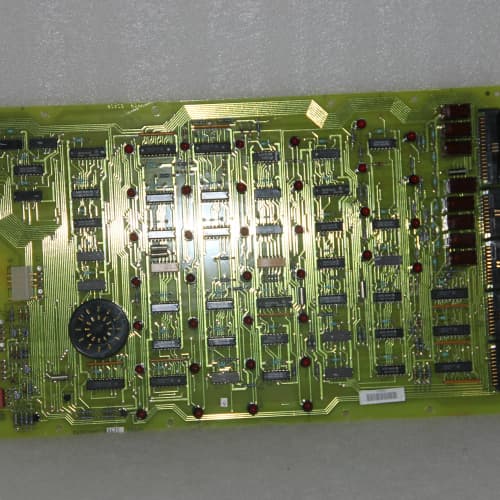
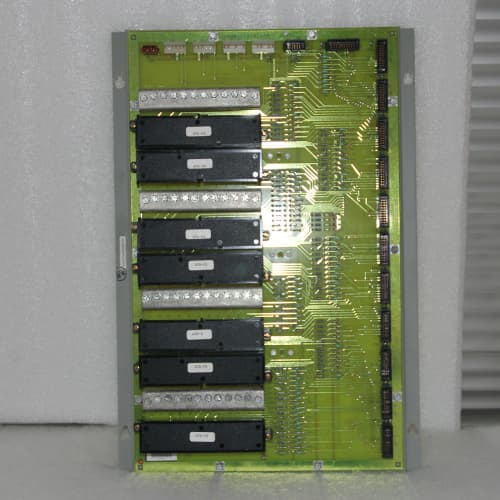
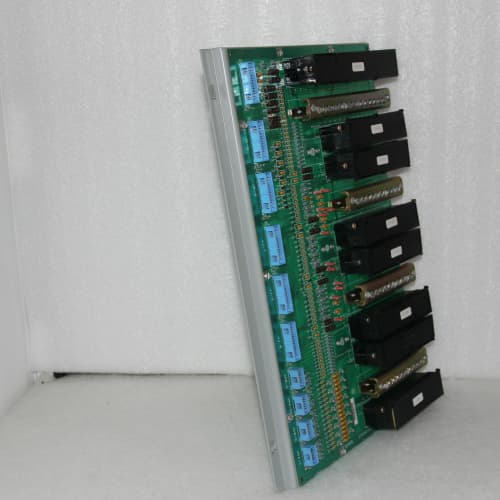
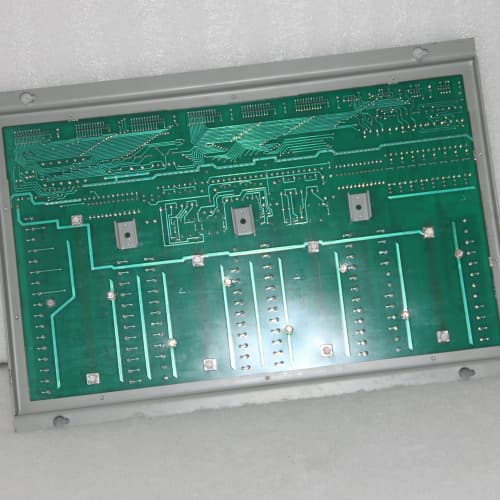
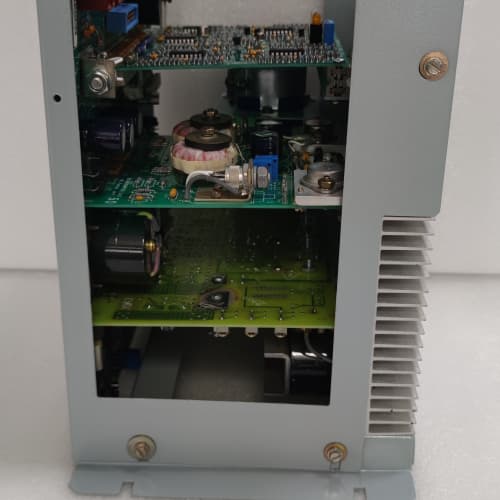
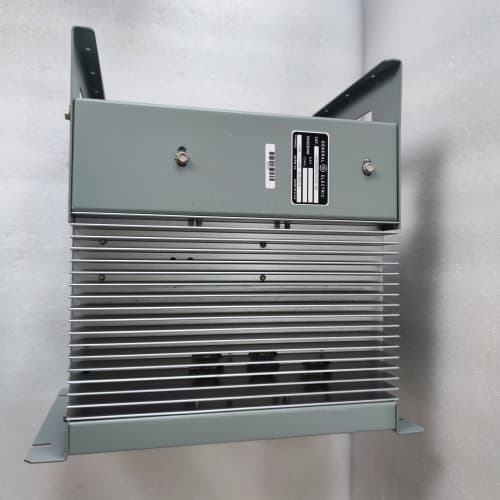
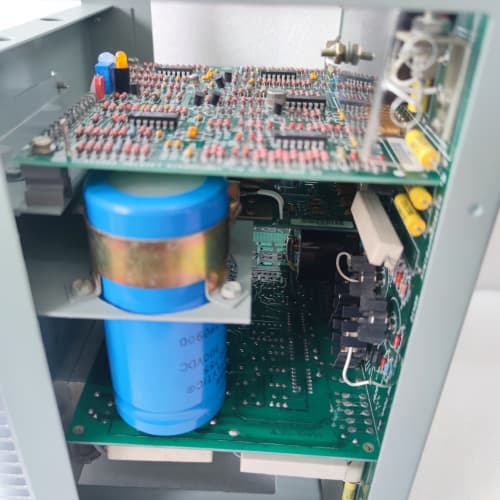
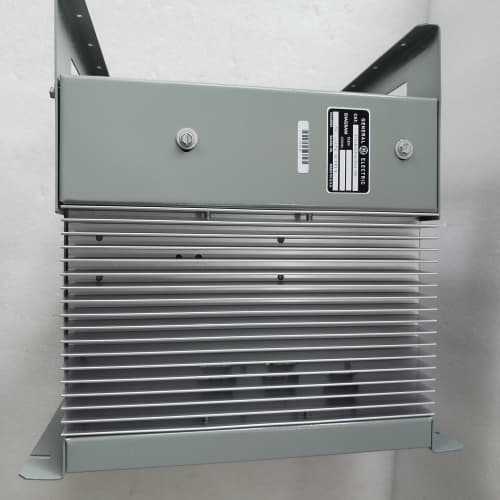
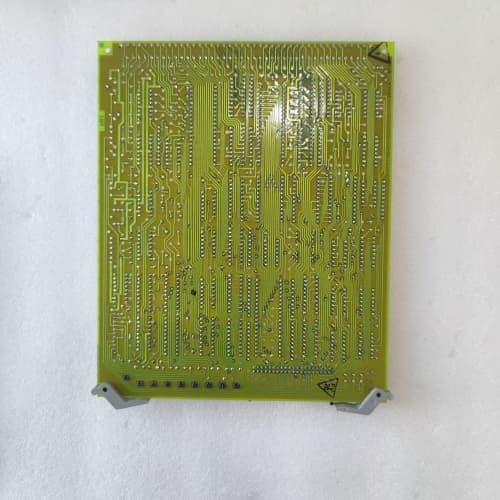
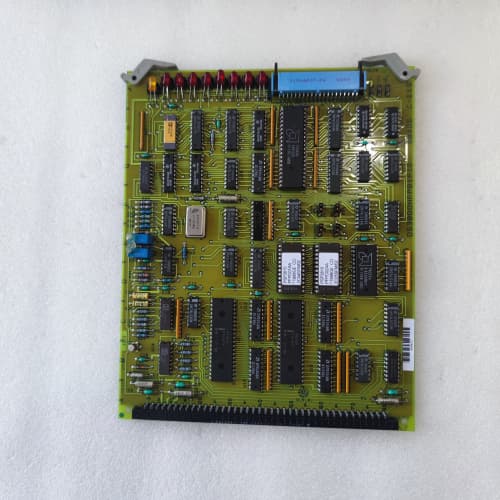
Module Type:Triple Modular Redundant (TMR) Digital Input Module.
Input Type: Typically designed for dry contact inputs (e.g., from switches, relay contacts). The module provides a wetting voltage (often 24V DC) to detect the open/closed state of the field contact.
Input Channels: Contains multiple independent input channels per module (e.g., 8, 16, or 32 channels). Each channel processes a single field contact.
Redundancy Architecture: Employs true hardware TMR at the channel level. Each field input is connected to three identical, but electrically isolated, input circuits within the module. These three circuits provide independent readings to the three controller channels.
Fault Tolerance: Can tolerate the failure of any one of the three internal input circuits for a given channel without corrupting the input data. The TMR controller performs a 2-out-of-3 vote on the three signals to determine the true state of the field contact.
Isolation: Provides high-grade channel-to-channel isolation and field-to-system isolation. This prevents ground loops, noise interference, and prevents a fault on one input or field wire from affecting others.
Diagnostics: Includes continuous online diagnostics that monitor the health of the internal power supplies, each of the three input circuits per channel, and the overall module logic. Faults are reported in detail to the main TMR controller.
Response Time: Very fast input response and filtering, suitable for high-speed safety interlock logic.
Safety Certification: Certified for use in Safety Integrity Level 3 (SIL 3) applications per IEC 61508/61511 standards.
Form Factor: A single-slot module designed for installation in the Trusted system’s main or expansion I/O chassis.
Input Type: Analog, configurable for current or voltage.
Input Channels: Typically 8 channels (configuration dependent).
Signal Ranges: 4-20mA, 1-5V DC, and other ranges via configuration.
Resolution: High-resolution (e.g., 16-bit) analog-to-digital conversion for precise measurement.
Isolation: Channel-to-channel and channel-to-system isolation to prevent noise and ground loop interference.
Diagnostics: Comprehensive continuous self-diagnostics, including open-circuit detection, short-circuit detection, and out-of-range alarms.
Fault Tolerance: TMR architecture; the module operates in a 2-out-of-3 voting configuration, allowing it to tolerate a single fault without compromising system integrity.
Communication: Interfaces via the trusted backplane with the TMR processors.
Certifications: Designed to meet stringent international safety standards (e.g., IEC 61508, SIL 3 capable).
Module Type:Triple Modular Redundant (TMR) Analog Output Module.
Output Type: Typically provides a single 4-20 mA DC current output signal per channel, though specifications may vary (e.g., 0-20 mA). The output is sourced from the module (active).
Redundancy Architecture: Employs true hardware TMR at the component level. The module contains three completely independent analog output circuits (one per controller channel). A sophisticated hardware voting network compares the three signals and delivers the correct 2-out-of-3 voted output to the field.
Fault Tolerance: Can tolerate the failure of any one of its three internal output circuits without interrupting the correct analog signal to the field. The system diagnostics will identify the faulty sub-circuit.
Load Capacity: Capable of driving a specified maximum load resistance (e.g., 750 Ohms or more), ensuring compatibility with most field devices and long cable runs.
Accuracy & Resolution: High accuracy (e.g., ±0.1% of span) and resolution (e.g., 16-bit) to ensure precise control signal generation.
Isolation: Provides high-grade channel-to-channel and channel-to-field isolation to prevent fault propagation and protect the controller from field-side transients.
Diagnostics: Extensive continuous online diagnostics monitor the health of each of the three internal output circuits, the voting logic, and the final output stage. Faults are reported back to the main TMR controller.
Safety Certification: Certified for use in Safety Integrity Level 3 (SIL 3) applications per IEC 61508/61511 standards.
Form Factor: A single-slot module designed for installation in the Trusted system’s main or expansion I/O chassis.
Compatibility: Designed for specific Tricon (e.g., v9, v10) and Trident chassis models. It is crucial to verify the exact chassis part number.
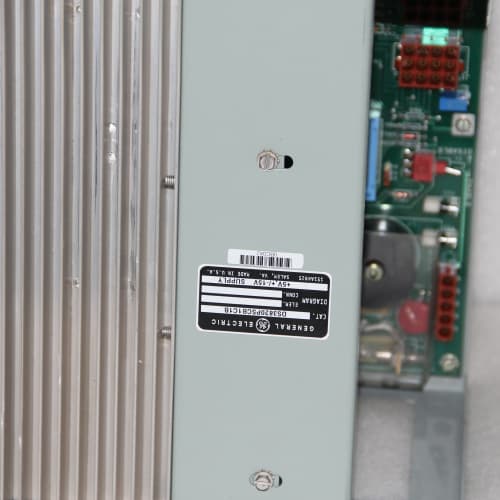
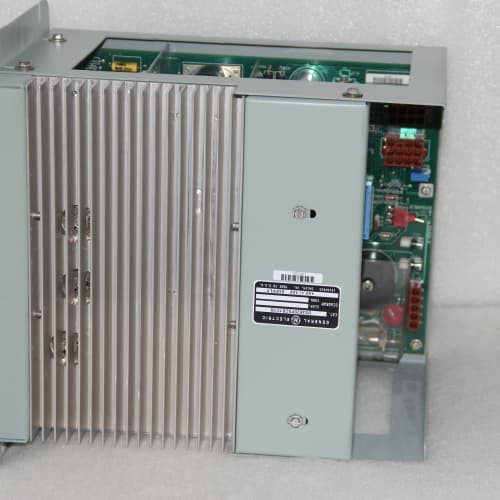
Input Voltage: Accepts a range of input voltages, typically 120/240V AC or 125V DC, from the plant’s uninterruptible power supply (UPS) or secure power source.
Output Power: Supplies multiple isolated and regulated DC voltage rails (e.g., +5V, ±12V, +24V) to power all modules within the chassis.
Redundancy: Employs a TMR architecture internally, featuring three independent power conversion and monitoring circuits. The outputs are voted upon to ensure a single internal fault does not disrupt power to the controller.
Hot-Swap Capability: Designed to be hot-swappable, allowing for replacement or maintenance without shutting down the safety controller, thus maximizing system uptime.
Diagnostics & Monitoring: Comprehensive self-diagnostics with LED status indicators for input power, output health, and module faults. Fault status is communicated to the main processor.
Certifications: Designed and tested for use in Safety Integrity Level (SIL) 3 applications, meeting rigorous standards such as IEC 61508.
Module Type: TMR Communication Interface Module / Network Controller.
System Compatibility: Designed for installation within the Trusted TMR system chassis (e.g., T8100 series), interfacing with the triple redundant backplane.
Primary Function: Acts as a communications front-end processor, managing data flow between the TMR controller’s three independent channels and external networks.
Supported Protocols: Typically supports industry-standard protocols for supervisory communication. Common protocols include:
Modbus TCP/IP and Modbus RTU (serial) for connectivity to HMIs, DCS, and other PLCs.
OPC (Classic or DA) for connection to SCADA and historian systems.
Proprietary Trusted Network (TNET) protocols for peer-to-peer communication between Trusted systems.
Redundancy: The module itself is typically configured in a redundant (dual or triple) pair to eliminate itself as a single point of failure in the communication path, aligning with the system’s overall high-availability design.
Data Handling: Manages the mapping of process data (both safe and unsafe values, diagnostics) from the TMR controller to the external network and vice-versa for setpoints or commands (with appropriate permissions).
Diagnostics: Includes comprehensive self-diagnostics and status reporting back to the main TMR controller and externally, indicating communication link health and module status.
Physical Interface: Features standard network ports (e.g., RJ45 for Ethernet, serial ports) on its front face for external connections.
Compatibility: Designed for integration with Tricon v9, v10, and Trident chassis.
Output Channels: Typically provides multiple channels (e.g., 4 or 8 channels per module) of analog output.
Output Signal: Standard 4-20 mA or 0-20 mA current output to field devices, with support for HART communication protocol on some versions.
Resolution: High-resolution output (e.g., 16-bit) for precise control.
Isolation: Provides channel-to-channel and channel-to-system isolation to prevent fault propagation and ensure signal integrity.
Architecture: Employs a full TMR design, with three independent output circuits per channel. The outputs are voted upon, and the module can diagnose and compensate for a fault in any single leg without loss of control.
Certifications: Certified for Safety Integrity Level (SIL) 3 applications per IEC 61508 / IEC 61511 standards.
Diagnostics: Extensive onboard diagnostics and LED status indicators for power, channel activity, and fault conditions.
System Architecture:Triple Modular Redundant (TMR). Three independent channels execute the same logic in parallel, with hardware voting on inputs and outputs.
Fault Tolerance: Designed to tolerate any single fault (CPU, power, I/O channel) and many multiple faults without causing a system shutdown or compromising the safety function.
Chassis/Backplane: The T8100 typically refers to the main system chassis or rack that houses:
Communication Interface Modules for peer-to-peer and host connectivity.
Voting Mechanisms: Employs sophisticated hardware-based voting at the I/O level, ensuring that a correct 2-out-of-3 (2oo3) vote determines the valid state before any output action is taken.
Diagnostics: Extensive continuous online diagnostics monitor the health of every component across all three channels, detecting failures at the module level.
Communication: Supports robust communication networks like Trusted Network (TNET) and interfaces for connection to DCS, HMIs, and engineering workstations.
Certifications: Certified for use in SIL 3 safety applications per IEC 61508/61511 standards by exida, TÜV, and other global agencies.
Environmental Ratings: Designed for harsh industrial environments with wide operating temperature ranges and high immunity to shock, vibration, and electromagnetic interference.
Product Type: 4-20 mA Field Transmitter Power Supply / Isolated Barrier.
Compatibility: Designed for Honeywell Universal I/O (UIO) carriers and bases. Compatible with Experion PKS C200, C300, and ACE controllers.
Power Output: Provides intrinsically safe, regulated DC power to two-wire loop-powered field transmitters.
Signal Conditioning: Accepts a 4-20 mA input signal from the field device, provides isolation, and transmits the conditioned signal to the controller’s analog input channel.
Isolation: Features galvanic isolation between the field hazardous area and the safe area control system.
Certifications: Compliant with global intrinsic safety standards (e.g., ATEX, IECEx, FM) for use in Zone 0/1 hazardous areas when connected to appropriately certified field devices.
Channels: Typically a single-channel module.
Indicators: Includes LED status indicators for power and communication.
Module Type: Solid-State Digital Output (DO) Terminal / Switching Module.
Control Input (Controller Side): Typically accepts a 24V DC logic signal to activate the output. Input current draw is low (e.g., a few mA).
Switched Output (Load Side): Provides a switched voltage output to drive the load. Common output ratings are 24V DC with a current capacity ranging from 0.5A to 2A per channel (exact specs depend on the variant).
Switching Element: Utilizes a MOSFET or IGBT for solid-state switching, enabling fast, silent, and wear-free operation compared to mechanical relays.
Isolation: Features galvanic isolation between the control input circuit and the load output circuit. This isolation voltage is typically 1500Vrms or higher, protecting the controller from transients, noise, and potential differences on the load side.
Protection Features:
Short-Circuit Protection: Electronic current limiting or cut-off to protect the module if the output is shorted.
Overload Protection: Protects against sustained excessive current.
Overvoltage Protection: May include suppression for voltage spikes from inductive loads (like solenoids or small contactor coils).
Diagnostic Feedback: Many models include a diagnostic feedback signal (e.g., a separate isolated digital input channel) that reports back to the controller if the output is in a fault state (e.g., short circuit, open load).
Status Indication: Integrated LEDs to show the status of the control input and/or the switched output.
Installation: Designed for DIN-rail mounting (35mm) with pluggable screw terminal blocks or spring-cage terminals for easy wiring and replacement.
Operating Temperature: Standard industrial range, e.g., -20°C to +60°C.
Module Type: Multi-channel Field Power Controller / Conditioned Power Supply.
Input Power: Accepts a single primary power input, typically 24V DC (range may be, e.g., 18-32V DC), from a system or cabinet power supply.
Output Channels: Provides multiple isolated output channels (e.g., 4, 8, or 16 channels). Each channel can typically supply 24V DC at a specified current (e.g., 0.5A to 2A per channel).
Protection Features (per channel):
Electronic Short-Circuit Protection: Non-destructive, auto-resetting or latch-off type.
Overload Protection: Limits current to a safe maximum.
Reverse Polarity Protection: Protects the module from damage if field wiring is connected incorrectly.
Diagnostics & Communication:
Per-channel LED status indicators (Power, Fault).
Advanced models may include digital communication (e.g., via a dedicated bus or IO-Link) to report individual channel status (healthy, shorted, open circuit) back to the controller.
Isolation: Channels are typically individually isolated from each other and from the input power. This prevents faults in one field device from affecting others.
Installation: Standard 35mm DIN-rail mounting with plug-in or screw terminal blocks for easy wiring.
Operating Temperature: Industrial temperature range (e.g., -20°C to +70°C).
Safety & Compliance: Meets relevant industrial standards for electrical safety and EMC.
Typically features 8 or more 10/100/1000 Mbps copper (RJ45) Ethernet ports.
Often includes combo ports (RJ45/SFP) or dedicated SFP slots for fiber optic connectivity, allowing for flexible media and distance adaptation.
Network Features:
FTE (Fault Tolerant Ethernet) Support: Native support for Honeywell’s proprietary FTE protocol, enabling the creation of highly available, redundant network rings with seamless failover.
Rapid Spanning Tree Protocol (RSTP) / MRP: Support for standard redundancy protocols for integration with other network equipment.
VLAN (802.1Q): Supports Virtual LANs for traffic segmentation and security.
QoS (Quality of Service): Supports prioritization of critical control traffic.
IGMP Snooping: Efficient management of multicast traffic.
Management & Security:
Management Interface: Web-based management, CLI (Command Line Interface), and often SNMP support.
Security Features: Port security, 802.1X network access control, and password protection.
Power Supply: Typically supports dual, redundant power inputs (e.g., 24V DC or 110-240V AC) for enhanced reliability.
Environmental Ratings:
Designed for industrial environments with a wide operating temperature range (e.g., -40°C to 75°C).
High immunity to vibration, shock, and electromagnetic interference (EMI).
Certifications: Complies with relevant industrial and safety standards (e.g., UL, CE, Class I Div 2 for hazardous locations in specific models).