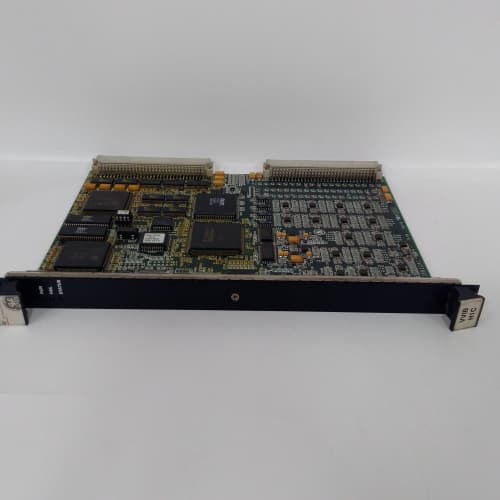
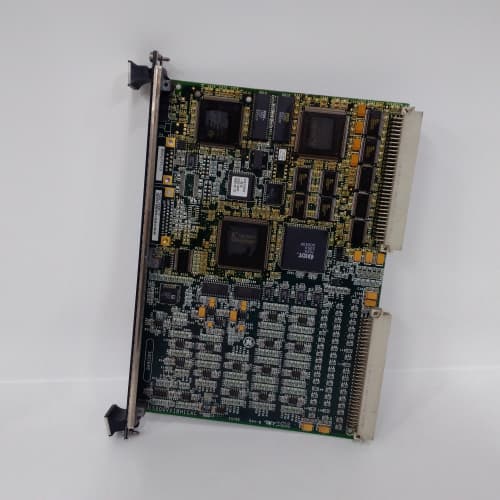
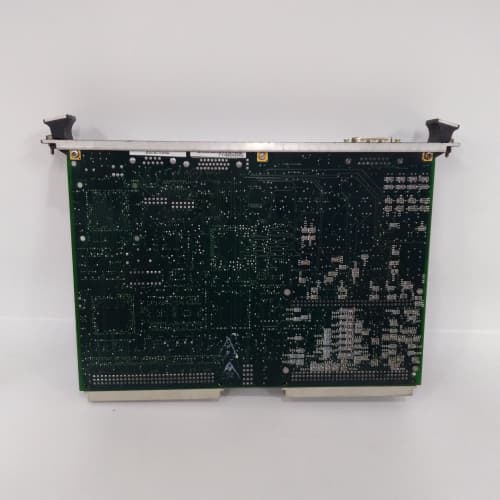
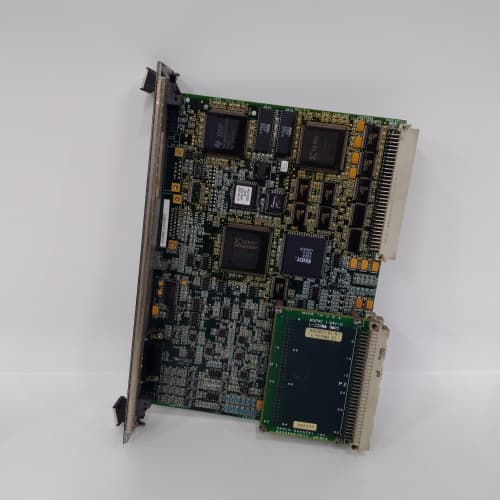
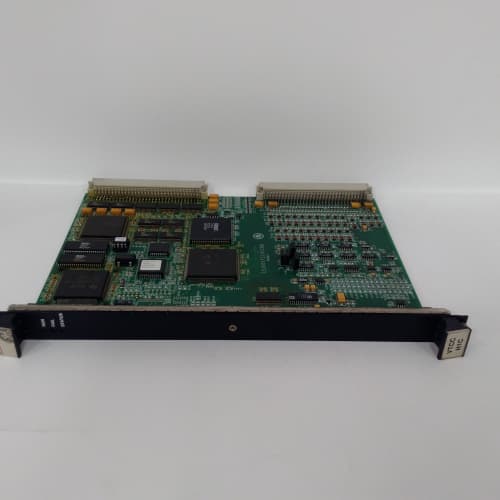
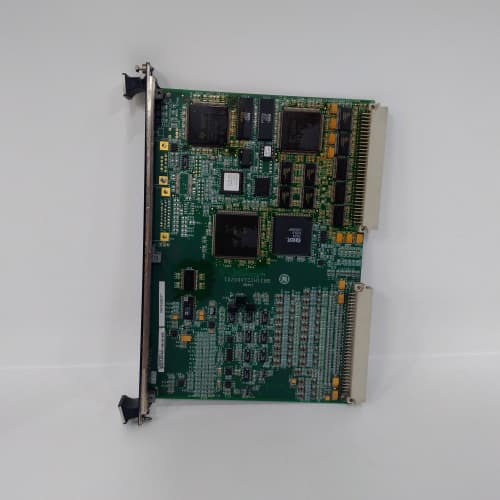
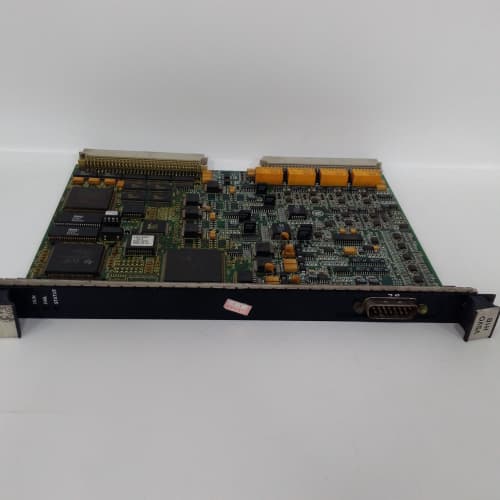
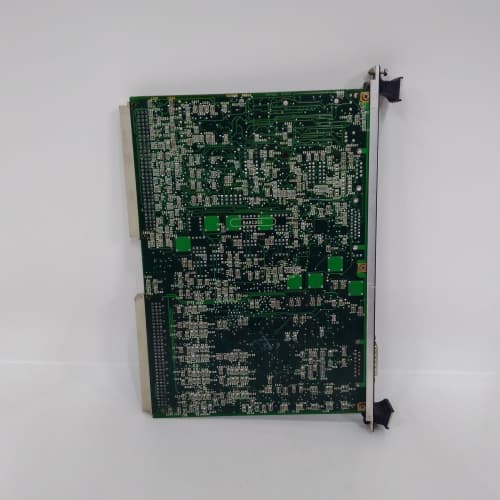
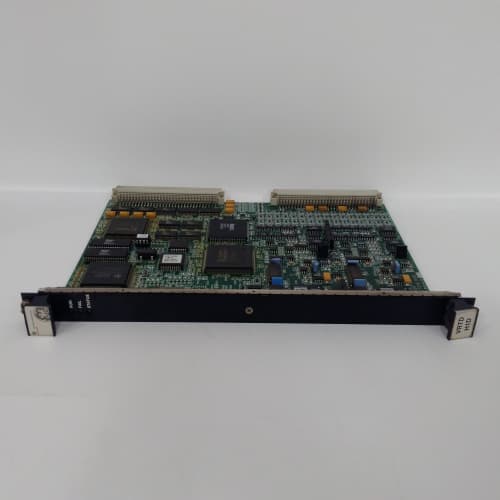
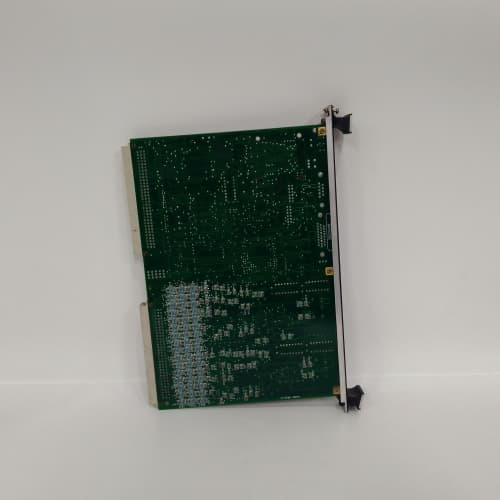
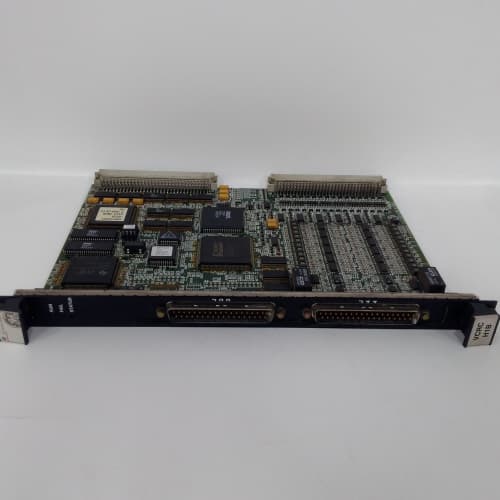
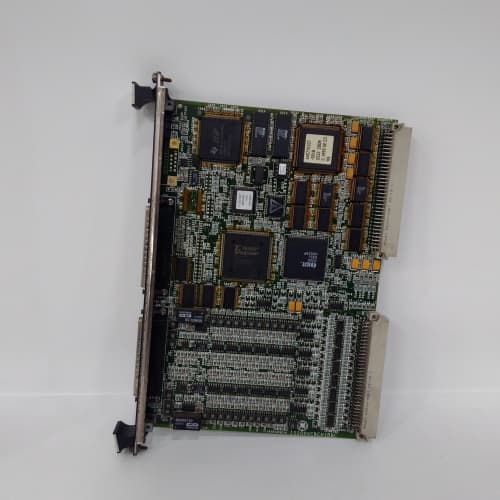
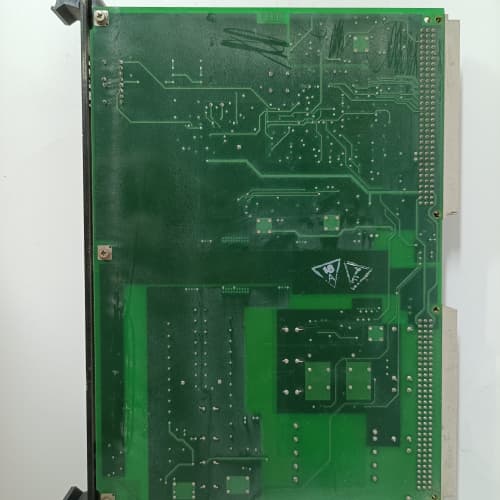
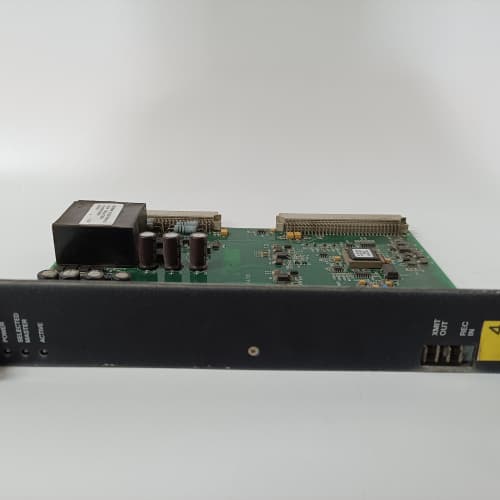
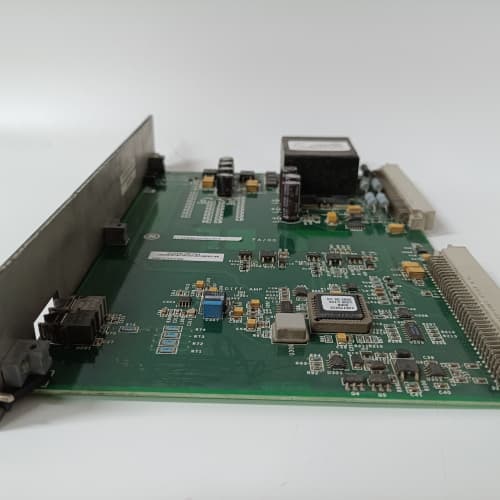
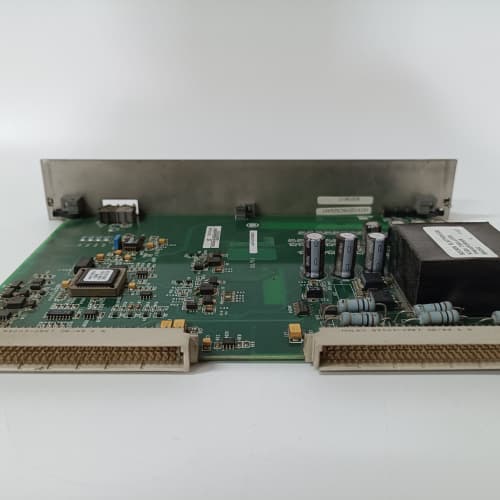
Industrial Automation: In manufacturing plants, the MVME6100 is used for process control and monitoring. For example, in a steel – making plant, it can control the operation of blast furnaces, rolling mills, and other equipment. It can receive data from sensors that measure temperature, pressure, and flow rate, and then send control signals to actuators to adjust the process parameters.
Power Generation and Distribution: In power plants, the MVME6100 is used for power system control and protection. It can monitor the electrical parameters of generators, transformers, and transmission lines, and take appropriate actions in case of faults, such as tripping circuit breakers to isolate the faulty section.
Transportation: In railway and aerospace applications, the MVME6100 is used for control and monitoring systems. In a high – speed train, it can control the train’s speed, braking system, and communication with the railway infrastructure. In an aircraft, it can be used for flight control and avionics systems.
3. Weight and Dimensions
Weight: The MVME6100 weighs approximately 3 kg. Its weight is designed to be manageable for installation and maintenance purposes, especially when it needs to be installed in racks or cabinets.
Dimensions: It has dimensions of around 260 mm in length, 210 mm in width, and 45 mm in height. These compact dimensions allow it to be easily installed in standard 19 – inch racks, which are commonly used in industrial and data – center environments.
4. Features
High – Performance Computing: The powerful processor and ample memory enable the MVME6100 to handle complex computational tasks in real – time. This is crucial for applications that require fast data processing and decision – making, such as control systems and data – acquisition systems.
Flexible I/O Configuration: The multiple I/O interfaces and PCI expansion slots provide flexibility in configuring the system to meet different application requirements. Users can easily add or remove I/O cards as needed, without having to replace the entire system.
Reliable Real – Time Operation: The support for real – time operating systems ensures reliable and deterministic operation. This is essential for applications where timing is critical, such as industrial control and transportation systems.
Industrial Automation: In manufacturing plants, the IC694MDL655 is widely used for process control. For example, in a metal – stamping factory, it can control the operation of stamping machines, conveyor belts, and robotic arms. The digital inputs monitor the status of these machines, such as whether they are running or have encountered an error, and the digital outputs send control signals to start or stop the operations.
Material Handling: In warehouses and distribution centers, it can be integrated into automated material – handling systems. It controls the movement of automated guided vehicles (AGVs) and the operation of sorting systems. The digital inputs detect the position of pallets and products, while the digital outputs control the motors and actuators of the AGVs and sorting equipment.
Power Generation: In power plants, the module can be used to monitor and control auxiliary equipment. For instance, it can control the operation of pumps, fans, and valves in the cooling system based on the signals received from temperature and pressure sensors.
3. Weight and Dimensions
Weight: The IC694MDL655 weighs around 1.3 kg. Its relatively light weight makes it easy to install and handle during the setup and maintenance processes.
Dimensions: It has dimensions of approximately 210 mm in length, 160 mm in width, and 75 mm in height. These compact dimensions allow it to be easily installed in standard control cabinets or on DIN rails in industrial control panels.
4. Features
High – Density I/O: With 32 digital inputs and 32 digital outputs in a single module, the IC694MDL655 provides a high – density I/O solution. This is beneficial for applications that require a large number of input/output points in a limited space.
Flexible Configuration: The module can be configured using software tools. Users can customize the input/output functions, communication parameters, and alarm thresholds according to their specific requirements. This flexibility allows for easy adaptation to different industrial applications.
Diagnostic Functions: It is equipped with built – in diagnostic functions that can detect faults in the input/output circuits and the communication interface. The diagnostic information can be displayed on a human – machine interface (HMI) or sent to a PLC for further analysis, facilitating quick troubleshooting.
Weight: The 1X00781H01L weighs approximately 0.8 kg. Its relatively light weight makes it easy to install and handle during the setup and maintenance processes.
Dimensions: It has compact dimensions, typically around 150 mm in length, 100 mm in width, and 50 mm in height. These dimensions allow it to be easily installed in control cabinets or on DIN rails in industrial environments.
4. Features
Compact Design: The small form factor of the 1X00781H01L makes it suitable for applications where space is limited. It can be easily integrated into existing control systems without taking up excessive space.
Flexible Configuration: The module can be configured using software tools. Users can set up the input/output functions, communication parameters, and alarm thresholds according to their specific requirements. This flexibility allows for customization in different industrial applications.
Diagnostic Functions: It is equipped with built – in diagnostic functions that can detect faults in the input/output circuits and the communication interface. The diagnostic information can be displayed on a human – machine interface (HMI) or sent to a PLC for further analysis, facilitating quick troubleshooting.
5. Stability and Reliability
Robust Construction: The 1X00781H01L is built with a durable housing that can withstand harsh industrial environments, including dust, moisture, and mechanical vibrations.
Quality Components: It uses high – quality electronic components that are selected for their reliability and long – term performance. This helps to ensure stable operation over an extended period.
Redundancy Support: Although not always standard, in some critical applications, redundancy options can be implemented. For example, redundant communication paths can be set up to ensure continuous data transfer in case of a communication failure.
Industrial Automation: In manufacturing plants, the IC694MDL655 is used to monitor and control complex industrial processes. For example, in an automotive assembly plant, it can control the operation of multiple robotic arms, conveyor belts, and welding stations. The digital inputs can monitor the status of these devices, such as whether a robot arm has completed a task or a conveyor belt is jammed, and the digital outputs can send control signals to start or stop the operations.
Material Handling: In warehouses and distribution centers, it can be integrated into material handling systems. It can control the movement of automated guided vehicles (AGVs) and the operation of sorting systems. The digital inputs can detect the position of pallets and products, while the digital outputs can control the motors and actuators of the AGVs and sorting equipment.
Process Control: In chemical and pharmaceutical plants, the module can be used to control and monitor the process parameters. For example, it can control the opening and closing of valves in a chemical reaction process based on the signals received from sensors that measure temperature, pressure, and flow rate.
3. Weight and Dimensions
Weight: The IC694MDL655 weighs approximately 1.2 kg. Its relatively light weight makes it easy to install and handle during the setup and maintenance processes.
Dimensions: It has dimensions of around 200 mm in length, 150 mm in width, and 70 mm in height. These dimensions allow it to be easily installed in standard control cabinets or on DIN rails in industrial environments.
4. Features
High – Density I/O: With 32 digital inputs and 32 digital outputs, the IC694MDL655 provides a high – density I/O solution, which is beneficial for applications that require a large number of input/output points in a limited space.
Flexible Configuration: The module can be configured using software tools. Users can set up the input/output functions, communication parameters, and alarm thresholds according to their specific requirements. This flexibility allows for customization in different industrial applications.
Diagnostic Functions: It is equipped with built – in diagnostic functions that can detect faults in the input/output circuits and the communication interface. The diagnostic information can be displayed on a human – machine interface (HMI) or sent to a PLC for further analysis, facilitating quick troubleshooting.
Robust Construction: The RLM01 is built with a durable housing that can withstand harsh industrial and commercial environments, including dust, moisture, and mechanical vibrations.
Quality Components: It uses high – quality electronic components that are selected for their reliability and long – term performance. This helps to ensure stable operation over an extended period.
Electrical Protection: It is equipped with basic electrical protection features, such as over – voltage and over – current protection, to prevent damage from electrical faults.
6. Real – World Examples
Small – Scale Woodworking Shop: In a small – scale woodworking shop, the RLM01 is used to control a simple cutting machine. The digital inputs are connected to sensors that detect the position of the wood piece on the cutting table. Based on these signals, the digital outputs control the movement of the cutting blade and the activation of the dust collection system. If a sensor detects that the wood piece is not properly positioned, the output can stop the cutting process to prevent damage to the wood and the machine.
Local Greenhouse: In a local greenhouse, the RLM01 is used to control the ventilation system. The digital inputs are connected to temperature and humidity sensors. When the temperature or humidity exceeds a certain setpoint, the digital outputs activate the ventilation fans to regulate the environmental conditions inside the greenhouse. This helps to create an optimal growing environment for the plants.
Industrial Automation: In manufacturing plants, the GJR5252300R3101 07AC91H is used to monitor and control various industrial processes. For example, in a metal – stamping factory, it can control the operation of stamping machines, conveyor belts, and robotic arms. The digital inputs can monitor the status of these machines, such as whether they are running or have encountered an error, and the digital outputs can send control signals to start or stop the machines.
Robotics: In robotic applications, it can be used to interface between the robot controller and external devices. In a pick – and – place robotic system, the digital inputs can receive signals from sensors that detect the position and presence of objects, and the digital outputs can control the movement of the robot arm and the operation of the gripper.
Material Handling: In warehouses and distribution centers, the module can be integrated into material handling systems. It can control the movement of automated guided vehicles (AGVs) and the operation of sorting systems. The digital inputs can detect the position of pallets and products, while the digital outputs can control the motors and actuators of the AGVs and sorting equipment.
3. Weight and Dimensions
Weight: The GJR5252300R3101 07AC91H weighs approximately 0.8 kg. Its relatively light weight makes it easy to install and handle during the setup and maintenance processes.
Dimensions: It has compact dimensions, typically around 150 mm in length, 100 mm in width, and 50 mm in height. These dimensions allow it to be easily installed in control cabinets or on DIN rails in industrial environments.
4. Features
Compact Design: The small form factor of the GJR5252300R3101 07AC91H makes it suitable for applications where space is limited. It can be easily integrated into existing control systems without taking up excessive space.
Flexible Configuration: The module can be configured using software tools. Users can set up the input/output functions, communication parameters, and alarm thresholds according to their specific requirements. This flexibility allows for customization in different industrial applications.
Diagnostic Functions: It is equipped with built – in diagnostic functions that can detect faults in the input/output circuits and the communication interface. The diagnostic information can be displayed on a human – machine interface (HMI) or sent to a PLC for further analysis, facilitating quick troubleshooting.
Weight: The MPB1 – TP weighs approximately 0.5 kg. Its relatively light weight makes it easy to install and handle during the setup and maintenance processes.
Dimensions: It has compact dimensions, typically around 120 mm in length, 80 mm in width, and 40 mm in height. These dimensions allow it to be easily installed in control cabinets or on DIN rails in industrial or building automation environments.
4. Features
Compact Design: The small form factor of the MPB1 – TP makes it suitable for applications where space is limited. It can be easily integrated into existing control systems without taking up excessive space.
Easy Configuration: It is designed to be user – friendly, with simple configuration procedures. Users can configure the input/output functions, communication parameters, and alarm thresholds using software tools or through a local interface.
Cost – Effective: It offers a cost – effective solution for small – to medium – scale control and monitoring applications. Its relatively low price and low power consumption make it an attractive option for budget – conscious projects.
5. Stability and Reliability
Robust Construction: The MPB1 – TP is built with a durable housing that can withstand harsh industrial and building environments, including dust, moisture, and mechanical vibrations.
Quality Components: It uses high – quality electronic components that are selected for their reliability and long – term performance. This helps to ensure stable operation over an extended period.
Electrical Protection: The electrical isolation and basic over – voltage and over – current protection features help prevent damage from electrical faults, reducing the risk of system failures.
Weight: The SCXI – 1104C weighs approximately 1.2 kg. Its relatively light weight makes it easy to install and handle during the setup and maintenance processes.
Dimensions: It has dimensions of around 200 mm in length, 150 mm in width, and 60 mm in height. These compact dimensions allow it to be easily installed in standard SCXI chassis or on DIN rails in industrial control panels.
4. Features
High – Density Inputs: With 8 differential input channels in a single module, the SCXI – 1104C provides a high – density solution for multi – channel analog signal measurement.
Flexible Signal Conditioning: The adjustable anti – aliasing filters and basic signal – conditioning functions allow for customization according to the specific requirements of different applications.
Easy Integration: It can be easily integrated into the SCXI system, which simplifies the setup and configuration of the data – acquisition system. Users can use the same software tools to manage and analyze the data from different SCXI modules.
5. Stability and Reliability
Robust Construction: The SCXI – 1104C is built with a durable housing that can withstand harsh industrial and laboratory environments, including dust, moisture, and mechanical vibrations.
Quality Components: It uses high – quality electronic components that are selected for their reliability and long – term performance. This helps to ensure stable operation over an extended period.
Calibration and Self – Diagnostic: The module can be calibrated to maintain measurement accuracy over time. It also has self – diagnostic functions that can detect internal faults and abnormal operating conditions, which helps in quick troubleshooting and maintenance.
Industrial Process Monitoring: In manufacturing plants, the SCXI – 1349 is used to monitor various process parameters. For example, in a chemical plant, it can measure the temperature, pressure, and flow rate of different chemical substances in the pipelines. By continuously monitoring these parameters, the plant operators can ensure the stability and safety of the production process.
Environmental Monitoring: In environmental monitoring stations, it can be used to measure environmental parameters such as temperature, humidity, and air quality. The module can interface with different types of sensors to collect data on pollutants, meteorological conditions, and other environmental factors. This data is crucial for environmental protection and resource management.
Research and Development: In laboratories, the SCXI – 1349 is used for experimental data acquisition. For instance, in a materials science laboratory, it can measure the strain and stress of materials under different loading conditions. The accurate measurement provided by the module helps researchers to analyze the mechanical properties of materials and develop new materials.
3. Weight and Dimensions
Weight: The SCXI – 1349 weighs approximately 0.8 kg. Its relatively light weight makes it easy to install and handle during the setup and maintenance processes.
Dimensions: It has compact dimensions, typically around 150 mm in length, 100 mm in width, and 50 mm in height. These dimensions allow it to be easily installed in standard SCXI chassis or on DIN rails in industrial control panels.
4. Features
Versatile Signal Conditioning: The ability to support multiple types of sensors and provide comprehensive signal – conditioning functions makes the SCXI – 1349 a versatile module for different measurement applications.
Easy Integration: It can be easily integrated into the SCXI system, which simplifies the setup and configuration of the data – acquisition system. Users can use the same software tools to manage and analyze the data from different SCXI modules.
Remote Configuration and Monitoring: The module can be remotely configured and monitored via the SCXI system. This feature allows users to adjust the measurement parameters and check the status of the module without physically accessing it, which is convenient for large – scale or hard – to – reach installations.
Weight: The TRICONEX 8305A weighs approximately 2 kg. Its relatively light weight makes it easy to install and handle during the setup and maintenance processes.
Dimensions: It has dimensions of around 200 mm in length, 150 mm in width, and 100 mm in height. These compact dimensions allow it to be easily installed in standard industrial control cabinets or racks.
4. Features
Triple Modular Redundancy (TMR): Similar to other TRICONEX products, the 8305A features TMR architecture. It has three independent channels that perform the same control and monitoring functions simultaneously. The outputs of these channels are voted on, and the majority result is used. This redundancy provides high – level reliability and fault tolerance, as the system can continue to operate even if one channel fails.
Fault – Detection and Diagnostic Capabilities: The module has built – in fault – detection mechanisms that can identify internal faults in real – time. It can also provide detailed diagnostic information, such as error codes and status messages, which helps in quick troubleshooting and maintenance.
Flexible Configuration: It can be easily configured using software tools. Users can customize the input/output functions, communication parameters, and control logic according to their specific application requirements.
5. Stability and Reliability
Robust Construction: The TRICONEX 8305A is built with a rugged enclosure that can withstand harsh industrial environments, including high temperatures, humidity, dust, and mechanical vibrations.
High – Quality Components: It uses high – quality electronic components that are selected for their reliability and long – term performance. These components are tested thoroughly to ensure they can operate under extreme conditions.
Redundancy and Self – Healing: The TMR architecture and self – diagnostic capabilities ensure that the module can continue to function reliably even in the presence of faults. In case of a single – channel failure, the system can automatically reconfigure itself to maintain normal operation.
Oil and Gas Industry: In oil refineries and gas processing plants, the TRICONEX 8101 is used for safety – critical control systems. For example, it can control the operation of emergency shutdown valves (ESD) in case of a leak or other hazardous situations. The digital inputs can receive signals from gas detectors and pressure sensors, and the digital outputs can activate the ESD valves to isolate the affected area.
Power Generation: In power plants, it is used for turbine control and protection. The module can monitor various parameters such as turbine speed, temperature, and vibration. Based on these measurements, it can adjust the turbine’s operation or trigger an emergency shutdown if necessary to prevent damage to the equipment.
Chemical Industry: In chemical manufacturing facilities, the TRICONEX 8101 is employed for process control and safety management. It can control the flow of chemicals in pipelines, monitor the reaction conditions in reactors, and ensure the safety of the entire production process.
3. Weight and Dimensions
Weight: The TRICONEX 8101 weighs approximately 3 kg. Its weight is designed to be manageable for installation and maintenance purposes while still housing high – quality components and a robust enclosure.
Dimensions: It has dimensions of around 250 mm in length, 200 mm in width, and 150 mm in height. These dimensions allow it to be installed in standard industrial control cabinets or racks.
4. Features
Triple Modular Redundancy (TMR): One of the key features of the TRICONEX 8101 is its TMR architecture. It has three independent channels that perform the same control and monitoring functions simultaneously. The outputs of these channels are then voted on, and the majority result is used. This redundancy significantly enhances the reliability and safety of the system, as it can tolerate single – channel failures without affecting the overall operation.
Fault – Tolerant Design: The module is designed to be fault – tolerant. It can detect internal faults in real – time and take appropriate actions, such as isolating the faulty component or channel. This ensures continuous and reliable operation in harsh industrial environments.
Easy Configuration and Programming: It comes with user – friendly configuration and programming tools. Engineers can easily set up the input/output functions, communication parameters, and control logic using these tools, reducing the development and commissioning time.
Weight: The DO810 3BSE008510R1 weighs approximately 0.6 kg. Its relatively light weight makes it easy to install and handle during the setup and maintenance processes.
Dimensions: It has compact dimensions, typically around 120 mm in length, 80 mm in width, and 40 mm in height. These dimensions allow it to be easily installed in control cabinets or on DIN rails in industrial environments.
4. Features
Compact Design: The small form factor of the DO810 makes it suitable for applications where space is limited. It can be easily integrated into existing control systems without taking up excessive space.
High – Speed Switching: The transistor – based digital outputs provide fast switching speeds, which is important for applications that require quick response times, such as robotic control and high – speed manufacturing processes.
Diagnostic Functions: It is equipped with built – in diagnostic functions that can detect faults in the output circuits and the communication interface. The diagnostic information can be displayed on a human – machine interface (HMI) or sent to a PLC for further analysis, facilitating quick troubleshooting.
5. Stability and Reliability
Robust Construction: The DO810 is built with a durable housing that can withstand harsh industrial environments, including dust, moisture, and mechanical vibrations.
Quality Components: It uses high – quality electronic components that are selected for their reliability and long – term performance. This helps to ensure stable operation over an extended period.
Electrical Protection: The electrical isolation and the ability to handle short – circuits and over – currents provide protection against electrical faults, reducing the risk of system failures.