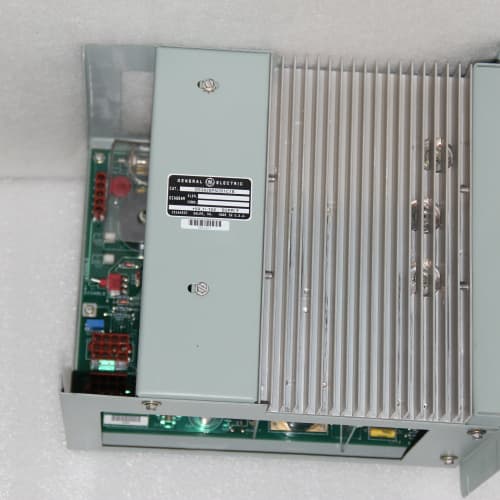
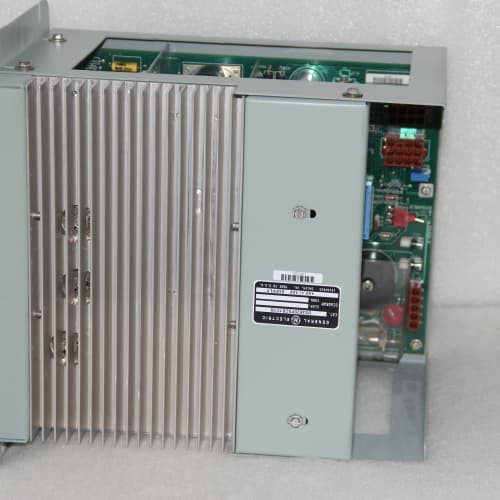
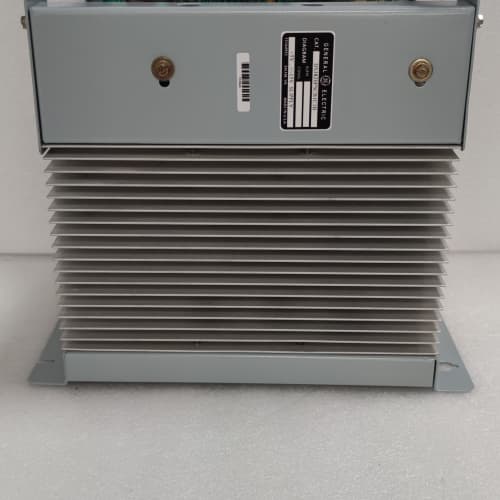
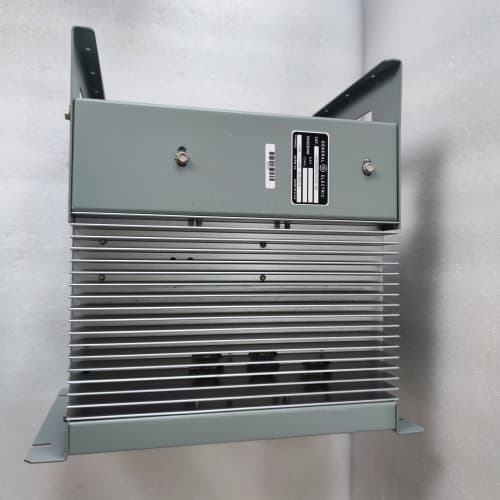
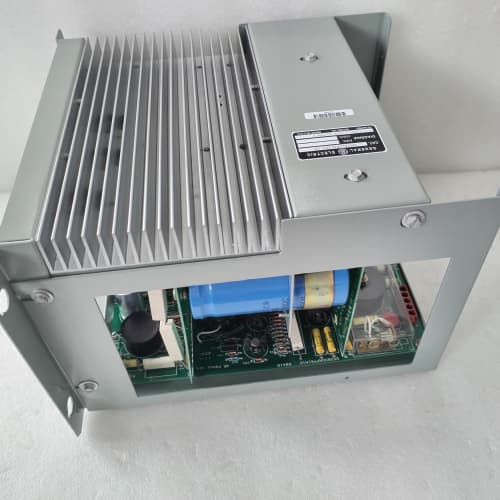
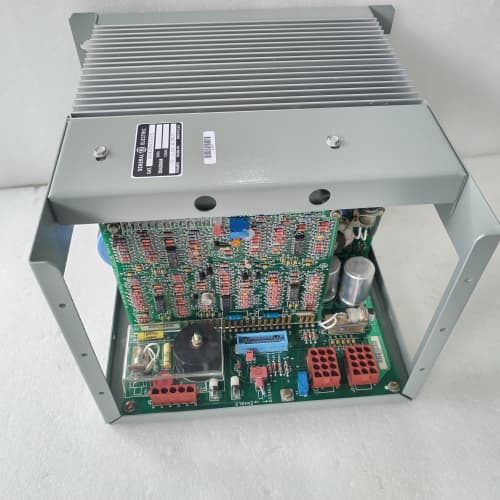
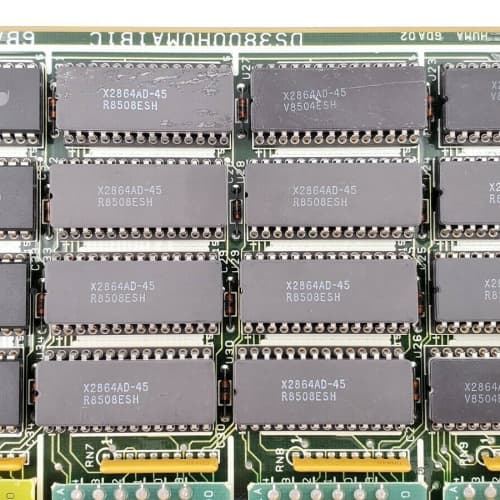
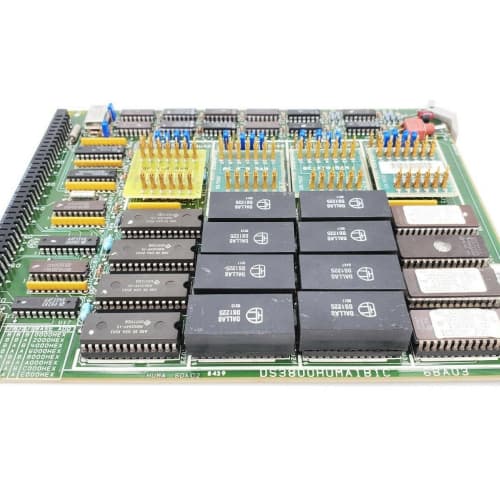
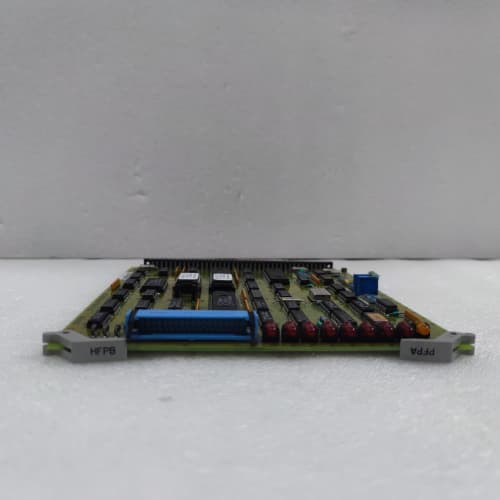
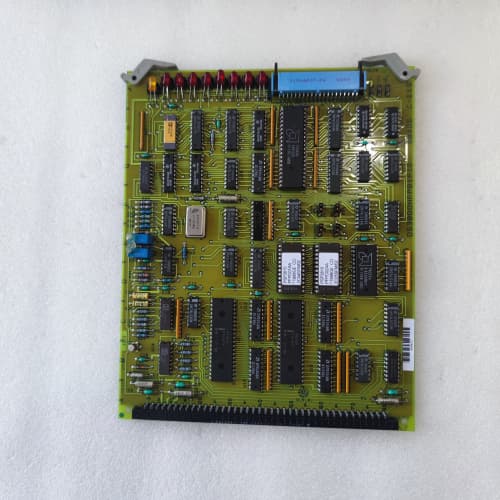
The GE VMIVME-7455 is a high-performance, VMEbus-based single-board computer (SBC) designed for demanding real-time control and data acquisition applications in industrial automation and embedded systems. This board represents the convergence of rugged industrial computing with the open VME architecture, providing a powerful processing engine for complex tasks that exceed the capabilities of standard PLCs. The GE VMIVME-7455 is built around an advanced microprocessor (historically from the PowerPC or Intel families) and serves as a critical component in systems such as large-scale DCS, test and measurement rigs, simulator control, and high-end motion control. Its role is often that of a supervisory controller, communication gateway, or data concentrator, handling complex algorithms, extensive network traffic, and large datasets. The GE VMIVME-7455 is engineered for reliability in harsh environments, making it a trusted choice for mission-critical automation infrastructure.
The ABB SE96920414 YPK112A is a specialized electrical drive component, specifically identified as a thyristor power stack or module. It is a critical high-power semiconductor assembly used within ABB’s industrial AC drive systems (such as the ACS 800 or similar series) to convert incoming AC power into a controlled DC output, forming a key part of the drive’s converter section for precise motor control.
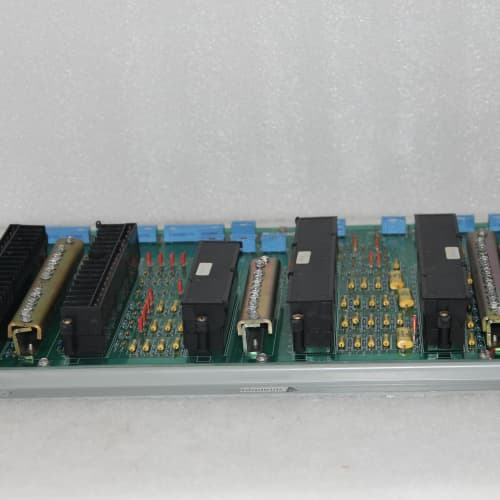
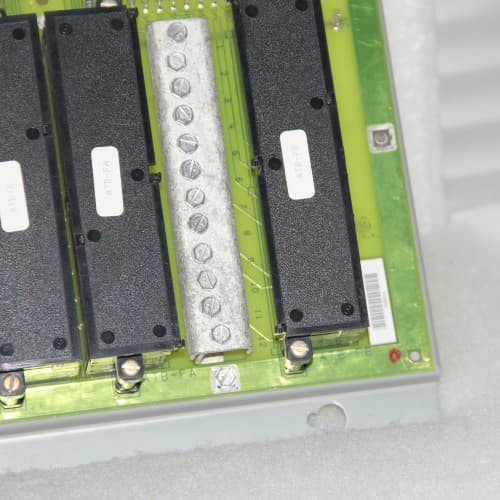
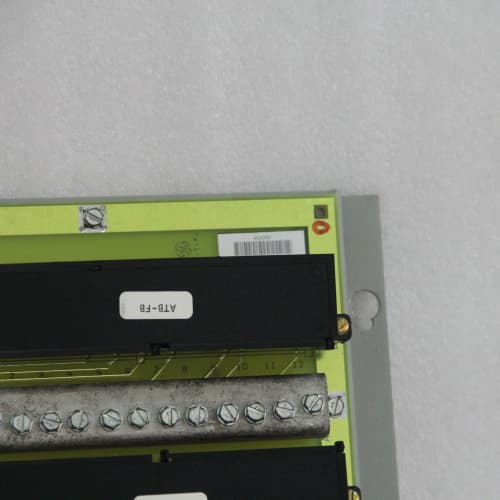
The GE TB43225AF14 is a specialized termination board or signal conditioning module from GE’s legacy Speedtronic Mark IV turbine control system. This module serves as a critical interface between the field instrumentation (sensors, switches, actuators) and the internal electronics of the Mark IV controller. The primary role of the GE TB43225AF14 is to provide signal isolation, conditioning, and termination for various analog and discrete signals, ensuring they are properly scaled, filtered, and protected before being processed by the turbine’s protective and control logic. In the rugged environment of a turbine control cabinet, modules like the GE TB43225AF14 are essential for maintaining signal integrity and system reliability. Its design is specific to the architecture of the Mark IV system, making it a vital spare part for sustaining the operation of older but still critical gas and steam turbines worldwide.
The ALSTOM N895313512X N95313012D SUP-AL N895313000R is a highly specialized and critical electronic printed circuit board (PCB) assembly from Alstom’s (now part of GE Grid Solutions or Hitachi Energy) protection and control systems, most likely for their MICOM or Px40 series of protective relays or associated equipment. This board functions as a core processing, power supply, or dedicated interface module, essential for the relay’s protective functions, communication, or analog signal processing.
The GE IC200CHS022E is a compact, high-performance CPU (Central Processing Unit) module for the VersaMax Micro family of programmable logic controllers (PLCs). This module is the central brain of the control system, executing user-written logic, managing I/O, and handling communication tasks. Designed for small to medium-sized automation applications, the GE IC200CHS022E offers a balanced mix of processing power, memory capacity, and integrated features in a space-saving package. It is engineered to deliver reliable control for machine automation, process skids, and standalone systems where cost-effectiveness and simplicity are key. The E suffix in the model indicates an enhanced feature set, which often includes more user memory, faster execution, or additional communication capabilities compared to base models. As the core of a VersaMax Micro system, the GE IC200CHS022E provides a solid foundation for building robust and efficient control solutions.
The HONEYWELL CC-TAIX11 is a high-performance, multi-channel analog input module designed for the Honeywell Experion Process Knowledge System (PKS) and its C Series I/O family. This module serves as a critical data acquisition component, precisely converting analog signals from field transmitters into digital values for monitoring, control, and safety functions within the DCS.
The ABB RF533 3BSE014227R1 is a robust and flexible remote fieldbus module designed for ABB’s Freelance distributed control system (DCS). This module serves as a crucial extension node, enabling the AC 700F series controllers to communicate with and manage a wide array of distributed I/O over the PROFIBUS DP (Decentralized Peripherals) fieldbus network. The ABB RF533 3BSE014227R1 acts as a compact, remote I/O station that can be installed close to sensors and actuators in the field, significantly reducing the amount of long and costly individual wiring runs back to the main control cabinet. By incorporating the ABB RF533 3BSE014227R1, system architects can build a truly distributed control architecture, enhancing scalability, simplifying installation, and improving maintenance access. Its design is optimized for seamless integration within the Freelance engineering and runtime environment.
The ABB AI895 3BSC690089R1 is a highly versatile and configurable analog input module designed for ABB’s Advant MOD 300 and AC 800F distributed control systems (DCS). It serves as a critical interface for connecting a wide variety of analog field instruments—such as transmitters for pressure, temperature, and flow—to the control system, converting their real-world signals into precise digital values for monitoring and control.
The ABB HESG324430R11/B is a critical microprocessor-based communication and gateway module from ABB’s extensive range of automation components, specifically associated with their high-end turbine control and power generation systems, such as the Advant or Symphony families. This module acts as an intelligent interface, facilitating data exchange between the proprietary control network and higher-level systems like plant DCS, SCADA, or engineering workstations. The ABB HESG324430R11/B is engineered to handle protocol conversion, data concentration, and network routing, ensuring reliable and deterministic communication for mission-critical processes. Its robust construction and specialized firmware make it a key component for modernizing or maintaining legacy control systems, allowing them to integrate with contemporary network architectures. The precise function of the ABB HESG324430R11/B is defined by its firmware and application-specific configuration.
The GE 369B1860G0028 is a critical component from the GE Multilin series, specifically identified as a printed circuit board (PCB) assembly. It serves as a core processing or interface module within a GE Multilin protective relay, such as the 369 Motor Management Relay or a similar device in the series. This module is responsible for executing protection algorithms, managing communications, and interfacing with current transformers (CTs) and voltage transformers (VTs) to safeguard industrial motors and equipment.
The ABB 216VC62A HESG324442R112/F is a high-performance, modular power supply unit designed for critical industrial and power generation applications, particularly within ABB’s Advant/AC 800M DCS and Symphony Harmony systems. This unit is more than a simple converter; it is a highly reliable, redundant, and hot-swappable power system that provides conditioned and stable 24V DC power to the controllers, I/O modules, and other electronics in a process automation rack. The ABB 216VC62A HESG324442R112/F ensures that the control system remains operational even during fluctuations or partial failures of the primary AC power source. Its robust design and built-in diagnostics make it a cornerstone for maintaining system availability in environments like power plants, oil refineries, and chemical facilities where uninterrupted control is paramount. The specific configuration denoted by the suffix ensures compatibility and performance within a defined system architecture.
The EMERSON KJ4001X1-CK1 is a specialized communication processor and power supply module for the Ovation distributed control system (DCS) by Emerson Automation Solutions. It is a core component within the Ovation controller architecture, specifically designed to manage network communication and provide conditioned power, serving as the vital link between the controller’s internal bus and the plant-wide control network.