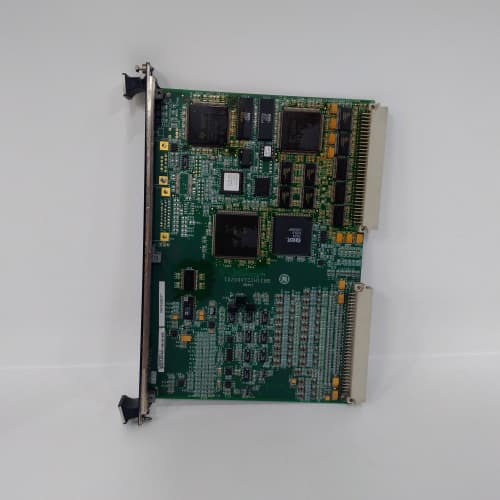
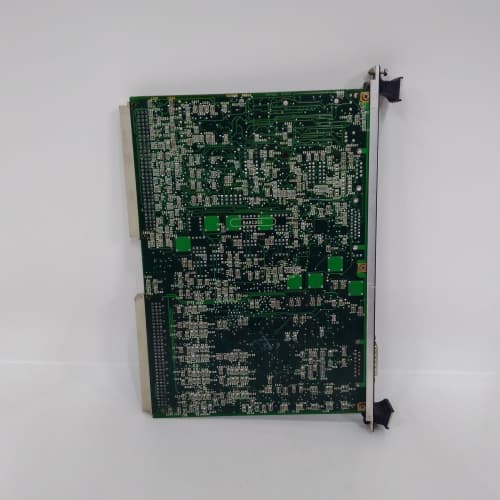
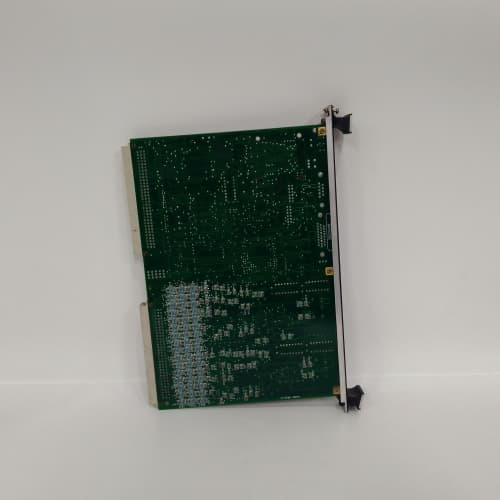
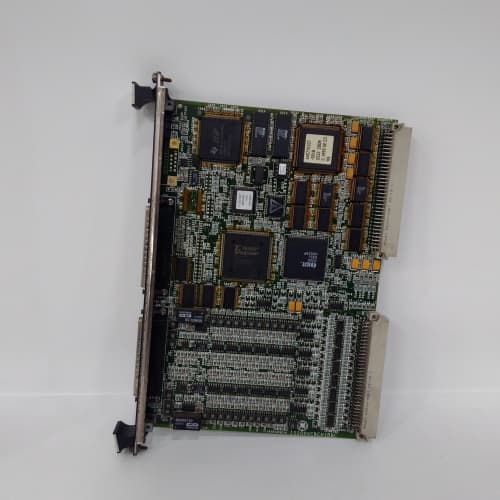
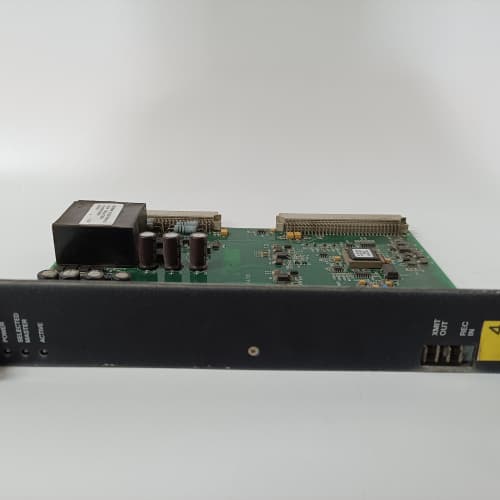
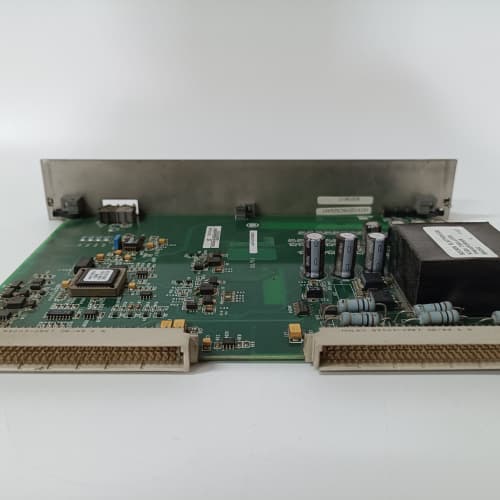
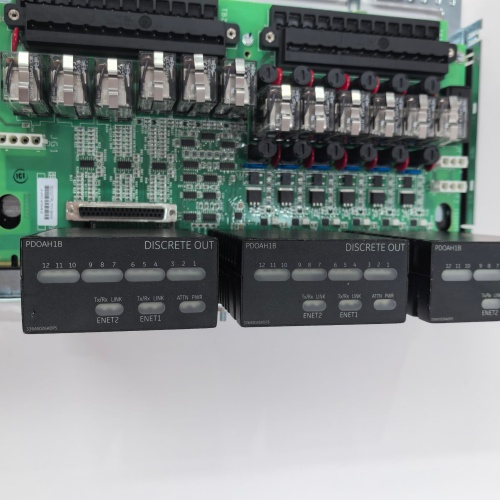
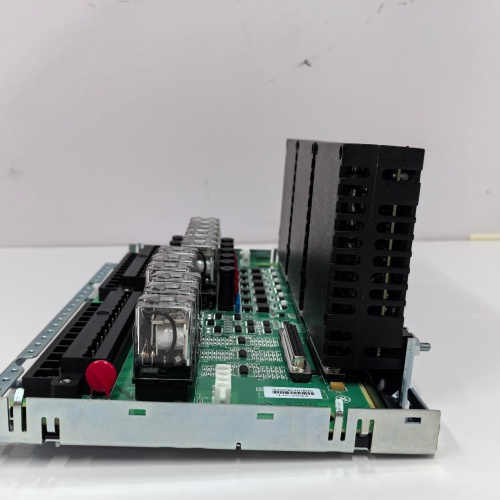
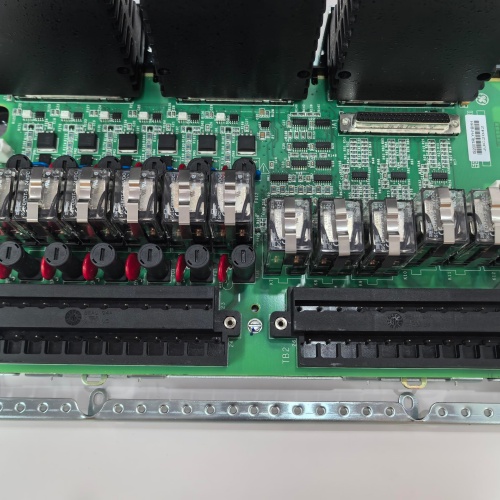
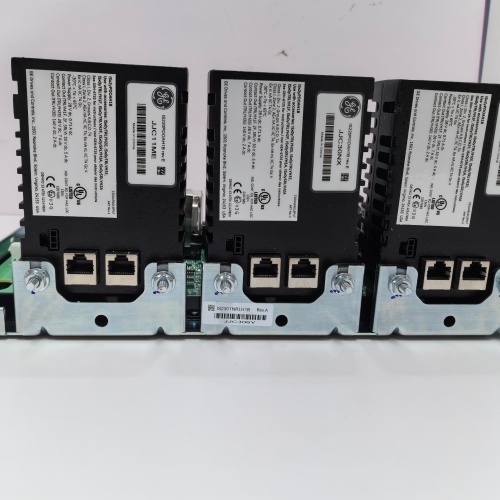
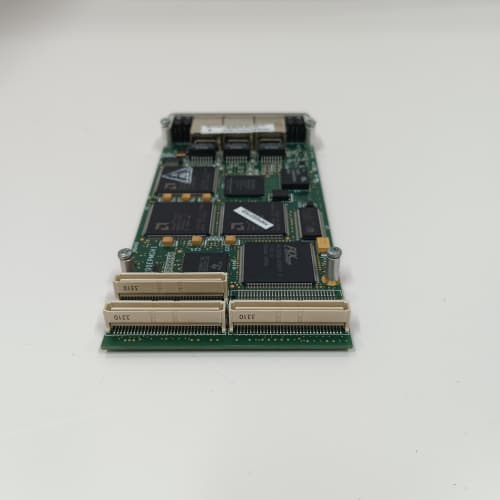
Robust Construction: The ICS TRIPLEX T8461 is built with a rugged enclosure that can withstand harsh environmental conditions, including high temperatures, humidity, dust, and mechanical vibrations.
High – Quality Components: It uses high – quality electronic components that are selected for their reliability and long – term performance. These components are tested rigorously to ensure they can operate under extreme conditions.
Redundancy and Fault – Detection Mechanisms: The TMR architecture and built – in fault – detection mechanisms ensure that the module can continue to operate even in the presence of faults. This high level of reliability is crucial for safety – critical applications.
6. Real – World Examples
Offshore Oil Platform: On an offshore oil platform, the ICS TRIPLEX T8461 is used to control the fire and gas detection system. The digital inputs are connected to a network of gas sensors and smoke detectors installed throughout the platform. If a gas leak or fire is detected, the module can quickly activate the emergency shutdown system, close the valves to isolate the affected area, and trigger the alarm system. The TMR architecture ensures that the system can continue to function even if one of the channels fails due to the harsh offshore environment.
Nuclear Power Plant: In a nuclear power plant, the ICS TRIPLEX T8461 is used for reactor protection and control. It monitors critical parameters such as reactor temperature, pressure, and neutron flux. If any of these parameters exceed the safe limits, the module can initiate an emergency shutdown procedure to prevent a nuclear accident. The high reliability and fault – tolerance of the ICS TRIPLEX T8461 are essential for the safe operation of the nuclear power plant.
Weight: The MVME – 147A weighs approximately 1.2 kg. Its weight is manageable for installation and maintenance, especially when it needs to be installed in a rack – mounted system.
Dimensions: It has dimensions of around 200 mm in length, 160 mm in width, and 40 mm in height. These compact dimensions allow it to be easily installed in standard VMEbus racks, which are commonly used in industrial and military applications.
4. Features
Compact Design: The small form factor of the MVME – 147A makes it suitable for applications where space is limited. It can be easily integrated into existing systems without taking up excessive space.
Versatile I/O Interfaces: The multiple I/O interfaces provide flexibility in connecting to different types of devices and systems. This allows for seamless integration into various industrial, military, and test – measurement applications.
Real – Time Processing: The Motorola 68020 processor enables real – time processing of data, which is crucial for applications that require immediate response to changing conditions, such as control systems and monitoring systems.
5. Stability and Reliability
Robust Construction: The MVME – 147A is built with a durable housing that can withstand harsh environmental conditions, including high temperatures, humidity, dust, and mechanical vibrations.
Quality Components: It uses high – quality electronic components that are selected for their reliability and long – term performance. These components are tested rigorously to ensure they can operate under extreme conditions.
Redundancy Options: Although not always standard, in some critical applications, redundancy options can be implemented. For example, redundant power supplies and communication paths can be set up to ensure continuous operation in case of a component failure.
Weight: The ATS48C59Q weighs approximately 10 kg. Its weight is relatively manageable for installation and handling, especially when considering its medium – sized power capacity.
Dimensions: It has dimensions of around 300 mm in height, 250 mm in width, and 200 mm in depth. These dimensions allow it to be easily installed in standard industrial control cabinets or on motor control panels.
4. Features
Easy Configuration: The drive comes with an intuitive user interface, which can be a keypad or a local display. This allows for easy configuration of parameters such as motor ratings, speed setpoints, and protection thresholds. The user – friendly interface reduces the setup time and simplifies the commissioning process.
Energy Saving: Through its variable – frequency drive technology, the ATS48C59Q can significantly reduce energy consumption. By adjusting the motor speed to match the actual load requirements, it avoids the inefficiencies associated with running motors at a fixed speed.
Soft Start and Stop: It provides soft – start and soft – stop functions. This means that the motor starts and stops gradually, reducing the mechanical stress on the motor and the connected equipment. Soft – start also helps to avoid inrush currents, which can cause voltage dips in the power supply system.
5. Stability and Reliability
Robust Construction: The ATS48C59Q is built with a durable housing that can withstand the harsh conditions of industrial environments, including dust, moisture, and temperature variations.
Quality Components: It uses high – quality electronic components that are selected for their reliability and long – term performance. These components are tested thoroughly to ensure they can operate under different environmental conditions.
Built – in Diagnostic Functions: The drive has built – in diagnostic functions that can detect faults and display error codes. This helps in quick troubleshooting and maintenance, reducing the downtime of the system.
Industrial Automation: In manufacturing plants, the MVME162 – 213 is used for controlling and monitoring industrial processes. For example, in a paper – making plant, it can control the operation of the paper – making machine, monitor the quality parameters such as paper thickness and moisture content, and adjust the process parameters accordingly.
Transportation: In railway systems, it can be used for train control and monitoring. It can receive data from sensors on the train, such as speed sensors and brake sensors, and send control signals to the train’s actuators to ensure safe and efficient operation.
Power Generation: In power plants, the MVME162 – 213 can be used for controlling and protecting power generation equipment. It can monitor the electrical parameters of generators, such as voltage, current, and frequency, and take appropriate actions in case of faults, such as tripping circuit breakers.
3. Weight and Dimensions
Weight: The MVME162 – 213 weighs approximately 1.5 kg. Its weight is manageable for installation and maintenance, especially when it needs to be installed in a rack – mounted system.
Dimensions: It has dimensions of around 220 mm in length, 160 mm in width, and 40 mm in height. These compact dimensions allow it to be easily installed in standard 19 – inch racks, which are commonly used in industrial and data – center environments.
4. Features
Compact Design: The small form factor of the MVME162 – 213 makes it suitable for applications where space is limited. It can be easily integrated into existing control systems without taking up excessive space.
Versatile I/O Interfaces: The multiple I/O interfaces provide flexibility in connecting to different types of devices and systems. This allows for seamless integration into various industrial and embedded applications.
Software Compatibility: It supports a range of operating systems and software development tools, making it easy for developers to write and deploy applications. Common operating systems include VxWorks and Linux.
5. Stability and Reliability
Robust Construction: The MVME162 – 213 is built with a durable housing that can withstand harsh industrial environments, including dust, moisture, and mechanical vibrations.
Quality Components: It uses high – quality electronic components that are selected for their reliability and long – term performance. These components are tested rigorously to ensure they can operate under extreme conditions.
Redundancy Options: Although not always standard, in some critical applications, redundancy options can be implemented. For example, redundant power supplies and communication paths can be set up to ensure continuous operation in case of a component failure.
Weight: The MR – J2S – 22KB weighs approximately 6 kg. Its weight is relatively manageable, which is beneficial for installation and maintenance, especially when the drive needs to be installed in a confined space.
Dimensions: It has dimensions of around 230 mm in height, 180 mm in width, and 250 mm in depth. These compact dimensions allow it to be easily installed in standard industrial control cabinets or on machinery frames.
4. Features
High – Precision Control: The drive offers high – precision control of the servo motor, with a positioning accuracy of up to ±0.01°. This high level of precision is crucial for applications that require accurate motion control, such as in the manufacturing of precision components.
Fast Response Time: It has a fast response time, which enables the servo motor to quickly adjust its speed and position in response to changes in the control commands. This is important for applications that involve dynamic motion, such as in robotic operations.
Built – in Protection Functions: The MR – J2S – 22KB is equipped with various built – in protection functions, including over – current protection, over – voltage protection, and over – temperature protection. These functions help to protect the drive and the servo motor from damage caused by abnormal operating conditions, ensuring the reliability and longevity of the system.
5. Stability and Reliability
Robust Construction: The drive is built with a robust housing that can withstand the rigors of industrial environments, including dust, moisture, and mechanical vibrations.
Quality Components: It uses high – quality electronic components that are selected for their reliability and long – term performance. These components are tested thoroughly to ensure they can operate under different environmental conditions.
Proven Technology: The MR – J2S – 22KB is based on proven servo drive technology, which has been widely used in industrial applications for many years. This technology has been continuously improved and optimized, ensuring the stability and reliability of the drive.
Oil and Gas Industry: In oil refineries and gas processing plants, the TRICONEX 3721 is used for safety – critical control systems. For example, it can control the emergency shutdown valves (ESD) in case of a gas leak or other hazardous situations. The digital inputs can receive signals from gas detectors and pressure sensors, and the digital outputs can activate the ESD valves to isolate the affected area.
Power Generation: In power plants, it is used for turbine control and protection. The module can monitor various parameters such as turbine speed, temperature, and vibration. If any of these parameters exceed the safe limits, the module can initiate an emergency shutdown to prevent damage to the turbine and other equipment.
Chemical Industry: In chemical manufacturing facilities, the TRICONEX 3721 is employed for process safety management. It can control the flow of chemicals in pipelines, monitor the reaction conditions in reactors, and ensure the safety of the entire production process.
3. Weight and Dimensions
Weight: The TRICONEX 3721 weighs approximately 3 kg. Its weight is designed to be manageable for installation and maintenance while still housing high – quality components and a robust enclosure.
Dimensions: It has dimensions of around 250 mm in length, 200 mm in width, and 150 mm in height. These dimensions allow it to be installed in standard industrial control cabinets or racks.
4. Features
Triple Modular Redundancy (TMR): One of the key features of the TRICONEX 3721 is its TMR architecture. It has three independent channels that perform the same control and monitoring functions simultaneously. The outputs of these channels are then voted on, and the majority result is used. This redundancy significantly enhances the reliability and safety of the system, as it can tolerate single – channel failures without affecting the overall operation.
Fault – Tolerant Design: The module is designed to be fault – tolerant. It can detect internal faults in real – time and take appropriate actions, such as isolating the faulty component or channel. This ensures continuous and reliable operation in harsh industrial environments.
Easy Configuration and Programming: It comes with user – friendly configuration and programming tools. Engineers can easily set up the input/output functions, communication parameters, and control logic using these tools, reducing the development and commissioning time.
Weight: The IC695CMM004 weighs approximately 0.8 kg. Its relatively light weight makes it easy to install and handle during the setup and maintenance processes.
Dimensions: It has compact dimensions, typically around 180 mm in length, 120 mm in width, and 50 mm in height. These dimensions allow it to be easily installed in control cabinets or on DIN rails in industrial and building automation environments.
4. Features
Multiple Communication Options: The combination of Ethernet and serial ports provides flexibility in connecting to different types of devices. This allows users to integrate legacy equipment with modern network – based systems, expanding the scope of application.
High – Speed Data Transfer: The high – speed Ethernet communication and efficient serial communication capabilities ensure timely data exchange, which is crucial for real – time control and monitoring in industrial applications.
Easy Configuration: The module can be easily configured using software tools. Users can set up communication parameters, such as IP addresses, baud rates, and communication protocols, according to their specific requirements.
5. Stability and Reliability
Robust Construction: The IC695CMM004 is built with a durable housing that can withstand harsh industrial environments, including dust, moisture, and mechanical vibrations.
Quality Components: It uses high – quality electronic components that are selected for their reliability and long – term performance. This helps to ensure stable operation over an extended period.
Error Detection and Correction: The communication protocols supported by the module have built – in error detection and correction mechanisms. This helps to ensure the accuracy and integrity of the data during transmission, reducing the risk of communication failures.
Industrial Automation: In manufacturing plants, the IC695CPL410 is used for controlling various production processes. For example, in a food – packaging plant, it can control the operation of conveyor belts, filling machines, and sealing machines. It receives signals from sensors that detect the position of products, the level of filling materials, and the status of the machines. Based on these signals, it executes the control logic to ensure the smooth and efficient operation of the packaging process.
Process Control: In chemical and pharmaceutical industries, the module is used for process control applications. It can monitor and control parameters such as temperature, pressure, and flow rate in chemical reactors and pharmaceutical production lines. By adjusting the control signals to valves, pumps, and heaters, it maintains the process within the desired operating range.
Building Automation: In commercial buildings, the IC695CPL410 can be used for building automation systems. It can control the lighting, heating, ventilation, and air – conditioning (HVAC) systems. For instance, it can adjust the lighting intensity based on the ambient light level detected by sensors and control the HVAC system according to the occupancy and temperature requirements in different areas of the building.
3. Weight and Dimensions
Weight: The IC695CPL410 weighs approximately 1.5 kg. Its weight is manageable for installation and maintenance, especially when it needs to be installed in control cabinets or on racks.
Dimensions: It has dimensions of around 250 mm in length, 180 mm in width, and 80 mm in height. These dimensions allow it to fit into standard industrial control cabinets and be easily integrated into existing control systems.
4. Features
High – Performance Processing: The powerful processor enables fast execution of control programs, ensuring real – time response in industrial control applications. This is crucial for applications where timely decision – making and control actions are required.
Flexible Communication: The multiple communication interfaces provide flexibility in connecting to different types of devices and systems. This allows for seamless integration into various industrial networks and enables data exchange with other components of the control system.
User – Friendly Programming: The module supports common programming languages such as ladder logic, function block diagrams, and structured text. This makes it easy for engineers and technicians to develop, modify, and debug control programs.
Weight: The ADV151 – E50/B5S00 weighs approximately 0.6 kg. Its relatively light weight makes it easy to install and handle during the setup and maintenance processes.
Dimensions: It has compact dimensions, typically around 130 mm in length, 90 mm in width, and 40 mm in height. These dimensions allow it to be easily installed in control cabinets or on DIN rails in industrial and building automation environments.
4. Features
Compact Design: The small form factor of the ADV151 – E50/B5S00 makes it suitable for applications where space is limited. It can be easily integrated into existing control systems without taking up excessive space.
Flexible Configuration: The module can be configured using software tools. Users can set up the input/output functions, communication parameters, and alarm thresholds according to their specific requirements. This flexibility allows for customization in different applications.
CANopen Compatibility: The support for the CANopen communication protocol provides seamless integration with other CANopen – compliant devices, enabling the creation of complex and scalable industrial control networks.
5. Stability and Reliability
Robust Construction: The ADV151 – E50/B5S00 is built with a durable housing that can withstand harsh industrial and commercial environments, including dust, moisture, and mechanical vibrations.
Quality Components: It uses high – quality electronic components that are selected for their reliability and long – term performance. This helps to ensure stable operation over an extended period.
Electrical Protection: The module is equipped with basic electrical protection features, such as over – voltage and over – current protection, to prevent damage from electrical faults.
Weight: The FBM230 P0926GU weighs approximately 0.8 kg. Its relatively light weight makes it easy to install and handle during the setup and maintenance processes.
Dimensions: It has compact dimensions, typically around 150 mm in length, 100 mm in width, and 50 mm in height. These dimensions allow it to be easily installed in control cabinets or on DIN rails in industrial environments.
4. Features
Compact Design: The small form factor of the FBM230 P0926GU makes it suitable for applications where space is limited. It can be easily integrated into existing control systems without taking up excessive space.
Flexible Configuration: The module can be configured using software tools. Users can set up the input/output functions, communication parameters, and alarm thresholds according to their specific requirements. This flexibility allows for customization in different industrial applications.
Diagnostic Functions: It is equipped with built – in diagnostic functions that can detect faults in the input/output circuits and the communication interface. The diagnostic information can be displayed on a human – machine interface (HMI) or sent to a PLC for further analysis, facilitating quick troubleshooting.
5. Stability and Reliability
Robust Construction: The FBM230 P0926GU is built with a durable housing that can withstand harsh industrial environments, including dust, moisture, and mechanical vibrations.
Quality Components: It uses high – quality electronic components that are selected for their reliability and long – term performance. This helps to ensure stable operation over an extended period.
Redundancy Support: Although not always standard, in some critical applications, redundancy options can be implemented. For example, redundant communication paths can be set up to ensure continuous data transfer in case of a communication failure.
Automotive Testing: In the automotive industry, the PXIE – 8861 is used for comprehensive vehicle testing. It can control and monitor multiple test equipment simultaneously, such as dynamometers, emission testing devices, and electrical system testers. The high – performance processor can handle the complex algorithms required for analyzing vehicle performance data, such as engine efficiency, fuel consumption, and electrical system stability.
Aerospace and Defense: In aerospace and defense applications, the PXIE – 8861 is employed for testing avionics systems, radar systems, and communication equipment. It can simulate different operating conditions and scenarios, and quickly process the large amounts of data generated during testing to ensure the reliability and performance of these critical systems.
Semiconductor Testing: In semiconductor manufacturing, the PXIE – 8861 is used for testing semiconductor devices. It can control the test equipment, collect and analyze the test data, and determine the quality and performance of the semiconductor chips. The high – speed data processing capabilities are essential for handling the large number of test points and complex test patterns.
3. Weight and Dimensions
Weight: The PXIE – 8861 weighs approximately 2.5 kg. Its weight is designed to be manageable for installation and maintenance within the PXI Express chassis.
Dimensions: It is designed to fit into a standard PXI Express chassis. The dimensions are typically around 260 mm in length, 210 mm in width, and 80 mm in height, which comply with the PXI Express form – factor specifications.
4. Features
High – Performance Computing: The powerful Intel Xeon processor and large amount of memory enable the PXIE – 8861 to handle complex computational tasks in real – time. This is crucial for applications that require fast data processing, such as signal processing, image processing, and algorithm execution.
Flexible Configuration: It can be easily configured to meet different application requirements. Users can adjust the memory, storage, and communication settings according to their specific needs.
Scalability: As a part of the PXI Express platform, the PXIE – 8861 offers scalability. It can be integrated with other PXI Express modules to expand the functionality of the test system, allowing for the construction of more comprehensive and customized test solutions.
Automotive Testing: In the automotive industry, the PXIE – 8523 is used for testing various automotive components and systems. For example, it can be used to test the electronic control units (ECUs) of vehicles. The digital inputs can monitor the status signals from the ECU, while the analog inputs can measure parameters such as voltage, current, and temperature. The analog outputs can be used to simulate different operating conditions for the ECU.
Aerospace and Defense: In aerospace and defense applications, the PXIE – 8523 is used for testing and validating avionics systems, radar systems, and communication equipment. It can generate and measure complex signals, and its high – speed data transfer capabilities allow for real – time monitoring and analysis of the system performance.
Industrial Automation: In industrial automation, the module can be used for process control and monitoring. It can interface with sensors and actuators in a manufacturing process, collecting data from the sensors and sending control signals to the actuators to ensure the smooth operation of the process.
3. Weight and Dimensions
Weight: The PXIE – 8523 weighs approximately 1.5 kg. Its relatively light weight makes it easy to install and handle within the PXI Express chassis.
Dimensions: It is designed to fit into a standard PXI Express chassis. The dimensions are typically around 200 mm in length, 160 mm in width, and 80 mm in height, which are in line with the PXI Express form factor specifications.
4. Features
High – Speed Data Transfer: The PXI Express interface provides high – speed data transfer capabilities, which are essential for applications that require real – time data acquisition and processing.
Flexible I/O Configuration: The configurable digital and analog I/O channels allow for customization according to the specific requirements of different applications. This flexibility makes the module suitable for a wide range of test and measurement tasks.
Modular Design: As a PXI Express module, it follows the modular design concept of the PXI Express platform. This allows for easy integration with other PXI Express modules, enabling the construction of complex test and measurement systems.