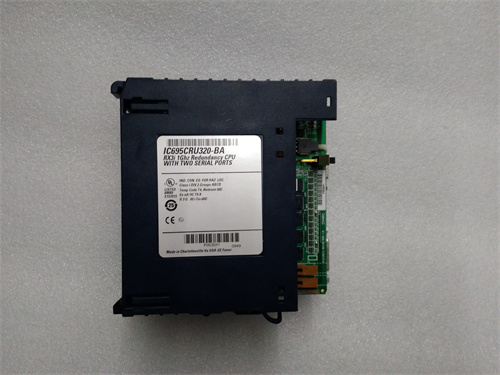
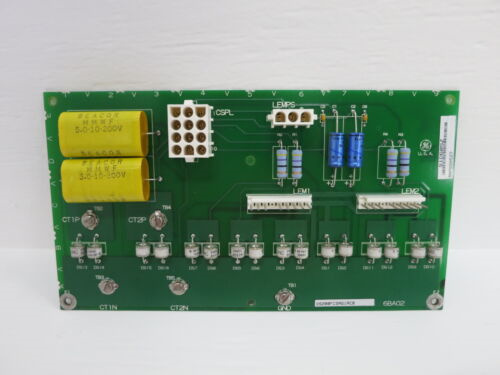
Processor: It’s equipped with a 1Ghz Celeron M processor with 64MB of RAM.
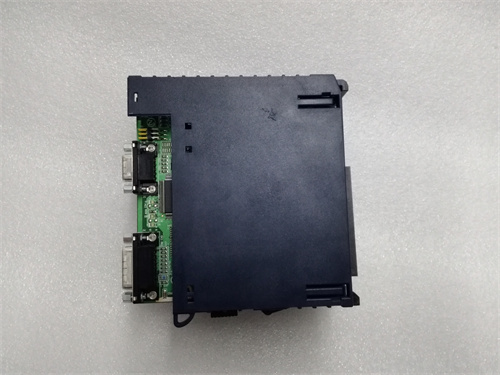
Communication interface: Supports two serial communication ports, including RS232 and RS485 communication standards. In addition, there are Ethernet ports and USB ports.
Battery backup: Up to 64MB of battery backup RAM is supported, ensuring data security and integrity in the event of a power failure.
Size and weight:
Weight: Depending on the data, its weight may be around 1.26KG or close to 0.9kg.
Dimensions: Its overall dimensions are 71mm x 138mm x 131mm.
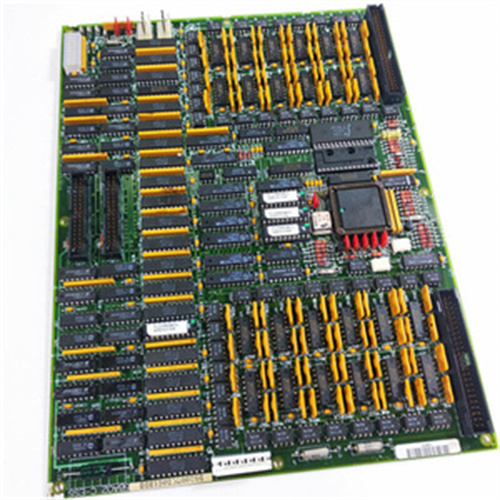
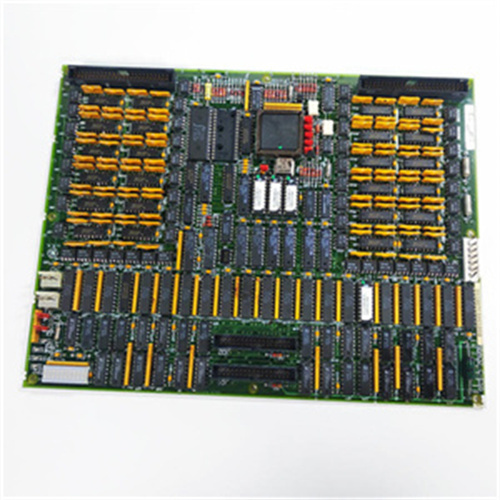
Type: IS200VSVOH1B is a power module or servo control board. The type and application scenario may vary according to the configuration and use.
Channels and outputs: With multiple channels and discrete output channels, the voltage and current of each channel can be independently controlled.
Programming configuration: With the characteristics of programmable configuration, convenient for users to carry out flexible control and application according to actual needs.
Wavelength range: 190~1100 nm.
Wavelength accuracy: ±1nm (within 200nm~900nm band).
Wavelength resolution: 0.1nm.
Bandwidth: 2nm.
Photometric range: ±3 ABS.
Stray light: 220nm > 3.3ABS.
Reading mode: A reading mode with transmittance, absorbance, and concentration.
Communication interface: includes USB1.1, USB interface, and interface for connecting computers, printers, and external keyboards.
Power supply: 200~240V, 50/60 Hz.
Input type: The module can monitor up to 12 RTD (Resistance Temperature Detector) inputs for stator, bearing, environmental or other temperature monitoring.
RTD Type: Each RTD type can be field-programmed to be 100Ω platinum (DIN 43760), 100Ω nickel, 120Ω nickel or 10Ω copper.
Specifications:
RTD circuit compensation: When using a three-wire RTD, the module automatically compensates the wire resistance.
Lead resistance: The lead resistance should not exceed 25Ω (platinum/nickel type RTD) or 3Ω (copper type RTD) per lead.
Input voltage: 24V DC.
Maximum current: 1A.
Output voltage: 0-10V DC (some versions).
Output current: 0-20mA (some versions).
Specifications:
Operating temperature: Usually -40°C to +70°C, but some versions may reach -40°C to +85°C.
System storage capacity: 32MB.
Communication protocols: Support Modbus, Profibus, DeviceNet, ControlNet, Ethernet/IP and other communication protocols.
Channel status data: The reference address and start address parameters are used to configure the read and reference of channel status data. The number of channel states can be 8 or 16.
Output range: including 0 to 10V, -10 to +10V, 4 to 20mA and 0 to 20mA, users can choose the appropriate output range according to the application needs.
Active channels: indicates the number of channels that the PLC CPU will scan, which is to ensure the effective operation of the system and the accuracy of data acquisition.
Stop mode Output state: When a module switches from RUN mode to STOP mode, it can be configured to remain in the last state or default to zero.
Voltage: The rated voltage is 380v, the voltage variation range is 380v±20%.
Current: It has the characteristics of three-phase three-wire voltage input, three-phase current balance, AC overvoltage and undervoltage protection.
Output: The output rating is 7A/220vG07H and the voltage regulation range is 180v-286v.
Accuracy: the accuracy of stable voltage and stable current are ≤0.5%, ripple coefficient ≤0.5%.
Frequency: The frequency range is 50hz±10%.
Conversion efficiency: At full load output, the conversion efficiency reaches ≥95%.
Size and weight:
Weight: Some data indicate that its weight is 2KG.
Switch Settings: When the switch is set to 8 o ‘clock, only the first 8 toggle switches in front of the input simulator can be used. Each module can choose an 8 – or 16-point operation mode.
Response time: Off response time is 20 ms, on response time is 30 ms.
Backplane power consumption: On a 5-volt bus, the internal power consumption is 120mA when all inputs are turned on.
Size and weight:
Dimensions: The board is 11.25 inches long and 3 inches high and is designed for mounting in a rack cabinet.
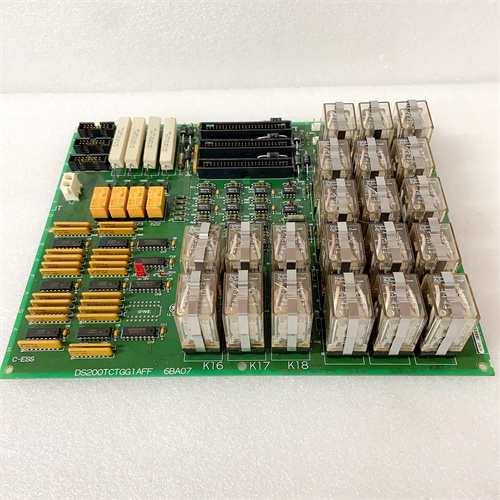
Model: DS200TBQBG1ACB is an LST TMR reheat card manufactured and designed by GE for the Mark V series of steam turbine control systems.
Frequency: 13.560MHz.
Transmission power: 500w.
Reflected power (at power) : <3w. Load current: 10ARMS. Load voltage: 4000VRMS. Transmission efficiency: >90%.
Load impedance: 50Ω.
Size and weight:
Size: There are two versions, one is 430mm(D)x220mm(W)x130mm(H), the other is 20.4×22.2×3.7cm. This may be due to differences in product versions or different measurement methods.
Weight: 5kg.
Supported functions: Supports triple module redundancy (TMR).
CPU model: With IC697CPM790 CPU.
Memory: Has 1 MB of battery-supported memory, up to 512KB, for user programs.
Discrete input/output points: Support discrete input and output points up to 12K (in simplex mode), or 2048 votes of discrete input and 2048 votes of discrete output (in TMR configuration).
Analog input/output: Capable of handling analog input and output up to 8K (in simplex mode).
Scan rate: up to 0.4 microseconds per Boolean function.
Clock speed: 80486DX2 microprocessor with clock speed of 64 MHz.