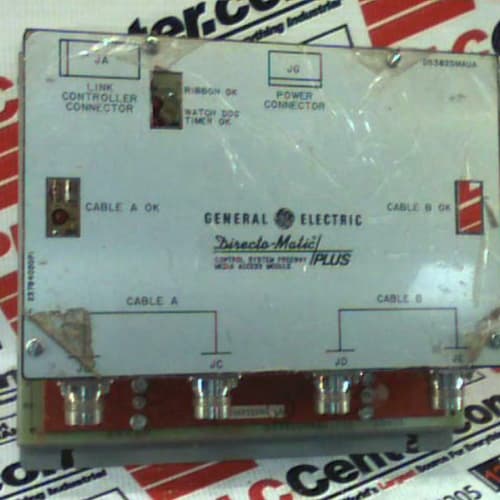
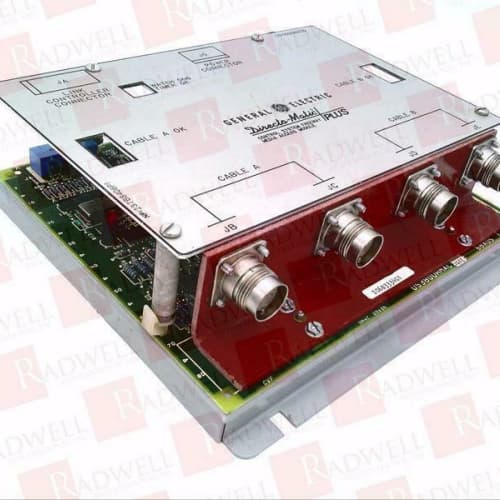
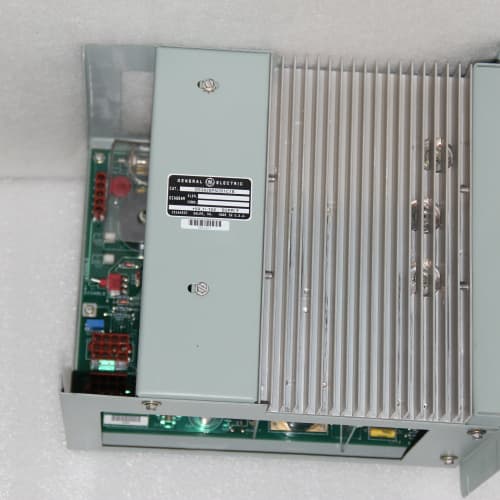
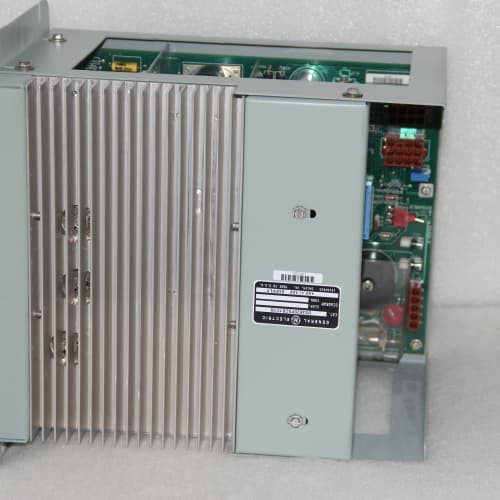
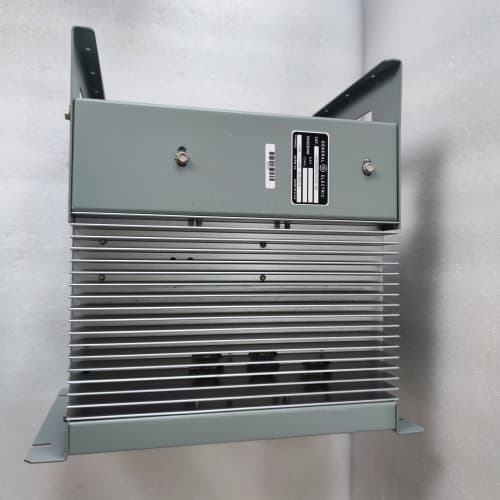
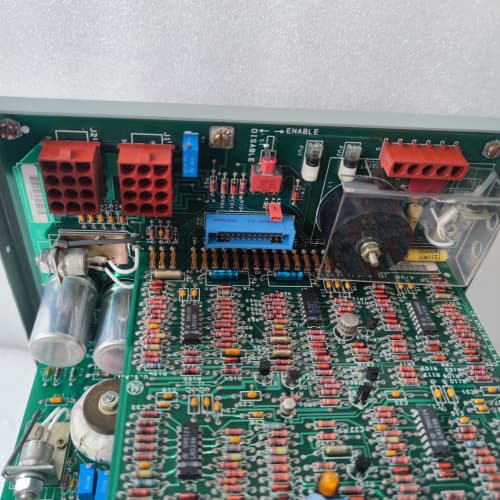
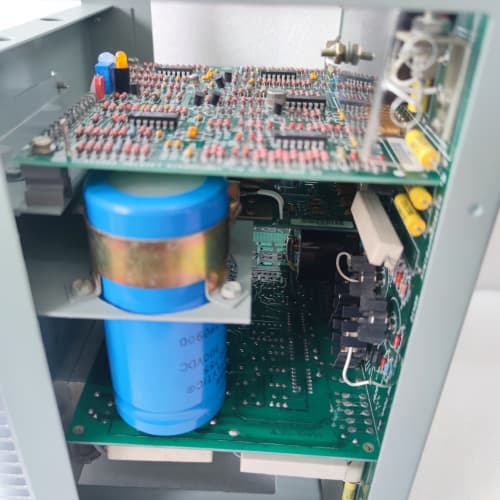
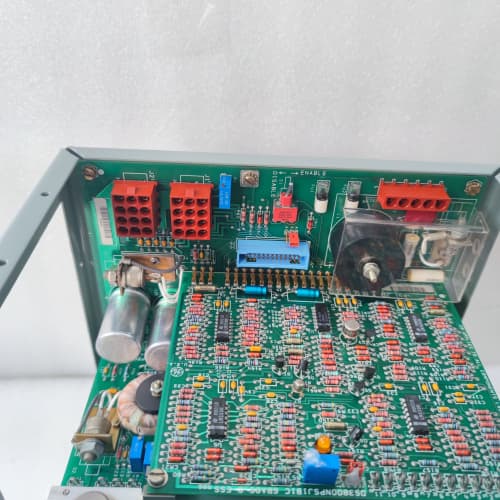
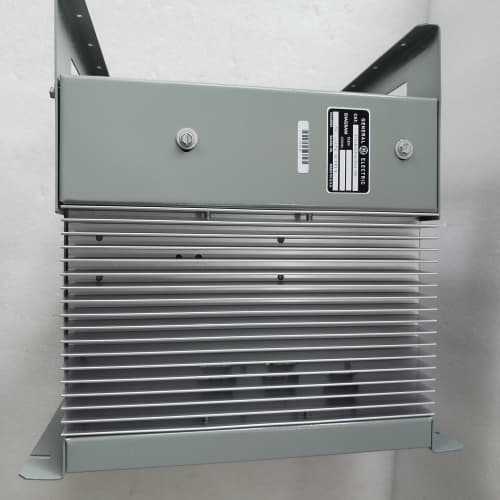
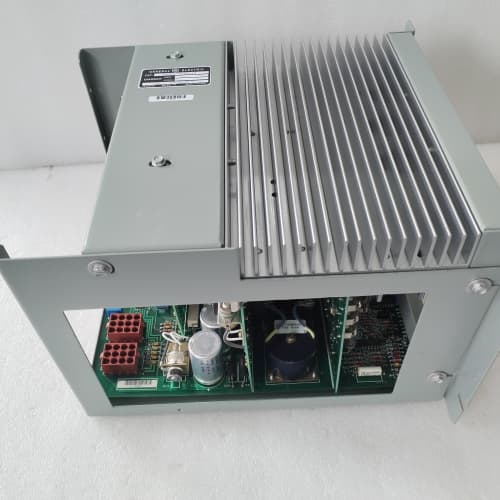
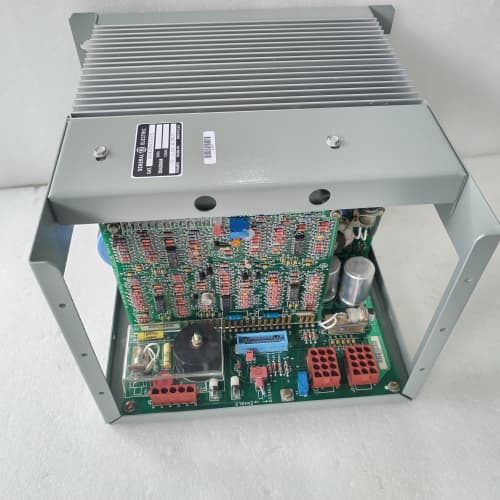
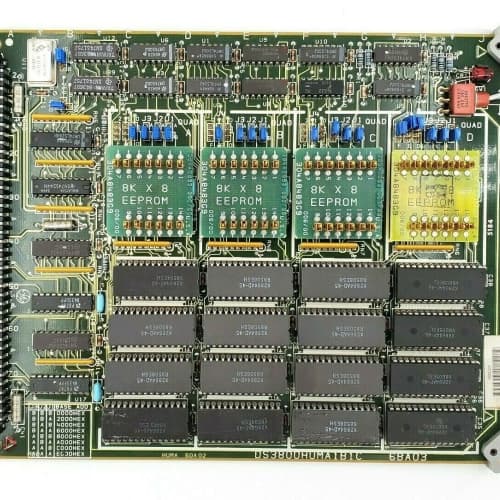
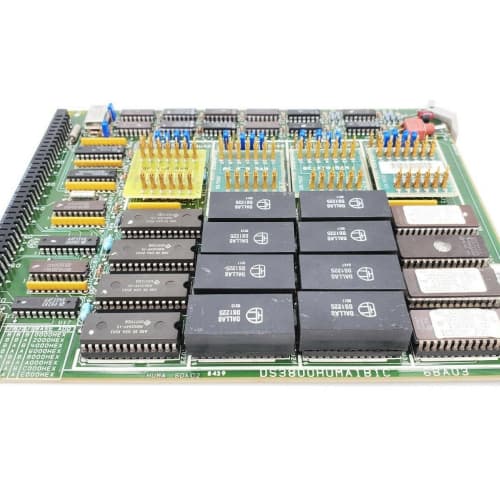
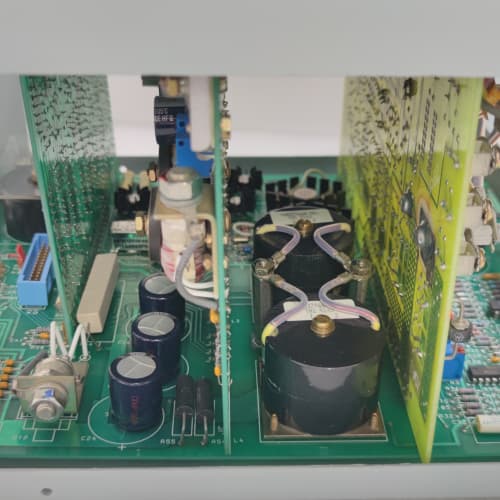
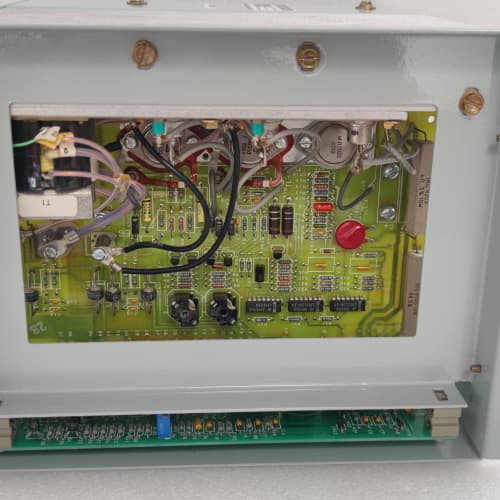
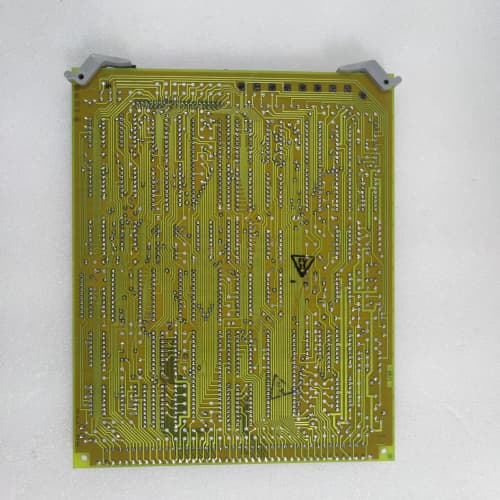
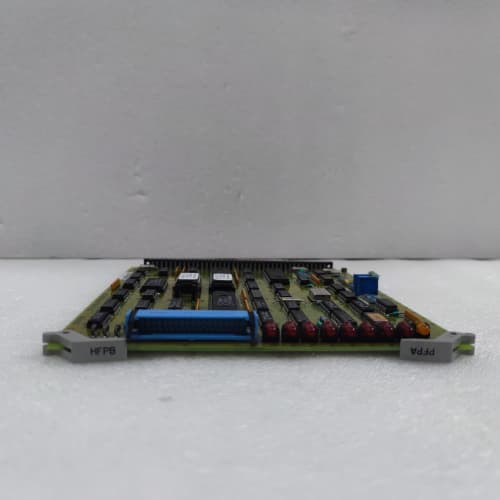
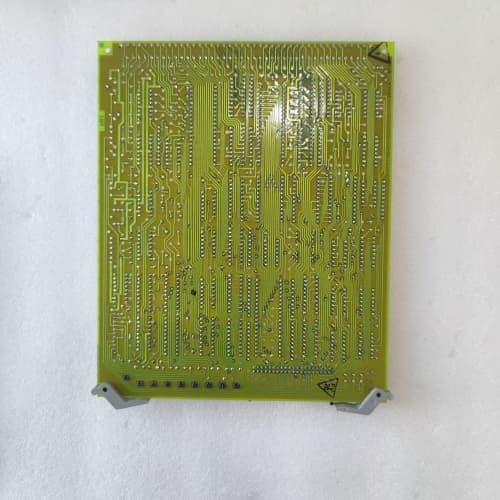
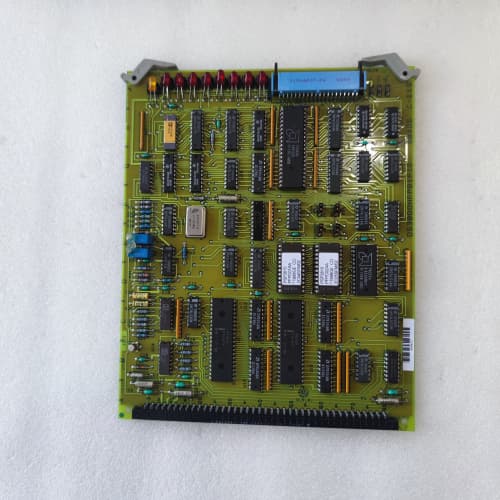
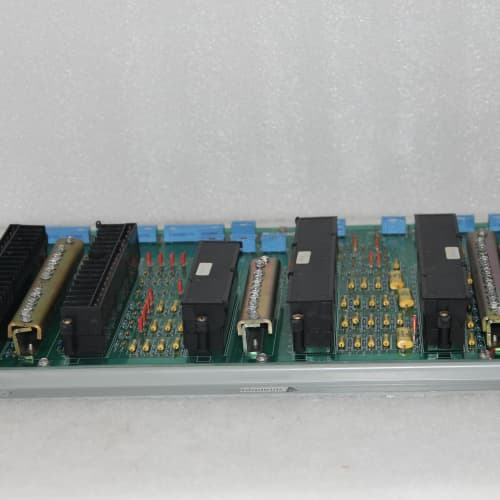
The DS3800NHVN1A1A is the baseline revision of the ultimate flagship Fan/Exhaust Control board in General Electric’s Mark V series, engineered for high-voltage DC applications with a hybrid output configuration. The suffix “1A1A” indicates Revision A firmware with 24-bit ADC (±0.5°C / ±0.3°C accuracy) and standard temperature components (0°C to +60°C). This board provides:
8 mechanical relays (4A @ 125VDC)—the highest relay current in the entire Mark V high-voltage DC lineup
4 solid-state outputs (4A @ 24–48VDC)—the highest solid-state current in the high-voltage lineup, with individual current monitoring
8 thermocouple input channels for temperature monitoring
8 RTD input channels (Pt100, 3-wire) for high-precision temperature monitoring—adding 16 total temperature channels
2 tachometer input channels for fan speed verification
Predictive relay maintenance with contact resistance monitoring
The DS3800NHVN1A1A is the original, unmodified version of the most powerful high-voltage hybrid board, combining the highest relay current (4A @ 125VDC), the highest solid-state current (4A), dual-sensor temperature monitoring (16 total channels), tachometer feedback, 24-bit ADC, and predictive relay maintenance—all in a climate-controlled package.
The DS3800NHVN is the absolute flagship of General Electric’s Mark V series Fan/Exhaust Control boards, engineered for high-voltage DC applications with a hybrid output configuration. The “NHVN” designation indicates a board with:
8 mechanical relays (4A @ 125VDC)—the highest relay current in the entire Mark V high-voltage DC lineup, supporting the most powerful 125VDC exhaust fans
4 solid-state outputs (4A @ 24–48VDC)—the highest solid-state current in the high-voltage lineup, with individual current monitoring
8 thermocouple input channels for temperature monitoring
8 RTD input channels (Pt100, 3-wire) for high-precision temperature monitoring—adding 16 total temperature channels
2 tachometer input channels for fan speed verification
24-bit ADC with ultra-high precision (±0.5°C / ±0.3°C)
Extended operating temperature range (-40°C to +85°C)
5g vibration resistance (MIL-STD-810G)
Predictive relay maintenance with contact resistance monitoring
Predictive thermal modeling (Revision E firmware)
500-event fault log
The DS3800NHVN combines every possible advanced feature: the highest relay current (4A @ 125VDC), the highest solid-state current (4A), dual-sensor temperature monitoring (16 total channels), tachometer feedback, 24-bit ADC, predictive maintenance, predictive thermal modeling, extreme temperature tolerance, and comprehensive fault logging.
The DS3800NHVM1E1D is the absolute pinnacle of General Electric’s Mark V series Fan/Exhaust Control boards, engineered for high-voltage DC applications with a hybrid output configuration. The suffix “1E1D” indicates Revision E firmware with 24-bit ADC (±0.5°C / ±0.3°C accuracy), extended temperature components (-40°C to +85°C), military-grade vibration tolerance (5g RMS), predictive relay maintenance, predictive thermal modeling, and critically—8 thermocouple input channels and 8 RTD input channels for a total of 16 temperature channels (unlike the reduced 12-channel “1E1C” variant). The “1D” suffix also indicates enhanced solid-state auxiliary outputs rated at 4A (vs. 3A) with individual output current monitoring.
This board provides:
8 mechanical relays (3A @ 125VDC)—the highest relay current in the high-voltage DC lineup, with predictive maintenance
4 solid-state outputs (4A @ 24–48VDC)—higher current than the 3A “1C” variant, with individual current monitoring
8 thermocouple input channels for temperature monitoring
8 RTD input channels (Pt100, 3-wire) for high-precision temperature monitoring—adding 16 total temperature channels
2 tachometer input channels for fan speed verification
The DS3800NHVM1E1D represents the ultimate high-voltage hybrid board, combining the highest relay current (3A @ 125VDC), the highest solid-state current (4A), the full 16 temperature channels (8 T/C + 8 RTD), predictive maintenance, predictive thermal modeling, and extreme environmental tolerance (-40°C to +85°C, 5g vibration).
The DS3800NHVM1E1C is a premium revision of General Electric’s Mark V series Fan/Exhaust Control board, engineered for high-voltage DC applications with a hybrid output configuration. The suffix “1E1C” indicates Revision E firmware with 24-bit ADC (±0.5°C / ±0.3°C accuracy), extended temperature components (-40°C to +85°C), military-grade vibration tolerance (5g RMS), predictive relay maintenance, predictive thermal modeling, and—critically— thermocouple input channels reduced to 4 (instead of the standard 8), while retaining 8 RTD input channels for a total of 12 temperature channels.
This board provides:
8 mechanical relays (3A @ 125VDC)—the highest relay current in the high-voltage DC lineup, with predictive maintenance
4 solid-state outputs (3A @ 24–48VDC) for high-current auxiliary fans or alarms
4 thermocouple input channels for temperature monitoring
8 RTD input channels (Pt100, 3-wire) for high-precision temperature monitoring—adding 12 total temperature channels
2 tachometer input channels for fan speed verification
The DS3800NHVM1C1C is a revision of General Electric’s Mark V series Fan/Exhaust Control board, engineered for high-voltage DC applications with a hybrid output configuration. The suffix “1C1C” indicates Revision C firmware with 24-bit ADC (±0.5°C / ±0.3°C accuracy), extended temperature components (-40°C to +75°C), military-grade vibration tolerance (5g RMS), and predictive relay maintenance. Critically, the “1C” suffix also indicates thermocouple input channels reduced to 4 (instead of the standard 8), while retaining 8 RTD input channels for a total of 12 temperature channels.
This board provides:
8 mechanical relays (3A @ 125VDC)—the highest relay current in the high-voltage DC lineup, with predictive maintenance
4 solid-state outputs (3A @ 24–48VDC) for high-current auxiliary fans or alarms
4 thermocouple input channels for temperature monitoring
8 RTD input channels (Pt100, 3-wire) for high-precision temperature monitoring—adding 12 total temperature channels
2 tachometer input channels for fan speed verification
The DS3800NHVM1C1C combines the highest relay current (3A @ 125VDC) with RTD-heavy temperature monitoring, high-current solid-state outputs, tachometer feedback, 24-bit ADC, predictive relay maintenance, and extreme environmental tolerance (-40°C to +75°C, 5g vibration).
The DS3800NHVM1B1B is a revision of General Electric’s Mark V series Fan/Exhaust Control board, engineered for high-voltage DC applications with a hybrid output configuration. The suffix “1B1B” indicates Revision B firmware with 24-bit ADC (±0.5°C / ±0.3°C accuracy), extended temperature components (-20°C to +65°C), and the hybrid + tachometer + RTD architecture. This board provides:
8 mechanical relays (3A @ 125VDC)—the highest relay current in the high-voltage DC lineup
4 solid-state outputs (3A @ 24–48VDC) for high-current auxiliary fans or alarms
8 thermocouple input channels for temperature monitoring
8 RTD input channels (Pt100, 3-wire) for high-precision temperature monitoring—adding 16 total temperature channels
2 tachometer input channels for fan speed verification
The DS3800NHVM1B1B combines the highest relay current (3A @ 125VDC) with dual-sensor temperature monitoring, high-current solid-state outputs, tachometer feedback, 24-bit ADC accuracy, predictive relay maintenance, and an extended temperature range (-20°C to +65°C).
The DS3800NHVM1B1A is a revision of General Electric’s Mark V series Fan/Exhaust Control board, engineered for high-voltage DC applications with a hybrid output configuration. The suffix “1B1A” indicates Revision B firmware with 24-bit ADC (±0.5°C / ±0.3°C accuracy), standard temperature components (0°C to +60°C), and the hybrid + tachometer + RTD architecture. This board provides:
8 mechanical relays (3A @ 125VDC)—the highest relay current in the high-voltage DC lineup
4 solid-state outputs (3A @ 24–48VDC) for high-current auxiliary fans or alarms
8 thermocouple input channels for temperature monitoring
8 RTD input channels (Pt100, 3-wire) for high-precision temperature monitoring—adding 16 total temperature channels
2 tachometer input channels for fan speed verification
The DS3800NHVM1B1A combines the highest relay current (3A @ 125VDC) with dual-sensor temperature monitoring, high-current solid-state outputs, tachometer feedback, and 24-bit ADC accuracy—all in a climate-controlled package.
The DS3800NHVM is a specialized, high-performance Fan/Exhaust Control board from General Electric’s Mark V Speedtronic™ series, engineered for high-voltage DC applications with a hybrid output configuration. The “NHVM” designation indicates a board with:
8 mechanical relays (3A @ 125VDC)—the highest relay current in the high-voltage DC lineup, supporting more powerful 125VDC fans
4 solid-state outputs (3A @ 24–48VDC) for high-current auxiliary fans or alarms
8 thermocouple input channels for temperature monitoring
8 RTD input channels (Pt100, 3-wire) for high-precision temperature monitoring—adding 16 total temperature channels
2 tachometer input channels for fan speed verification
24-bit ADC with ultra-high precision (±0.5°C / ±0.3°C)
Extended operating temperature range (-40°C to +75°C)
Predictive relay maintenance with contact resistance monitoring
The DS3800NHVM is the ultimate high-voltage hybrid board in the Mark V lineup, combining the highest relay current (3A @ 125VDC) with dual-sensor temperature monitoring, high-current solid-state outputs, tachometer feedback, 24-bit ADC, extreme temperature tolerance, and predictive relay maintenance.
The DS3800NHVL1C1C is a premium revision of General Electric’s Mark V series Fan/Exhaust Control board, engineered for high-voltage DC applications with a hybrid output configuration and dual-sensor temperature monitoring. The suffix “1C1C” indicates Revision C firmware with 24-bit ADC (±0.5°C / ±0.3°C accuracy), extended temperature components (-40°C to +75°C), military-grade vibration tolerance (5g RMS), and predictive relay maintenance. Critically, the “1C” suffix also indicates thermocouple input channels reduced to 4 (instead of the standard 8), while retaining 8 RTD input channels for a total of 12 temperature channels.
This board provides:
8 mechanical relays (2A @ 125VDC) for high-voltage exhaust fans
4 solid-state outputs (3A @ 24–48VDC) for high-current auxiliary fans or alarms
4 thermocouple input channels for temperature monitoring
8 RTD input channels (Pt100, 3-wire) for high-precision temperature monitoring—adding 12 total temperature channels
2 tachometer input channels for fan speed verification
The DS3800NHVL1C1C is optimized for fan-dense high-voltage cabinets where RTD sensors are preferred over thermocouples, or where fewer T/C points are required. The reduced thermocouple count (4 channels) reallocates hardware resources to enhance RTD signal conditioning and noise filtering.
The DS3800NHVL is a specialized, high-performance Fan/Exhaust Control board from General Electric’s Mark V Speedtronic™ series, engineered for high-voltage DC applications with a hybrid output configuration and dual-sensor temperature monitoring. The “NHVL” designation indicates a board with:
8 mechanical relays (2A @ 125VDC) for high-voltage exhaust fans
4 solid-state outputs (3A @ 24–48VDC) for high-current auxiliary fans or alarms
8 thermocouple input channels for temperature monitoring
8 RTD input channels (Pt100, 3-wire) for high-precision temperature monitoring—adding 16 total temperature channels
2 tachometer input channels for fan speed verification
24-bit ADC with ultra-high precision (±0.5°C / ±0.3°C)
Extended operating temperature range (-40°C to +75°C)
Predictive relay maintenance with contact resistance monitoring
The DS3800NHVL is the ultimate high-voltage hybrid board in the Mark V lineup, combining every possible advanced feature: dual-sensor temperature monitoring, high-current outputs (3A SS, 2A @ 125VDC relays), tachometer feedback, 24-bit ADC, extreme temperature tolerance, and predictive relay maintenance.
The DS3800NHVK1A1A is a baseline revision of General Electric’s Mark V series Fan/Exhaust Control board, engineered for high-voltage DC applications with a hybrid output configuration and dual-sensor temperature monitoring. The suffix “1A1A” indicates Revision A firmware with 16-bit ADC (±1°C / ±0.5°C accuracy), standard temperature components (0°C to +60°C), and the hybrid + tachometer + RTD architecture. This board provides:
8 mechanical relays (2A @ 125VDC) for high-voltage exhaust fans
4 solid-state outputs (3A @ 24–48VDC) for high-current auxiliary fans or alarms
8 thermocouple input channels for temperature monitoring
8 RTD input channels (Pt100, 3-wire) for high-precision temperature monitoring—adding 16 total temperature channels
2 tachometer input channels for fan speed verification
The DS3800NHVK1A1A is the most capable high-voltage hybrid board in the Mark V lineup, offering dual-sensor temperature monitoring (T/C + RTD), high-current outputs (3A SS, 2A @ 125VDC relays), and tachometer feedback—all on a single board.
The DS3800NHVK is a specialized, high-performance Fan/Exhaust Control board from General Electric’s Mark V Speedtronic™ series, engineered for high-voltage DC applications with a hybrid output configuration. The “NHVK” designation indicates a board with:
8 mechanical relays (2A @ 125VDC) for high-voltage exhaust fans
4 solid-state outputs (3A @ 24–48VDC) for high-current auxiliary fans or alarms
8 thermocouple input channels for temperature monitoring
8 RTD input channels (Pt100, 3-wire) for high-precision temperature monitoring—adding 16 total temperature channels
2 tachometer input channels for fan speed verification
The DS3800NHVK is distinguished from the “NHVJ” series by the addition of 8 RTD input channels, enabling dual-sensor temperature monitoring (thermocouple + RTD) for applications requiring redundant or mixed sensor types.