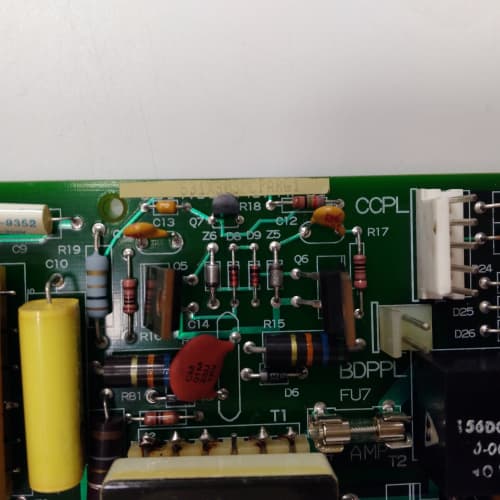
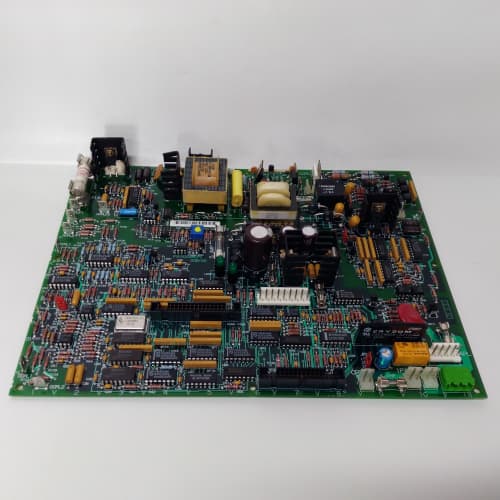
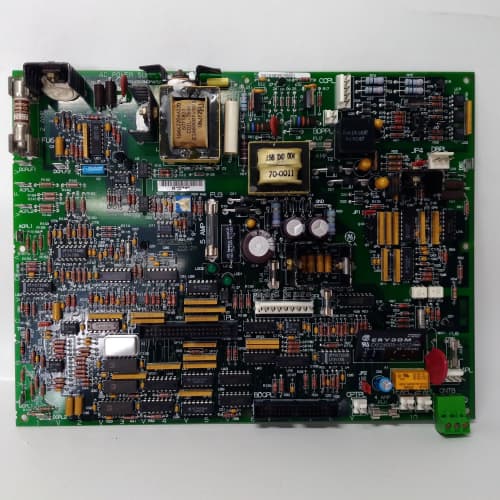
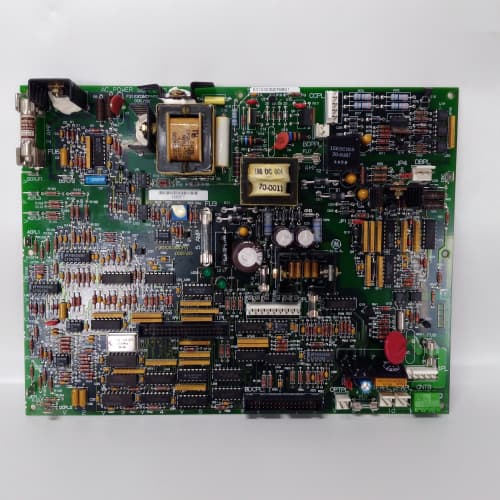
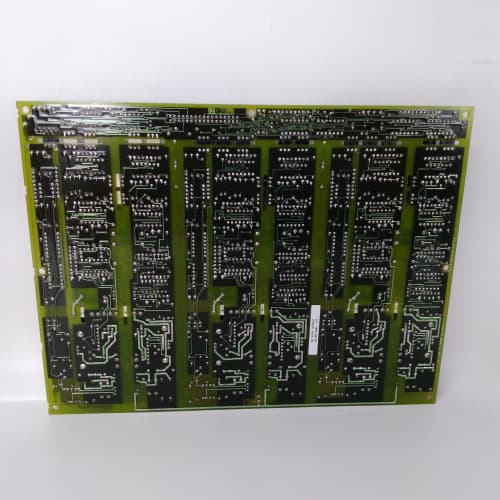
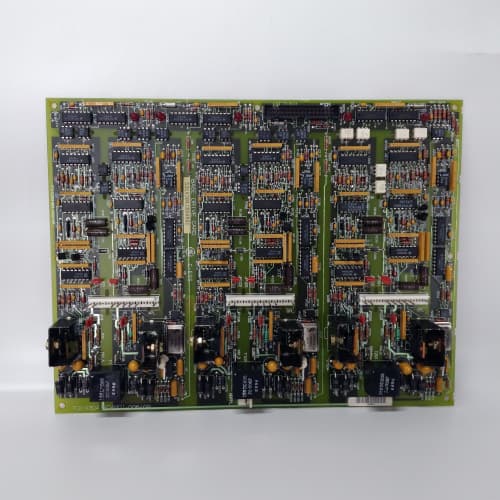
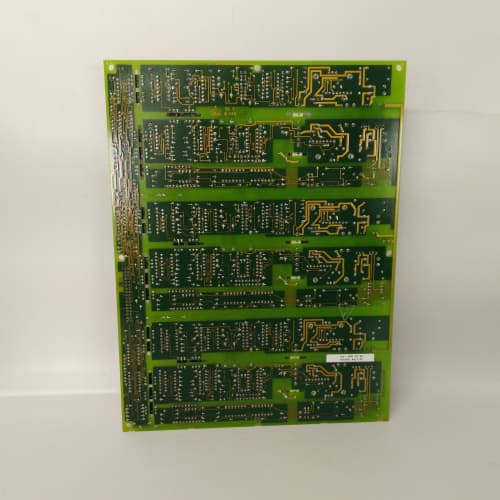
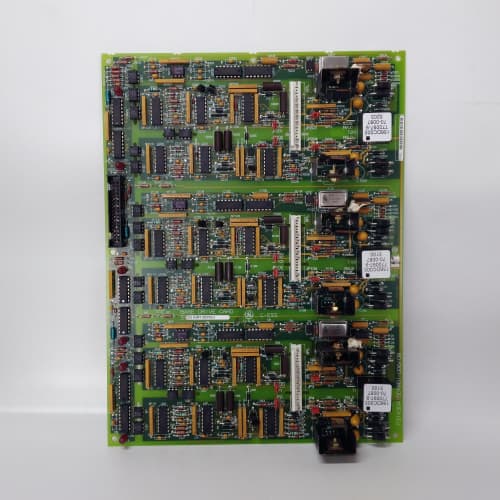
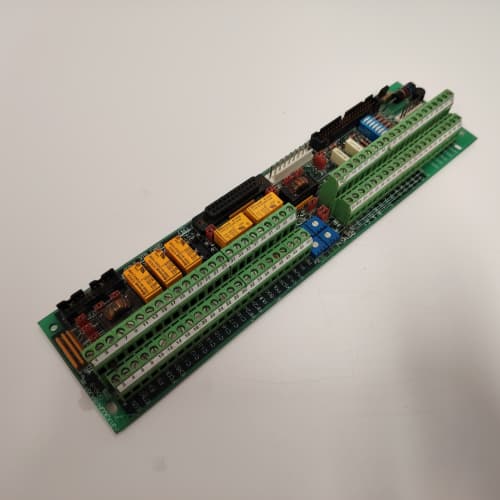
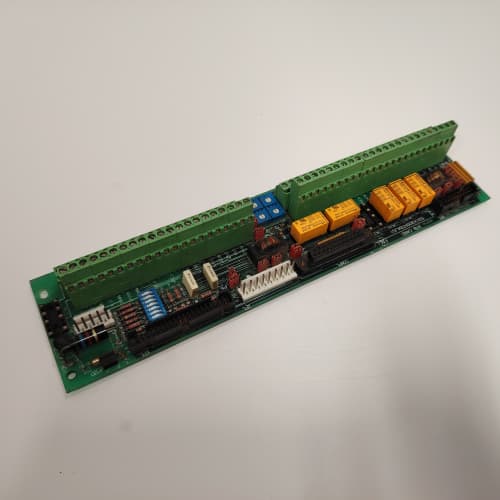
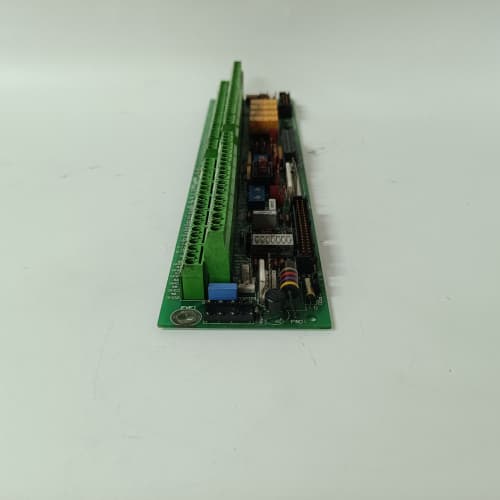
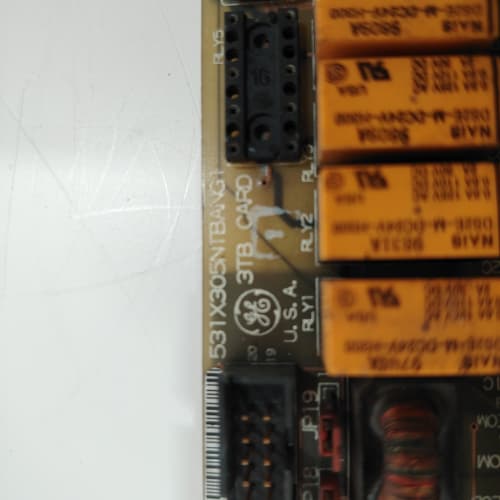
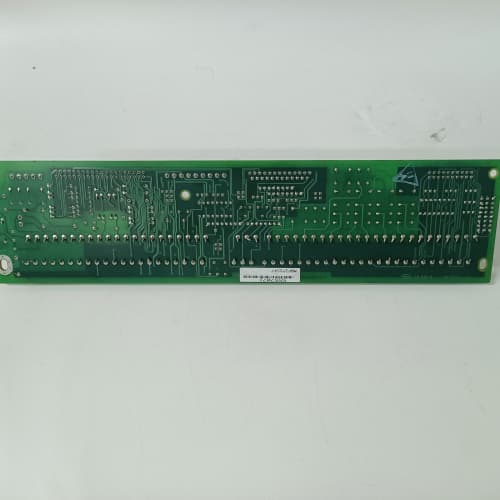
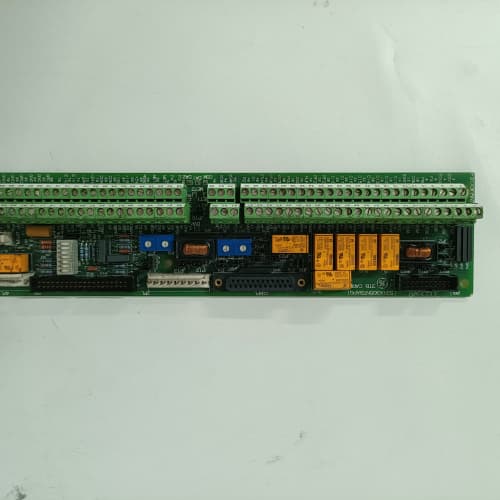
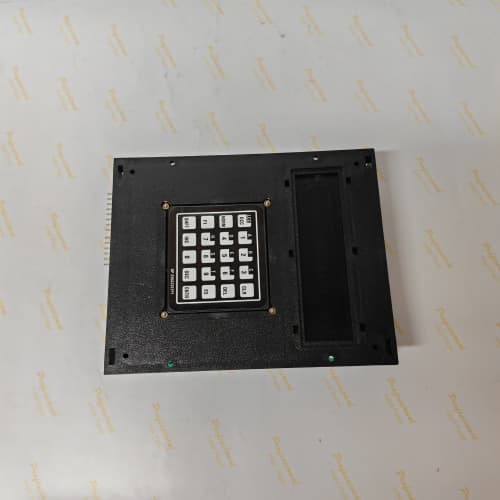
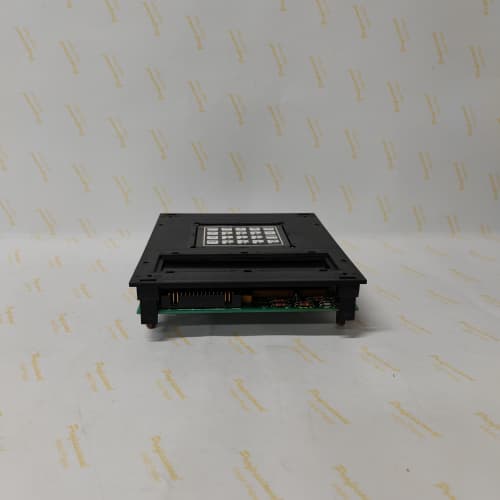
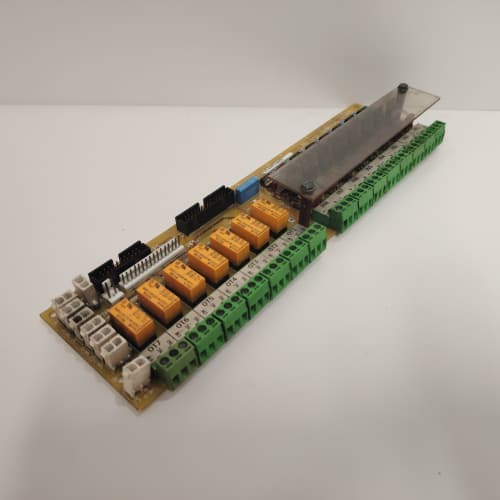
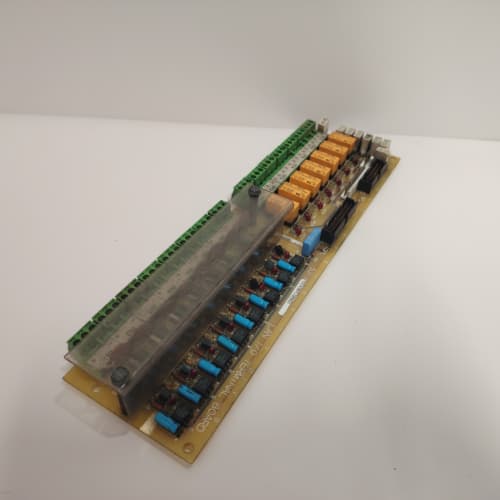
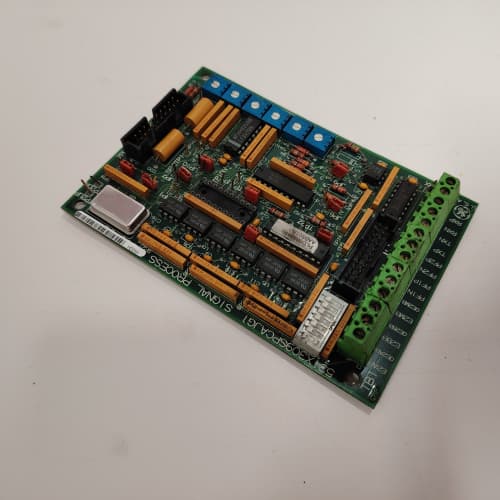
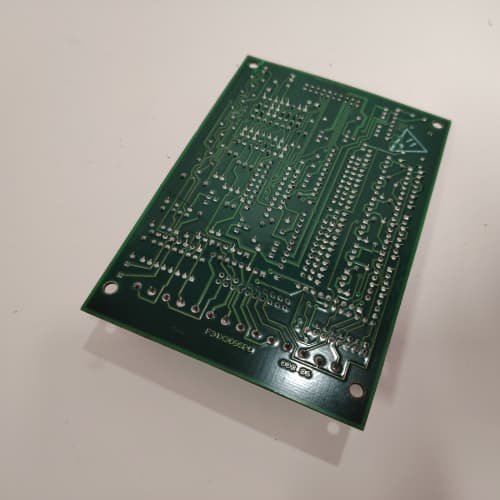
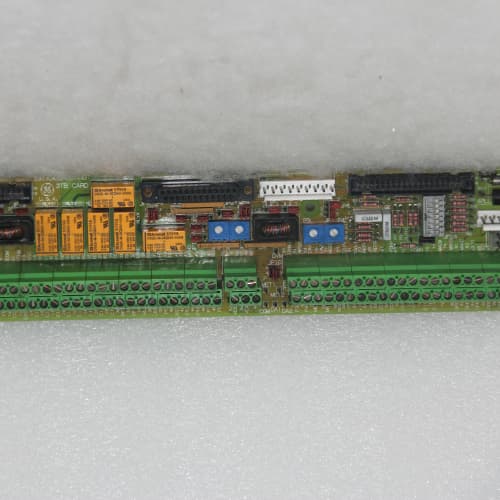
GE 531X300CCHASM3 is a DC link choke / filter board assembly for GE DC-300, AC-300, and AF-300 drive platforms. It provides passive filtering and energy storage for the DC bus, smoothing voltage ripple and reducing harmonic distortion generated by IGBT switching. The “CCH” designation indicates DC Link Choke assembly, while “ASM3” represents a revision with enhanced capacitance, improved thermal management, extended temperature range (-20°C to 70°C), screw-type terminals for secure auxiliary wiring, marine-grade conformal coating, expanded diagnostic monitoring, enhanced transient protection, enhanced EMC filtering, and expanded fault logging memory.
GE 531X300CCHANM3 is a DC link choke / filter board assembly for GE DC-300, AC-300, and AF-300 drive platforms. It provides passive filtering and energy storage for the DC bus, smoothing voltage ripple and reducing harmonic distortion generated by IGBT switching. The “CCH” designation indicates DC Link Choke assembly, while “ANM3” represents a revision with enhanced capacitance, improved thermal management, extended temperature range (-20°C to 70°C), spring-clamp terminals for faster auxiliary wiring, marine-grade conformal coating, expanded diagnostic monitoring, enhanced transient protection, enhanced EMC filtering, and expanded fault logging memory.
GE 531X300CCHAMM3 is a DC link choke / filter board assembly for GE DC-300, AC-300, and AF-300 drive platforms. It provides passive filtering and energy storage for the DC bus, smoothing voltage ripple and reducing harmonic distortion generated by IGBT switching. The “CCH” designation indicates DC Link Choke assembly, while “AMM3” represents a revision with enhanced capacitance, improved thermal management, extended temperature range (-20°C to 70°C), screw-type terminals for secure auxiliary wiring, marine-grade conformal coating, expanded diagnostic monitoring, enhanced transient protection, enhanced EMC filtering, and expanded fault logging memory.
GE 531X300CCHALM3 is a DC link choke / filter board assembly for GE DC-300, AC-300, and AF-300 drive platforms. It provides passive filtering and energy storage for the DC bus, smoothing voltage ripple and reducing harmonic distortion generated by IGBT switching. The “CCH” designation indicates DC Link Choke assembly, while “ALM3” represents a revision with enhanced capacitance, improved thermal management, extended temperature range (-20°C to 70°C), spring-clamp terminals for faster auxiliary wiring, marine-grade conformal coating, expanded diagnostic monitoring, enhanced transient protection, enhanced EMC filtering, and expanded fault logging memory.
GE 531X300CCHALG2 is a DC link choke / filter board assembly for GE DC-300, AC-300, and AF-300 drive platforms. It provides passive filtering and energy storage for the DC bus, smoothing voltage ripple and reducing harmonic distortion generated by IGBT switching. The “CCH” designation indicates DC Link Choke assembly, while “ALG2” represents a revision with enhanced capacitance, improved thermal management, extended temperature range (-20°C to 70°C), screw-type terminals for secure auxiliary wiring, marine-grade conformal coating, expanded diagnostic monitoring, enhanced transient protection, enhanced EMC filtering, and expanded fault logging memory.
GE 531X300CCHAJM2 is a DC link choke / filter board assembly for GE DC-300, AC-300, and AF-300 drive platforms. It provides passive filtering and energy storage for the DC bus, smoothing voltage ripple and reducing harmonic distortion generated by IGBT switching. The “CCH” designation indicates DC Link Choke assembly, while “AJM2” represents a revision with enhanced capacitance, improved thermal management, extended temperature range (-20°C to 70°C), spring-clamp terminals for faster auxiliary wiring, marine-grade conformal coating, expanded diagnostic monitoring, enhanced transient protection, enhanced EMC filtering, and expanded fault logging memory.
GE 531X300CCHAHM3 is a DC link choke / filter board assembly for GE DC-300, AC-300, and AF-300 drive platforms. It provides passive filtering and energy storage for the DC bus, smoothing voltage ripple and reducing harmonic distortion generated by IGBT switching. The “CCH” designation indicates DC Link Choke assembly, while “AHM3” represents a revision with enhanced capacitance, improved thermal management, extended temperature range (-20°C to 70°C), spring-clamp terminals for faster auxiliary wiring, marine-grade conformal coating, expanded diagnostic monitoring, enhanced transient protection, enhanced EMC filtering, and expanded fault logging memory.
GE 531X300CCHAHM2 is a DC link choke / filter board assembly for GE DC-300, AC-300, and AF-300 drive platforms. It provides passive filtering and energy storage for the DC bus, smoothing voltage ripple and reducing harmonic distortion generated by IGBT switching. The “CCH” designation indicates DC Link Choke assembly, while “AHM2” represents a revision with enhanced capacitance, improved thermal management, extended temperature range (-20°C to 70°C), screw-type terminals for auxiliary connections, marine-grade conformal coating, expanded diagnostic monitoring, enhanced transient protection, enhanced EMC filtering, and expanded fault logging memory.
GE 531X300CCHAGM5 is a DC link choke / filter board assembly for GE DC-300, AC-300, and AF-300 drive platforms. It provides passive filtering and energy storage for the DC bus, smoothing voltage ripple and reducing harmonic distortion generated by IGBT switching. The “CCH” designation indicates DC Link Choke assembly, while “AGM5” represents a revision with enhanced capacitance, improved thermal management, extended temperature range (-20°C to 70°C), spring-clamp terminals for faster auxiliary wiring, marine-grade conformal coating, expanded diagnostic monitoring, enhanced transient protection, and enhanced EMC filtering.
GE 531X300CCHAGM2 is a DC link choke / filter board assembly for GE DC-300, AC-300, and AF-300 drive platforms. It provides passive filtering and energy storage for the DC bus, smoothing voltage ripple and reducing harmonic distortion generated by IGBT switching. The “CCH” designation indicates DC Link Choke assembly, while “AGM2” represents a revision with enhanced capacitance, improved thermal management, extended temperature range (-20°C to 70°C), screw-type terminals for auxiliary connections, marine-grade conformal coating, expanded diagnostic monitoring, enhanced transient protection, and enhanced EMC filtering.
GE 531X300CCHAFM5 is a DC link choke / filter board assembly for GE DC-300, AC-300, and AF-300 drive platforms. It provides passive filtering and energy storage for the DC bus, smoothing voltage ripple and reducing harmonic distortion generated by IGBT switching. The “CCH” designation indicates DC Link Choke assembly, while “AFM5” represents a revision with enhanced capacitance, improved thermal management, extended temperature range (-20°C to 70°C), spring-clamp terminals for faster auxiliary wiring, marine-grade conformal coating, expanded diagnostic monitoring, enhanced transient protection, and enhanced EMC filtering.
GE 531X300CCHAFG1 is a DC link choke / filter board assembly for GE DC-300, AC-300, and AF-300 drive platforms. It provides passive filtering and energy storage for the DC bus, smoothing voltage ripple and reducing harmonic distortion generated by IGBT switching. The “CCH” designation indicates DC Link Choke assembly, while “AFG1” represents a revision with enhanced capacitance, improved thermal management, extended temperature range (-20°C to 70°C), screw-type terminals for auxiliary connections, marine-grade conformal coating, expanded diagnostic monitoring, enhanced transient protection, and enhanced EMC filtering.