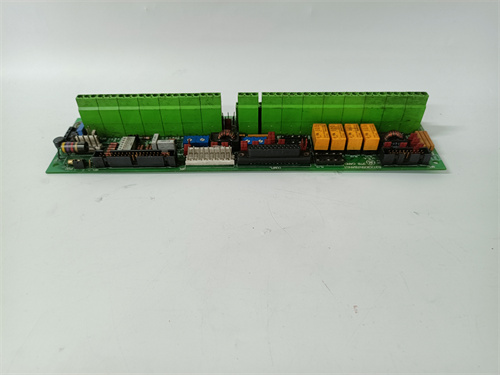
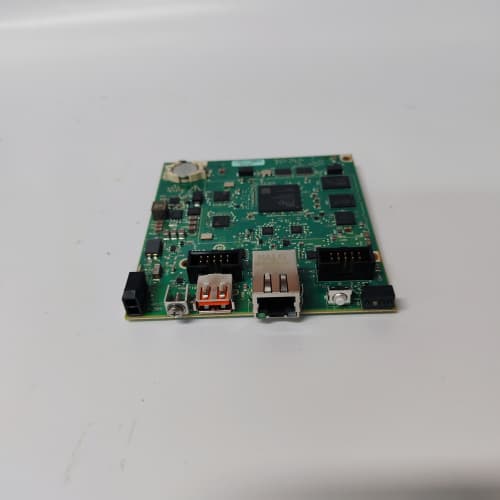
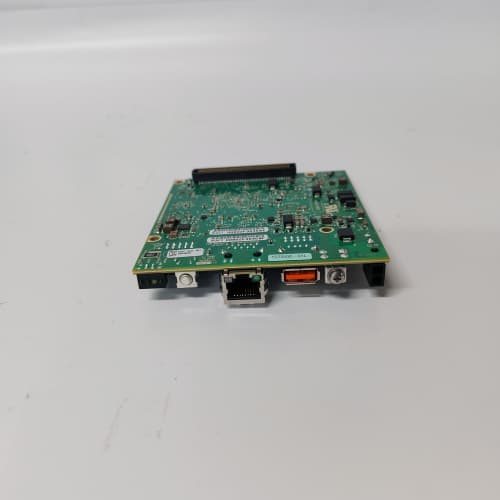
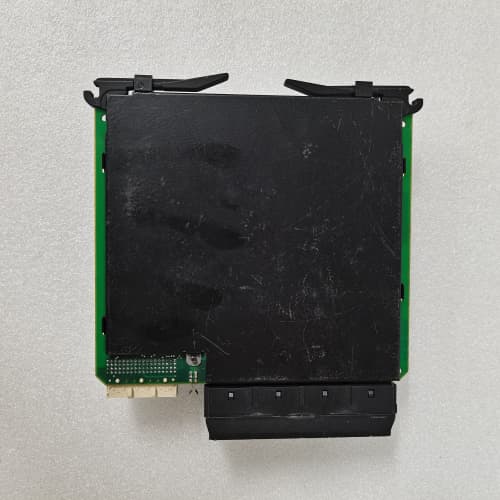
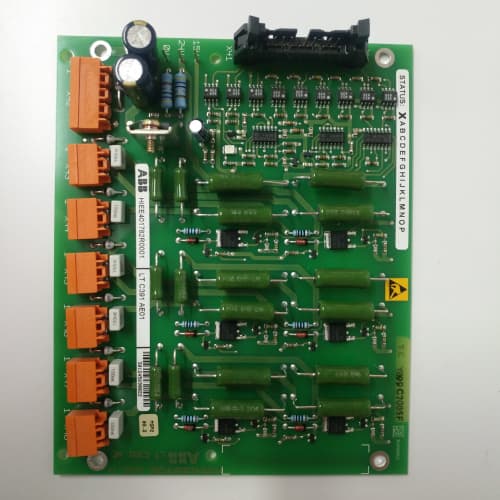
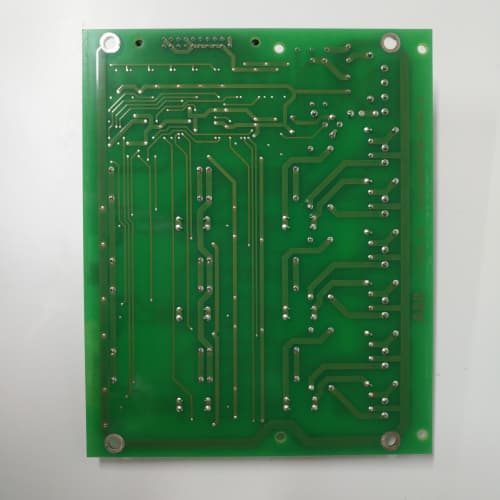
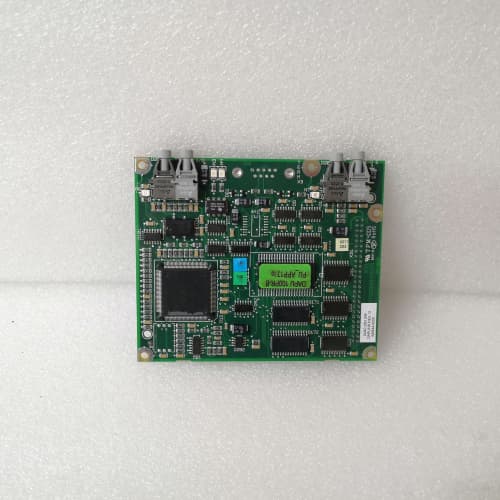
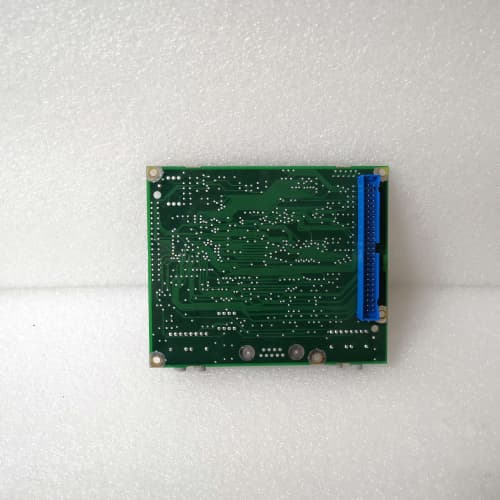
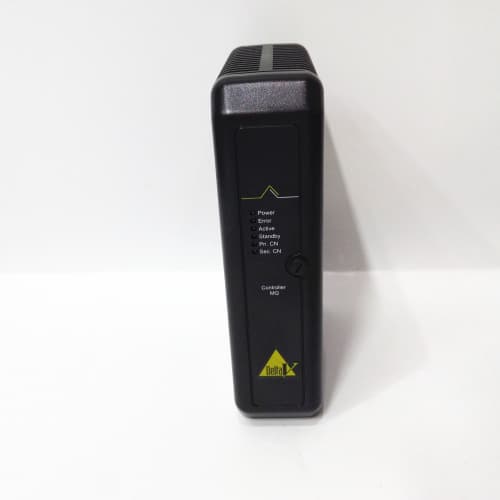
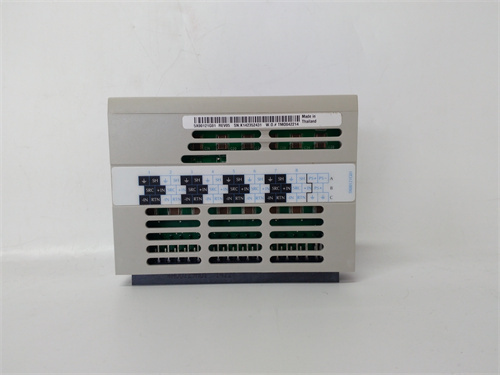
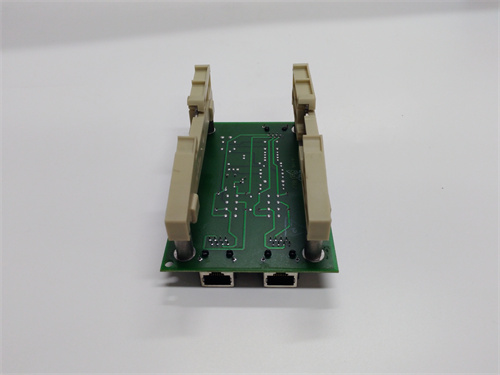
Weight: Approximately 0.5 kg, which is relatively light and easy to handle during installation and maintenance.
Dimensions: It has a compact design, with dimensions of about 100mm (length) x 80mm (width) x 30mm (height). This small size allows it to be easily installed in control cabinets or other limited – space environments.
Features
High – speed Communication: The Gigabit Ethernet interface provides fast and reliable data transfer, reducing latency and enabling real – time control and monitoring.
Compact Design: Its small size makes it suitable for installation in tight spaces, without taking up much room in control panels or equipment enclosures.
Wide Temperature Tolerance: The ability to operate in a wide temperature range ensures its reliability in different industrial environments, including those with high – heat or cold – storage areas.
Stability and Reliability
Robust Construction: Built with high – quality components and a sturdy enclosure, it can withstand mechanical vibrations, shocks, and electromagnetic interference commonly found in industrial settings.
Long – term Testing: Through extensive long – term testing, it has been proven to have a stable performance over a long service life, with a low failure rate.
Redundancy Options: Some versions may offer redundancy features in the power supply or communication, ensuring continuous operation even in the event of a single – point failure.
Industrial Automation: In manufacturing plants, it can be used to control and monitor production lines. For example, it can manage the operation of conveyor belts, robotic arms, and assembly machines, ensuring efficient and accurate production processes.
Building Automation: In commercial buildings, it can control and monitor building systems such as HVAC, lighting, and security systems. It can optimize energy consumption and enhance the comfort and safety of the building environment.
Water Treatment Plants: It can monitor and control water treatment processes, including controlling pumps, valves, and monitoring water quality parameters like pH, turbidity, and chlorine levels.
Weight and Dimensions
Weight: Approximately 0.8 – 1 kg, which is relatively light and easy to install and handle.
Dimensions: It has a compact design, with dimensions of about 180mm (length) x 120mm (width) x 50mm (height), allowing it to be installed in standard control cabinets.
Features
Flexible Configuration: It can be easily configured and programmed according to different application requirements. Users can customize input/output settings, communication protocols, and control logic using programming languages like ladder logic or function block diagram.
High – speed Data Processing: With its powerful processor and sufficient memory, it can process large amounts of data in real – time, enabling quick response to changes in the industrial environment.
Remote Monitoring and Control: It supports remote access via Ethernet, allowing operators to monitor and control the device from a central control room or even from a remote location, improving operational efficiency.
Weight: Approximately 0.1 kg, which is very light and easy to handle during installation and maintenance.
Dimensions: It has a compact design, with dimensions of about 50mm (length) x 40mm (width) x 20mm (height). This small size allows it to be easily installed in tight spaces, such as inside control boxes.
Features
Compact and Lightweight: Its small size and low weight make it easy to integrate into various systems without taking up much space.
Easy Configuration: Configuration is simple, often through software or DIP switches. Users can quickly set up input/output functions, communication parameters, and other settings according to specific requirements.
Cost – Effective: It offers a cost – effective solution for basic automation and control tasks, especially for small – scale applications where high – end features are not required.
Stability and Reliability
Solid Construction: Built with quality components and a durable enclosure, it can withstand normal industrial vibrations and minor impacts.
Electrical Isolation: It provides electrical isolation between input/output channels and the power supply, protecting the device from electrical interference and ensuring stable signal transmission.
Long – term Testing: Through long – term testing, it has been proven to have a reliable performance over time, with a low failure rate.
Weight: Approximately 0.15 kg, which is extremely light, facilitating easy installation and handling.
Dimensions: It has a very compact design, with dimensions of about 80mm (length) x 60mm (width) x 25mm (height). This small size allows it to be easily integrated into control panels or small – space installations.
Features
Multiple Input Types: The ability to accept different types of analog input signals makes it highly versatile and suitable for a wide range of applications.
Isolated Inputs: It provides electrical isolation between input channels and the power supply, protecting the device from electrical interference and ensuring accurate signal measurement.
Easy Configuration: Configuration is straightforward, either through software or DIP switches. Users can quickly set the input signal type, measurement range, and other parameters according to their specific needs.
Stability and Reliability
Robust Design: Built with high – quality components and a sturdy enclosure, it can withstand harsh industrial environments, including vibrations, dust, and temperature fluctuations.
Long – term Stability: Through rigorous testing and calibration, it maintains stable performance over an extended service life, with minimal drift in measurement accuracy.
Fault – Tolerant Operation: It has certain fault – tolerance capabilities. For instance, if there is an issue with one input channel, the other channels can continue to function normally, ensuring continuous data collection.
Industrial Process Monitoring: In manufacturing plants, it can be used to monitor process variables such as temperature, pressure, and flow rate in chemical reactions, food processing, and metalworking.
Environmental Monitoring: It is suitable for monitoring environmental parameters like air quality, humidity, and water quality in environmental protection projects.
Building Automation: In commercial buildings, it can monitor parameters such as indoor temperature, light intensity, and CO₂ concentration for energy management and comfort control.
Weight and Dimensions
Weight: Approximately 0.2 kg, which is very light and easy to install.
Dimensions: It has a compact design, with dimensions of about 100mm (length) x 80mm (width) x 30mm (height), allowing it to be easily integrated into control panels.
Features
Multiple Input Channels: It is equipped with multiple input channels, usually 8 channels, which can simultaneously measure different analog signals, providing comprehensive data acquisition.
Isolation: It provides electrical isolation between input channels and the power supply, effectively preventing electrical interference and ensuring the accuracy of measurement results.
Easy Configuration: It can be easily configured using software or DIP switches. Users can set input signal types, measurement ranges, and sampling rates according to specific requirements.
Industrial Automation: In manufacturing plants, it can control and monitor production lines, manage the operation of motors, and adjust process parameters in real – time.
Power Generation: In power plants, it can be used to monitor and control generators, turbines, and other power – generating equipment, ensuring stable power output.
Water Treatment: In water treatment facilities, it can control the operation of pumps, valves, and filters, and monitor water quality parameters such as pH, turbidity, and dissolved oxygen.
Weight and Dimensions
Weight: Approximately 1 – 1.5 kg, which is relatively light and easy to install and handle.
Dimensions: It has a compact design, with dimensions of about 200mm (length) x 150mm (width) x 50mm (height), allowing it to be installed in standard control cabinets.
Features
Flexible Configuration: It can be easily configured and programmed according to different application requirements. Users can customize input/output settings, communication protocols, and control logic using programming languages like ladder logic or function block diagram.
Industrial Automation: In manufacturing plants, it can be used to control and monitor the operation of production lines. For instance, it can detect the position of workpieces on a conveyor belt through input sensors and control the movement of robotic arms or actuators via output channels.
Building Automation: In commercial buildings, it can be used for simple control tasks such as controlling lighting circuits based on occupancy sensors or monitoring the status of door locks.
Material Handling: In warehouses and logistics centers, it can be used to manage the movement of conveyors, forklifts, and other material – handling equipment.
Weight and Dimensions
Weight: Approximately 0.5 kg, which is relatively light and easy to install and handle.
Dimensions: The device has a compact design, with dimensions of about 120mm (length) x 80mm (width) x 30mm (height). This small size allows it to be installed in tight spaces, such as control cabinets.
Features
Modular Design: It has a modular design, which means that additional input/output modules can be easily added or removed according to specific application requirements. This provides flexibility and scalability.
Easy Configuration: The LDGRB – 01 can be easily configured using a user – friendly software tool. Users can set up input/output functions, communication parameters, and alarm thresholds without complex programming.
Diagnostic Function: It has a built – in diagnostic function that can detect faults in input/output channels, communication interfaces, or power supply. It provides error codes and status information for quick troubleshooting.
Weight: Approximately 3 – 4 kg, which is relatively light considering its functionality and display size.
Dimensions: The device has dimensions of about 250mm (length) x 200mm (width) x 50mm (height), making it suitable for installation on control panels or consoles.
Features
User – Friendly Interface: The touchscreen display provides an intuitive and easy – to – use interface. Operators can quickly access different functions and information with just a few taps on the screen.
Customizable Graphics: It supports the creation of customizable graphics and screens. Users can design their own HMI layouts according to specific application requirements, including adding logos, alarms, and trend graphs.
Remote Access: It allows remote access via Ethernet, enabling operators to monitor and control the system from a remote location using a computer or mobile device.
Stability and Reliability
Robust Design: The LD800HSE is built with a sturdy enclosure and high – quality components, which can withstand harsh industrial environments, including vibrations, dust, and temperature variations.
Power Protection: It is equipped with power protection features, such as over – voltage and under – voltage protection, to ensure stable operation even in the case of power fluctuations.
Long – term Testing: Through extensive long – term testing and quality control, it has been proven to have a high level of stability and reliability over a long service life.
Weight: Approximately 2 kg, which is relatively light and easy to handle during installation and maintenance.
Dimensions: The device has a compact design, with dimensions of about 220mm (length) x 180mm (width) x 60mm (height), allowing it to be easily installed in standard control cabinets.
Features
Flexible Configuration: It can be easily configured according to different application requirements. Users can customize input/output settings, communication protocols, and control logic through a user – friendly software interface.
High – speed Data Processing: With its powerful processor and sufficient memory, it can process large amounts of data in real – time, ensuring quick response to changes in the industrial environment.
Remote Monitoring and Control: It supports remote access via Ethernet, enabling operators to monitor and control the device from a central control room or even from a remote location, improving operational efficiency.
Stability and Reliability
Robust Hardware Design: The device is built with high – quality components and a sturdy enclosure, which can withstand harsh industrial environments, including high temperatures, humidity, and vibrations.
Redundancy and Fault – Tolerance: Some models may offer redundant power supplies and communication interfaces to ensure continuous operation in case of component failures.
Long – term Testing: Through extensive long – term testing and quality control procedures, it has been proven to have a high level of stability and reliability over a long service life.
Process Automation: Widely used in chemical, pharmaceutical, and food processing industries for controlling and monitoring production processes. It can regulate temperature, pressure, and flow rate to ensure product quality and production efficiency.
Machine Control: In manufacturing machinery, it controls the movement and operation of mechanical components. For example, it can control the speed and position of conveyor belts, robotic arms, and machine tools.
Building Automation: Used in large – scale buildings for managing HVAC systems, lighting, and security systems. It can optimize energy consumption and enhance the comfort and safety of the building environment.
Weight and Dimensions
Weight: Approximately 1 – 1.5 kg, which is relatively light, making it easy to install and handle.
Dimensions: Compact in size, with a length of about 200mm, a width of 150mm, and a height of 50mm. This compact design allows it to be installed in limited – space control cabinets.
Features
Flexibility: Can be easily configured and programmed to meet different application requirements. It supports a variety of programming languages, such as ladder logic, function block diagram, and structured text.
Scalability: It can be easily expanded by adding input/output modules or communication interfaces. This scalability allows it to adapt to the changing needs of industrial systems.
Diagnostic Capability: Has a comprehensive diagnostic function that can detect faults in the module itself, input/output channels, and communication interfaces. It provides detailed error messages and status information for quick troubleshooting.
Industrial Automation: In manufacturing plants, it can be used to control the operation of production lines, monitor the status of machinery, and adjust process parameters in real – time.
Building Automation: For controlling and monitoring building systems such as lighting, heating, ventilation, and air – conditioning (HVAC), ensuring energy – efficient and comfortable operation.
Power Distribution Monitoring: In power distribution systems, it can monitor electrical parameters such as voltage, current, and power, and provide protection and control functions.
Weight and Dimensions
Weight: Approximately 1 – 2 kg, which is relatively light and easy to handle during installation and maintenance.
Dimensions: Compact in size, with a length of about 200mm, a width of 150mm, and a height of 50mm. This allows it to be easily installed in control cabinets or small spaces.
Features
Flexibility: Can be easily configured and programmed according to different application requirements. Users can customize input/output settings, communication protocols, and control logic.
High – speed Processing: Capable of processing input signals quickly and sending out control commands in a timely manner, ensuring real – time control in dynamic industrial processes.
Diagnostic Function: Has built – in diagnostic capabilities to detect faults in input/output channels, communication interfaces, or internal components. It can provide error codes and status information for quick troubleshooting.
Power Substations: It is widely used in power substations for the protection and monitoring of transformers, feeders, and busbars. It can quickly detect faults and isolate the faulty section to prevent the spread of the fault and ensure the safety of the power grid.
Industrial Power Systems: In industrial power systems, it can be used to protect and control high – voltage and medium – voltage electrical equipment, such as motors, generators, and switchgear.
Renewable Energy Power Plants: In wind farms and solar power plants, it can monitor and protect the power generation equipment and the connection to the grid, ensuring the stable operation of renewable energy systems.
Weight and Dimensions
Weight: Approximately 5 – 7 kg, which is relatively light considering its functionality, making it easy to handle and install.
Dimensions: The typical dimensions are around 300 mm (height) x 250 mm (width) x 150 mm (depth). Its compact size allows for installation in standard substation cabinets.
Features
Advanced Algorithm: It uses advanced protection algorithms, such as digital signal processing and artificial intelligence – based algorithms, to improve the speed and accuracy of fault detection and protection.
User – Friendly Interface: It has a user – friendly interface with a large LCD display and intuitive menu navigation. Operators can easily configure the protection settings, view measurement data, and diagnose faults.
Self – Diagnosis Function: The device has a self – diagnosis function that can continuously monitor its own operation status. It can detect internal faults and provide early warnings, reducing the risk of unexpected failures.