Power supply: Powered by connection to the acquisition system or external battery
Output voltage adjustable range: 10 V to 50 V
Operating temperature range: **-18°C to +60°C (mentioned in the vibration monitor documentation) and -20 to +55°C** (mentioned in the power management device documentation)
Storage temperature range: -40°C to +85°C
Over voltage, over current, over temperature and short circuit protection: available
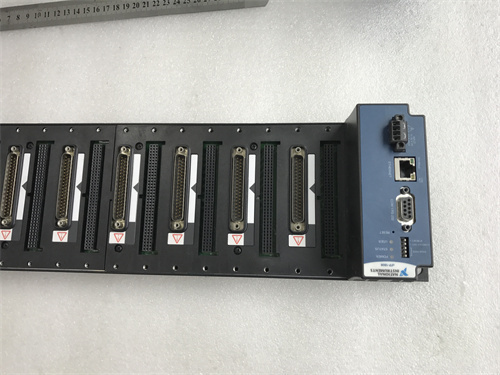
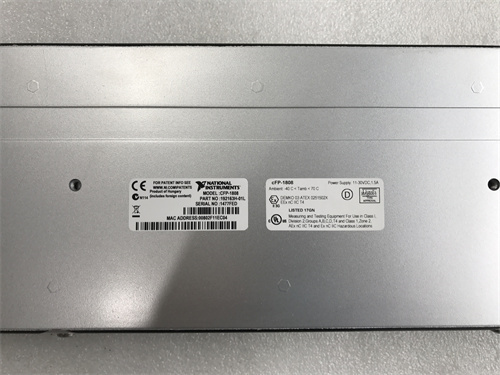
Series: A family of products belonging to National Instruments, which may be a model of their data acquisition or control cards.
Voltage: According to the search results [1], the voltage is 24V; The search result [2] mentions that the operating voltage is 220V. This may vary by app or product version.
Current: Some search results mention that the current range may be 100-400A, but this may also vary by application.
Output frequency: In some applications, the output frequency may be 50Hz or 350kHz.
Product certification: Search results [2] mention product certification as 12451.
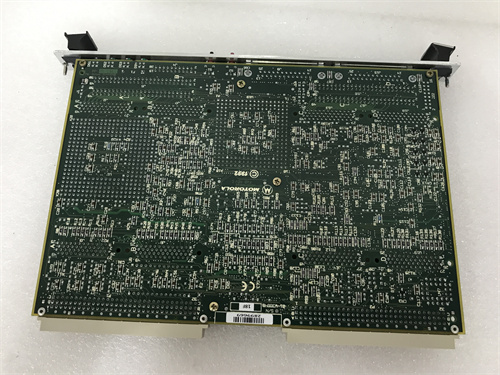
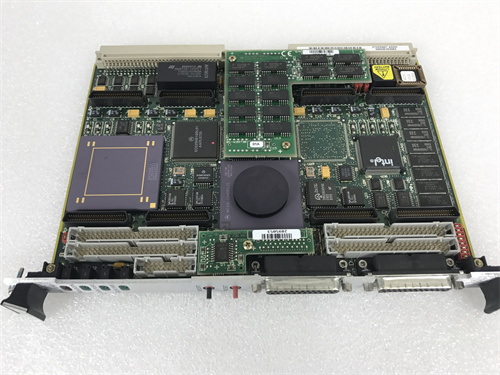
Processor: Equipped with either MC68LC040 or optional MC68040 microprocessor. MC68040 has a floating-point coprocessor, while MC68LC040 does not1.
Memory: Comes with 1MB, 4MB, or 8MB parity-protected DRAM, 512KB SRAM (with backup battery), and TOD clock (with backup battery)1.
Interfaces: Includes DMA-capable optional LAN Ethernet transceiver interface, two serial ports (EIA-232-D and EIA-232-D/EIA-530), six tick timers with watchdog timer, optional SCSI bus interface with DMA, and VMEbus interface1.
Expansion Options: Supports fast and easy integration of additional interface cards, such as PCI/104-Express and Mini PCI Express2.
Design: Designed to withstand harsh environments, using robust design methods that can resist extreme shock, corrosion, and galvanic oxidation