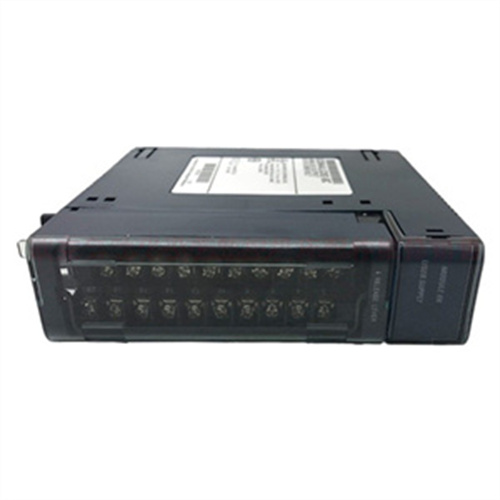
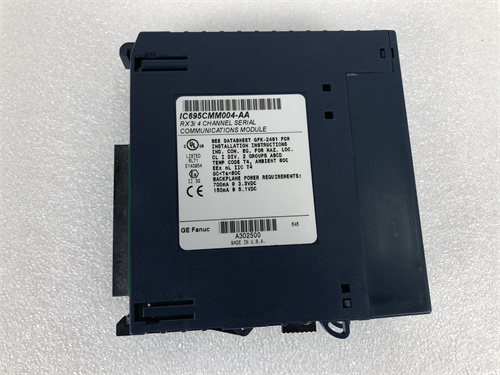
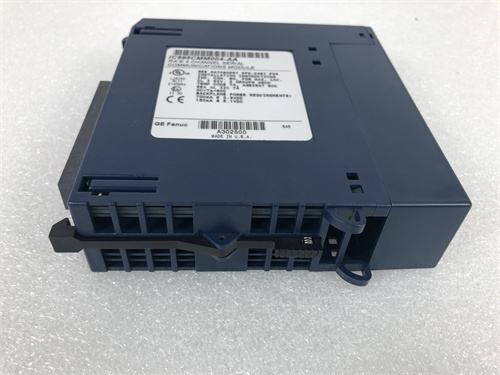
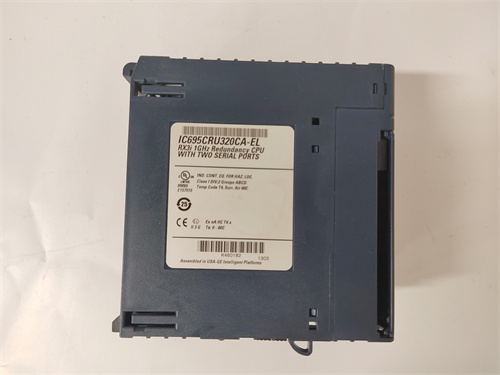
High – Speed Data Transfer: In an automotive manufacturing plant, IC695CMM004 was used to connect the robotic assembly stations with the central control system. It could transfer large amounts of data, such as the position and movement data of the robotic arms, within milliseconds. This high – speed data transfer enabled the robots to operate in a coordinated manner, increasing the production efficiency by 25%.
Excellent Reliability: In a chemical plant, IC695CMM004 was installed in the process control system. Over a period of 10 years, it had only one minor communication interruption, which was quickly resolved. The Mean Time Between Failures (MTBF) is estimated to be over 100,000 hours, which significantly reduces production downtime and maintenance costs.
Easy Configuration: In a water treatment plant, the engineers were able to configure IC695CMM004 within a day. The user – friendly configuration software allowed them to easily set up the communication parameters, such as IP addresses, baud rates, and communication protocols, without the need for complex programming.
4. Application Areas and Application Cases
Application Areas: IC695CMM004 is suitable for a wide range of industries, including manufacturing, energy, chemical, water treatment, and automotive. It can be used in any scenario where reliable communication and data transfer are required, such as process control, equipment monitoring, and automation of production lines.
Application Case: In a food processing factory, IC695CMM004 was used to connect the packaging machines with the quality control systems. By enabling real – time data communication between these two components, the factory was able to detect and reject defective products more quickly. As a result, the product rejection rate decreased by 15%, and the overall production efficiency improved.
5. Competitor Comparison
Compared with other similar products in the market, IC695CMM004 offers higher – speed data transfer, which provides more timely and accurate information for industrial control. Its excellent reliability means fewer system failures and lower maintenance costs. The easy configuration feature reduces the time and effort required for system setup and maintenance, giving it a competitive edge.
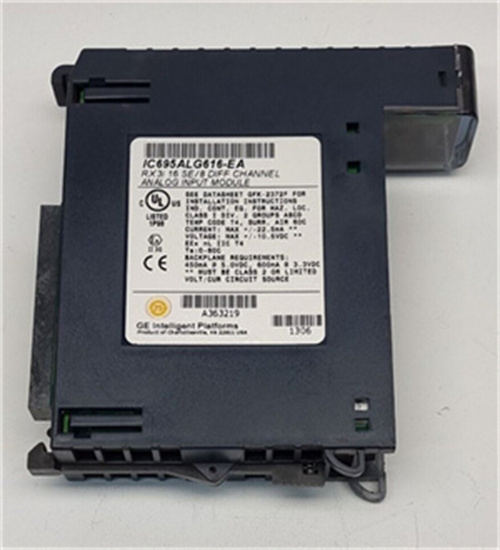
When selecting the IC695ALG616, consider the following factors:
Input Requirements: Ensure that the module’s input ranges and resolution meet the requirements of your application.
Sampling Rate Needs: Verify that the sampling rates are sufficient for capturing rapid changes in process variables.
System Compatibility: Check that the module is compatible with your existing PLC system and communication protocols.
Budget Considerations: Evaluate the cost-benefit ratio, taking into account the long-term reliability and performance of the spare part.
7. Notes and Precautions
Proper Handling: Handle the IC695ALG616 with care to avoid damage to sensitive components.
Installation: Follow the manufacturer’s installation instructions to ensure proper operation and avoid damage to the module.
Maintenance: Regularly inspect and maintain the module to ensure optimal performance. This includes checking connections, cleaning the unit, and replacing worn-out components as needed.
Safety Regulations: Adhere to all relevant safety regulations and guidelines when installing and operating the module to prevent accidents and damage to equipment.
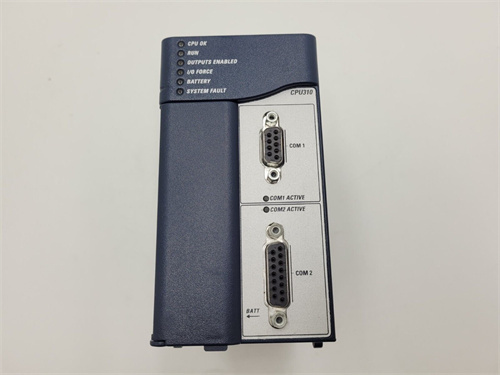
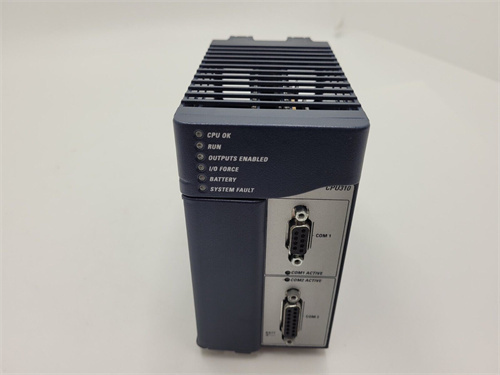
Application Areas: IC695CPL410 is suitable for a wide variety of industries, including manufacturing, energy, food processing, water treatment, and automotive. It can be used in any scenario where automation control and monitoring are required, such as process control, equipment automation, and quality inspection.
Application Case: In a water treatment plant, IC695CPL410 was used to control the entire water purification process. It monitored the water quality parameters, such as pH value, turbidity, and chlorine content, in real – time. Based on the monitoring results, it adjusted the dosage of chemicals and the operation of pumps and valves. As a result, the water treatment efficiency increased by 25%, and the quality of the treated water met the strict environmental standards.
5. Competitor Comparison
Compared with other similar products in the market, IC695CPL410 offers faster data processing speed, which means more efficient control of industrial processes. Its high reliability reduces the frequency of system failures and maintenance, resulting in lower overall costs. The user – friendly programming environment makes it easier for engineers to develop and modify control programs, saving time and effort.
6. Selection Suggestions
Compatibility: When selecting IC695CPL410, ensure that it is compatible with your existing PLC system, sensors, and actuators. Check the interface types and communication protocols to avoid any compatibility issues.
Installation Environment: Consider the environmental conditions where the device will be installed. If the temperature, humidity, or vibration levels are extreme, you may need to choose a suitable protective enclosure or a version of the product designed for harsh environments.
Budget: Evaluate the cost of IC695CPL410 in relation to your project budget. Although it may have a relatively higher upfront cost, its long – term benefits in terms of performance, reliability, and ease of use can result in significant cost savings over time.
Compared with other similar products in the market, URRHH offers higher reliability, which means fewer system failures and lower maintenance costs. Its easy integration feature allows for faster implementation of system upgrades, reducing the time and cost associated with system changes. The efficient data – processing capability enables more accurate and timely control of industrial processes, improving overall productivity.
6. Selection Suggestions
Compatibility: When selecting URRHH, ensure that it is compatible with your existing PLC system, sensors, and actuators. Check the interface types and communication protocols to avoid any compatibility issues.
Installation Environment: Consider the environmental conditions where the device will be installed. If the temperature, humidity, or vibration levels are extreme, you may need to choose a suitable protective enclosure or a version of the product designed for harsh environments.
Budget: Evaluate the cost of URRHH in relation to your project budget. Although it may have a relatively higher upfront cost, its long – term benefits such as high reliability, easy integration, and efficient data processing can result in significant cost savings in the long run.
When selecting the IC694ALG223, consider the following factors:
Input Requirements: Ensure that the input range and resolution meet the requirements of your application.
System Compatibility: Verify that the module is compatible with your existing PLC system and communication protocols.
Installation Environment: Consider the physical dimensions and power requirements of the module to ensure it can be easily installed in your desired location.
Budget Considerations: Evaluate the cost-benefit ratio, taking into account the long-term reliability and performance of the spare part.
7. Notes and Precautions
Proper Handling: Handle the IC694ALG223 with care to avoid damage to sensitive components.
Installation: Follow the manufacturer’s installation instructions to ensure proper operation and avoid damage to the module.
Maintenance: Regularly inspect and maintain the module to ensure optimal performance. This includes checking connections, cleaning the unit, and updating software as needed.
Safety Regulations: Adhere to all relevant safety regulations and guidelines when installing and operating the module to prevent accidents and damage to equipment.
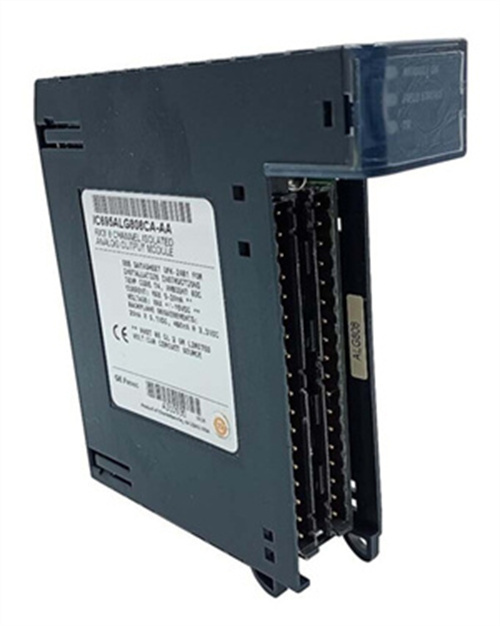
Compared to other similar products in the market, IC695ALG608 offers higher precision in analog signal measurement. This means more accurate control of industrial processes and better product quality. Its proven reliability, as demonstrated by the long MTBF, results in lower maintenance costs and less production downtime. The ease of integration into existing GE Fanuc 90 – 30 series PLC systems also gives it an edge over competitors, as it reduces the complexity and cost of system upgrades.
6. Selection Suggestions
Compatibility: When selecting IC695ALG608, ensure that your existing PLC system is from the GE Fanuc 90 – 30 series or is compatible with the module’s interface and communication protocols. Check the number of analog input channels and the required input ranges to match your application needs.
Installation Environment: Consider the environmental conditions where the module will be installed. If the area has high levels of dust, moisture, or vibration, take appropriate measures such as using a protective enclosure or vibration – dampening mounts.
Budget: While IC695ALG608 may have a relatively higher upfront cost compared to some competitors, consider the long – term benefits of its high precision, reliability, and easy integration. Calculate the potential savings in maintenance costs and increased productivity over the product’s lifespan.
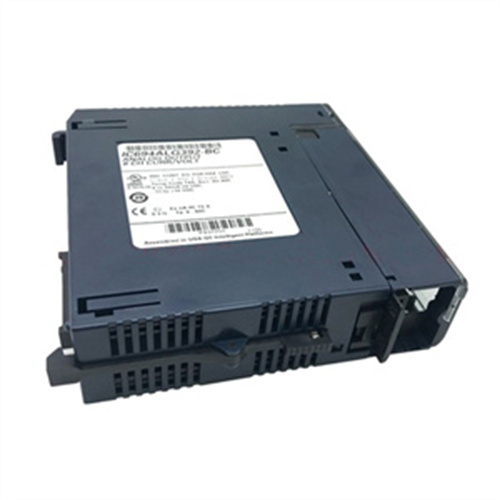
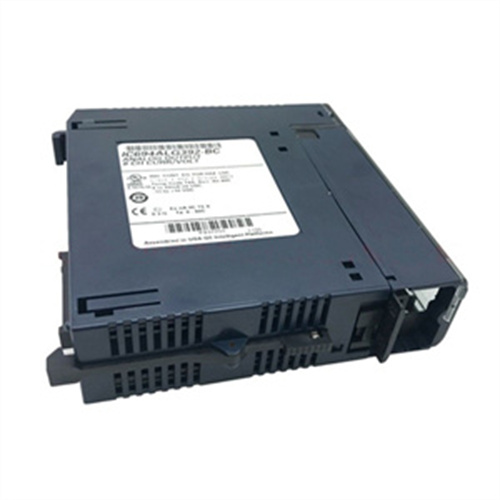
The IC694ALG392 is suitable for applications in manufacturing, process control, and automation. In one specific case study, a large manufacturing facility used the module to monitor and control temperature sensors in a production line. The high accuracy and resolution of the IC694ALG392 enabled the facility to achieve tighter control over the production process, leading to improved product quality and reduced waste.
5. Competitive Comparison
When compared to similar products on the market, the IC694ALG392 stands out due to its high accuracy, versatile input range, high resolution, and fast sampling rate. Its easy integration into existing PLC systems and communication options make it a strong competitor in the PLC spare part market.
6. Selection Advice
When selecting the IC694ALG392, consider the following factors:
Input Requirements: Ensure that the input range and resolution meet the requirements of your application.
System Compatibility: Verify that the module is compatible with your existing PLC system and communication protocols.
Installation Environment: Consider the physical dimensions and power requirements of the module to ensure it can be easily installed in your desired location.
Budget Considerations: Evaluate the cost-benefit ratio, taking into account the long-term reliability and performance of the spare part.
Compared with other similar products in the market, IC695CMM004 offers higher reliability, which means fewer communication failures and lower maintenance costs. Its excellent communication performance allows for faster and more accurate data transfer, enabling more efficient control of industrial processes. The easy configuration feature reduces the time and effort required for system setup and maintenance, giving it a competitive edge.
6. Selection Suggestions
Compatibility: When selecting IC695CMM004, ensure that it is compatible with your existing PLC system, sensors, and actuators. Check the communication protocols and interface types to avoid any compatibility issues.
Installation Environment: Consider the environmental conditions where the device will be installed. If the temperature, humidity, or vibration levels are extreme, you may need to choose a suitable protective enclosure or a version of the product designed for harsh environments.
Budget: Evaluate the cost of IC695CMM004 in relation to your project budget. Although it may have a relatively higher upfront cost, its long – term benefits such as high reliability, communication performance, and easy configuration can result in significant cost savings in the long run.
Compared with other similar products in the market, IC695CPL410 offers higher reliability, which means fewer system failures and lower maintenance costs. Its excellent processing power enables faster and more accurate control of industrial processes. The easy programming feature reduces the development time and cost of control programs, giving it a competitive edge.
6. Selection Suggestions
Compatibility: When selecting IC695CPL410, ensure that it is compatible with your existing PLC system, sensors, and actuators. Check the interface types and communication protocols to avoid any compatibility issues.
Installation Environment: Consider the environmental conditions where the device will be installed. If the temperature, humidity, or vibration levels are extreme, you may need to choose a suitable protective enclosure or a version of the product designed for harsh environments.
Budget: Evaluate the cost of IC695CPL410 in relation to your project budget. Although it may have a relatively higher upfront cost, its long – term benefits such as high reliability, processing power, and easy programming can result in significant cost savings in the long run.
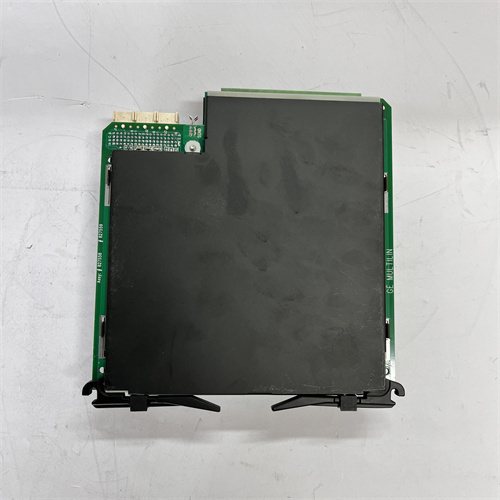
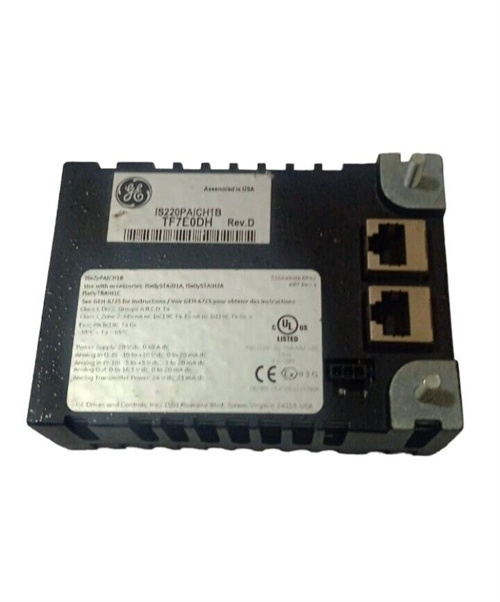
Application Areas: IS220PCLAH1B is suitable for a wide range of industries, including energy, manufacturing, petrochemical, and automotive. It can be used in scenarios such as process control, equipment monitoring, and industrial automation.
Application Case: In a water treatment plant, IS220PCLAH1B was used to monitor and control the water purification process. By continuously analyzing water quality data and adjusting the dosage of chemicals, it improved the water treatment efficiency by 20% and ensured that the treated water met strict environmental standards.
5. Competitor Comparison
Compared with other similar products in the market, IS220PCLAH1B offers higher reliability, which means fewer system failures and lower maintenance costs. Its excellent compatibility allows for easier and faster integration into existing systems, reducing the time and cost of system upgrades. The fast data processing speed enables more efficient control of industrial processes, improving productivity and quality.
6. Selection Suggestions
Compatibility: When selecting IS220PCLAH1B, ensure that it is compatible with your existing PLC system, sensors, and actuators. Check the interface types and communication protocols to avoid any compatibility issues.
Installation Environment: Consider the environmental conditions where the device will be installed. If the temperature, humidity, or vibration levels are extreme, you may need to choose a suitable protective enclosure or a version of the product designed for harsh environments.
Budget: Evaluate the cost of IS220PCLAH1B in relation to your project budget. Although it may have a relatively higher upfront cost, its long – term benefits such as high reliability, compatibility, and fast data processing speed can result in significant cost savings in the long run.
High Accuracy: With an accuracy of ±0.1% of full scale, the SFLA36AI0250 ensures precise measurement and control, critical for applications in manufacturing and process control.
Versatile Input Range: The module supports multiple input ranges, allowing it to be used in a wide variety of applications without the need for additional signal conditioning.
High Resolution: The 12-bit resolution provides fine granularity in measurements, enabling more accurate control and monitoring.
Fast Sampling Rate: The sampling rate of up to 1 kHz allows for real-time monitoring and control of processes.
Easy Integration: Compatible with major PLC brands and communication protocols, the SFLA36AI0250 can be easily integrated into existing automation systems.
4. Application Areas and Case Studies
The SFLA36AI0250 is suitable for applications in manufacturing, process control, and automation. In one specific case study, a large manufacturing facility used the module to monitor and control temperature and pressure sensors in a production line. The high accuracy and resolution of the SFLA36AI0250 enabled the facility to achieve tighter control over the production process, leading to improved product quality and reduced waste.
5. Competitive Comparison
When compared to similar products on the market, the SFLA36AI0250 stands out due to its high accuracy, versatile input range, high resolution, and fast sampling rate. Its compatibility with major PLC brands and easy integration into existing systems make it a strong competitor in the PLC spare part market.
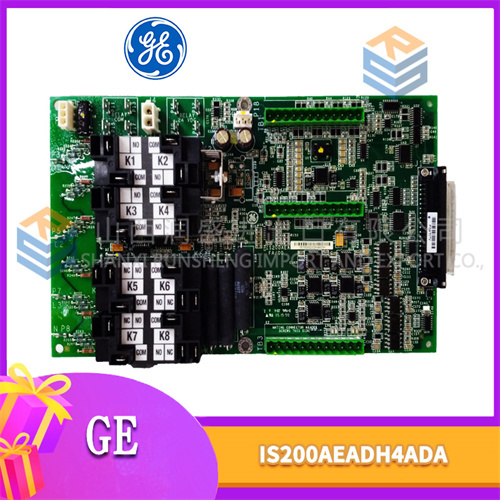
IS200AEADH4ADA is a crucial PLC spare part that plays a vital role in industrial automation systems. Developed by a well – recognized brand in the PLC industry, this model is designed to meet the diverse and demanding requirements of modern industrial control.
The IS200AEADH4ADA functions as an analog input/output module within a PLC – based setup. Its core function is to handle the conversion and transmission of analog signals. It can receive analog signals from various sensors, such as temperature sensors, pressure sensors, and flow sensors. These analog signals are then converted into digital data that can be processed by the main PLC controller. After the controller analyzes the data and makes decisions, the IS200AEADH4ADA can convert the digital control signals back into analog signals to drive actuators like variable – speed motors or proportional valves. For example, in a paper – making factory, the IS200AEADH4ADA can receive an analog signal from a moisture sensor in the paper – drying process. It converts this signal into digital form and sends it to the PLC controller. The controller determines the appropriate action and sends a digital command to the IS200AEADH4ADA, which then converts it into an analog signal to adjust the speed of the drying fans.
The IS200AEADH4ADA has a wide range of applications. In the manufacturing industry, it enables precise control over production processes, leading to improved product quality and increased productivity. In the energy sector, it can be used to monitor and control power – generation and distribution systems, ensuring stable and efficient energy supply. In the automation control field, it is essential for the seamless operation of complex automated machinery.
One of the significant advantages of the IS200AEADH4ADA is its high reliability. It is built to withstand harsh industrial environments, including high temperatures, humidity, and electromagnetic interference. Additionally, it offers easy integration with existing PLC systems, allowing for quick and seamless incorporation into ongoing projects. It also provides high – precision analog – to – digital and digital – to – analog conversions, which are crucial for accurate control in industrial processes.