Input voltage: 24VDC or 125VDC.
Output voltage: 24VDC.
Maximum output current: 10A.
Operating temperature range: -40°C to 70°C.
Product size: 120mm x 60mm x 80mm.
Product weight: 0.5kg.
Sampling period: 100ms.
Redundancy: Dual power supply and processor.
The ABB CI532V03 is a high – quality communication interface module. It is designed to enable seamless communication between various devices in industrial settings
The ABB DSTA180F is a control motherboard commonly used for programmable controllers2. It plays a crucial role in industrial automation systems, facilitating seamless data acquisition, process control, and communication
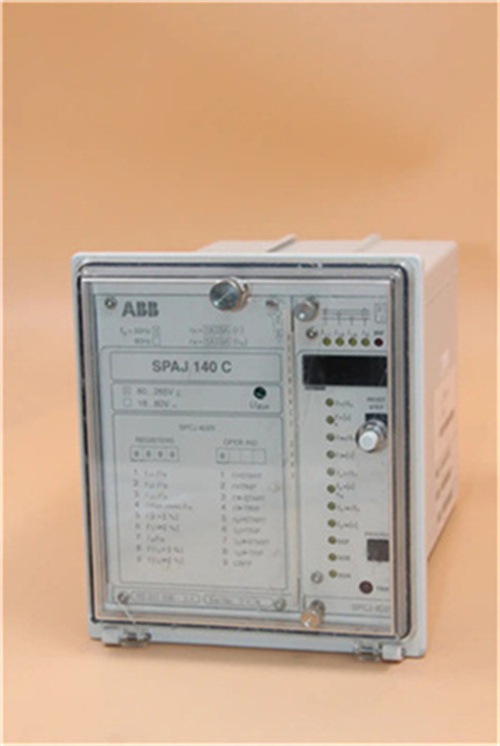
The ABB SPAJ110 C is a digital protection relay that plays a crucial role in electrical power systems. It is designed to provide reliable protection, measurement, and control functions for various electrical equipment. The SPAJ110 C is capable of detecting abnormal electrical conditions such as overcurrent, overvoltage, and underfrequency, and then taking appropriate actions to protect the system from damage.
The ABB DSQC328 is a digital output module widely used in industrial automation systems. It plays a crucial role in sending out digital signals to control external devices, such as relays, solenoid valves, and indicators
PP846 is a product of ABB. It is an industrial control equipment used for data acquisition, processing, and communication in the process of automatic control and monitoring
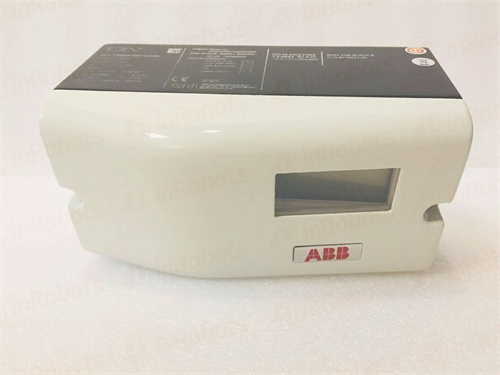
The ABB V18345-1020120001 is an electro – pneumatic positioner designed for precise control of industrial valves2. It combines advanced accuracy, versatile control capabilities, and easy setup through auto – stroke functions
The ABB CI854AK01 is a PROFIBUS – DP/V1 interface module1. It is mainly used to connect remote I/O and fieldbus instruments via the PROFIBUS – DP protocol
The V18345 – 1020120001 is an intelligent valve positioner of ABB. It is mainly used to drive pneumatic actuators of linear – stroke valves1. Its core function is to accurately control the opening and closing of valves by receiving control signals. It can convert the input electrical signal into a corresponding pneumatic signal to drive the valve actuator to move, thereby achieving precise control of the valve position.