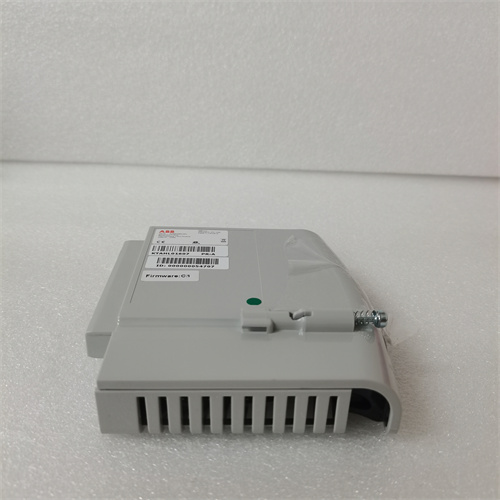
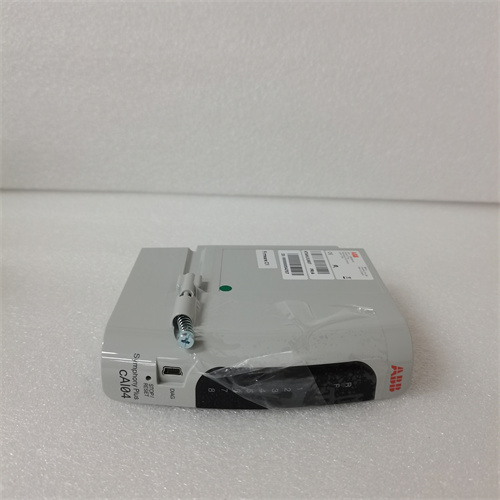
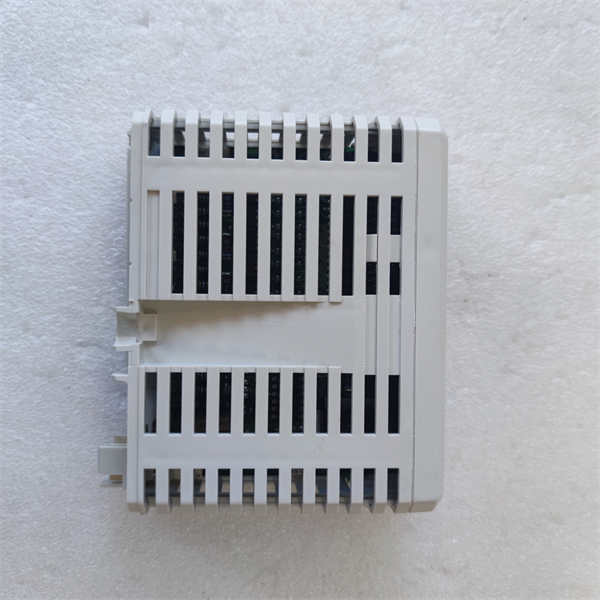
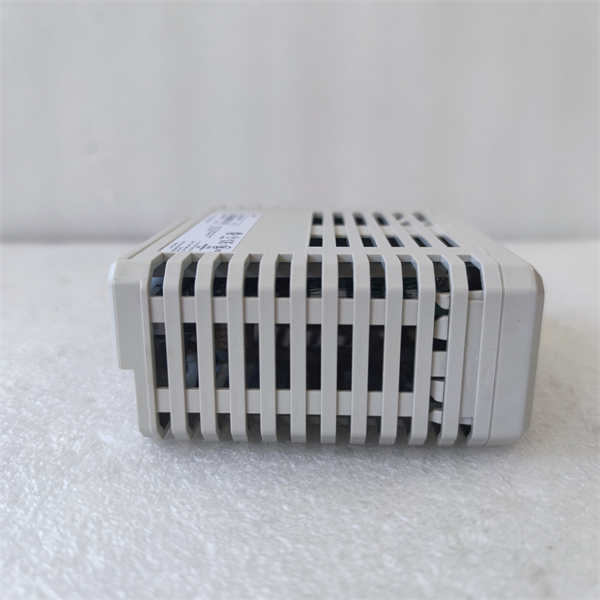
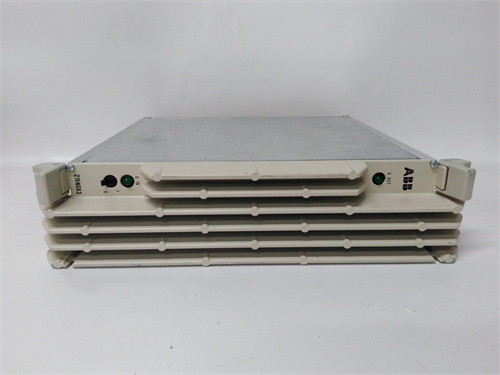
Current and voltage: Rated current is 5A, rated voltage is 220V, resistance is 5 ohms.
Torque: Rated torque up to 680,000 lb-in.
Output frequency: 230.
Size and weight:
Size: Specific size information is not available at this time, but please note that the device comes in 15 case sizes ranging from 0.16 to 200 HP.
Measuring range: 0… 600 bar, 0… 8700 psi, 0… 60 MPa.
System interface: threaded connection G 1/4 internal thread.
Working voltage: 18… 30 DC V.
Output quantity: 2.
Output signal: switching signal, IO-Link (configurable).
Electrical design: PNP/NPN.
Switching output DC voltage drop Maximum: 2.5V.
Continuous current load of switching output DC: 150 mA (200 mA @ 60 °C); 250 mA @ 40 °C.
Short circuit protection: Yes, the type is pulse.
Overload protection: Yes.
Response time: < 3 ms.
Ambient temperature: -25… 80 °C.
Storage temperature: -40… 100 °C.
Shell protection level: IP 65, IP 67.
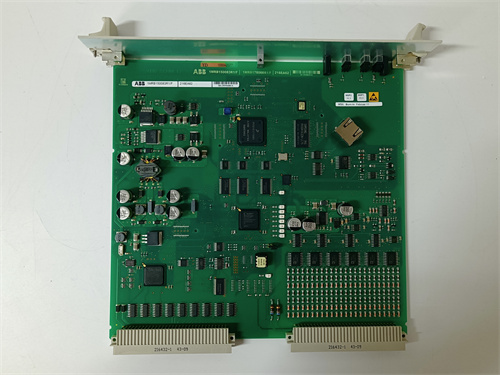
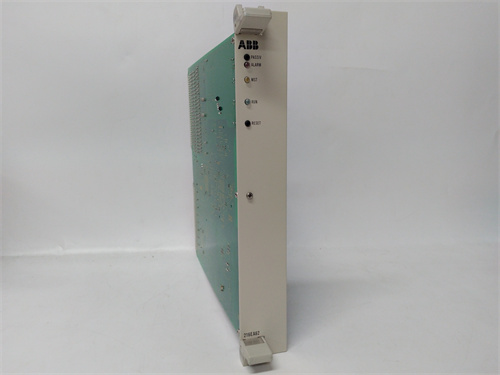
Model Number: 500BIO01 1MRB150005R1/J
Type: DCS PLC Module
Manufacturer: ABB
Input Voltage: X volts
Output Voltage: Y volts
Communication Ports: Z ports
Operating Temperature: -10°C to 60°C
Dimensions: L x W x H mm
Model: 500CIM05 1MRB150077R1/B
Type: Field Control Module (FCM)
Compatibility: ABB 800xA DCS
Input Channels: 16 digital input channels
Input Voltage: 24 VDC
Input Signal Type: Digital
Enclosure: DIN rail mounted
Operating Temperature: -25°C to 60°C
Communication: Profibus DP communication protocol
CPU Type: 500CPU05
Model Number: 1MRB150081R1/E
Compatibility: Designed to work within ABB’s DCS system
Input/Output Channels: Varied based on configuration
Communication Interfaces: Multiple communication ports for connectivity
Power Supply: Voltage requirements and power consumption details
The ABB 500SCM01 1MRB200059/C 1MRB15004R0001 is a DCS (Distributed Control System) PLC (Programmable Logic Controller) module. Here are some details about this product:
Product Name: ABB 500SCM01
Product Description: DCS PLC Module
Product Parameters:
Model Number: 1MRB200059/C
Part Number: 1MRB15004R0001
Uses: As a control unit module, suitable for various industrial applications, such as process control, machine control, automatic production line, etc.
Channels: Typically equipped with multiple input and output channels to connect sensors, actuators, motors, and other external devices.
Communication interface: Supports a variety of communication protocols, such as EtherNet/IP, PROFIBUS-DP, MODBUS, etc., to meet the communication needs of different devices.
Size and weight:
Dimensions: The net depth/length of the product is 350.52 mm, the net height of the product is 129.54 mm, and the net width of the product is 482.6 mm.
Digital output: with 16 digital output channels.
Output voltage: The output voltage range is 10 to 30 volts.
Output current: The maximum continuous output current is 0.5A.
Protection: The output is protected against short circuit, overvoltage and overheating.
Output grouping: The output is divided into two separate groups, each with eight output channels and one voltage monitoring input.
Main functions: It is used to connect digital sensors, switches or other digital devices and pass their status information to the control system in order to monitor and control related processes.
Input type: Mainly used to process digital input signals, such as switch states (such as on/off) or sensor signals (such as pulse counts).
Size and weight:
Dimensions: The net depth/length of the product is 350.52 mm, the net height of the product is 129.54 mm, and the net width of the product is 482.6 mm.
Weight: In some cases, the net weight of the product is 0.69 kg,
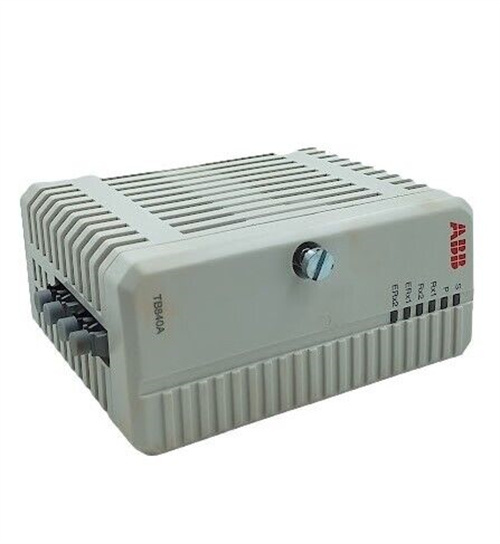
As part of industrial automation, the TB840A 3BSE037760R1 follows ABB’s ModuleBus standard, ensuring seamless integration with ABB’s control system1.
Weight :
One account puts its weight at 2KG2.
Another theory gives a more accurate figure of 0.2 kg (0.44 lb) 1. This can be due to subtle differences between different sources or different batches of products.
function :
It is mainly used for reliable and efficient data transmission. It uses the RS-485 communication protocol to connect multiple Modbus devices, enabling seamless data exchange and control1 between devices within the network.
CPU speed: 400 MHz
Memory: 512 MB RAM
Storage: 4 GB Flash memory
Number of digital inputs: 16
Number of digital outputs: 16
Number of analog inputs: 4
Number of analog outputs: 2
Communication interfaces: Ethernet, USB, serial
This part number likely refers to a specific module within the ABB system. Without further details, it’s difficult to pinpoint the exact function. Here are some possibilities:
I/O Module: It could be an input/output (I/O) module responsible for interfacing with sensors and actuators in the process. It might handle analog or digital signals depending on the specific application.
Communication Module: There’s a possibility it’s a communication module facilitating data exchange between the control system and other devices or networks.