argument
Input voltage: 24VDC (according to [3])
Maximum output current: 10A (according to [3]), but in some cases the maximum output power is up to 5KW and the maximum output current is 300A (according to [5]), which may refer to other models or configurations in the series.
Ambient temperature: -10 to +50 °C (without freezing) (according to [2])
Light source: Visible red semiconductor laser, wavelength 655 nm (according to [2])
specification
Type: Small standard type, possible for DCS distributed control systems (according to [4])
Detection distance: 500 mm (according to [2])
Power supply: dual power supply, power supply and control power supply respectively (according to [5])
Encoder interface: Rich, support hall, incremental, Tonomagawa absolute encoder and other encoders (according to [5])
dimension
Product size: 10cm × 12cm × 4cm (according to [3])
Output voltage: 24VDC (provided by some information sources)
Operating voltage: 240VDC power may also be included (but note that this may refer to different parts or configurations of the entire system)
Operating temperature range: The temperature range given by different information sources varies, such as -40 ° C to +85 ° C and -40 to 100 ° C, which may vary by model or configuration
Current: 100-400A (provided by some information sources)
specification
Distributed and modular: DX581-S features a distributed and modular design for easy installation, maintenance and expansion
Communication interface: Through the industry standard fieldbus to communicate with the parent controller and PLC
Size and weight
Size:
100mm x 50mm x 20mm (provided by some information sources)
argument
Rated power: 1.5kW
Input voltage: 380 V AC
Output voltage: 0-380 V AC
Output frequency: 0-600 Hz
Operating temperature: -10°C to +40°C
Protection level: IP20
specification
High precision: Using vector control technology, high precision speed and torque control can be achieved
High reliability: The use of mature design and manufacturing process to ensure the long-term stable operation of products
High efficiency: The use of high efficiency power devices, reduce the power consumption of the inverter
Multiple functions: Provide soft start, soft stop, overload protection, undervoltage protection and other functions
Output current: 0-500A (additional information indicates 100-400A)
Output power: 0-400kW
specification
Voltage current value: continuously adjustable from zero to rated value
Protection function: over current protection, over voltage protection, short circuit protection, overload protection
Display function: voltage, current simultaneously LED digital tube display
Pulse operation: can be equipped with a time controller to form a pulse seasoned power supply
Intelligent: It can be connected with the computer to form an intelligent power supply controlled by the computer
Size and weight
Dimensions: Product net length 9800mm, product net height 850mm, product net width 92mm (this information may include packaging or overall dimensions, not the module itself)
Output frequency: 52kHz (note that this may refer to the frequency of a certain signal or operation related to the voltage monitoring card, not directly to the voltage frequency)
specification
Type: Voltage monitoring card
Main functions: real-time monitoring of the voltage in the system to ensure that the system can operate within a safe voltage range
Size and weight
Size: One saying is 16cm x 16cm x 12cm, but please note that this is not an official size given directly, it may be an approximation or a specific application size.
Weight: 0.8kg to 3.17Kg, again, this range may vary from batch to batch or configuration.
Voltage: The DSQC355A is typically supplied from 115-220V, but 24V May be used in some applications, depending on system configuration and manufacturer specifications.
Current: In some applications, the DSQC355A may have a current range of 100-400A, but please note that this may not be the same as the supply current, and the exact value may vary by model and configuration.
Operating temperature: Usually designed to operate within a specific temperature range, such as 60 ° C, but the specific operating temperature range may vary depending on manufacturer specifications and application environment.
specification
Functions: DSQC355A mainly provides the processing function of analog input and output signals, usually including 4 analog input signals and 4 analog output signals.
Interfaces: Support for multiple interfaces and protocols, such as Hot-Plug, and integration with other industrial automation equipment and systems.
Module type: As a distributed I/O module, DSQC355A plays an important role in industrial automation systems, responsible for signal acquisition, processing and transmission.
Rated voltage: The specific value is not directly given, but the general relay will have different rated voltage according to the application scenario.
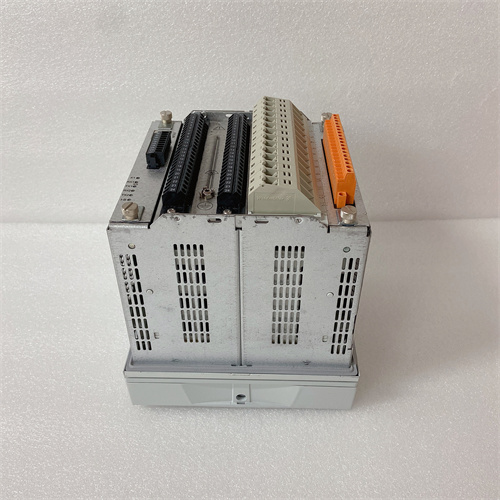
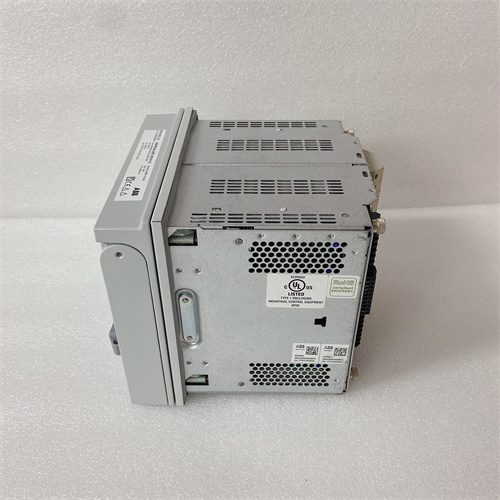
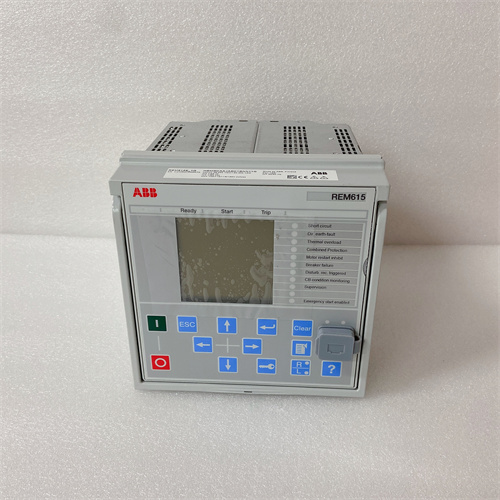
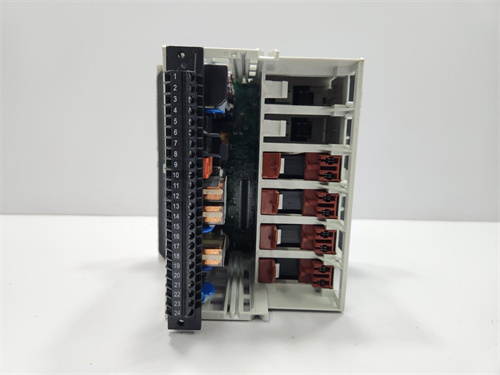
Current rating: Again not given directly, but the REM615 is capable of handling a wide range of currents, such as 100-400A.
Rated frequency: The specific value is not mentioned, but usually matches the standard frequency of the power system.
Operating temperature: Operating temperature range is -20°C to +50°C, storage temperature range is -40°C to +70°C.
Ac/DC power supply: The input voltage range of the REM615 is 12-48VDC, indicating that it uses DC power.
Rated voltage: The specific parameters are not directly given, but according to similar products, it may cover a variety of voltage levels, need to refer to the specific model or data table.
Rated current: Again, specific parameters are not given directly and may vary depending on the model.
Rated frequency: Not given directly, but usually matches the standard frequency of the power system, such as 50Hz or 60Hz.
Operating temperature: In the range of -20°C to +50°C (according to some information), which may vary depending on the model or environmental requirements.
Ac/DC power supply: The input voltage range is usually 12-48VDC (according to some sources) for power supply.
specification
IEC61850 communication protocol support: This is an international standard widely used in substation automation for efficient communication between equipment.
argument
Voltage: 24V (according to some information)
Current: 100-400A (according to some information)
Rated frequency: User can choose 50/60 Hz
specification
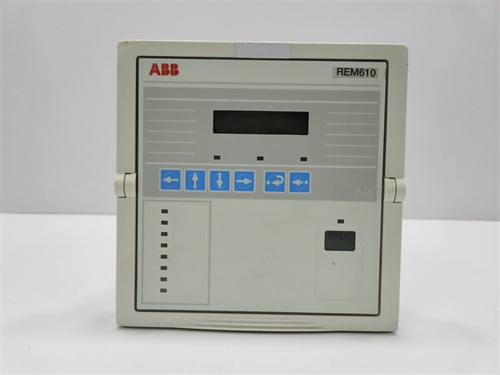
Protection functions: including three-phase thermal overload protection, three-phase overcurrent protection, three-phase short-circuit protection, non-directional grounding fault protection, three-phase unbalance protection, reverse phase protection, etc
Communication protocols: Support communication protocols such as SPA bus, IEC 60870-5-103 and Modbus (RTU and ASCII)
Size and weight
Size: The specific size is not directly given, but depending on the type of relay, it is generally more compact and suitable for a variety of installation environments.
Weight: Approx. 2KG (according to some information)