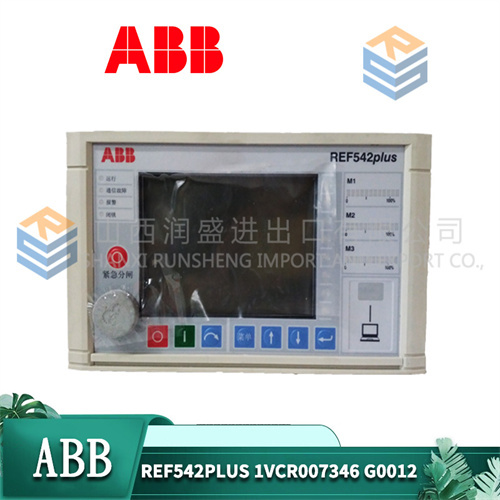
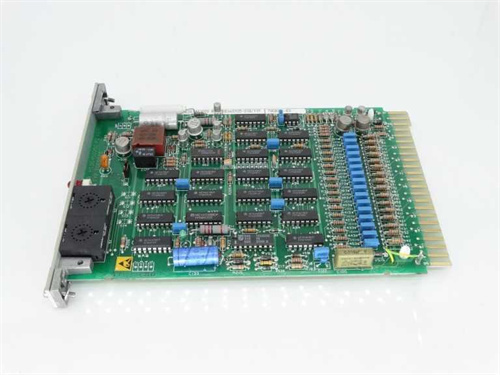
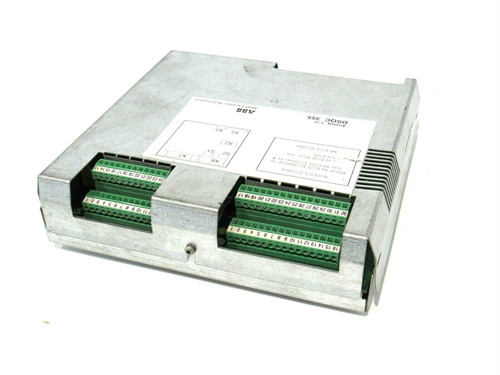
Power Substations: It is widely used in power substations for the protection and monitoring of transformers, feeders, and busbars. It can quickly detect faults and isolate the faulty section to prevent the spread of the fault and ensure the safety of the power grid.
Industrial Power Systems: In industrial power systems, it can be used to protect and control high – voltage and medium – voltage electrical equipment, such as motors, generators, and switchgear.
Renewable Energy Power Plants: In wind farms and solar power plants, it can monitor and protect the power generation equipment and the connection to the grid, ensuring the stable operation of renewable energy systems.
Weight and Dimensions
Weight: Approximately 5 – 7 kg, which is relatively light considering its functionality, making it easy to handle and install.
Dimensions: The typical dimensions are around 300 mm (height) x 250 mm (width) x 150 mm (depth). Its compact size allows for installation in standard substation cabinets.
Features
Advanced Algorithm: It uses advanced protection algorithms, such as digital signal processing and artificial intelligence – based algorithms, to improve the speed and accuracy of fault detection and protection.
User – Friendly Interface: It has a user – friendly interface with a large LCD display and intuitive menu navigation. Operators can easily configure the protection settings, view measurement data, and diagnose faults.
Self – Diagnosis Function: The device has a self – diagnosis function that can continuously monitor its own operation status. It can detect internal faults and provide early warnings, reducing the risk of unexpected failures.
Industrial Automation: It is used to collect and monitor analog signals from sensors like temperature, pressure and flow in industrial production lines, providing data support for process control.
Power Monitoring: In power plants and substations, it monitors analog parameters such as voltage and current to ensure the safe and stable operation of the power system.
Building Automation: Monitors environmental parameters like temperature and humidity in buildings and is used in air conditioning systems and lighting control systems.
Weight and Dimensions
Weight: There is no clear and consistent data, with some sources saying 0.42 kg – 0.771 kg.
Dimensions: 144 mm x 127 mm x 25 mm (5.67 inches x 5 inches x 1 inch).
Features
Multifunctional Input: Supports various types of analog input signals, which is convenient for connecting different sensors.
High Resolution: 16 – bit resolution enables accurate measurement of input signal changes.
Easy Configuration: It can be easily configured through software to meet different application requirements.
Good Compatibility: Designed for ABB’s Symphony Plus control system and can be well integrated with other system components.
Weight: Approximately 0.5 kg.
Dimensions: Usually has a compact design with dimensions of about 150 mm in length, 100 mm in width and 50 mm in height.
Features
High Channel Density: With 14 input channels, it offers a high channel density, reducing the need for additional modules.
Isolation: Provides electrical isolation between input channels and the system to prevent electrical interference.
Easy Configuration: Can be easily configured through software, allowing users to set up input types, ranges and sampling rates.
Stability and Reliability
Industrial-Grade Design: Built with high-quality components to withstand harsh industrial environments, including temperature variations, vibrations and electrical noise.
Redundancy Options: Some versions may support redundancy, ensuring continuous operation in case of component failure.
Error Detection and Correction: Equipped with error detection and correction mechanisms to ensure data accuracy and integrity.
Weight: 1 kg.
Dimensions: 108 mm in height, 225 mm in length, 135 mm in width.
Features
High Processing Power: Can handle complex control tasks and data processing.
Flexible I/O Configuration: Allows easy connection and control of various devices.
User-friendly Interface: Facilitates quick setup and maintenance.
Compact Design: Saves space in control cabinets.
Weight: 1.2 kg.
Dimensions: 150mm×100mm×50mm.
Features
Triple Modular Redundancy: Adopts TMR architecture, which can ensure continuous operation even if one module fails.
Flexible Communication: Supports multiple communication protocols, enabling seamless integration with other devices.
Easy Programming: Uses IEC 61131-3 programming languages, which is convenient for users to program and configure.
Built-in Diagnostics: It has built-in diagnostic functions, which can quickly identify and locate faults.
Stability and Reliability
High-Quality Components: Made of high-quality materials and components, which can resist harsh industrial environments.
Redundancy Design: The TMR structure and redundant communication design improve system stability and reliability.
Strict Certification: With CE, UL, SIL 3 and other certifications, it meets high safety and reliability standards.
Power Generation: It is used to monitor and control the processes of power plants, such as steam turbine control and power distribution management.
Oil and Gas: In oil and gas production, it is responsible for controlling the extraction, transportation and refining processes, monitoring parameters like pressure and flow.
Chemical Industry: It plays a role in chemical reaction control, temperature and pressure regulation in chemical plants.
Water Treatment: It is used to manage water purification, sewage treatment and water supply systems, controlling equipment such as pumps and valves.
Weight and Dimensions
Weight: 0.6 kg.
Dimensions: Depth/Length – 210 mm, Height – 160 mm, Width – 90 mm.
Industrial Automation: It is widely used in industrial automation systems to monitor parameters such as temperature, pressure, and flow rate.
Building Automation: In smart buildings, it can be used to collect data from environmental sensors to achieve intelligent control of temperature, lighting, and ventilation.
Energy Management: It plays an important role in energy management systems, monitoring power consumption and other parameters of equipment.
Weight and Dimensions
Weight: Approximately 0.5 kg, which is relatively light and easy to install and carry.
Dimensions: The size is 120mm×80mm×50mm (L×W×H), with a compact design that saves space.
The primary function of the HIEE300661R0001 is to act as a process controller, regulating and monitoring industrial processes within automation systems.
It can interface with various input/output modules, expanding its control capabilities
Communication with CPUs and other system components is facilitated through its built-in bus interface
Weight:
The exact weight may vary depending on the manufacturer and any additional accessories included. However, it is generally lightweight, designed for easy installation and maintenance.
One source mentions a weight of 2KG2, but this should be confirmed with the specific manufacturer’s specifications.
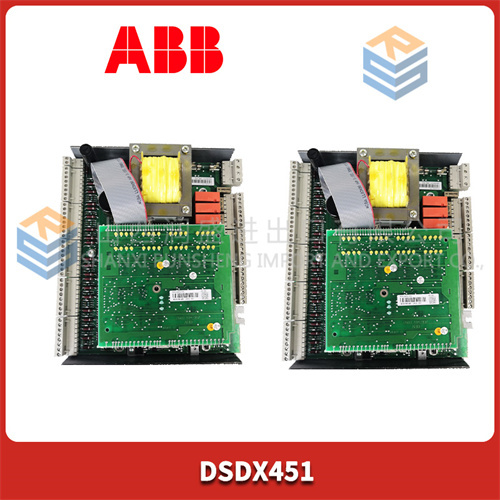
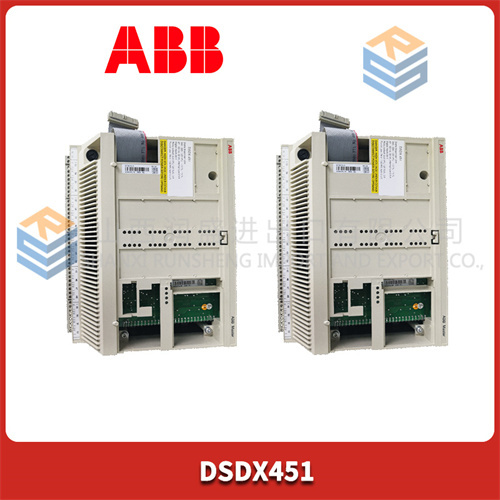
The function of the DSDX451 component is dependent on its application. It may serve as a sensor, actuator, controller, or any other functional element in a larger system. Its primary role is to perform a specific task or provide a particular functionality within the system it is integrated into, such as measuring a physical parameter, controlling a process, or enabling communication between system components.
Specifications and Parameters:
Model Number: DSDX451
Type: This is a specific component or device, likely used in industrial, automotive, or electronic applications. The exact application may vary depending on the manufacturer and industry.
Technical Standards: The DSDX451 may comply with industry-specific standards or regulations relevant to its function and application.
Electrical Characteristics: Depending on its application, it may have specific voltage and current ratings, power consumption, frequency response, or other electrical parameters.
Environmental Ratings: It may be rated for operation within a specific temperature range, humidity levels, vibration resistance, or other environmental factors.
Weight: Approximately 5 – 10 kg.
Dimensions: The overall dimensions are about 200mm in length, 150mm in width and 100mm in height, but it may vary slightly depending on the specific model.
Characteristics
High Precision: With high-precision encoder and precise control system, it can achieve high-precision motion control.
High Reliability: The use of high-quality materials and advanced manufacturing processes ensures the reliability and stability of the motor in harsh working environments.
Good Dynamic Performance: It can quickly start, stop and reverse, and has good acceleration and deceleration performance.
Weight: Typically weighs around 50 grams, which is lightweight and convenient for installation in various locations.
Dimensions: Usually has dimensions of approximately 100mm in length, 50mm in width, and 30mm in height, allowing for easy integration into compact control panels.
Characteristics
High Precision: With a 12-bit resolution, it offers high accuracy in signal conversion and data acquisition.
Reliability: Built with high-quality components, it can operate stably in harsh industrial environments with a wide temperature range from -25°C to 60°C.
Easy Configuration: The device can be easily configured through software or DIP switches, providing flexibility for different application requirements.
Model Number: DSQC355A
Operating Temperature Range: Typically -10°C to 60°C, but may vary depending on specific application requirements.
Voltage Rating: Varies depending on the specific application and configuration, typically within industrial standard ranges.
Current Rating: Varies depending on the specific application and configuration, designed to meet the demands of industrial applications.
Communication Interface: Equipped with standard industrial communication protocols for seamless integration into existing systems.
Weight:
The DSQC355A has a net weight of approximately 0.7 kilograms (1.54 pounds), offering a robust yet manageable solution for industrial installations.