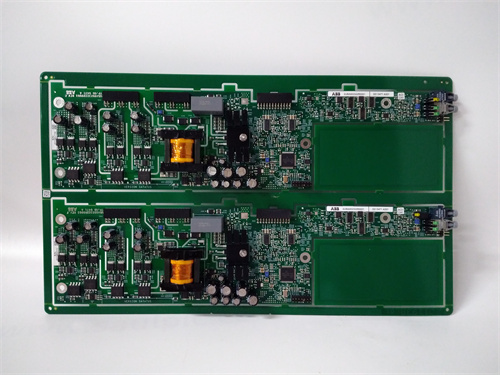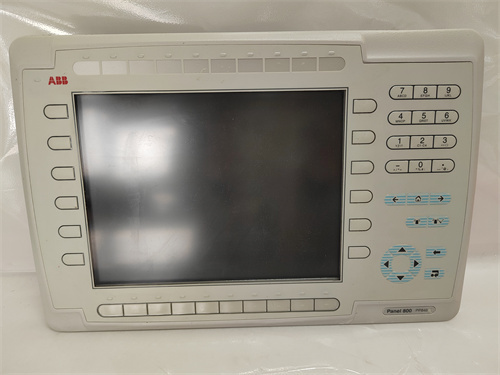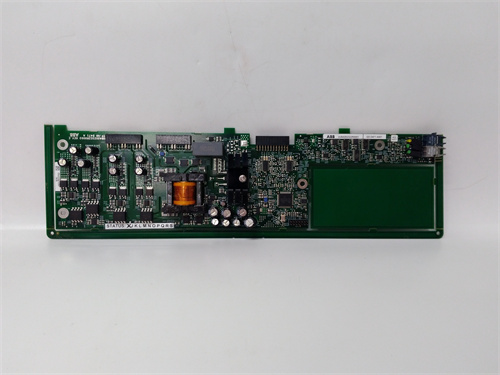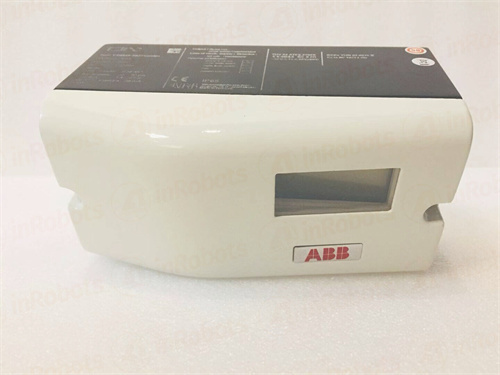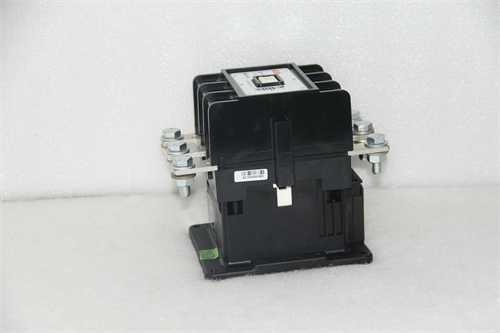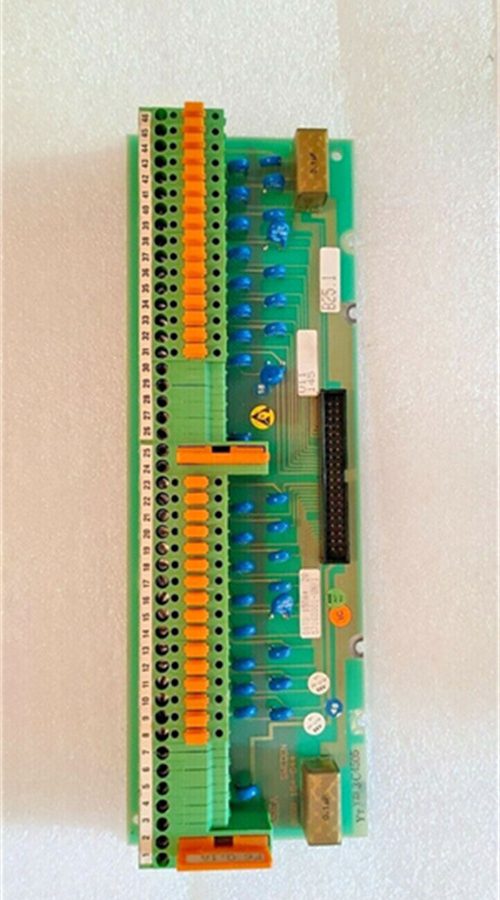
Application Areas: The PE1315A is widely used in industries such as manufacturing, food and beverage, and water treatment. In manufacturing, it can control the production process of various products, from electronic components to mechanical parts. In the food and beverage industry, it can be used to control the filling, packaging, and storage processes. In water treatment plants, it can manage the water purification and distribution systems.
Application Case: In a food packaging plant, the PE1315A was used to control the packaging process. It received input signals from sensors that detected the presence and position of food products on the conveyor belt. Based on these signals, it controlled the operation of the packaging machines, including the sealing and labeling processes. As a result, the packaging efficiency increased by 20%, and the packaging error rate decreased by 15%.
5. Competitor Comparison
Compared to other similar products in the market, the PE1315A has several advantages. Its high – density I/O configuration allows for more connections in a single unit, reducing the need for additional devices. The robust communication capabilities ensure reliable data transmission, which is often lacking in some competing models. Additionally, its easy – to – use programming interface makes it more accessible to a wider range of users, while some competitors may have more complex programming requirements.
6. Selection Suggestions
I/O Requirements: Determine the number of input and output channels you need for your application. If you have a large number of sensors and actuators to connect, the high – density I/O of the PE1315A will be a great advantage.
Communication Needs: Consider the communication requirements of your industrial system. If you need long – range data transmission, the RS – 485 interface and Modbus RTU protocol of the PE1315A are suitable.
Programming Expertise: Evaluate the programming skills of your engineering team. If your team has limited programming experience, the user – friendly programming interface of the PE1315A will be beneficial.
Budget: Compare the cost of the PE1315A with your budget. However, also consider its long – term benefits, such as improved productivity and reduced maintenance costs.
High – Speed Data Processing: The PPC380AE01 HIEE300885R1 can process large amounts of data at a very high speed. It can execute up to 1 million instructions per second, which is much faster than many comparable products in the market. This high – speed processing allows for real – time control and monitoring of industrial processes, reducing the risk of system delays and improving overall productivity.
Large Memory Capacity: With 2 GB of RAM and 8 GB of Flash memory, it can store a vast amount of data, including control programs, historical data, and configuration settings. This large memory capacity enables the device to handle complex control algorithms and long – term data storage, which is useful for system analysis and troubleshooting.
Multiple Communication Interfaces: It supports multiple communication interfaces, such as Ethernet, USB 2.0, and RS – 485, along with popular communication protocols like Modbus TCP, Profibus DP, and Ethernet/IP. This flexibility in communication allows for easy integration with a wide range of industrial devices, making it suitable for diverse industrial applications.
4. Application Areas and Application Cases
Application Areas: The PPC380AE01 HIEE300885R1 is suitable for various industries, including manufacturing, energy, and water treatment. In manufacturing, it can be used to control assembly lines, automated storage and retrieval systems, and quality control processes. In the energy sector, it can monitor and control power generation and distribution systems. In water treatment plants, it can manage the flow of water, chemical dosing, and filtration processes.
Application Case: In a large – scale manufacturing plant, the PPC380AE01 HIEE300885R1 was used to control an automated assembly line. By precisely processing the input signals from sensors on the line, it coordinated the movement of robotic arms, conveyor belts, and other equipment. As a result, the production efficiency increased by 30%, and the defect rate decreased by 25%.
5. Competitor Comparison
Compared to other similar products in the market, the PPC380AE01 HIEE300885R1 has several advantages. Its high – speed data processing and large memory capacity give it an edge in handling complex industrial processes. The multiple communication interfaces and support for various protocols make it more versatile and easier to integrate into existing systems. Additionally, its wide operating temperature range allows it to function reliably in harsh industrial environments, which is not always the case with some competing products.
Compared with other similar products in the market, the VME172PA652SE VME172PA – 652SE has several advantages. It offers higher reliability with a lower failure rate, which means less downtime and maintenance costs. Its energy – saving feature also makes it more cost – effective in the long – term operation. Additionally, its easy integration property allows for faster deployment in industrial systems.
6. Selection Suggestions
Compatibility: Ensure that the VME172PA652SE VME172PA – 652SE is compatible with your existing industrial automation system, including sensors, actuators, and other control devices.
Installation Environment: Consider the installation environment, such as temperature, humidity, and the presence of dust or corrosive substances. Make sure the model can operate reliably in such conditions.
Budget: Compare the price of the VME172PA652SE VME172PA – 652SE with your budget. However, also take into account its long – term benefits, such as energy savings and reduced maintenance costs.
7. Precautions
Installation: Follow the installation instructions carefully. Ensure proper grounding and wiring to prevent electrical interference and ensure the safety of the equipment.
Safety Regulations: Comply with all relevant safety regulations during the installation and operation of the VME172PA652SE VME172PA – 652SE.
Maintenance: Regularly check the device for any signs of damage or wear. Clean the device and its connectors to prevent dust accumulation.
Industrial Automation: In manufacturing plants, it can be used for process monitoring and control. For example, it can count the number of parts produced on an assembly line, measure the speed of production machinery, and trigger alarms if certain thresholds are exceeded.
Energy Management: In power generation and distribution systems, it can measure the frequency of the electrical grid, monitor the consumption of electricity in industrial facilities, and help in optimizing energy usage.
Transportation: In automotive and aerospace industries, it can be used for engine speed monitoring, wheel rotation counting, and other applications related to vehicle performance and safety.
6. Selection Suggestions
Function Requirements: Determine your specific needs, such as the required counting range, frequency measurement range, and the type of input signals. Make sure the CC – PCNT02 can meet these requirements.
Compatibility: Check the compatibility of the device with your existing control system, including the power supply voltage, communication interfaces, and software. Ensure that it can integrate smoothly into your current setup.
Environment: Consider the installation environment, such as temperature, humidity, and the presence of electrical noise. Choose a device that can operate reliably in these conditions.
Cost – Benefit Analysis: Compare the cost of the product with its features and performance. Consider the long – term benefits, such as improved productivity, reduced downtime, and better quality control.
7. Precautions
Installation: Follow the installation instructions carefully to ensure proper grounding and connection. Incorrect installation can lead to inaccurate counting or measurement, as well as electrical safety hazards.
Maintenance: Regularly check the device for any signs of damage or wear. Clean the device and its connectors if necessary, especially if it’s installed in a dusty environment.
Calibration: Periodically calibrate the device to maintain its accuracy. Calibration ensures that the counting and frequency measurement results are reliable.
Industrial Manufacturing: In factories, it can be used to monitor and control production processes, such as in automotive manufacturing, food processing, and chemical production.
Energy Management: In power plants, it can collect data from sensors on generators, transformers, and power lines to optimize energy production and distribution.
Environmental Monitoring: For monitoring environmental parameters such as air quality, water quality, and weather conditions.
If it’s a Network Communication Device
Broadcast and Media: In television studios, it can be used to distribute and manage SDI – based video and audio signals between cameras, switchers, and recorders.
Surveillance Systems: To connect multiple SDI – enabled cameras in a large – scale surveillance network and transmit the video signals to a central monitoring station.
6. Selection Suggestions
Function Requirements: Clearly define your specific requirements. If you need a data acquisition device, determine the number of channels, the type of signals (analog or digital), and the required sampling rate and resolution. If it’s a network communication device, consider the number of ports and the supported protocols.
Compatibility: Ensure that the FC – SDI – 1624 is compatible with your existing equipment, including sensors, actuators, network switches, and control systems. Check the electrical specifications, communication interfaces, and software compatibility.
Environment: Consider the installation environment, such as temperature, humidity, and the presence of dust or corrosive substances. Make sure the device can operate reliably in such conditions.
Cost – Benefit Analysis: Compare the cost of the product with its features and performance. Consider the long – term benefits, such as improved efficiency, reduced downtime, and better system integration.
Power Generation Plants: The UNITROL 1010 is widely used in different types of power generation plants, including hydroelectric, thermal, and gas – fired power plants. It ensures the stable and efficient operation of the generators, which is essential for providing a continuous supply of electricity to the grid.
Industrial Power Systems: In large industrial facilities, such as steel mills, chemical plants, and mining operations, the UNITROL 1010 can be used to control the generators that supply power to the industrial processes. This helps in maintaining the power quality and stability required for the smooth operation of the industrial equipment.
Renewable Energy Systems: With the increasing use of renewable energy sources like wind and solar, the UNITROL 1010 can be used in synchronous generators in wind farms or in hybrid power systems. It helps in integrating the renewable energy into the power grid by providing stable voltage and reactive power control.
6. Selection Considerations
Generator Capacity: Choose a UNITROL 1010 model with an appropriate output current capacity based on the size and rating of the generator. Ensure that the excitation system can provide sufficient excitation power to the generator under all operating conditions.
Grid Requirements: Consider the specific requirements of the power grid, such as voltage regulation accuracy, reactive power control capabilities, and communication protocols. Make sure the UNITROL 1010 can meet these grid requirements.
Environmental Conditions: Evaluate the operating environment, including temperature, humidity, and the presence of dust or corrosive substances. Select a model that can operate reliably in the given environmental conditions.
Cost – Benefit Analysis: Compare the cost of the UNITROL 1010 with its features and performance. Consider the long – term benefits, such as reduced maintenance costs, improved power quality, and enhanced system reliability.
The CI871 offers several outstanding features. Firstly, its high – speed Ethernet communication allows for rapid data transfer between devices. In a large – scale chemical plant, it can transfer real – time process data from multiple sensors to the DCS within milliseconds, enabling quick decision – making and control. This high – speed communication led to a 12% increase in production efficiency. Secondly, its support for Foundation Fieldbus provides seamless integration with field devices. It can communicate with a wide range of Foundation Fieldbus – compliant sensors and actuators, reducing the complexity of system integration and improving the overall reliability of the industrial control system.
4. Application Areas and Application Cases
The CI871 is suitable for a wide range of industries, including oil and gas, power generation, and chemical processing. In the oil and gas industry, it can be used to connect well – head sensors and control valves to the central control system. In a specific offshore oil platform, the CI871 was installed to communicate with pressure sensors, temperature sensors, and flow meters on the well – head. By providing real – time data to the control system, it improved the safety and efficiency of oil production, reducing the risk of equipment failures by 15%.
5. Competitor Comparison
Compared to other similar communication interface modules in the market, the CI871 has distinct advantages. Its high – speed communication and support for Foundation Fieldbus are often superior. Some competing products may have lower communication speeds, which can lead to delays in data transfer and affect the real – time control of industrial processes. Additionally, the CI871‘s compatibility with Yokogawa’s well – established DCS systems provides a more integrated and reliable solution for users.
6. Selection Suggestions
When selecting the CI871, several factors should be considered. Compatibility is crucial. Ensure that it is compatible with your existing industrial control system, especially the DCS and field devices you are using. Evaluate your specific communication requirements, such as the required data transfer speed, the number of devices to be connected, and the supported communication protocols. Consider the installation environment; if it has high levels of temperature variations, electrical interference, or vibration, the module’s operating temperature range and robustness should be taken into account. Finally, budget is also a factor; while the CI871 offers high – quality performance, it should fit within your financial plan.
The UNITROL 1010 is suitable for a wide range of power generation applications, including small – scale and medium – scale power plants, diesel generators, and renewable energy power generation systems such as wind turbines and small – hydro power plants. In a small – scale diesel generator power plant, the UNITROL 1010 was installed to regulate the generator’s output voltage. By maintaining a stable voltage, it improved the power quality supplied to a local community, reducing the number of power – related equipment failures by 20%.
5. Competitor Comparison
Compared to other similar automatic voltage regulators in the market, the UNITROL 1010 has distinct advantages. Its high – precision voltage regulation and fast dynamic response are often superior. Some competing products may have lower voltage regulation accuracy, which can lead to voltage fluctuations and affect the performance of electrical equipment. Additionally, the UNITROL 1010‘s compatibility with different power generation systems and its communication capabilities for remote monitoring and control make it a more attractive choice for users.
6. Selection Suggestions
When selecting the UNITROL 1010, several factors should be considered. Compatibility is crucial. Ensure that it is compatible with your generator’s type and specifications, including the rated voltage, current, and power. Evaluate your specific power generation requirements, such as the required voltage regulation accuracy and the expected dynamic response. Consider the installation environment; if it has high levels of temperature variations, humidity, or electrical interference, the module’s operating temperature range and robustness should be taken into account. Finally, budget is also a factor; while the UNITROL 1010 offers high – quality performance, it should fit within your financial plan.
The 3HAC041443 – 003 DSQC639 is suitable for a wide range of industries, including manufacturing, automotive, and food processing. In the manufacturing industry, it can be used to control the operation of production lines, such as the movement of conveyor belts and the operation of robotic arms. In an automotive manufacturing plant, the 3HAC041443 – 003 DSQC639 was used to control the painting process. By accurately controlling the spraying time and pressure, it improved the painting quality and reduced the paint waste by 15%.
5. Competitor Comparison
Compared to other similar products in the market, the 3HAC041443 – 003 DSQC639 has significant advantages. Its high reliability and ease of integration are often superior. Other products may have a higher failure rate or require more complex integration processes, which can lead to increased production costs and downtime.
6. Selection Suggestions
When selecting the 3HAC041443 – 003 DSQC639, the following factors should be considered. Firstly, compatibility is crucial. Ensure that it is compatible with your existing automation system, including sensors, actuators, and communication protocols. Secondly, consider the installation environment. If the environment has high levels of dust, humidity, or temperature variations, the module’s operating temperature range and durability should be taken into account. Finally, budget is also an important factor. Although the 3HAC041443 – 003 DSQC639 offers excellent performance, it is necessary to ensure that it fits within your budget.
7. Precautions
When using and installing the 3HAC041443 – 003 DSQC639, the following precautions should be taken. Firstly, follow the safety regulations strictly. Disconnect the power supply before installation or maintenance to prevent electric shock. Secondly, follow the installation instructions carefully to ensure proper grounding and connection. Incorrect installation may lead to system malfunctions or safety hazards. Finally, perform regular maintenance, including checking the power supply, communication links, and input/output signals. Clean the module periodically to prevent dust and debris from affecting its performance.
High – Precision Control: When used for control applications, it can provide accurate and stable control of industrial equipment. This precision helps in improving the quality of the production process and reducing waste. For example, in a chemical mixing process, it can precisely control the flow rate of different chemicals, ensuring a consistent product quality.
Versatility: With multiple input/output channels and communication interfaces, it can be easily integrated into different industrial systems. It can be used in various industries, including manufacturing, energy, and water treatment.
Reliability: Built with high – quality components, it is designed to withstand the harsh conditions of industrial environments. It has a low failure rate and long service life, reducing maintenance and replacement costs.
5. Application Areas
Manufacturing: In manufacturing plants, it can be used to control the operation of production lines. For instance, it can control the movement of robotic arms, the operation of machine tools, and the filling of products in packaging machines.
Energy Sector: In power plants, it can be used for monitoring and controlling parameters such as generator output, turbine speed, and temperature in different parts of the plant.
Water Treatment: In water treatment facilities, it can control the operation of pumps, valves, and filters based on the water quality parameters measured by sensors.
6. Installation and Maintenance
Installation: The installation of the DSCB – 01C should be carried out by trained personnel following the manufacturer’s instructions. This includes proper wiring of the power supply, input/output connections, and communication interfaces. Correct grounding is essential to prevent electrical interference.
Maintenance: Regular maintenance involves checking the status of the input/output signals, the communication links, and t
Control Function: It may be used to control the operation of industrial equipment such as motors, valves, or other actuators. For example, in a manufacturing process, it could regulate the speed of a conveyor belt motor to ensure a consistent production rate.
Data Acquisition: The PP846A might be capable of collecting data from various sensors. These sensors could measure parameters like temperature, pressure, or flow rate. The collected data can then be used for monitoring, analysis, or to trigger certain control actions.
Communication: It may support communication protocols to exchange data with other devices in the industrial network. This allows for integration with a larger control system or for remote monitoring and control.
Working Principle
If it’s a control device, it typically receives input signals (such as setpoints or feedback from sensors). Based on pre – programmed logic or algorithms, it processes these signals and generates output signals to control the connected equipment.
For data acquisition, it interfaces with sensors, converts the analog or digital signals from the sensors into a usable format, and stores or transmits the data.
3. Product Parameters
Supply Voltage: Commonly, it may operate on a standard industrial voltage such as 24 VDC, but this can vary. The voltage tolerance might be within ±10% to ensure stable operation.
Input/Output Channels: It could have a certain number of digital input and output channels, for example, 8 digital inputs and 6 digital outputs. It may also have analog input and output channels, with typical analog input ranges like 0 – 10 V or 4 – 20 mA.
Communication Interfaces: It may support interfaces such as Ethernet for high – speed data transfer, serial ports (RS – 232 or RS – 485) for communication with legacy devices, and possibly support for industrial communication protocols like Modbus.
Operating Temperature Range: A typical range could be from – 20°C to 60°C, allowing it to be used in a variety of industrial environments.
Dimensions: Compact in design, with approximate dimensions of [Length: X mm, Width: Y mm, Height: Z mm] to fit into standard control cabinets.
Application Areas: The AFPS – 11C F7450038EE is suitable for a wide range of industries, including chemical, pharmaceutical, and manufacturing. In the chemical industry, it can be used to control chemical reactions, monitor safety parameters, and prevent leaks. In the pharmaceutical industry, it helps in ensuring the quality and safety of drug production processes.
Application Case: In a pharmaceutical manufacturing plant, the AFPS – 11C F7450038EE was installed to control the sterilization process of medical equipment. It monitored the temperature, pressure, and time parameters during the sterilization cycle. By precisely controlling these parameters, it ensured that the sterilization process was effective and met the strict quality standards. As a result, the number of contaminated products was reduced by 25%, and the overall production efficiency increased by 18%.
5. Competitor Comparison
Compared to other similar products in the market, the AFPS – 11C F7450038EE has several advantages. Its high – speed processing and reliability are often superior, providing more accurate and timely control and safety monitoring. The flexible configuration also makes it a more adaptable choice for different industrial applications, allowing for easy customization to meet specific requirements.
6. Selection Suggestions
Compatibility: Ensure that the AFPS – 11C F7450038EE is fully compatible with your existing industrial control system, sensors, and actuators. Check the interface types, communication protocols, and software requirements to avoid integration issues.
I/O Requirements: Evaluate your specific input/output needs, such as the number of digital and analog channels required, and the signal ranges. The AFPS – 11C F7450038EE offers a suitable configuration for many common industrial applications, but make sure it meets your exact requirements.
Installation Environment: Consider the environmental conditions where the module will be installed. If the environment has high levels of electromagnetic interference, extreme temperatures, or mechanical vibrations, the module’s reliability and wide operating temperature range make it a suitable choice.
Budget: While the AFPS – 11C F7450038EE offers excellent performance and features, it’s important to consider your budget. However, also take into account the long – term benefits, such as improved safety, productivity, and reduced maintenance costs.