Display Type: Liquid Crystal Display (LCD)
Resolution: High-resolution graphics
Input Types: Touchscreen interface
Processor: High-performance processor for fast data processing and response
Communication Interfaces: Supports multiple interfaces such as Ethernet, serial communication, etc.
Operating Temperature: -30°C to 70°C
Storage Temperature: (-40°F to +185°F) / (-40°C to 85°C)
Dimensions and Weight:
Sizes Available: 6.4″, 8″, 10.4″, 12.1″, 15″ series, and standard 19″ rack-mountable
Weight: Approx. 0.82 kg
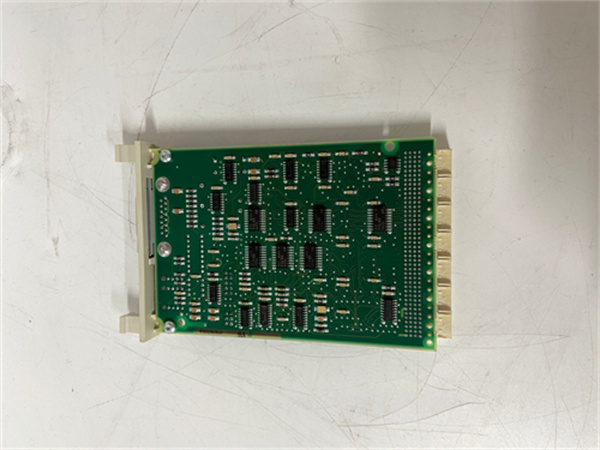
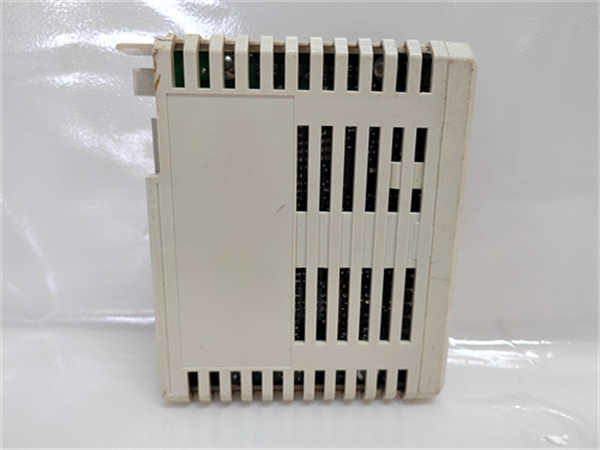
Manufacturer: ABB
Type: Synchronizer Module
Function: Control synchronization of generators with other generators or grids in power systems
Monitoring Capabilities: Monitors voltage and frequency in power systems
Dimensions and Weight:
Weight: 2KG
Communication Protocol: Supports PROFINET IO, a widely used Ethernet communication protocol in the industrial automation field
Communication Speed: Can be selected between 10 Mbps and 100 Mbps, defined in the IEEE 802.3u 10/100 Base-Tx standard
Status Indicators: Equipped with status indicators, which turn green when operating normally and red when a fault occurs
Power and Power Consumption: Receives 24VDC power through the CEX bus, with a maximum current consumption of 250 mA. Under typical operating conditions, the power consumption is 3.8 W, and the maximum power consumption is 6 W
Protection Level: IP20 according to EN60529 and IEC 529 standards, indicating a certain level of dust and water resistance, but not suitable for harsh industrial environments
Automation Direct Productivity 2000 PLC: Modular, rack-based system with a full range of discrete, analog, and special I/O modules, providing over 400 local I/O points. With remote expansion, up to 4,000+ I/O points are available
High-Performance CPU: Features 50Mb memory, fast scan time, and five communication ports, including Ethernet (Modbus TCP, Ethernet/IP Scanner, and Adapter) for programming, expansion, and client/server connectivity
Dimensions and Weight:
Exact Dimensions and Weight: Not provided in the search results.
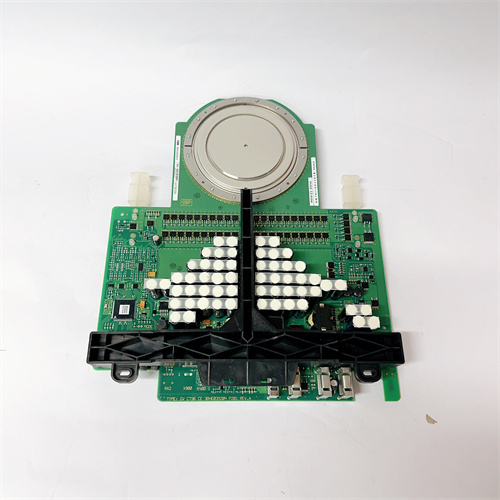
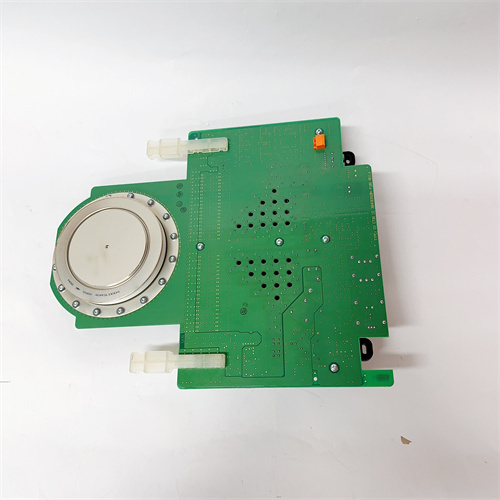
Type: Semiconductor Module / Thyristor Module
IGBT Technology: Integrated Gate Bipolar Transistor
Voltage Rating: 415/440V AC
Frequency Rating: 50Hz
Current Rating: 53A
Power Rating: 100kVAr
Cooling: Natural Cooling / Forced Air Cooling
Control: AC or DC Supply Voltage
Input Voltage: 24VDC
Output Voltage: 24VDC
Maximum Output Current: 10A
Rated Voltage: For converters, the rated voltage is mainly single-phase 220~240V and three-phase 220V or 380~460V, with most low-voltage converters in China rated at 380V12.
Rated Frequency: Typically 50Hz or 60Hz, with China using 50Hz12.
Model: TB820V2.
Brand: ABB.
Power Supply: Dual power redundant input, DC (9-36)V, typical DC24V, with power consumption less than 4W.
Isolation and Protection: DC1500V voltage isolation and reverse polarity protection.
Dimensions and Weight:
Dimensions: 132mm × 105mm × 52mm.
Weight: Approximately 800g (0.8kg).
Display: This touch panel features a high-precision widescreen design with a screen size typically 15.4 inches, providing a clear, detailed visual experience.
Serial ports: includes COM1 RS232 and Communication 2 RS422/RS485 with standard 9-pin D sub contacts.
Size and weight:
Dimensions: The width x height x depth of the front panel is 410 x 286 x 7 mm.
Weight: The touch panel weighs 3.85 kg.
The specific parameters and specifications of the ABB CI546 may vary according to different models and application scenarios. However, it typically supports multiple input and output channels for receiving and sending digital or analog signals. It may also have high-speed communication interfaces for data exchange with other devices and systems.
Features:
High reliability: ABB CI546 modules are designed for stable operation in harsh industrial environments, ensuring reliability and stability over long periods of use.
Real-time: It can quickly respond to the instructions of the host computer or control system, and feedback the state of the machine or production line in real time, which helps to achieve accurate production control and management.
Flexible Integration: ABB’s controller modules are designed to seamlessly integrate into automation systems, providing reliable control and monitoring functions.
Programming and Configuration: The module likely supports various programming languages and configuration tools, allowing users to customize its functionality according to their specific needs.


.jpg)