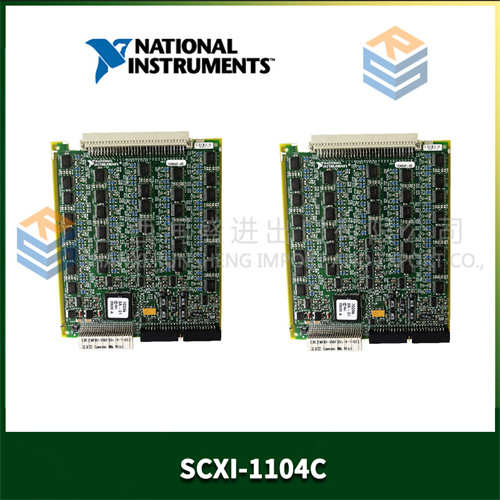
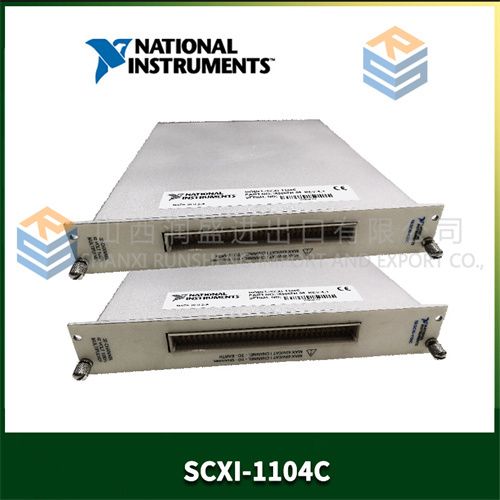
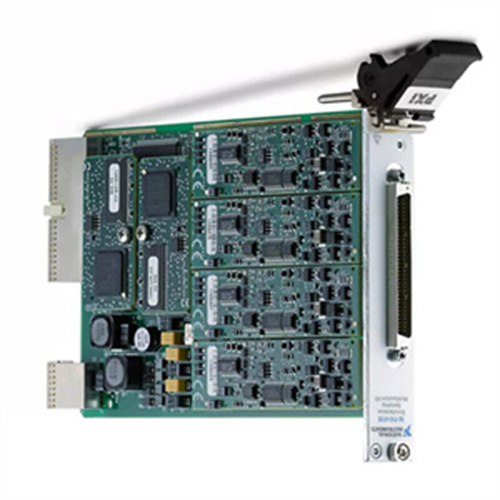
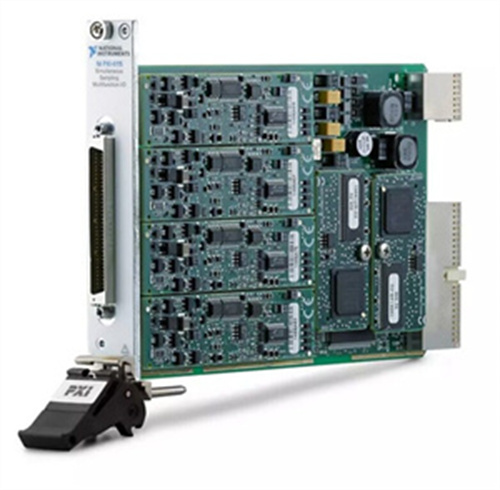
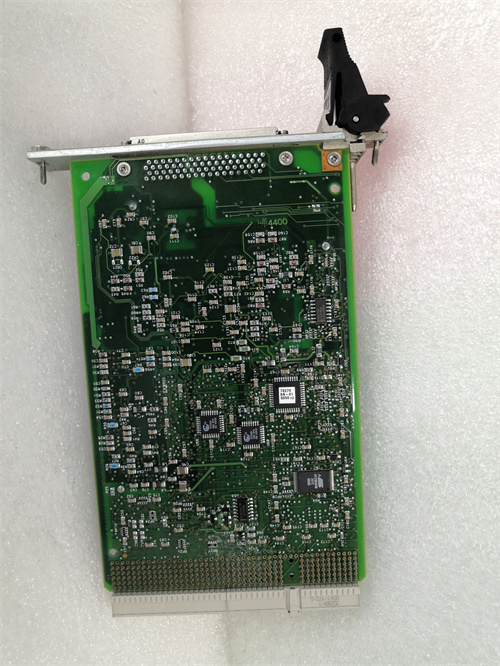
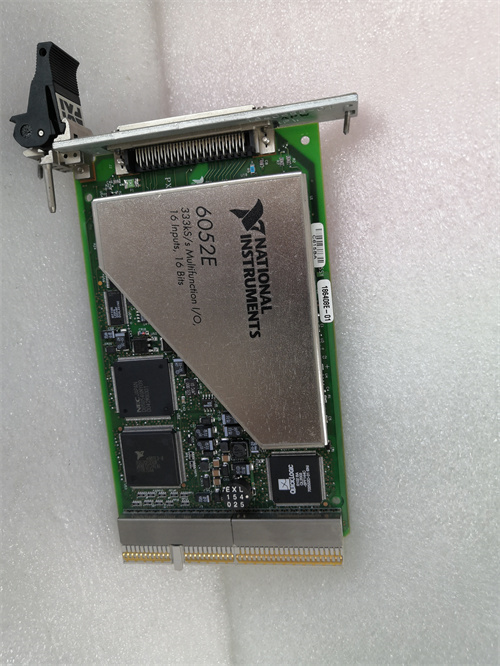
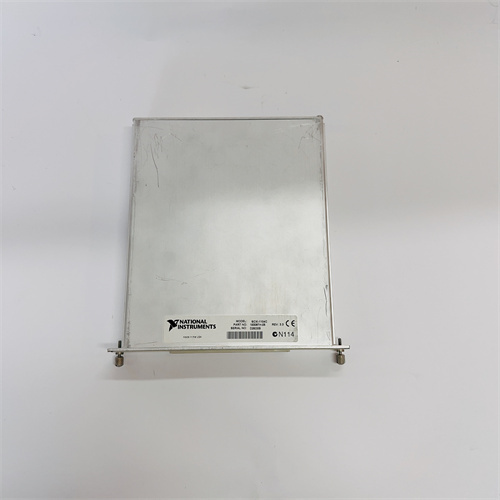
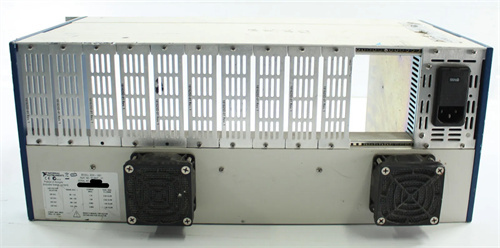
Industrial Automation: In manufacturing plants, the SCXI – 1104C can be used to monitor and control various processes. For example, it can measure the temperature, pressure, and flow rate of fluids in a chemical process, and the data can be used to adjust the process parameters in real – time.
Research and Development: In laboratories, it is used for data acquisition in experiments. For instance, in a materials testing laboratory, it can measure the strain and stress of materials under different loads.
Test and Measurement: It is widely used in test and measurement applications, such as in the automotive industry to test the performance of engines or in the aerospace industry to measure the vibrations of aircraft components.
6. Selection Considerations
Channel Requirements: Determine the number of input channels you need based on the number of sensors you want to connect. If you have multiple sensors measuring different parameters, choose a module with an appropriate number of channels.
Input Voltage Range: Consider the range of voltages that your sensors will output. Make sure the module can handle the input voltage range of your sensors without saturation or loss of accuracy.
Sampling Rate and Resolution: For applications where fast – changing signals need to be measured, a higher sampling rate is required. Similarly, for applications that demand high – precision measurements, a higher – resolution module is preferable.
Compatibility: Ensure that the SCXI – 1104C is compatible with your existing data acquisition system and software. Check the communication protocols and the programming interfaces.
Application Areas: The PXI – 6115 is suitable for a wide range of industries and research fields, including aerospace, automotive, medical, and power electronics. In the aerospace industry, it can be used for flight testing, vibration analysis, and structural health monitoring. In the automotive industry, it helps in engine testing, vehicle dynamics testing, and emissions monitoring.
Application Case: In an automotive engine testing facility, the PXI – 6115 was used to measure various engine parameters such as pressure, temperature, and vibration. By accurately acquiring and analyzing these signals, engineers were able to optimize the engine’s performance, improve fuel efficiency by 10%, and reduce emissions by 15%.
5. Competitor Comparison
Compared to other similar data acquisition modules in the market, the PXI – 6115 has several advantages. Its high – speed and high – resolution data acquisition, along with low noise and distortion, are often superior, providing more accurate and detailed data for analysis. The flexible configuration options also make it a more adaptable choice for different applications, allowing for easy customization according to specific requirements.
6. Selection Suggestions
Compatibility: Ensure that the PXI – 6115 is fully compatible with your existing PXI chassis and software platform. Check the interface types, communication protocols, and software drivers to avoid integration issues.
Sampling and Resolution Requirements: Evaluate your specific data acquisition needs, such as the required sampling rate, resolution, and input range. The PXI – 6115 offers high – speed and high – resolution capabilities, but make sure it meets your exact requirements.
Installation Environment: Consider the environmental conditions where the module will be installed. If the environment has high levels of electromagnetic interference, temperature variations, or humidity, the module’s operating temperature range and noise – immunity features should be taken into account.
Budget: While the PXI – 6115 offers excellent performance and features, it’s important to consider your budget. However, also take into account the long – term benefits, such as improved data accuracy and reduced testing time.
High – Resolution Data Acquisition: The PXI – 6052E offers a 12 – bit analog input resolution, which allows it to accurately measure small changes in analog signals. In a sensor calibration test, it was able to detect a voltage change of [X] millivolts, providing highly precise data for calibration purposes.
High – Speed Sampling Rate: With a sampling rate of up to 200 kS/s, it can capture fast – changing signals in real – time. In a high – speed motor testing application, it was able to sample the motor’s current and voltage waveforms at a high rate, enabling detailed analysis of the motor’s performance under different operating conditions.
Flexible Configuration: The module supports multiple input ranges and sampling modes, allowing users to configure it according to their specific application requirements. For example, in a multi – sensor data acquisition project, different sensors with different output voltage ranges can be easily connected to the PXI – 6052E by adjusting the input range settings.
Reliable Design: It is built with high – quality components and advanced circuit protection. In an industrial environment with electrical noise and power surges, the PXI – 6052E maintained stable operation without any data loss or signal distortion.
4. Application Areas and Application Cases
Application Areas: The PXI – 6052E is suitable for industries such as medical, where it can be used to collect physiological data from patients; environmental monitoring, for measuring parameters like air quality, water quality, and temperature; and industrial automation, for process control and monitoring.
Application Case: In a medical research project, the PXI – 6052E was used to collect electrocardiogram (ECG) signals from patients. The high – resolution data acquisition and high – speed sampling rate of the PXI – 6052E allowed for accurate detection of heart arrhythmias. The detailed ECG data collected by the module helped doctors in making more accurate diagnoses, leading to improved patient treatment outcomes.
5. Competitor Comparison
Compared to other similar products in the market, the PXI – 6052E has several advantages. Its high – resolution data acquisition and high – speed sampling rate are superior to many competitors, providing more accurate and detailed data for analysis. The flexible configuration options make it more adaptable to different application scenarios. The reliable design also ensures stable operation in harsh industrial environments, reducing the risk of system failures and data loss.
In an automotive engine research laboratory, the SCXI – 1104C was used in a comprehensive engine performance testing setup. The researchers were conducting experiments to optimize the fuel efficiency and emission levels of a new engine design. The SCXI – 1104C was connected to a wide range of sensors installed on the engine, including temperature sensors, pressure sensors, and flow sensors.
During a series of high – speed driving simulations, the sensors detected rapid changes in the engine’s operating parameters. The SCXI – 1104C quickly acquired the data from these sensors, amplified and conditioned the signals, and then transferred the processed data to a data acquisition computer.
The researchers were able to analyze the real – time data provided by the SCXI – 1104C. They discovered that a particular fuel injection pattern was causing inefficient combustion under high – speed conditions. Based on this finding, they adjusted the engine’s fuel injection system. Thanks to the accurate and timely data acquisition of the SCXI – 1104C, the researchers were able to improve the engine’s performance and reduce its emissions significantly.
2. Applications
Automotive Testing: As demonstrated in the above case, it is widely used for engine testing, chassis testing, and vehicle durability testing. It helps automotive engineers collect and analyze data from various sensors to improve vehicle design and performance.
Aerospace Industry: In aerospace applications, the SCXI – 1104C can be used for testing aircraft engines, flight control systems, and structural components. It can monitor parameters such as air pressure, vibration, and temperature during flight simulations and ground tests.
Industrial Machinery Monitoring: For large – scale industrial machinery, like turbines and compressors, it can monitor the health and performance of the equipment. By collecting data from sensors, it can detect early signs of wear and tear, and potential failures, enabling preventive maintenance.
In an automotive research and development center, the SCXI – 133A was used in a vehicle engine testing setup. Engineers were conducting tests to evaluate the performance of a new engine design under various operating conditions. The SCXI – 133A was connected to a multitude of sensors placed on the engine, such as temperature sensors, pressure sensors, and vibration sensors.
During a high – speed test, the sensors detected a sudden spike in the engine’s cylinder head temperature. The SCXI – 133A rapidly collected and processed the data from these sensors. It then sent an immediate alarm signal to the control system, which in turn automatically adjusted the engine’s fuel injection and cooling systems. Thanks to the quick response of the SCXI – 133A, the engine was protected from overheating, and the test could continue without any major setbacks. This allowed the engineers to gather accurate data for further engine optimization.
2. Applications
Automotive Testing: As shown in the above case, it is used for engine testing, chassis testing, and vehicle performance evaluation. It helps automotive engineers collect and analyze data from various sensors to improve vehicle design and performance.
Aerospace Industry: In aerospace applications, the SCXI – 133A can be used for testing aircraft engines, flight control systems, and structural components. It can monitor parameters such as air pressure, vibration, and temperature during flight simulations and ground tests.
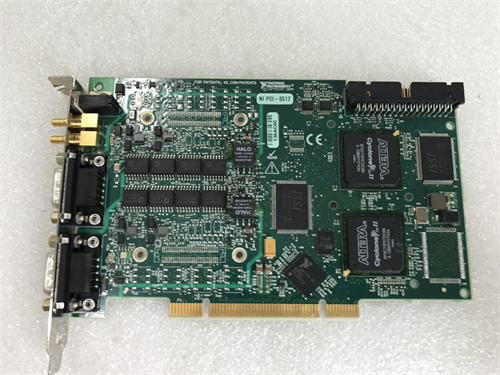
Robust Design: The PCI – 8517 is built with a robust circuit board and high – quality components. It can withstand normal operating conditions in industrial and laboratory environments, including temperature variations, humidity, and electrical noise.
Electrical Protection: It is equipped with basic electrical protection features, such as over – voltage and over – current protection. These features help to protect the module from damage caused by electrical faults in the input or output circuits.
Driver Support: The module comes with comprehensive driver support for various operating systems, such as Windows and Linux. This ensures stable and reliable communication between the module and the host computer.
6. Real – World Examples
Automotive Assembly Line Monitoring: In an automotive assembly line, the PCI – 8517 is used to monitor the status of various stations. The digital inputs are connected to sensors that detect the presence of car parts, the position of robotic arms, and the operation of conveyor belts. The digital outputs are used to control the start and stop of the conveyor belts and to activate warning lights in case of a malfunction. The high – speed data transfer and interrupt handling capabilities of the PCI – 8517 ensure that any issues are detected and addressed in a timely manner, improving the efficiency and quality of the assembly process.
Laboratory Experiment Control: In a laboratory experiment, the PCI – 8517 is used to control the operation of a test rig. The digital inputs are connected to sensors that measure the temperature, pressure, and displacement of the test rig. The digital outputs are used to control the power supply, the speed of the motors, and the opening and closing of valves. The easy integration and programming of the PCI – 8517 allow researchers to quickly set up and modify the experiment, saving time and effort.
Automotive Testing: In the automotive industry, the PXIE – 8861 is used for comprehensive vehicle testing. It can control and monitor multiple test equipment simultaneously, such as dynamometers, emission testing devices, and electrical system testers. The high – performance processor can handle the complex algorithms required for analyzing vehicle performance data, such as engine efficiency, fuel consumption, and electrical system stability.
Aerospace and Defense: In aerospace and defense applications, the PXIE – 8861 is employed for testing avionics systems, radar systems, and communication equipment. It can simulate different operating conditions and scenarios, and quickly process the large amounts of data generated during testing to ensure the reliability and performance of these critical systems.
Semiconductor Testing: In semiconductor manufacturing, the PXIE – 8861 is used for testing semiconductor devices. It can control the test equipment, collect and analyze the test data, and determine the quality and performance of the semiconductor chips. The high – speed data processing capabilities are essential for handling the large number of test points and complex test patterns.
3. Weight and Dimensions
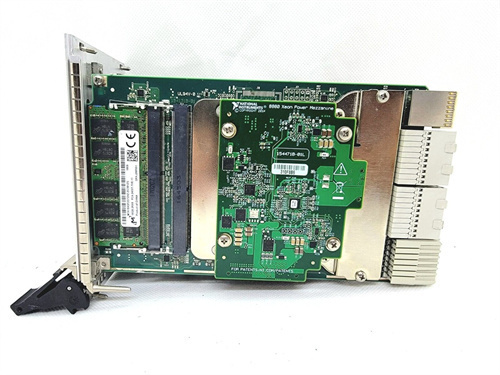
Weight: The PXIE – 8861 weighs approximately 2.5 kg. Its weight is designed to be manageable for installation and maintenance within the PXI Express chassis.
Dimensions: It is designed to fit into a standard PXI Express chassis. The dimensions are typically around 260 mm in length, 210 mm in width, and 80 mm in height, which comply with the PXI Express form – factor specifications.
4. Features
High – Performance Computing: The powerful Intel Xeon processor and large amount of memory enable the PXIE – 8861 to handle complex computational tasks in real – time. This is crucial for applications that require fast data processing, such as signal processing, image processing, and algorithm execution.
Flexible Configuration: It can be easily configured to meet different application requirements. Users can adjust the memory, storage, and communication settings according to their specific needs.
Scalability: As a part of the PXI Express platform, the PXIE – 8861 offers scalability. It can be integrated with other PXI Express modules to expand the functionality of the test system, allowing for the construction of more comprehensive and customized test solutions.
Automotive Testing: In the automotive industry, the PXIE – 8523 is used for testing various automotive components and systems. For example, it can be used to test the electronic control units (ECUs) of vehicles. The digital inputs can monitor the status signals from the ECU, while the analog inputs can measure parameters such as voltage, current, and temperature. The analog outputs can be used to simulate different operating conditions for the ECU.
Aerospace and Defense: In aerospace and defense applications, the PXIE – 8523 is used for testing and validating avionics systems, radar systems, and communication equipment. It can generate and measure complex signals, and its high – speed data transfer capabilities allow for real – time monitoring and analysis of the system performance.
Industrial Automation: In industrial automation, the module can be used for process control and monitoring. It can interface with sensors and actuators in a manufacturing process, collecting data from the sensors and sending control signals to the actuators to ensure the smooth operation of the process.
3. Weight and Dimensions
Weight: The PXIE – 8523 weighs approximately 1.5 kg. Its relatively light weight makes it easy to install and handle within the PXI Express chassis.
Dimensions: It is designed to fit into a standard PXI Express chassis. The dimensions are typically around 200 mm in length, 160 mm in width, and 80 mm in height, which are in line with the PXI Express form factor specifications.
4. Features
High – Speed Data Transfer: The PXI Express interface provides high – speed data transfer capabilities, which are essential for applications that require real – time data acquisition and processing.
Flexible I/O Configuration: The configurable digital and analog I/O channels allow for customization according to the specific requirements of different applications. This flexibility makes the module suitable for a wide range of test and measurement tasks.
Modular Design: As a PXI Express module, it follows the modular design concept of the PXI Express platform. This allows for easy integration with other PXI Express modules, enabling the construction of complex test and measurement systems.
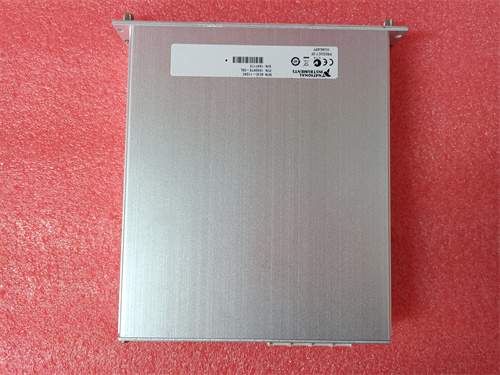
Weight: The SCXI – 1104C weighs approximately 1.2 kg. Its relatively light weight makes it easy to install and handle during the setup and maintenance processes.
Dimensions: It has dimensions of around 200 mm in length, 150 mm in width, and 60 mm in height. These compact dimensions allow it to be easily installed in standard SCXI chassis or on DIN rails in industrial control panels.
4. Features
High – Density Inputs: With 8 differential input channels in a single module, the SCXI – 1104C provides a high – density solution for multi – channel analog signal measurement.
Flexible Signal Conditioning: The adjustable anti – aliasing filters and basic signal – conditioning functions allow for customization according to the specific requirements of different applications.
Easy Integration: It can be easily integrated into the SCXI system, which simplifies the setup and configuration of the data – acquisition system. Users can use the same software tools to manage and analyze the data from different SCXI modules.
5. Stability and Reliability
Robust Construction: The SCXI – 1104C is built with a durable housing that can withstand harsh industrial and laboratory environments, including dust, moisture, and mechanical vibrations.
Quality Components: It uses high – quality electronic components that are selected for their reliability and long – term performance. This helps to ensure stable operation over an extended period.
Calibration and Self – Diagnostic: The module can be calibrated to maintain measurement accuracy over time. It also has self – diagnostic functions that can detect internal faults and abnormal operating conditions, which helps in quick troubleshooting and maintenance.
Industrial Process Monitoring: In manufacturing plants, the SCXI – 1349 is used to monitor various process parameters. For example, in a chemical plant, it can measure the temperature, pressure, and flow rate of different chemical substances in the pipelines. By continuously monitoring these parameters, the plant operators can ensure the stability and safety of the production process.
Environmental Monitoring: In environmental monitoring stations, it can be used to measure environmental parameters such as temperature, humidity, and air quality. The module can interface with different types of sensors to collect data on pollutants, meteorological conditions, and other environmental factors. This data is crucial for environmental protection and resource management.
Research and Development: In laboratories, the SCXI – 1349 is used for experimental data acquisition. For instance, in a materials science laboratory, it can measure the strain and stress of materials under different loading conditions. The accurate measurement provided by the module helps researchers to analyze the mechanical properties of materials and develop new materials.
3. Weight and Dimensions
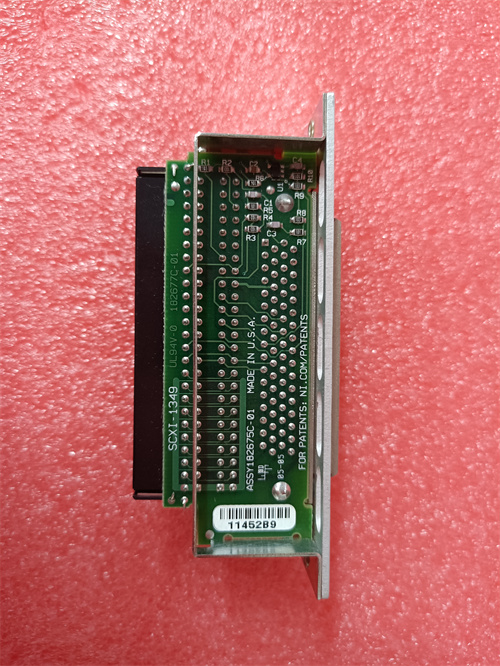
Weight: The SCXI – 1349 weighs approximately 0.8 kg. Its relatively light weight makes it easy to install and handle during the setup and maintenance processes.
Dimensions: It has compact dimensions, typically around 150 mm in length, 100 mm in width, and 50 mm in height. These dimensions allow it to be easily installed in standard SCXI chassis or on DIN rails in industrial control panels.
4. Features
Versatile Signal Conditioning: The ability to support multiple types of sensors and provide comprehensive signal – conditioning functions makes the SCXI – 1349 a versatile module for different measurement applications.
Easy Integration: It can be easily integrated into the SCXI system, which simplifies the setup and configuration of the data – acquisition system. Users can use the same software tools to manage and analyze the data from different SCXI modules.
Remote Configuration and Monitoring: The module can be remotely configured and monitored via the SCXI system. This feature allows users to adjust the measurement parameters and check the status of the module without physically accessing it, which is convenient for large – scale or hard – to – reach installations.
Weight: The SCXI – 1125 weighs approximately 1.5 kg. Its relatively light weight makes it easy to install and handle during the setup and maintenance processes.
Dimensions: It has dimensions of around 220 mm in length, 140 mm in width, and 60 mm in height. These compact dimensions allow it to be easily installed in standard equipment racks or test setups.
4. Features
High – Density Inputs: With 8 differential input channels in a single module, the SCXI – 1125 provides a high – density solution for multi – channel analog signal measurement.
Flexible Input Range: The adjustable input range allows it to be used with a wide variety of sensors, eliminating the need for external signal conditioning in many cases.
Integrated Filtering: The built – in anti – aliasing filters simplify the signal processing chain and ensure accurate measurement of high – frequency signals.
Easy Integration: It is designed to be easily integrated with other National Instruments data acquisition systems, such as the SCXI chassis and data acquisition cards. This seamless integration enables users to build comprehensive data acquisition and control systems.
5. Stability and Reliability
Robust Construction: The SCXI – 1125 is built with a durable housing that can withstand harsh industrial and laboratory environments, including dust, moisture, and mechanical vibrations.
Quality Components: It uses high – quality electronic components that are selected for their reliability and long – term performance. This helps to ensure stable operation over an extended period.
Calibration: The module can be calibrated to maintain measurement accuracy over time. Regular calibration ensures that the measured data remains reliable and consistent.
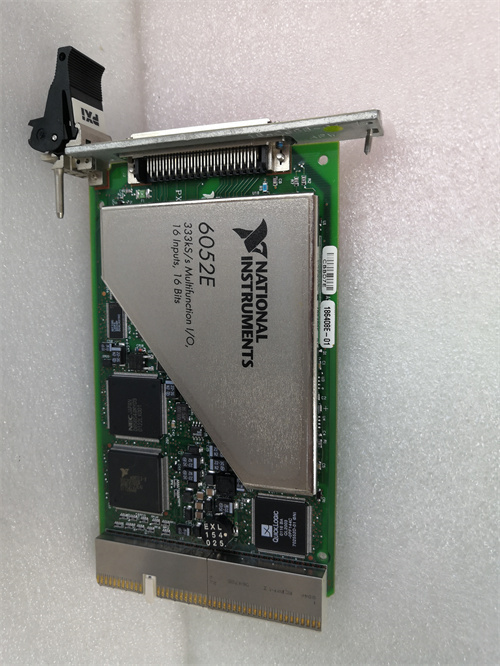
Data Acquisition in Research: In scientific research, the PXI – 6052E is widely used for data acquisition. For example, in a physics experiment, it can measure electrical signals from sensors detecting physical phenomena such as temperature, pressure, and magnetic fields. In a biology research project, it can record physiological signals like heart rate and brainwaves.
Automotive Testing: In the automotive industry, it is used for vehicle component testing. It can measure the performance of engines, transmissions, and electrical systems by collecting data from sensors placed on these components. For instance, it can monitor the voltage and current of the battery, the temperature of the engine, and the pressure in the fuel system.
Industrial Process Monitoring: In manufacturing plants, the PXI – 6052E can monitor industrial processes. It can measure parameters like the temperature, pressure, and flow rate of fluids in a chemical manufacturing process, ensuring the process runs smoothly and within the specified parameters.
3. Weight and Dimensions
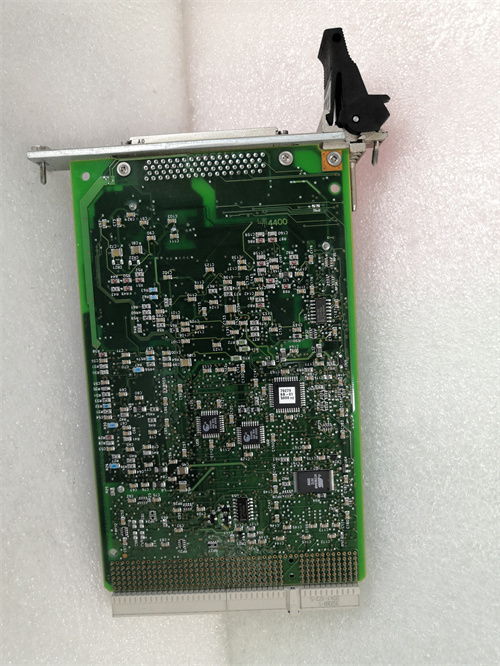
Weight: The PXI – 6052E weighs approximately 0.2 kg. Its lightweight design makes it easy to install and handle within a PXI chassis, which may house multiple modules.
Dimensions: It follows the standard PXI form – factor. The dimensions are typically 100 mm in width, 160 mm in height, and 160 mm in depth. This compact size allows it to be integrated into a PXI system without taking up excessive space.