
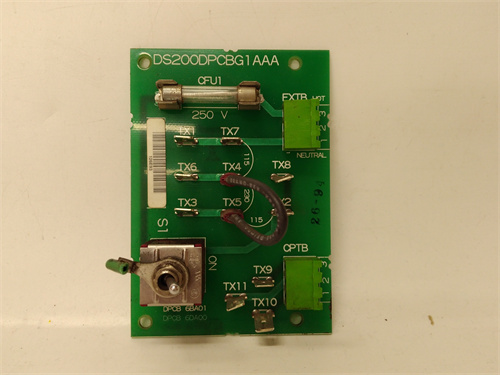
Description
Technical Parameters
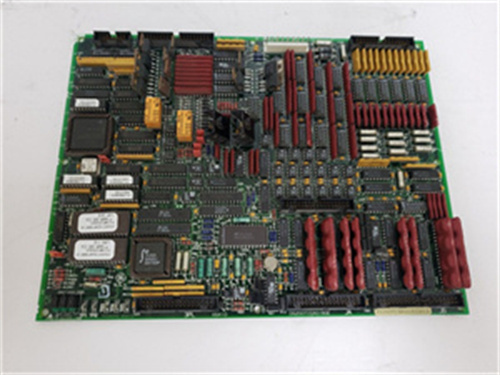
Based on the design specifications of the Mark V series, the DS200SLCCG3A features the following key parameters:
-
Communication Protocol: Supports proprietary GE LAN protocol (often referred to as ARCnet or Ethernet-based variants depending on the specific G3 revision) for high-speed deterministic data transfer.
-
Physical Interface: Typically equipped with multiple coaxial or twisted-pair ports (BNC or RJ45 connectors) for network trunk and drop connections.
-
Processor: Onboard microcontroller dedicated to managing communication stacks and buffering data between the turbine’s I/O backplane and the external network.
-
Power Supply: Derives operational power directly from the Mark V backplane via the P1/P2 connectors, typically requiring +5V DC and ±15V DC rails.
-
Mounting Type: Direct plug-in module for the Mark V rack, occupying a single slot.
-
Indicators: LED status indicators for power (PWR), network activity (ACT), and communication error (ERR) for rapid troubleshooting.
-
Temperature Range: Industrial-rated for 0°C to 60°C ambient operation.
Advantages and Features
The DS200SLCCG3A offers several distinctive advantages that make it indispensable for turbine retrofits and maintenance:
-
Deterministic Communication: The proprietary GE LAN protocol ensures predictable latency, which is crucial for time-sensitive turbine control loops such as speed and temperature regulation.
-
Hot-Swap Capability: The board can be replaced without completely powering down the entire Mark V rack (provided proper ESD precautions are taken), minimizing costly turbine downtime.
-
Diagnostic Onboard Intelligence: Built-in self-test routines and error logging assist technicians in pinpointing network faults—whether they originate from the DS200SLCCG3A itself, cabling, or upstream HMI equipment.
-
Legacy Compatibility: Specifically designed to interface with older GE operator workstations and I/O packs, making the DS200SLCCG3A the preferred replacement choice for plants that are not yet ready for a full Mark VIe upgrade.
-
Robust Construction: Conformal coating on the PCB protects against moisture, dust, and vibration common in power generation environments.
Application Cases in Application Fields
The DS200SLCCG3A is predominantly found in the following high-stakes industrial sectors:
-
Power Generation (Combined Cycle Gas Turbines): In a 500MW combined-cycle plant, the DS200SLCCG3A serves as the bridge between the turbine’s primary control processor and the plant’s performance monitoring system, transmitting real-time megawatt output and exhaust temperature data every 50ms.
-
Steam Turbine Retrofit Projects: An aging coal-fired facility in the Midwest utilized the DS200SLCCG3A to replace a failed communication module, successfully restoring remote dispatch control from the grid operator’s SCADA system within a 4-hour maintenance window.
-
Oil & Gas Pipeline Compressor Stations: The board is used to relay surge-protection signals from the turbine controller to the central station DCS, ensuring that compressor speed setpoints are accurately executed during fluctuating gas demand.
-
Emergency Backup Turbine Systems: In nuclear or hydroelectric facilities, redundant DS200SLCCG3A boards are configured in active-standby pairs to guarantee zero-loss communication during failover events.
Comparison with Competing Products
When evaluating replacements for the DS200SLCCG3A, consider these contrasts with alternative solutions:
| Aspect | DS200SLCCG3A (GE Mark V) | Competitor Option (e.g., Woodward 505 or Siemens T3000) |
|---|---|---|
| Protocol | Proprietary GE LAN (requires specific HMI software) | Open protocols (Modbus TCP, Profinet) – more flexible but less deterministic |
| Form Factor | Direct Mark V rack slot – no external wiring mess | Usually requires external gateway converters, increasing panel space |
| Replacement Cost | Higher due to legacy scarcity but guaranteed drop-in fit | Lower upfront cost, but requires significant logic reconfiguration and cabling |
| Obsolescence Support | GE provides limited support; relied upon by aftermarket suppliers | Active support from OEM, but may demand a full control system upgrade |
| Diagnostic Depth | Provides board-level LED and error codes | Offers software-based packet analysis but demands additional licensing |
Selection verdict: If you are operating an intact Mark V system, the DS200SLCCG3A is the only true drop-in replacement. Migrating to a competitor’s solution would require a complete re-engineering of the communication layer, which is rarely justifiable for a single spare part.
Selection Suggestions and Precautions
Before purchasing or installing the DS200SLCCG3A, adhere to these critical guidelines:
-
Verify Revision Match: Confirm that the DS200SLCCG3A you acquire matches the “G3A” revision suffix. Earlier revisions (e.g., G1 or G2) may have different EPROM firmware that is incompatible with your HMI software version. Always check the sticker on the top edge of the board.
-
ESD Protection: The CMOS components on the DS200SLCCG3A are sensitive to electrostatic discharge. Use a grounded wrist strap and anti-static mat during handling. Failure to do so can damage the onboard transceivers without visible physical marks.
-
Firmware Reprogramming: If the board is purchased as a “used pull,” reset the board to factory defaults using the Mark V maintenance terminal before deployment, as previous IP/Node address settings may conflict with your network.
-
Cable Integrity Check: Inspect the BNC or RJ45 connectors on the DS200SLCCG3A for bent pins or corrosion. In many field failures, the issue is not the board itself but degraded cabling or terminators. Test with a known-good cable before condemning the board.
-
Stock Availability: Due to the age of the Mark V series, new-old-stock (NOS) or refurbished units are the primary sources. Ensure the supplier provides a functional test certificate with specific pass/fail criteria for all communication ports.
-
System Backup: Before swapping the DS200SLCCG3A, perform a full backup of the turbine’s configuration database. If the new board’s firmware differs, you may need to reload certain configuration parameters via the GE Toolbox software.
Final Recommendation
For any facility still relying on a GE Mark V turbine control system, maintaining a functional spare DS200SLCCG3A is not optional—it is a strategic necessity. This board is the nervous system of your communication architecture, and its failure directly translates to loss of visibility and control. Given its legacy status, prioritize purchasing from reputable aftermarket suppliers who offer a 1-year warranty and rigorous testing. Always keep a second spare on-site to eliminate cross-shipping delays. If your plant is planning a long-term migration to Mark VIe, consider the DS200SLCCG3A as a bridging component to sustain operations during the multi-phase upgrade, rather than investing in radical third-party communication conversions that introduce unnecessary risk.
FOXBORO FBM217
RADISYS EXP-MX200
BENTLY 3500/45

.jpg)


Reviews
There are no reviews yet.