
Description
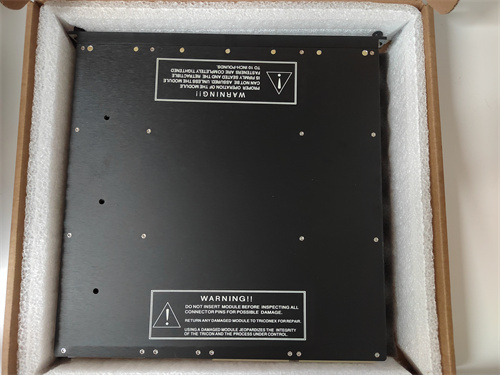
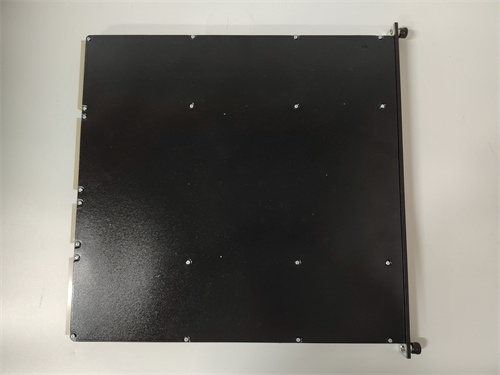
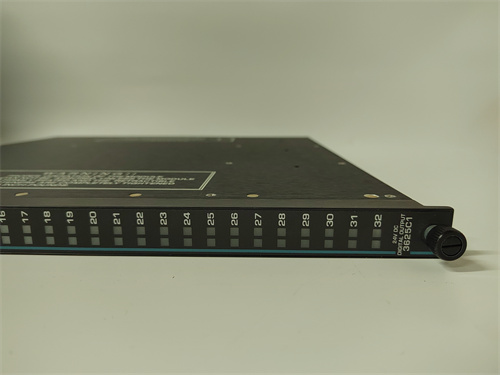
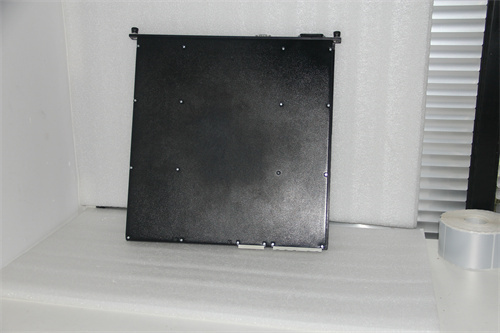
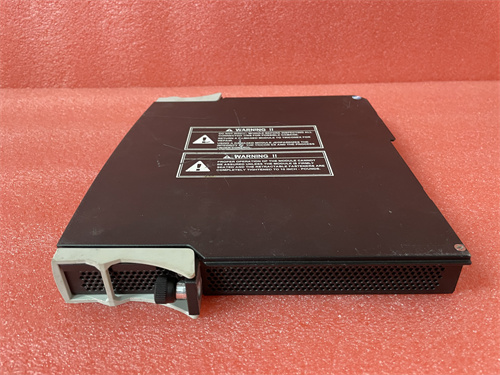
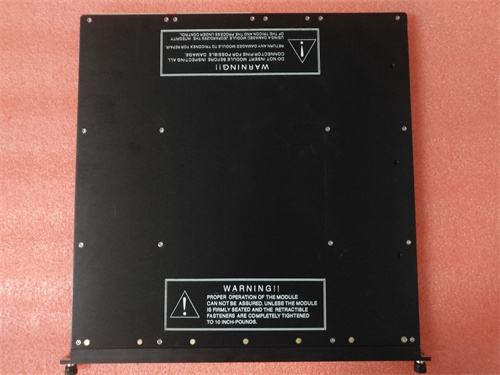
TRICONEX 3625C1 — Redundant Communication Module
Product Description: TRICONEX 3625C1
TRICONEX 3625C1 is a critical communication module manufactured by Triconex, a division of Schneider Electric, specifically for use in their high-integrity, fault-tolerant safety instrumented systems (SIS) and critical control systems, most notably the Tricon and Trident controller platforms. This module serves as a communication interface between the Triple Modular Redundant (TMR) main processors and other subsystems, such as engineering workstations, Human-Machine Interface (HMI) stations, or Distributed Control Systems (DCS). Its primary function is to ensure reliable, deterministic data exchange in environments where system availability and safety are paramount. The TRICONEX 3625C1 module is engineered with the same rigorous reliability standards as the main controllers, featuring diagnostics and fault-tolerance to maintain communication integrity.
Product Parameters
-
System Compatibility: Tricon v9, v10, and v11 systems (and potentially compatible Trident systems).
-
Module Type: Redundant Communication Module (RCM).
-
Primary Function: Provides an Ethernet or serial communication interface for the TMR controller.
-
Communication Protocols:
-
TriStation 1131: For connection to Triconex engineering and maintenance workstations.
-
Modbus TCP/IP: For integration with HMIs, SCADA, and other third-party systems over Ethernet.
-
OLE for Process Control (OPC): For data access by client applications.
-
Serial Protocols: Support for legacy serial communication (RS-232/485) in certain configurations.
-
-
Redundancy: Typically operates in a redundant pair (Primary and Secondary) for high availability. Failure of the primary module triggers an automatic switchover.
-
Diagnostics: Extensive built-in self-test (BIST) and diagnostic capabilities to monitor module health and communication link status.
-
Mounting: Plugs into a dedicated slot within the Tricon/Trident main chassis.
-
LED Indicators: Provides visual status indication for power, activity, fault, and primary/secondary role.
Advantages and Features
-
High Availability and Fault Tolerance: Designed for critical applications, the TRICONEX 3625C1 module supports redundant operation. This ensures continuous communication even if one module fails, preventing a single point of failure in the data path.
-
Secure and Reliable Data Exchange: It facilitates deterministic and secure communication between the safety controller and external systems, which is essential for proper system monitoring, alarm management, and data historization in processes requiring SIL 2/SIL 3 certification.
-
Seamless Integration with Triconex Ecosystem: The module is optimized for use with Triconex’s TriStation programming and configuration software, ensuring reliable firmware updates, configuration downloads, and online monitoring.
-
Versatile Protocol Support: By offering both proprietary (TriStation) and open industry-standard protocols (Modbus TCP/IP, OPC), the 3625C1 enables flexible integration into diverse plant control architectures.
-
Robust Industrial Design: Like all Triconex hardware, it is built to withstand harsh industrial environments with respect to temperature, vibration, and electromagnetic interference (EMI).
Application Cases in Various Fields
-
Oil & Gas (Upstream & Downstream): Providing communication links for Emergency Shutdown (ESD) and Fire & Gas (F&G) systems on offshore platforms, refineries, and pipeline compressor stations.
-
Chemical & Petrochemical Plants: Enabling integration of Burner Management Systems (BMS) and process safety interlocks with the plant’s main DCS for operator visibility and control.
-
Power Generation: Facilitating data exchange for critical turbine control and protection systems with the plant’s supervisory network.
-
Pharmaceutical Manufacturing: Integrating safety interlocks in processes involving hazardous materials with batch reporting and management systems.
Comparisons with Competing Products
The TRICONEX 3625C1 competes with communication modules from other major safety system vendors, such as Honeywell (FSC/Safety Manager) and Emerson (DeltaV SIS). Its key differentiator is its deep integration within the proven TMR architecture of the Tricon platform, which is renowned for its hardware-based fault tolerance and high diagnostic coverage. Competitors may offer different architectural approaches (e.g., 1oo2D), but the 3625C1 is the standard-bearer for communication within the widely adopted Triconex safety system family.
Selection Suggestions and Precautions
-
Verify System Compatibility: Confirm the specific Tricon or Trident system model and firmware version. The 3625C1 must be compatible with the controller chassis and the system’s installed software suite (e.g., TriStation version).
-
Plan for Redundancy: For any critical safety or control application, always deploy the communication module in a redundant pair to achieve the required availability and avoid a communication single point of failure.
-
Network Security Planning: When using Ethernet protocols like Modbus TCP/IP, integrate the TRICONEX 3625C1 into the plant’s industrial network security strategy. Use firewalls, VLANs, and access control lists to protect the safety network from unauthorized access.
-
Proper Configuration and Testing: Configuration of IP addresses, protocol settings, and data mapping must be performed meticulously within the TriStation software. Comprehensive loop testing, including failover tests between redundant modules, is essential before commissioning.
CE4001S2T2B3 EMERSON
EMERSON CE4001S2T2B4 DCSPLC
EMERSON CE4001S2T2B5 DCSPLC
EMERSON CE4001S3T1B2
EMERSON CE4001S3T2B1
EMERSON CE4002S1T2B1
EMERSON CE4002S1T2B2



Reviews
There are no reviews yet.