
Description
Product Overview
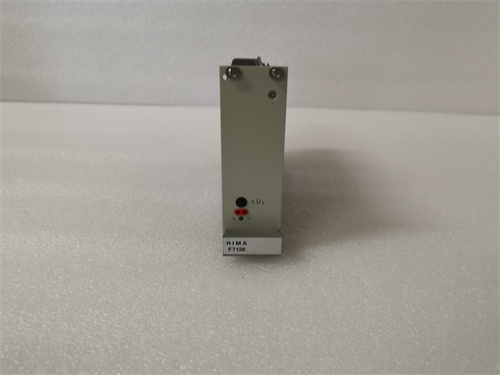
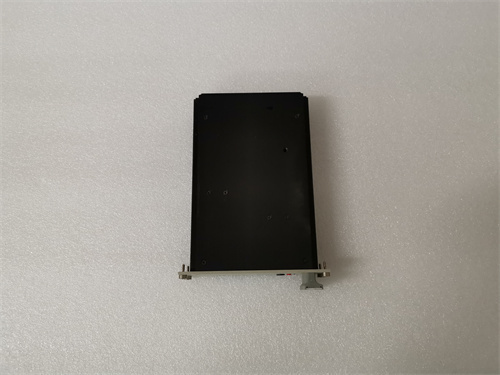
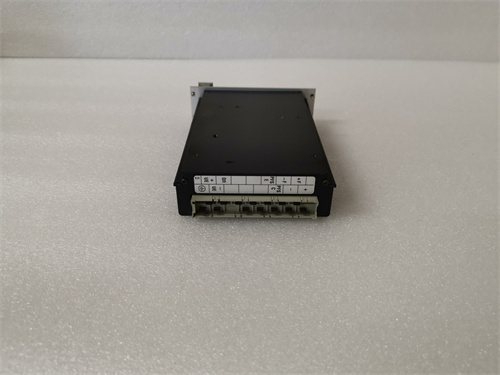
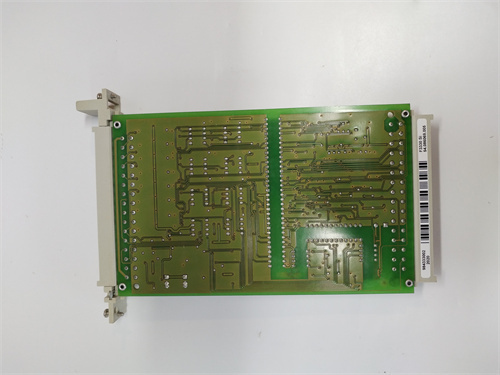
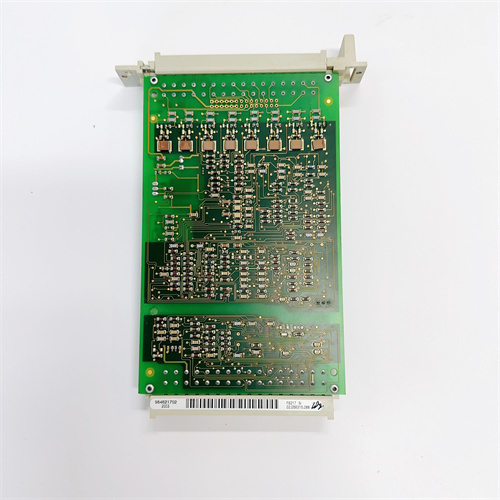
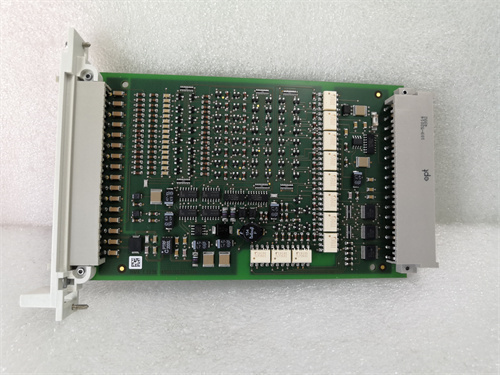
The HIMA F7126 is a critical power supply module for the HIMA HIQuad safety controller system. This module is not a standard industrial power supply; it is a safety-rated, fault-tolerant component specifically designed to provide clean, reliable, and monitored power to the entire HIQuad safety controller chassis, including the CPU, I/O, and communication modules. As the “heartbeat” of the safety system’s hardware, the HIMA F7126 ensures that the controller operates within its strict voltage tolerances and is protected from input power disturbances. Its design incorporates redundancy and diagnostic features to align with the high availability and integrity requirements of Safety Instrumented Systems (SIS). Selecting the genuine HIMA F7126 power supply is a fundamental decision to ensure the foundational reliability and certified operation of the entire safety control system.
Product Parameters
-
Module Type: Safety System Power Supply Module.
-
Input Voltage: Typically accepts a wide-range AC or DC input, such as 85-264V AC or 88-300V DC, to accommodate various global plant power standards.
-
Output Voltage: Provides a stabilized and filtered 24V DC output to power the HIQuad backplane and all installed modules.
-
Output Power/Current: Rated for a specific power output (e.g., 240W, 480W) to support fully populated controller chassis with all modules under load.
-
Redundancy Support: The HIMA F7126 is designed to be used in redundant (1oo2) configurations. Two modules can be installed in a single chassis, with one actively powering the system and the other in hot standby. Automatic switchover occurs upon failure of the active unit.
-
Diagnostics & Monitoring: Features comprehensive monitoring of:
-
Input voltage presence and status.
-
Output voltage level and stability.
-
Module temperature.
-
Load sharing status (in redundant mode).
-
Failure of the active unit.
-
Status is communicated via relay contacts (e.g., “Power OK”, “Failure”) and/or over the system backplane to the CPU.
-
-
Protection Features: Includes standard protections such as overload protection, short-circuit protection, and overtemperature protection to safeguard both the supply and the downstream controller.
-
Efficiency & Cooling: High efficiency design to minimize heat generation. May include integrated fans or be convection cooled, depending on the power rating.
-
Certifications: Certified for use in safety-related systems and complies with relevant EMC and safety standards (e.g., ATEX/IECEx for certain versions).
-
Form Factor: A slot-in module designed for the HIQuad system chassis.
Advantages and Features
-
Fault-Tolerant Design for Maximum Availability: The ability to configure the HIMA F7126 in a redundant (1oo2) pair is its most significant advantage. This ensures that a single power supply failure causes zero interruption to the safety controller. The system continues operating seamlessly on the standby unit, which is critical for SIS applications where power loss could equal a safety function failure.
-
Integrated Safety System Diagnostics: The module’s diagnostic capabilities are not isolated; they are fully integrated into the HIQuad system’s health monitoring. The CPU can read power supply status, enabling predictive maintenance (e.g., warning of a degrading unit) and providing clear cause information for any power-related faults in system event logs.
-
High Reliability and Clean Power Output: Built to the same rigorous standards as the safety controller itself, the F7126 provides exceptionally stable and noise-free DC power. This clean power is essential for the reliable operation of sensitive digital electronics in the CPU and analog I/O modules, preventing spurious resets or measurement errors.
-
Simplified Maintenance and Hot-Swap Capability: In redundant configurations, a failed HIMA F7126 module can be identified via its LED indicators and system diagnostics, and can typically be replaced online (hot-swapped) without shutting down the safety controller. This dramatically reduces maintenance downtime.
-
Purpose-Built for the Safety Environment: Unlike generic power supplies, the HIMA F7126 is engineered as part of a certified safety system. Its behavior during faults, its environmental ratings, and its communication with the CPU are all designed to support the overall safety lifecycle, making the genuine HIMA F7126 a compliant and reliable choice.
Application Fields and Case Studies
Application Fields:
Deployed in any industry utilizing the HIMA HIQuad platform for critical safety shutdown or control functions.
-
Oil & Gas: Powering HIQuad systems used for Emergency Shutdown (ESD), Fire & Gas (F&G), and Turbine Control (TMC) on platforms, pipelines, and refineries.
-
Chemical/Petrochemical: Providing reliable power to Burner Management Systems (BMS) and reactor safety systems.
-
Power Generation: Ensuring uninterrupted power for boiler protection and turbine overspeed safety controllers.
-
Transportation: In safety systems for rail or roller coaster control where power integrity is paramount.
Application Case:
In a gas compression station, the safety functions are managed by a redundant HIMA HIQuad system. Each controller chassis is equipped with two HIMA F7126 power supply modules in a 1oo2 configuration. During a severe summer storm, a voltage sag and subsequent surge on the plant’s AC mains causes one of the active F7126 modules to fail. The redundant module detects this failure within milliseconds and automatically assumes the full load, preventing any fluctuation in the 24V DC bus. The HIQuad CPU logs a “Power Supply A Failure” event and activates a maintenance alarm on the operator’s screen, but the safety control functions experience zero disruption. The faulty module is replaced during the next routine site visit without requiring a process shutdown.
Comparison with Competing Products
| Feature | HIMA F7126 (Integrated Redundant Safety PSU) | Standard Industrial Redundant PSU System | Single Non-Redundant Industrial PSU |
|---|---|---|---|
| System Integration & Diagnostics | Optimal. Fully integrated into the safety controller’s hardware and software diagnostics. Status is a known variable within the safety application. | Fair. May have dry contact alarms, but status is not communicated digitally to the controller. Integration requires separate wiring and programming. | Poor. No integration or detailed diagnostics. |
| Fault Tolerance & Availability | High (with redundancy). Seamless, automatic switchover with no interruption to the controlled system. | High (with redundancy). Also provides switchover, but the switchover mechanism itself can be a potential single point of failure. | None. A single fault causes total system power loss. |
| Form Factor & Simplicity | Excellent. Plugs directly into the controller chassis, saving external panel space and simplifying wiring. Neat and integrated. | Bulky. Requires separate DIN-rail mounting, external wiring to the chassis, and often an external decoupling module. | Simple but risky. |
| Safety Compliance & Certification | Certified. Part of the safety system’s certification (e.g., TÜV). Designed for the safety lifecycle. | Not Certified for Safety. While reliable, its use in a safety system may require additional justification and analysis. | Not suitable for safety. |
| Total Cost of Ownership | Higher initial cost, lower operational risk. Cost includes integration, certification, and seamless diagnostics. Justified for critical safety functions. | Moderate initial cost, moderate risk. Requires additional engineering for integration and may lack diagnostic transparency. | Lowest initial cost, highest potential failure cost. A single failure can cause a total safety system outage with severe consequences. |
Selection Suggestions and Precautions
-
Calculate the Total System Load: Before selecting a HIMA F7126, sum the power consumption of all modules (CPU, I/O, comms) planned for the chassis. Ensure the selected power supply’s rated output exceeds this total with a significant safety margin (e.g., 30-40%). This accounts for future expansion and ensures the PSU operates in its most efficient and reliable range.
-
Always Implement Redundancy for Critical Systems: For any SIS where loss of the safety function is unacceptable, a redundant (1oo2) configuration of two F7126 modules is strongly recommended and often mandated by internal safety standards. The incremental cost is minimal compared to the risk of a single-point failure.
-
Ensure High-Quality Input Power: While the module has a wide input range, provide it with the cleanest power possible. Use a dedicated circuit or a small uninterruptible power supply (UPS) upstream to filter out disturbances and provide ride-through during brief outages.
-
Monitor Diagnostic Alarms Proactively: Do not ignore power supply diagnostic messages. A “Power Supply Failure” or “Degraded” alarm in a redundant system means you are operating without a backup. Treat this as a high-priority maintenance item to restore redundancy promptly.
-
Follow Hot-Swap Procedures Precisely: If replacing a module in a redundant online system, follow the manufacturer’s exact hot-swap procedure. This usually involves unlocking, extracting the faulty module, inserting the new one, and locking it. Incorrect procedure can cause arcing or a brief power interruption.
F7126
ABB-PFTL301E1KN PLCDCS
REM545BM223AAAA PLC
6ES7314-6CH04-0AB0 PLC
1753-OB16 PLC
PH1013-2840 PLC
845PY-FW-2-C PLC
TC-4000-P-PB-ES
mvme2100 PLC
TRICONEX-4210 PLC
SEWMDX61B0040-5A3-4-0T DCS


Reviews
There are no reviews yet.