
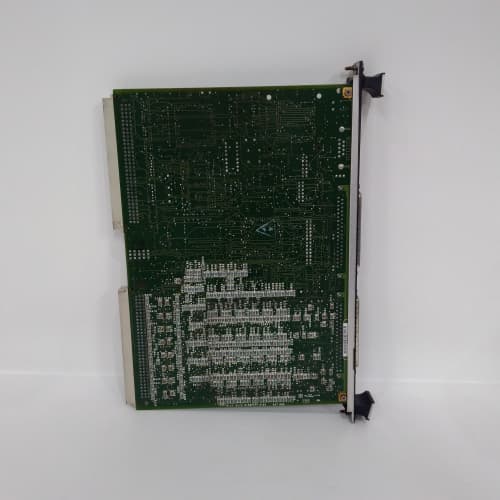
Description
Key Specifications
| Parameter | Specification |
|---|---|
| Vibration Inputs | 12 IEPE/accelerometer inputs, 6 proximity probe inputs |
| Vibration Measurement | Displacement (µm), velocity (mm/s), acceleration (g) |
| Frequency Range | DC to 30 kHz |
| Sampling Rate | Up to 75 kHz per channel (simultaneous) |
| Dynamic Analysis | On-board FFT, spectrum analysis, order analysis, transfer function, cascade plots |
| Control Outputs | 6 analog outputs (4–20 mA, ±10 V) for active vibration control |
| Digital I/O | 12 digital inputs, 12 digital outputs (24 VDC) |
| Control Modes | Active vibration control, dynamic response shaping, adaptive filtering, modal control |
| Communication | 2 Ethernet ports (10/100/1000Base-T) |
| Protocol Support | I/O Net, Modbus TCP, EtherNet/IP, OPC UA, DNP3 |
| Diagnostics | 1000-event fault log with timestamps, vibration snapshots, and spectrum snapshots |
| Operating Temp | –30 °C to +75 °C (extended over H2A) |
| Humidity | 5–100% condensing (silicone coating standard) |
| Coating | Silicone conformal coating + enhanced edge encapsulation (UV-traceable) |
| Manufacturing | 120-hour burn-in, 100% X-Ray/AOI, military-grade components |
| Isolation | 1500 VDC (I/O-to-backplane) |
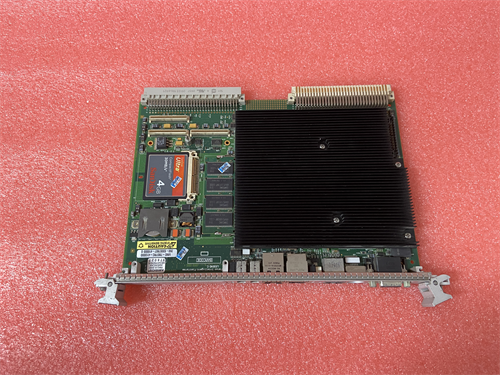
| Form Factor | 6U VME64x (160 × 233 mm), single-slot width |
| Power | 20 W (+5 V / +3.3 VDC) + external 24 VDC field power |
| Connectors | 48-pin terminal block with gold-plated contacts + RJ45 |
Advantages & Distinctive Features
-
Higher Channel Density: 12 IEPE + 6 proximity inputs.
-
Faster Sampling: 75 kHz per channel.
-
Expanded Dynamic Analysis: FFT, spectrum, order, transfer function, cascade plots.
-
Advanced Control Modes: Active control, shaping, adaptive filtering, modal control.
-
Widest Temperature Range: –30 °C to +75 °C.
-
Condensing Humidity Rating: 5–100% condensing.
-
Silicone Coating + Edge Encapsulation: Maximum environmental protection.
-
Military-Grade Manufacturing: 120-hour burn-in, military-grade components.
-
Hot-Swappable: No rack power-down for replacement.
-
Direct Retrofit: Replaces older UCVD series boards.
Application Fields
-
Gas Turbines: Vibration monitoring, active control, modal analysis
-
Steam Turbines: Vibration monitoring, active control
-
Compressors: Active vibration suppression, modal control
-
Generators: Vibration monitoring, modal analysis
-
Offshore platforms: Salt-spray and condensing environments
-
Nuclear Power Plants: Safety-critical vibration monitoring and control
Comparison with UCVDH2A and Competitors
| Feature | GE IS215UCVDH2AA | GE IS215UCVDH2A | Competitor A | Competitor B |
|---|---|---|---|---|
| IEPE Inputs | 12 | 12 | 8 | 12 |
| Proximity Inputs | 6 | 6 | 4 | 6 |
| Sampling Rate | 75 kHz | 75 kHz | 20 kHz | 75 kHz |
| Modal Control | Yes | Yes | No | Yes |
| Coating Type | Silicone + edge encaps. | None | Optional | Optional |
| Temp Range | –30 to +75 °C | –25 to +70 °C | 0 to +55 °C | –30 to +75 °C |
| Humidity | 5–100% condensing | 5–95% non-condensing | 5–90% | 5–95% |
| Fault Logging | 1000 events + snapshots | 1000 events + snapshots | No | 750 events |
Selection Guidelines
-
When to choose: Critical vibration monitoring and active control requiring environmental protection and maximum reliability.
-
When to choose “H2A” instead: For less extreme environments (non-condensing, –25 to +70 °C).
-
Vibration Input Configuration: Configure IEPE or proximity probes per channel.
-
Control Mode: Select active, shaping, adaptive, or modal control.
-
Coating Verification: Inspect under UV (365 nm)—silicone shows distinct fluorescence; verify edge encapsulation bead is continuous.
-
Compatibility: Fits all Mark VIe VME64x racks. Requires ControlST v7.5 or higher.
Operational Precautions
-
Wiring: Follow GE wiring diagrams—correct polarity for vibration sensors.
-
Vibration Sensor Verification: Verify sensor type and sensitivity during commissioning.
-
Control Tuning: Tune active control algorithms during commissioning.
-
Modal Control Tuning: Tune modal control parameters for multi-mode suppression.
-
Dynamic Analysis Baseline: Review baseline FFT, transfer functions, and cascade plots.
-
LED Diagnostics: Green = normal; Amber = fault; Red = module fault.
-
Fault Log: Access 1000-event log via Toolbox ST—review snapshots.
-
Coating Care: Use GE-approved silicone-safe cleaner; inspect annually under UV—rework voids with approved silicone coating per GE FSB-MKVIe-112.
-
Hot-Swap: Remove/insert slowly under power.
-
Spare Stock: Maintain 1 spare per 3–4 racks; “H2AA” backward-compatible with all UCVD sockets.
-
Firmware Updates: Ensure the GE IS215UCVDH2AA is in “standby” mode.
-
ESD: Handle by edges with grounded wrist strap—coating does not protect connectors.
-
Storage: Anti-static bag with desiccant at –40 to +85 °C; rotate every 3 years.
OPTP22 SNAP-AITM-4I
A-B 22B-D012N104
SCHNEISER BMXP342020
BENTLY 3500/15-02-00-00ȫ


Reviews
There are no reviews yet.