
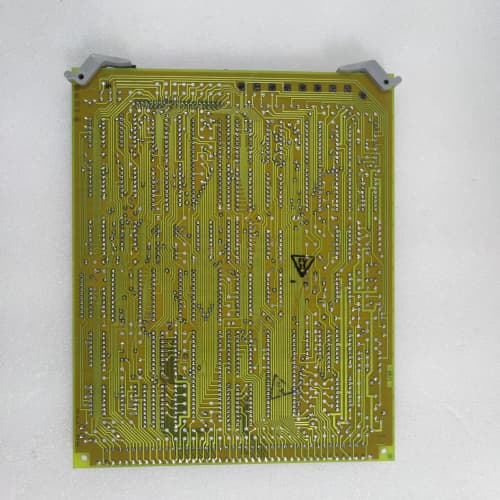
Description
Key Parameters
Temperature Simulation Section:
-
Function: Thermocouple and RTD signal simulation
-
Simulated Thermocouple Types: J, K, T, E, R, S, B, N (software-selectable)
-
RTD Simulation: Pt100, Ni100 (resistance values programmable)
-
Output Channels: 4 independent simulator channels
-
Signal Accuracy: ±0.02% of simulated value
-
Cold-Junction Compensation Simulation: Programmable reference temperature
-
Diagnostics: LED status per channel, output monitoring
Frequency Simulation Section:
-
Function: Frequency/pulse signal generation for testing counter inputs
-
Output Channels: 2 independent generator channels
-
Frequency Range: 0.1 Hz to 500 kHz (programmable)
-
Output Types: TTL, open-collector, or differential (jumper-selectable)
-
Accuracy: ±0.01% of set frequency
-
Waveform: Square wave (programmable duty cycle)
-
Diagnostics: LED status per channel
Common Section:
-
Isolation: 2500V RMS output-to-backplane (enhanced)
-
Temp Range: –40°C to +85°C (extended)
-
Power Supply: +5V, ±15V from VME backplane
-
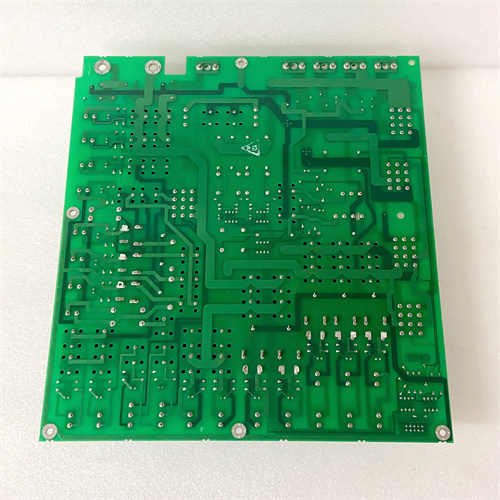
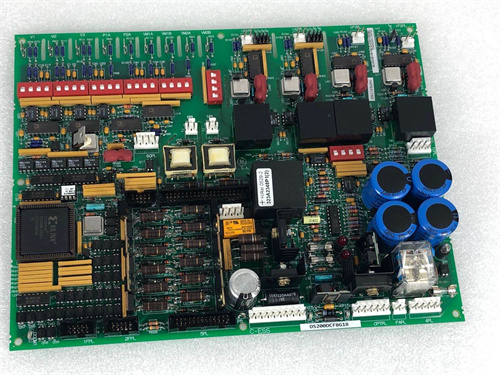
Physical: 6U VME single-slot board
-
Key Features: 4 TC/RTD simulator outputs + 2 frequency generator outputs, high accuracy, programmable, self-test, 2500V isolation
Advantages
-
Multi-function test capability – the DS3800XTFS combines temperature simulation and frequency generation in a single slot, providing a complete test solution for temperature and speed/flow measurement systems.
-
High-accuracy simulation – ±0.02% temperature simulation and ±0.01% frequency generation ensure reliable verification of measurement accuracy.
-
Wide frequency range – generates signals from 0.1 Hz to 500 kHz, covering slow-speed to high-speed turbine applications.
-
Programmable cold-junction reference – the General Electric DS3800XTFS allows programming of reference temperatures for thermocouple simulation.
-
Multiple output types – supports TTL, open-collector, and differential outputs for frequency simulation, accommodating various input requirements.
-
Enhanced isolation – 2500V RMS isolation protects the backplane from test equipment or accidental faults.
-
Extended temperature range – operates from –40°C to +85°C for harsh environments.
-
Self-test on power-up – verifies simulator functionality during system startup.
-
Drop-in compatible – works with all Mark IV backplanes and processor configurations.
Applications
-
Temperature channel validation – verifies that thermocouple and RTD input channels (e.g., on DS3800XTBA boards) are reading accurately using the DS3800XTFS simulation outputs.
-
Frequency channel validation – tests counter/frequency input boards (e.g., DS3800XCIA series) by generating precise frequency signals.
-
Loop testing – simulates sensor signals to test the entire measurement loop from the input board to the turbine control logic.
-
Commissioning – used during turbine commissioning to verify proper temperature sensor wiring and frequency sensor scaling.
-
Troubleshooting – isolates measurement issues by ruling out sensor or wiring problems.
-
Offshore and harsh environments – extended temperature range makes it suitable for demanding applications.
vs Competitors & Separate Test Equipment
| Feature | DS3800XTFS | DS3800XTES (Temp only) | External Calibrator + Signal Gen |
|---|---|---|---|
| Temperature simulation | Yes (4 ch) | Yes (8 ch) | Yes (1–2 ch) |
| Frequency simulation | Yes (2 ch) | No | Yes (1 ch) |
| Integration | VME-mounted | VME-mounted | External |
| Temp accuracy | ±0.02% | ±0.02% | ±0.01–0.05% |
| Freq accuracy | ±0.01% | N/A | ±0.01–0.05% |
| Freq range | 0.1 Hz – 500 kHz | N/A | 0.01 Hz – 100 kHz |
| Isolation | 2500V | 1500V | Limited |
| Extended temp range | –40°C to +85°C | –30°C to +70°C | 0°C to +50°C |
| Board count | 1 | 1 | N/A (external) |
Selection Tips
-
Combined test needs – choose the DS3800XTFS if your facility needs both temperature and frequency signal simulation capabilities in a single, integrated board.
-
Time savings – the General Electric DS3800XTFS can significantly reduce testing time compared to using separate external instruments.
-
Slot-limited installations – ideal for compact systems where a single test board is preferred over multiple external instruments.
-
High-frequency applications – the 500 kHz frequency generation capability is suitable for testing high-speed turbine pickups and encoders.
-
Sensor compatibility – verify that the thermocouple/RTD types and frequency input requirements in your facility are supported by the DS3800XTFS.
-
Spare strategy – keep one DS3800XTFS per facility (or per 5–8 installed measurement boards) for maintenance and troubleshooting.
-
Calibration – the DS3800XTFS itself should be periodically verified against traceable references.
Critical Precautions
-
Simulation output connection – disconnect the field sensor before connecting the DS3800XTFS output to an input channel to avoid damaging the sensor or simulator.
-
Voltage limits – do not apply external voltages to the General Electric DS3800XTFS outputs; this can damage the output stages.
-
Wiring polarity – observe correct polarity when connecting the DS3800XTFS simulator outputs to input boards; reversed polarity produces inverted readings.
-
Cold-junction simulation – when simulating thermocouple signals, ensure the programmed reference temperature matches the actual terminal block temperature of the input board, or use the input board’s CJC.
-
Frequency output load – ensure the connected input has the correct impedance and termination for the DS3800XTFS output type (TTL, open-collector, differential).
-
Shielded cabling – use shielded cables for simulation connections to minimize noise pickup. Ground the shield only at the DS3800XTFS end to prevent ground loops.
-
Ground loops – ensure proper grounding when connecting the DS3800XTFS to multiple input channels to avoid ground-loop currents.
-
Self-test – allow the DS3800XTFS to complete its power-up self-test (~2 seconds) before relying on simulation outputs.
-
Calibration intervals – schedule periodic calibration verification of the DS3800XTFS itself (every 12–18 months) against traceable references.
-
Hot-swap – never insert or remove the DS3800XTFS while the rack is powered; this can cause signal glitches or damage.
-
ESD handling – always use a grounded wrist strap when handling the DS3800XTFS; precision DACs and signal conditioning components are ESD-sensitive.
-
Storage – store spare DS3800XTFS boards in anti-static bags in a dry, temperature-controlled environment.
A-B 1734-TB
SIEMENS 5SY6204-7CC
A-B 1756-N2


Reviews
There are no reviews yet.