
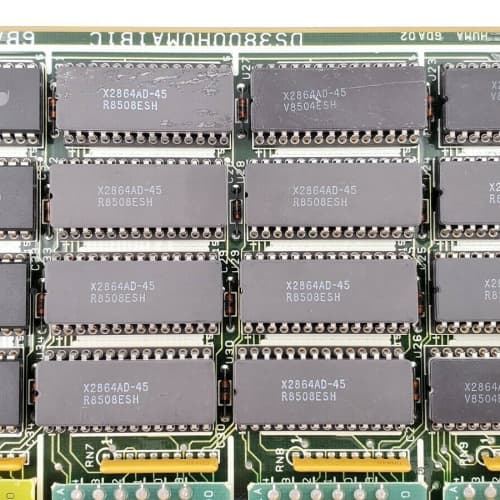
Description
Key Parameters
-
Power Outputs: Multiple regulated DC outputs (+5V, ±15V, +24V, and configurable auxiliary outputs)
-
Excitation Outputs: Adjustable excitation for transducers (e.g., 3V, 5V, 10V DC, or 4–20mA loop power)
-
Redundancy: Dual input feeds with automatic failover (<1ms switchover)
-
Input Voltage: 120/240V AC or 125/250V DC (dual inputs, independently fused)
-
Output Accuracy: ±0.05% regulation
-
Ripple/Noise: <3 mV peak-to-peak
-
Current Capacity: High (sufficient for multiple sensors; consult board marking)
-
Isolation: 2500V RMS input-to-output (per input)
-
Diagnostics: LED status indicators for each output, redundancy status indicators (primary/backup active), over-voltage/over-current protection, thermal shutdown, output voltage monitoring, input fault detection, enhanced fault logging (firmware 1A1B) , self-test on power-up
-
Temp Range: –40°C to +85°C (extended)
-
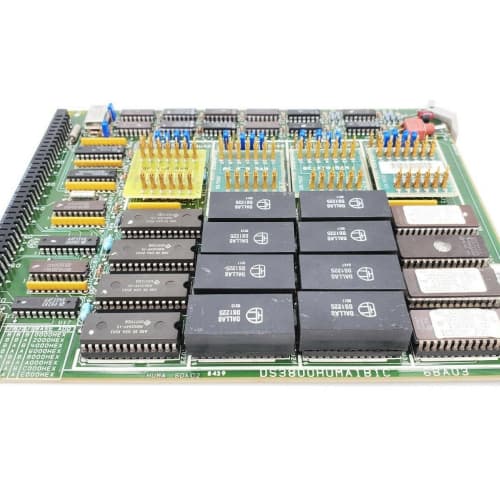
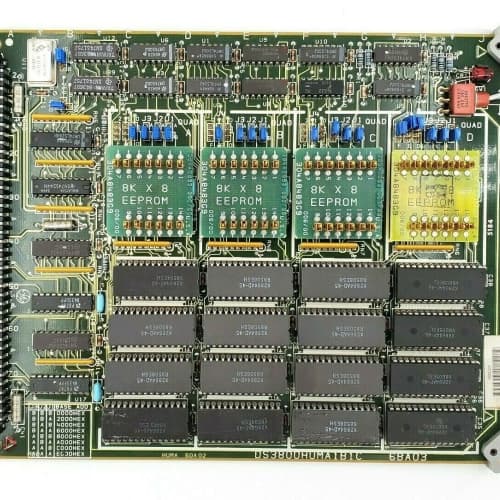
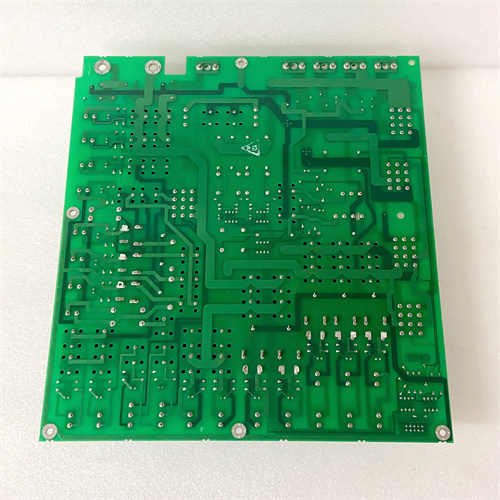
Physical: 6U VME single-slot board
-
Key Features: Dual redundant inputs, automatic failover, high current capacity, ultra-low noise, extended temp range, enhanced diagnostics, self-test, firmware rev 1A1B
Advantages
-
Built-in redundancy – the DS3800XPER1A1B features dual input feeds with automatic failover (<1ms), ensuring uninterrupted power to sensors even if one input supply fails.
-
Enhanced diagnostics – the 1A1B firmware provides improved fault logging, self-test on power-up, and detailed diagnostic reporting for predictive maintenance.
-
Ultra-low noise – <3 mV ripple provides exceptionally clean power for sensitive analog measurements.
-
Superior regulation – ±0.05% output regulation ensures stable excitation under varying load conditions.
-
Redundancy status visibility – LED indicators show which input is active, simplifying troubleshooting.
-
Input fault detection – the General Electric DS3800XPER1A1B detects input failures and logs them for diagnostic purposes.
-
Extended temperature range – operates from –40°C to +85°C for harsh environments.
-
Comprehensive protection – over-voltage, over-current, and thermal protection safeguard the board and connected field devices.
-
Drop-in compatible – works with all Mark IV backplanes and processor configurations.
Applications
-
Critical turbine protection systems – provides redundant excitation for overspeed protection speed pickups, where power loss is not acceptable.
-
High-availability installations – used in critical power generation applications where sensor power redundancy is required.
-
Offshore platforms – redundant inputs accommodate dual power sources common in offshore installations.
-
Vibration monitoring – supplies low-noise power to proximity probes for continuous shaft monitoring.
-
LVDT excitation – powers LVDTs for critical valve position feedback (fuel valves, steam valves).
-
Retrofits – the DS3800XPER1A1B replaces standard power boards in systems requiring redundancy upgrades.
vs Competitors & Previous Variants
| Feature | DS3800XPER1A1B | DS3800XPER | DS3800XPEN1B1D | Generic VME Board |
|---|---|---|---|---|
| Redundant inputs | Yes (dual, auto-failover) | Yes | No | No |
| Failover time | <1 ms | <1 ms | N/A | N/A |
| Output regulation | ±0.05% | ±0.05% | ±0.05% | ±0.1–0.5% |
| Ripple/noise | <3 mV | <3 mV | <3 mV | 10–50 mV |
| Self-test on power-up | Yes (1A1B) | No | Yes | No |
| Fault logging | Enhanced (1A1B) | Standard | Enhanced | No |
| Diagnostic detail | Enhanced (1A1B) | Standard | Standard | Basic |
| Extended temp range | –40°C to +85°C | –40°C to +85°C | –40°C to +85°C | 0°C to +60°C |
| Firmware revision | 1A1B | Varies | 1B1D | N/A |
Selection Tips
-
Redundancy + advanced diagnostics – choose the DS3800XPER1A1B for critical applications requiring both redundant power and the latest firmware with enhanced fault logging and self-test.
-
Dual power sources – the General Electric DS3800XPER1A1B requires two independent input power sources. Ensure your plant has redundant power feeds available.
-
High-precision sensors – the ultra-low noise and tight regulation make it suitable for the most sensitive analog measurements.
-
Sensor compatibility – verify that the excitation voltage and current requirements of your sensors match the DS3800XPER1A1B outputs.
-
Power loading – calculate the total current draw of all connected sensors and ensure it does not exceed the DS3800XPER1A1B total power rating.
-
Firmware compatibility – confirm your Mark IV main processor firmware supports the enhanced diagnostic features of the DS3800XPER1A1B.
-
Spare strategy – keep one DS3800XPER1A1B per 5–8 installed units, especially in critical applications where redundant power is specified.
-
Calibration – periodically verify output voltages under load using a precision multimeter to ensure the ±0.05% accuracy.
Critical Precautions
-
Dual input wiring – ensure both inputs of the DS3800XPER1A1B are connected to independent power sources. If both inputs are fed from the same source, redundancy is defeated.
-
Input fusing – each input of the DS3800XPER1A1B has its own fuse. Use only the specified fuse rating (consult board marking) and keep spare fuses on hand.
-
Failover testing – periodically test the automatic failover function by switching off one input while monitoring the DS3800XPER1A1B outputs to verify seamless transition.
-
Output voltage selection – verify that output voltages are correctly configured before connecting sensors. Incorrect voltage can damage sensors.
-
Overloading – do not exceed the DS3800XPER1A1B current rating for any output. Overloading can cause voltage drop, overheating, or shutdown.
-
Wiring polarity – ensure correct polarity when connecting sensors to the General Electric DS3800XPER1A1B outputs; reversed polarity can damage sensitive transducers.
-
Shielded cabling – use shielded cables for sensor connections to minimize noise pickup. Ground the shield only at the DS3800XPER1A1B end to prevent ground loops.
-
Ground loops – use single-point grounding for all sensors connected to the DS3800XPER1A1B to avoid ground-loop noise.
-
Thermal considerations – ensure adequate cabinet cooling (>200 CFM); the DS3800XPER1A1B can generate significant heat under load.
-
Self-test – allow the DS3800XPER1A1B to complete its power-up self-test (~2 seconds) before relying on outputs.
-
Redundancy status monitoring – connect the redundancy status outputs (if available) to the Mark IV system for remote monitoring of input health.
-
Hot-swap – never insert or remove the DS3800XPER1A1B while the rack is powered; this can cause voltage spikes and damage connected sensors.
-
ESD handling – always use a grounded wrist strap when handling the DS3800XPER1A1B; power components are ESD-sensitive.
-
Storage – store spare DS3800XPER1A1B boards in anti-static bags in a dry, temperature-controlled environment.
SCHNEIDER LC1D32M7C
A-B 1769-ECR
A-B 1756-N2
AB 889P-R3ABD4E-2


Reviews
There are no reviews yet.