
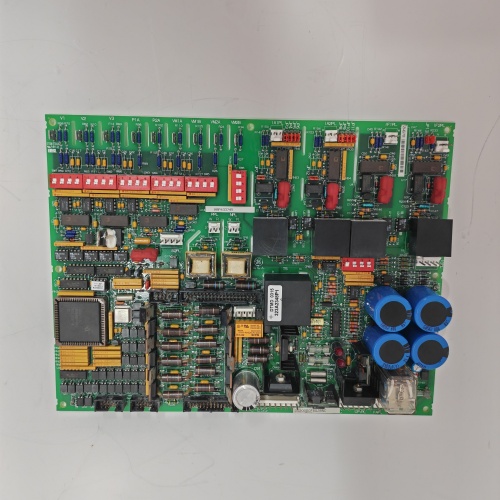
Description
Technical Parameters
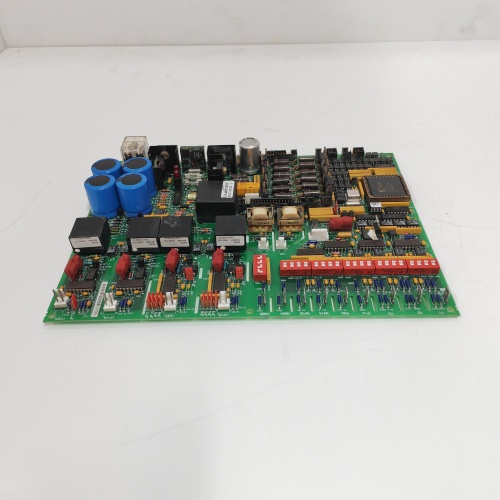
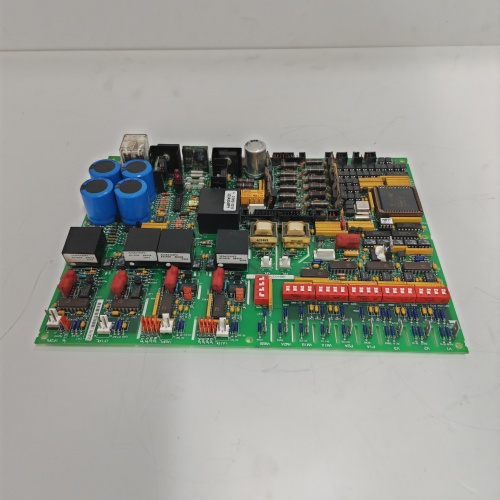
Based on the Mark V DS200 series specifications, the DS200SVAAG1ACC features the following key parameters:
-
Primary Function: Servo Valve Amplifier with Enhanced Diagnostics
-
Output Channels: 4 servo valve output channels
-
Output Signal Types: ±10V DC (command signal) or 4-20mA (configurable per channel)
-
Drive Current: Up to 120mA per channel (continuous, enhanced over standard 100mA); 250mA peak
-
Input Signal: ±10V DC (differential) from processor
-
Bandwidth: 0-600Hz (typical, enhanced over standard 500Hz)
-
Linearity: ±0.05% of full scale (enhanced over standard ±0.08%)
-
Output Impedance: < 1Ω
-
Diagnostic Features: Onboard fault detection (open circuit, short circuit, overcurrent, signal out of range, thermal warning, load impedance monitoring)
-
Event Logging: 512-event storage with timestamps (enhanced over standard)
-
Status Indicators: Front-panel LEDs for PWR OK, OUTPUT ACTIVE (per channel), FAULT (per channel), SATURATION (per channel), TEMP (thermal warning), and DIAG (diagnostic active)
-
Isolation: 2500V AC isolation between control logic and output side (enhanced over standard 1500V)
-
Power Input: +5V DC and ±15V DC from backplane
-
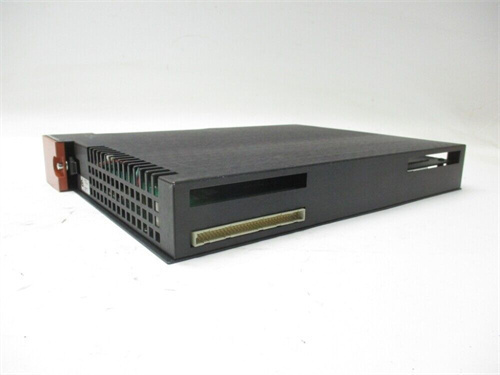
Form Factor: Single-slot 6U Eurocard (160mm), 96-pin DIN connector
-
Mounting: Direct plug-in to Mark V rack; front-facing terminals for servo valve wiring
-
Operating Environment: -10°C to 65°C ambient temperature (extended range), 5% to 95% non-condensing humidity
-
Accuracy: ±0.05% of full scale typical
-
Compliance: UL recognized, CE marked, RoHS compliant
Advantages and Features
The DS200SVAAG1ACC offers several distinctive advantages for Mark V system hydraulic actuator control:
-
Enhanced Linearity: With ±0.05% linearity, the DS200SVAAG1ACC provides superior precision for fuel and steam valve positioning, improving turbine speed and load regulation.
-
Extended Temperature Range: Rated for -10°C to 65°C, the DS200SVAAG1ACC is suitable for installations in extreme environments.
-
Enhanced Diagnostic and Logging: The “ACC” revision includes 512-event logging with timestamps, enabling detailed root-cause analysis of valve and amplifier issues. Load impedance monitoring provides early warning of valve coil degradation.
-
Increased Bandwidth: 0-600Hz bandwidth supports faster valve response, essential for grid frequency regulation and fast load changes.
-
Higher Drive Current: 120mA continuous capability allows the DS200SVAAG1ACC to drive a wider range of servo valve coils.
-
Configurable Output: Each channel can be configured for ±10V or 4-20mA output.
-
Enhanced Isolation: 2500V AC isolation provides superior protection against field-side transients.
-
Hot-Swap Capable: Supports live insertion and removal with proper ESD protocols.
-
Conformal Coating: PCB is factory-coated to protect against moisture, dust, and contaminants.
-
Comprehensive Status LEDs: Individual OUTPUT ACTIVE, FAULT, SATURATION, TEMP, and DIAG LEDs enable rapid troubleshooting.
Application Cases in Application Fields
The DS200SVAAG1ACC is deployed across multiple heavy-industrial sectors:
-
Combined Cycle Power Plants: A 750MW CCPP facility uses the DS200SVAAG1ACC to drive fuel gas control valves with ±0.05% linearity, improving fuel metering accuracy and reducing emissions. The enhanced logging helped identify a valve coil degradation trend, enabling preventive maintenance.
-
Steam Turbine Retrofits: During a control system refurbishment, a 300MW coal-fired station installed the DS200SVAAG1ACC for main steam admission valve control. The 600Hz bandwidth improved turbine response during load changes.
-
Gas Pipeline Compressor Stations: The DS200SVAAG1ACC drives high-cycle anti-surge control valves, with the enhanced diagnostic logging providing valuable data for valve health monitoring.
-
Offshore Oil Platforms: The extended temperature range and enhanced isolation have proven reliable in challenging offshore environments.
Comparison with Competing Products
| Aspect | DS200SVAAG1ACC | Standard DS200SVAAG1A | Third-Party Servo Amplifier |
|---|---|---|---|
| Linearity | ±0.05% | ±0.08% | Varies; often ±0.5% |
| Bandwidth | 0-600Hz | 0-500Hz | Varies; often 0-200Hz |
| Drive Current | 120mA continuous | 100mA continuous | Varies |
| Temperature Range | -10°C to 65°C | 0°C to 65°C | Varies; often 0°C to 50°C |
| Event Logging | 512 events | Limited or none | Varies; often none |
| Isolation | 2500V AC | 1500V AC | Varies; often lower |
| Diagnostics | Open, short, overcurrent, saturation, thermal, load impedance | Open, short, overcurrent, saturation, thermal | Varies; often limited |
| Channel Count | 4 channels | 4 channels | Varies; often 1-2 channels |
| Drop-in Compatibility | Direct plug-in | Direct plug-in | Requires external mounting |
Selection Suggestions and Precautions
Before purchasing or installing the DS200SVAAG1ACC:
-
Verify Exact Model: Ensure the board is precisely DS200SVAAG1ACC, not DS200SVAAG1, DS200SVAAG1A, or other variants. The “ACC” suffix is critical for ±0.05% linearity, 600Hz bandwidth, 120mA drive current, 512-event logging, and 2500V isolation.
-
Confirm Valve Compatibility: Verify that the servo valve coil requirements (voltage/current) match the DS200SVAAG1ACC output capabilities.
-
Output Configuration: Configure each channel for the appropriate output type before deployment.
-
Load Impedance Check: Use the load impedance monitoring feature of the DS200SVAAG1ACC to verify coil health after installation.
-
Thermal Management: Ensure adequate rack airflow despite the extended temperature range.
-
Wiring Check: Use shielded twisted-pair cables for servo valve wiring. Connect the shield at the DS200SVAAG1ACC end only.
-
ESD Protection: Use grounded wrist straps and anti-static mats during handling.
-
Post-Installation Validation:
-
Verify correct output configuration for each channel.
-
Test each channel with a known load to confirm proper current/voltage output.
-
Check all diagnostic LEDs for any fault indications.
-
Review the event log for any recorded faults or warnings.
-
Validate valve positioning accuracy through the HMI.
-
-
Spare Strategy: Maintain at least one spare DS200SVAAG1ACC on-site.
-
Supplier Qualification: Request test certificates including output linearity verification (±0.05%), bandwidth testing (600Hz), event logging validation, and isolation testing (2500V).
Final Recommendation
For GE Mark V turbine systems requiring the highest precision servo valve control with advanced diagnostics and enhanced performance, the DS200SVAAG1ACC is the premier solution. Its ±0.05% linearity, 600Hz bandwidth, 120mA drive current, 512-event logging, and 2500V isolation provide superior control accuracy and reliability for demanding applications. Prioritize reputable aftermarket suppliers with comprehensive testing. Maintain spares on-site, verify valve compatibility, and validate output configuration to ensure the long-term reliability of your DS200SVAAG1ACC and the entire Mark V control system.
A-B 2711-K5A1
woodward DSS-2
HONEYWELL FC-SDO-0824




Reviews
There are no reviews yet.