
Description
Product Description
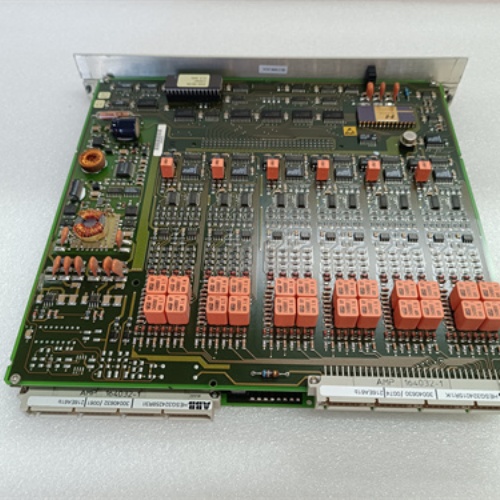
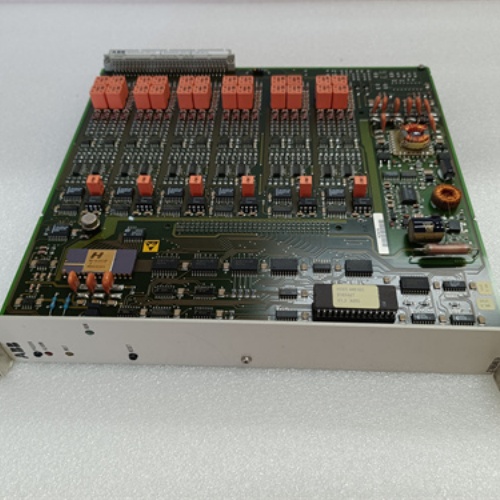
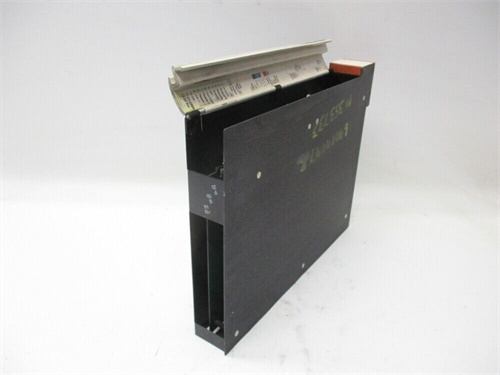
The ABB 216EA61B is a critical analog input module from ABB’s legacy MOD 30/MODVUE distributed control system (DCS). Designed for reliable process signal acquisition, this module is responsible for receiving and digitizing low-level analog signals from field transmitters and sensors, such as those measuring temperature via thermocouples or resistance temperature detectors (RTDs). The ABB 216EA61B served as a fundamental building block in its era, providing high-density input channels to efficiently monitor process variables across a plant. It is engineered with signal conditioning and isolation to ensure accurate readings in industrially noisy environments. For facilities that continue to operate with the MOD 30 or MODVUE platform, maintaining functional spares of the ABB 216EA61B (Product Link) is essential for ongoing operational support and maintenance. The durability and specific design of the ABB 216EA61B underscore its importance in preserving the functionality of these long-standing automation systems.
Product Parameters
-
Product Type: Analog Input Module (for Temperature & Low-Level Signals)
-
Brand & Series: ABB, MOD 30 / MODVUE System
-
Model: ABB 216EA61B
-
Number of Channels: Typically provides a high channel count (e.g., 8 or 16 channels).
-
Input Signal Types: Primarily designed for thermocouple (TC) types (e.g., J, K, T, E, etc.) and potentially RTD (e.g., Pt100) inputs. May also accept low-level voltage signals (mV).
-
Input Ranges: Specific to the sensor type, with configurable ranges for different thermocouple or RTD standards.
-
Isolation: Features channel-to-channel isolation to prevent signal interference and ground loops.
-
Cold Junction Compensation (CJC): Integral CJC for accurate thermocouple temperature measurement.
-
Connection: Interfaces via a dedicated, system-specific backplane or terminal panel within a MOD 30 I/O assembly.
-
Diagnostics: Basic operational status indicators.
Advantages and Features
The key advantage of the ABB 216EA61B lies in its High-Density, Specialized Acquisition for temperature and low-level signals, which was efficient for its time. It provides Integrated Signal Conditioning, performing the necessary amplification, linearization, and cold junction compensation for thermocouples directly at the I/O level, reducing the burden on the main controller. The module’s Electrical Isolation ensures signal integrity and protects the system from field-side disturbances. Its design enables Efficient Use of Rack Space, allowing a large number of temperature points to be monitored from a single module slot. For system maintainers, the availability of the ABB 216EA61B (Product Link) offers Direct Replacement Compatibility, ensuring a straightforward swap without requiring system re-engineering or calibration changes, assuming an identical configuration.
Application Cases in Various Fields
This module was extensively used in process industries utilizing the MOD 30/MODVUE system for critical temperature monitoring.
-
Chemical & Petrochemical Plants: Monitoring reactor temperatures, distillation column tray temperatures, and furnace tube temperatures.
-
Power Generation: Measuring boiler tube metal temperatures, turbine bearing temperatures, and generator winding temperatures.
-
Oil & Gas Refining: Monitoring catalyst bed temperatures in reformers and temperatures at various stages of crude distillation.
-
Metals & Glass Production: Controlling and monitoring temperatures in furnaces, kilns, and annealing lehrs.
-
Pulp & Paper: Measuring dryer section temperatures and cooking digester temperatures.
Comparison with Competing Products
The ABB 216EA61B was a contemporary of specialized temperature input modules from other legacy DCS vendors like Foxboro, Honeywell, and Fisher Controls. Its primary distinction was its seamless integration and data handling within the ABB MODVUE operator interface and control architecture. Compared to modern universal analog input modules that handle voltage, current, and temperature via software configuration, the ABB 216EA61B is a dedicated hardware solution, often considered more robust and precise for its specific purpose but less flexible. Unlike modern intelligent transmitters or remote I/O with digital communication (e.g., HART, Foundation Fieldbus), the 216EA61B represents a centralized, high-density analog acquisition approach typical of its generation. Its value today is not in technological competition but in providing authentic, reliable spares for a specific installed base.
Selection Suggestions and Precautions
-
Selection Suggestions:
-
Confirm System Architecture: Verify that your control system is an ABB MOD 30 or MODVUE system and identify the specific I/O chassis or assembly this module belongs to.
-
Exact Model Verification: Ensure the module number ABB 216EA61B matches exactly. Suffixes or revisions (like the ‘B’) are critical for compatibility.
-
Determine Input Type: Confirm the thermocouple type (J, K, etc.) or RTD type your application uses and verify the module is configured or hardwired for that specific input.
-
Procure from Legacy Specialists: Source this obsolete part from reputable suppliers specializing in discontinued ABB DCS components who can guarantee authenticity.
-
-
Precautions:
-
Electrostatic Discharge (ESD): Handle the module as a sensitive electronic component. Use an ESD wrist strap and bag when handling.
-
Configuration DIP Switches/Jumpers: Before installation, verify the settings of any configuration switches or jumpers on the module match those of the unit being replaced. Incorrect settings will lead to erroneous readings.
-
Proper Grounding: Ensure the system chassis and ground connections are correct. Improper grounding can introduce noise, especially critical for low-level mV signals from thermocouples.
-
Sensor Wire Compatibility: Use the correct grade of thermocouple extension wire and ensure proper polarity when connecting to the module’s terminals.
-
Beware of Remarked or Used Parts: Insist on a tested, genuine ABB 216EA61B (Product Link). Counterfeit or poorly refurbished modules can have calibration drift, failed channels, or cause system faults, leading to costly process errors or downtime.
-
DS200XDSAG1A GE
DS2020ACHAG1 GE
DS2020ACHAG2 GE PLC
DS2020ACHAG3 GE
DS2020ACSAG1 GE
DS2020ACSAG2 GE


Reviews
There are no reviews yet.