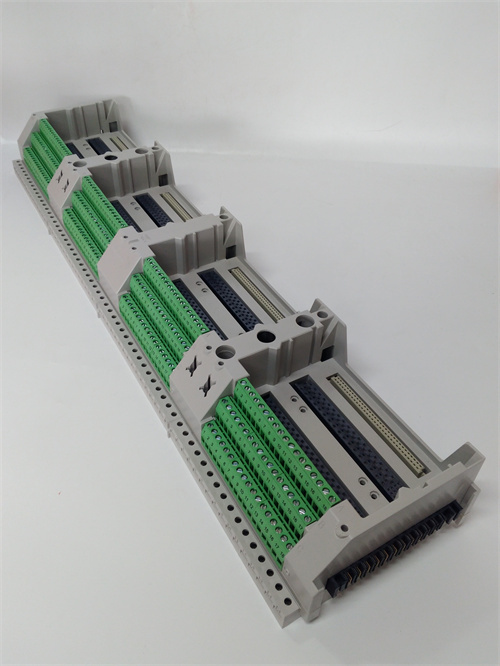
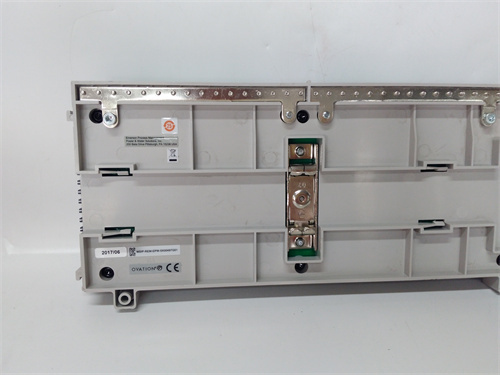
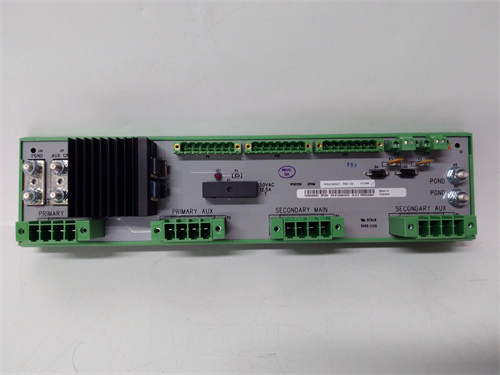
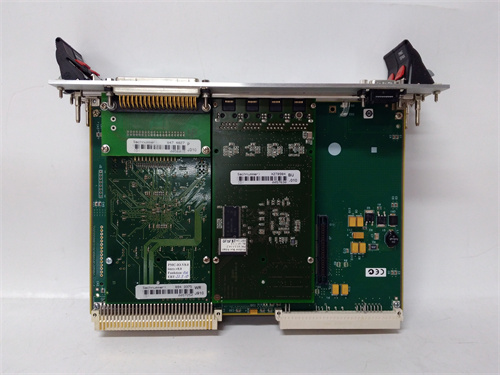
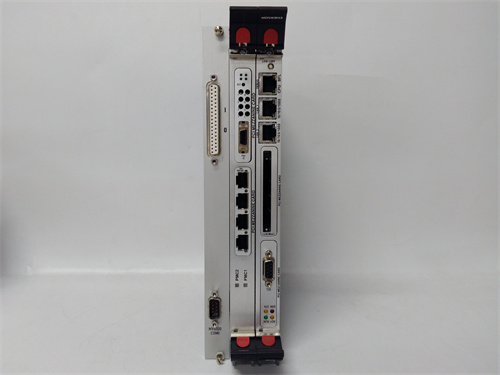
The EMERSON KJ3223X1-BA1 is a high-performance processor module for the Emerson Ovation distributed control system (DCS). This controller is the computational heart of a process automation unit, executing complex control logic, regulatory algorithms, and sequencing for critical industrial processes. The EMERSON KJ3223X1-BA1 is engineered for reliability and deterministic performance in demanding environments like power generation and water treatment. Implementing the KJ3223X1-BA1 provides a robust platform for safety, efficiency, and advanced regulatory control.
The EMERSON A6500-UM is a specialized universal mounting kit or hardware accessory designed for Emerson’s extensive range of industrial automation and control components. This product is engineered to provide secure, versatile, and standardized physical mounting solutions for devices such as I/O modules, communication gateways, or power supplies within a control panel or on a DIN rail. The A6500-UM kit simplifies installation and ensures components are properly anchored, which is vital for reliability in high-vibration environments. Utilizing the EMERSON A6500-UM enhances the mechanical integrity and professional finish of an automation system assembly.
The EMERSON VE4001S2T2B4 is a high-performance, modular I/O base unit or terminal block assembly designed for Emerson’s VersaMax PLC and PACSystems product families. This unit, the EMERSON VE4001S2T2B4, serves as the physical and electrical interface that mounts onto a DIN rail and accepts plug-in VersaMax I/O modules (e.g., digital input, digital output, analog modules). Its primary function is to provide secure mounting, power distribution, and the wiring terminal blocks for field devices, creating an organized and reliable connection point between the I/O module’s electronics and the field wiring. The design of the EMERSON VE4001S2T2B4 emphasizes flexibility, ease of installation, and robust connectivity for distributed or local I/O applications.
The EMERSON A6370D is a high-performance, multi-channel digital input module from Emerson’s extensive portfolio, commonly associated with their PACSystems™ RX3i or other industrial PLC platforms. This module, the EMERSON A6370D, is engineered to provide reliable and fast acquisition of discrete (on/off) status signals from field devices such as limit switches, pushbuttons, selector switches, and relay contacts. Its primary function is to interface between the high-voltage or low-voltage DC field wiring and the low-voltage logic-level circuitry of the PLC’s backplane, converting physical states into digital data for the processor. The design of the EMERSON A6370D emphasizes ruggedness, noise immunity, and diagnostic capability, making it suitable for a wide range of industrial applications. Integrating a reliable digital input module like the EMERSON A6370D is fundamental to building a responsive and accurate control system.
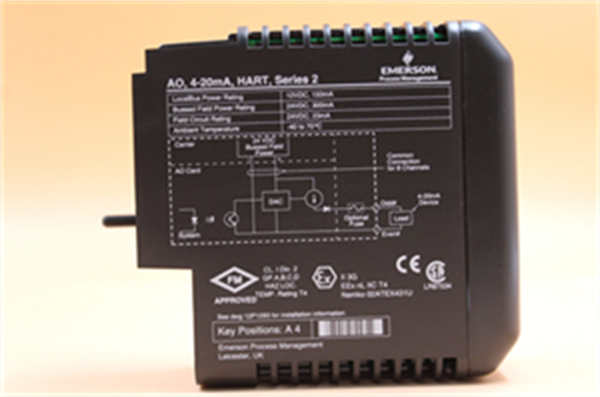
Output Channels: 4 independent analog output channels, supporting channel-by-channel signal configuration
Signal Types: Current output (4-20 mA, 0-20 mA); Voltage output (0-5 V, 0-10 V, ±5 V, ±10 V)
Accuracy Class: ±0.05% of full scale (FS) for current signals; ±0.075% FS for voltage signals
Load Capacity: Maximum 600 Ω for current output; Minimum 10 kΩ for voltage output
Isolation Performance: 2.5 kVrms isolation between channels and between output and backplane; 500 Vrms isolation between channels
Power Supply: 24 V DC (19.2-28.8 V DC allowable range), power consumption ≤ 5 W
Operating Environment: Temperature -40°C to +70°C; Humidity 5%-95% (non-condensing); Protection Class IP20 (module body)
Response Time: ≤ 50 ms (from digital signal input to analog output stabilization)
Diagnostic Functions: Overload protection, short-circuit detection, and power supply undervoltage alarm; fault data transmitted to the control system via backplane
Mounting Method: DIN rail mounting (35 mm standard) or EMERSON DeltaV DCS backplane slot mounting
The Emerson VE4005S2B1 is a standard I/O termination block designed for use with 8 – channel, 4 – 20 mA HART I/O cards2. It provides a reliable interface for connecting field signals to the DeltaV automation system, ensuring secure and accurate signal transmission
Input voltage range: 12-48VDC (Emerson) or 24VDC (Westinghouse).
Output voltage range: Emerson’s version outputs 5VDC, while Westinghouse’s version ranges from 4 mA to 20 mA.
Output current: Emerson versions are up to 10A.
Accuracy: The Westinghouse version has an accuracy of ±0.1%FS.
Resolution: Westinghouse version resolution is 12 bits.
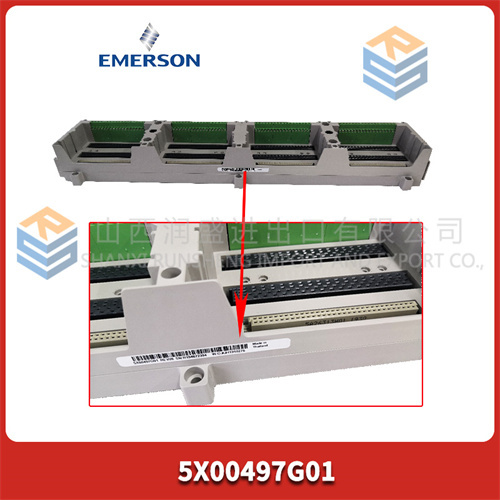
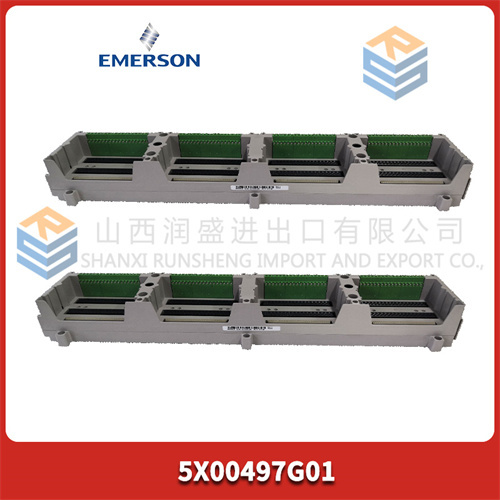
The 5X00497G01 is a high – performance relay output module. It is designed to provide reliable and efficient control of electrical loads in various industrial automation applications.
The VE4006P2 is an M – series serial interface card by Emerson4. It is designed to establish connections between the DeltaV™ system and devices that support serial protocols such as Modbus or Allen – Bradley’s Data Highway Plus
The EMERSON PMCSPAN is a single – slot, 6U VMEbus module designed to expand the I/O capabilities of VME – based CPU modules, especially those from Emerson Network Power1

.jpg)
.jpg)