
Description
Introduction and Product Overview
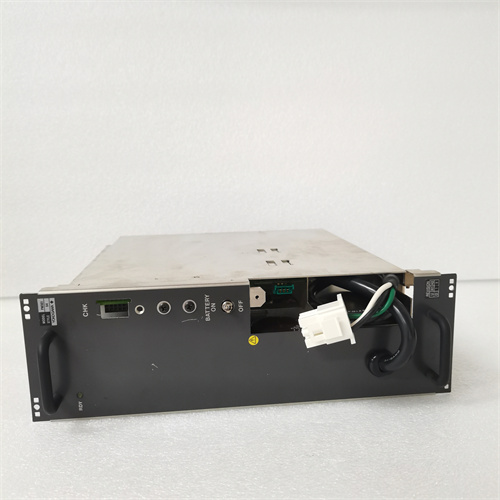
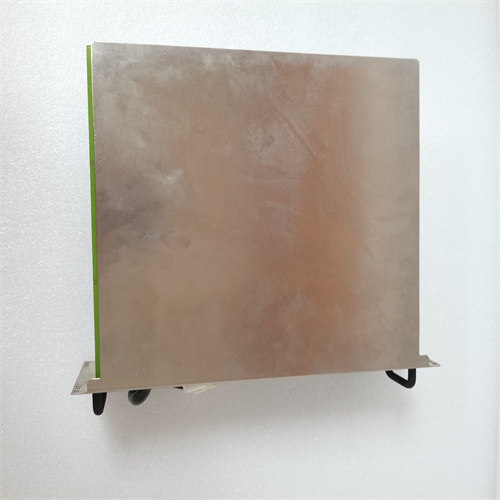
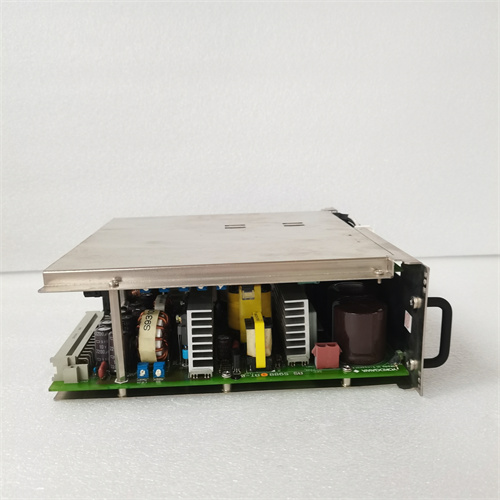
The YOKOGAWA PW301 is a Power Supply Unit for the Yokogawa ProSafe-RS Safety Instrumented System (SIS). This module is a critical infrastructure component, not a logic solver or I/O module, but is essential for providing clean, stable, and redundant DC power to the ProSafe-RS controllers and their associated I/O modules. The primary function of the PW301 is to convert incoming AC mains voltage into the regulated, low-voltage DC power required for the system’s internal electronics and field device power (via isolated barriers). In a safety system where reliability is non-negotiable, the PW301 ensures that the safety controllers—responsible for executing critical Emergency Shutdown (ESD) and Fire & Gas (F&G) logic—remain operational under varying power conditions. For installation and safety specifications, the official Yokogawa ProSafe-RS hardware manual for the PW301 is the definitive source.
Technical Parameters and Characteristics
The PW301 power supply is defined by its input/output ratings and safety-focused design:
-
Function: AC-to-DC Power Supply Module for ProSafe-RS.
-
Input Voltage: Typically accepts a wide-range AC input, commonly 100-240 VAC, 50/60 Hz, single-phase.
-
Output Voltage: Provides a regulated 24 VDC output, which is the standard power rail for the ProSafe-RS system’s logic and for powering field devices through isolated barriers.
-
Output Current: Rated to deliver sufficient current (e.g., 10A or as per model variant) to power a fully configured ProSafe-RS node, including redundant CPUs, communication modules, and a bank of I/O modules.
-
Safety Certification: Designed and certified as a component suitable for use in Safety Instrumented Systems (SIS), with its failure modes considered in the overall Safety Integrity Level (SIL) calculation of the system.
-
Redundancy Support: The PW301 is designed to be deployed in a redundant (1:1) configuration. Two modules can be installed in parallel with load sharing. If one module fails, the other seamlessly assumes the full load without interruption, eliminating a single point of failure for power.
-
Diagnostics & Monitoring: Features status indicators (LEDs) for input power, output power, and module health. Its status is communicated to the ProSafe-RS engineering and monitoring suite for centralized system health management.
Key Advantages and Features
The design of the YOKOGAWA PW301 offers distinct advantages for safety-critical applications:
-
Safety-System Integrity: As a certified component of the ProSafe-RS system, it contributes to the overall safety integrity and reliability of the SIS. Its design prioritizes high availability and includes protections that minimize the probability of dangerous failures.
-
High Availability through Redundancy: The built-in support for hot-swappable, parallel redundant configuration directly addresses power supply failure as a potential cause of system downtime, maximizing the availability of the safety system for continuous protection.
-
Robust Electrical Performance: Engineered for harsh industrial environments with high immunity to electrical noise, voltage fluctuations, and transients. This ensures the sensitive safety controller electronics receive clean and stable power, which is critical for reliable operation.
-
Integrated System Diagnostics: Fully integrated with the ProSafe-RS engineering environment (ProSafe-RS Explorer). This allows for centralized configuration, real-time monitoring of power supply health, and generation of maintenance alerts, making management of the PW301 part of the overall safety lifecycle management. The reliable operation of the entire node depends on the PW301.
Application Cases in Various Fields
This power supply is used in safety systems across all major high-hazard process industries:
-
Oil & Gas Refineries and Petrochemicals: Powering the ProSafe-RS system that implements the Emergency Shutdown System (ESD) and Fire & Gas (F&G) system for process units.
-
Chemical Processing Plants: Providing reliable power to safety controllers managing reactor trips, high-integrity pressure protection systems (HIPPS), and burner management.
-
Liquefied Natural Gas (LNG) Facilities: Ensuring uninterrupted power to safety functions across the liquefaction, storage, and loading processes.
-
Power Generation: In boiler protection systems and turbine emergency trip systems.
Comparison with Competing Products
The YOKOGAWA PW301 competes with safety-rated power supply modules from other SIS vendors, such as:
-
Emerson (DeltaV SIS) power supplies.
-
HIMA power supply units for F35/F87 systems.
-
ABB (System 800xA High Integrity) power modules.
Its key differentiator is its native integration and certification within the Yokogawa ProSafe-RS ecosystem. While generic 24VDC industrial power supplies may offer similar electrical specs, they lack the specific safety certifications, form factor, diagnostic communication, and validated redundancy schemes required for use in a certified SIL 2/3 safety system. The PW301 is part of a validated, single-vendor safety solution.
Selection Suggestions and Precautions
Selecting and maintaining this safety-critical component requires adherence to strict procedures:
-
System-Specific Part: The PW301 is designed exclusively for the Yokogawa ProSafe-RS system. It must not be used as a generic power supply, nor should generic supplies be used to replace it in a ProSafe-RS rack.
-
Load Calculation and Redundancy: Perform a detailed power budget for the entire ProSafe-RS node. In a redundant configuration, a single PW301 module must be capable of supporting the full load on its own.
-
Follow Safety Lifecycle Procedures: Any maintenance or replacement of the PW301 should be performed under a formal work permit and in accordance with the site’s safety manual and management of change (MOC) procedures, as it impacts a safety instrumented function.
-
Use Genuine Yokogawa Parts: To maintain system certification and reliability, always use genuine Yokogawa replacement parts. The PW301 is a critical component where substitutes pose a significant risk.
-
Observe Environmental Limits: Install the module within its specified temperature, humidity, and pollution degree ratings to ensure long-term reliability and compliance with its safety certification.
PW301
IEMMU11 PLC
IEPAF02 PLC
IEPAS01 PLC
IIADP02
IEPEP07 PLC
IIADP01 PLC
IIAMS04A
IIMGC01 PLC
IIMLM01 PLC
IIMGC04 PLC
IIMRM01 PLC
IIMKM01A PLC
IIMRM02
IIMCP02 PLC
IIMLM01R PLC
.jpg)


Reviews
There are no reviews yet.