
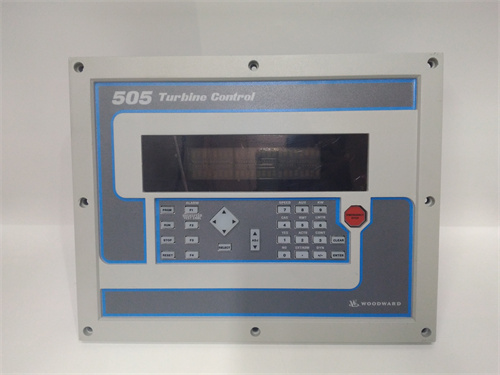
Description
Product Description
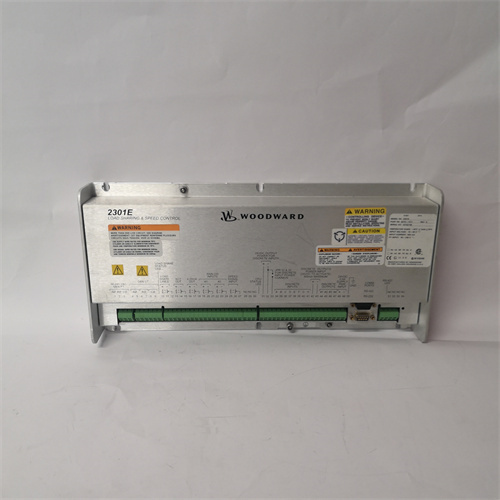
The WOODWARD 9907-167 is a digital speed control unit from Woodward’s esteemed line of prime mover controls, specifically engineered for precise speed regulation of engines and turbines. This microprocessor-based controller accepts input from magnetic pickups (MPUs) or proximity sensors mounted on the prime mover’s shaft, processes the speed signal, and generates an output to an actuator that adjusts fuel or steam flow to maintain desired speed.
The WOODWARD 9907-167 features advanced control algorithms including PID (Proportional-Integral-Derivative) control with gain scheduling, enabling optimal performance across the entire operating range from startup to full load. The unit supports both isochronous and droop speed control modes, allowing flexibility for various applications including generator set parallel operation and mechanical drive applications.
This versatile controller includes multiple programmable inputs and outputs, enabling integration with plant control systems and implementation of sophisticated control strategies. Typical configurations include discrete inputs for start/stop commands, remote speed setpoint adjustment, and various protection functions, along with analog outputs for speed indication and load sharing signals.
The WOODWARD 9907-167 incorporates comprehensive protection features including overspeed detection, underspeed protection, actuator failure detection, and speed signal loss detection. These protective functions can be configured to provide alarms or initiate shutdown sequences, safeguarding the prime mover and driven equipment from damaging conditions.
Designed for harsh industrial environments, the WOODWARD 9907-167 features rugged construction with industrial-grade components, wide operating temperature range, and high immunity to electrical noise. The unit can be panel-mounted or installed in control cabinets, with front-panel indicators providing visual status of operation, speed setpoint, and alarm conditions.
Configuration and tuning of the WOODWARD 9907-167 is accomplished through front-panel controls and display or via PC-based software tools, allowing precise adjustment of control parameters for specific prime mover characteristics and application requirements. Non-volatile memory retains all configuration settings indefinitely, ensuring consistent operation after power cycles.
Parameters and Specifications
| Parameter | Specification |
|---|---|
| Model Number | 9907-167 |
| Manufacturer | Woodward |
| Product Type | Digital Speed Control Unit |
| Primary Function | Prime mover speed control |
| Compatible Prime Movers | Diesel engines, gas engines, gas turbines, steam turbines |
| Speed Sensing Input | Magnetic pickup (MPU), proximity probe |
| Input Frequency Range | 1 Hz to 10,000 Hz |
| Speed Accuracy | ±0.1% of setpoint (steady state) |
| Control Modes | Isochronous, droop, remote setpoint |
| Control Algorithm | PID with gain scheduling |
| Actuator Output | 0-200 mA or 0-20 mA (configurable) |
| Discrete Inputs | 4-8 programmable (24V DC) |
| Discrete Outputs | 2-4 programmable relay outputs |
| Analog Inputs | 2 programmable (4-20 mA, 0-10V) |
| Analog Outputs | 2 programmable (4-20 mA, 0-10V) |
| Communication Ports | RS-232, RS-485 (Modbus RTU optional) |
| Protection Functions | Overspeed, underspeed, actuator failure, speed signal loss |
| Display | LED or LCD (depending on variant) |
| Power Supply | 18-32V DC or 90-150V AC (model dependent) |
| Power Consumption | 15W typical |
| Operating Temperature | -40°C to +70°C |
| Storage Temperature | -50°C to +85°C |
| Humidity | 5% to 95% non-condensing |
| Vibration Resistance | 5g @ 10-100 Hz |
| Enclosure Rating | IP20 (panel mount) |
| Dimensions (H x W x D) | 200 mm x 150 mm x 80 mm (approx.) |
| Weight | Approximately 1.5 kg |
| Mounting | Panel mount or DIN rail |
| Certifications | CE, UL, CSA, ATEX (Zone 2) |
| RoHS Compliance | Yes |
Advantages and Features
The WOODWARD 9907-167 offers numerous benefits that make it the preferred choice for prime mover speed control applications:
Key Advantages
-
Precise Speed Regulation: Advanced PID control with ±0.1% accuracy ensures tight speed control essential for generator set frequency stability and precise mechanical drive applications. The WOODWARD 9907-167 maintains consistent speed despite load variations.
-
Versatile Application Support: Suitable for various prime mover types including diesel engines, gas engines, steam turbines, and gas turbines, the WOODWARD 9907-167 provides a single control solution for diverse equipment fleets.
-
Comprehensive Protection: Built-in protection functions including overspeed detection and actuator monitoring safeguard expensive prime movers from damaging conditions, reducing repair costs and downtime.
-
Flexible Configuration: Programmable inputs and outputs allow the WOODWARD 9907-167 to be tailored to specific application requirements without external components, simplifying system design.
-
Load Sharing Capability: Support for isochronous load sharing enables parallel operation of multiple generator sets, essential for reliable power system operation.
-
Remote Control Options: Analog and digital communication interfaces allow integration with plant DCS, SCADA systems, or remote monitoring stations, enabling centralized control and monitoring.
-
Rugged Construction: Wide operating temperature range and high vibration resistance ensure reliable operation in harsh environments including engine rooms, outdoor installations, and industrial facilities.
-
Field-Proven Reliability: Based on Woodward’s decades of prime mover control experience, the WOODWARD 9907-167 has demonstrated exceptional reliability in thousands of installations worldwide.
-
User-Friendly Interface: Front-panel controls and display simplify local monitoring and adjustment, while PC-based software tools enable detailed configuration and tuning.
-
Non-Volatile Memory: Configuration settings are retained indefinitely without battery backup, ensuring consistent operation after power interruptions.
Application Fields and Cases
The WOODWARD 9907-167 is extensively deployed across various industries for prime mover speed control:
Primary Application Areas
-
Power Generation:
-
Emergency standby generator sets
-
Prime power generator sets
-
Peak shaving plants
-
Combined heat and power (CHP) systems
-
Renewable energy hybrid systems
-
-
Oil and Gas:
-
Gas compressor stations
-
Pump drives for pipelines
-
Wellhead gas engine controls
-
Offshore platform power generation
-
-
Marine:
-
Ship service generator sets
-
Propulsion engine speed control
-
Auxiliary engine control
-
-
Industrial:
-
Engine-driven pumps and compressors
-
Turbine drives for fans and blowers
-
Cogeneration systems
-
Biogas utilization engines
-
Application Case Examples
-
Data Center Standby Power: A major data center operator standardized on the WOODWARD 9907-167 for all emergency diesel generator sets across multiple facilities. The precise speed control ensures rapid response to utility failures with minimal frequency deviation, critical for sensitive IT loads. The load sharing capability enables seamless parallel operation of multiple generators for larger facilities. After five years of operation, the controls have demonstrated 99.9% reliability during monthly testing and actual utility events.
-
Gas Pipeline Compressor Station: A natural gas transmission company utilizes the WOODWARD 9907-167 on compressor station gas engines driving centrifugal compressors. The wide speed range capability accommodates varying pipeline flow requirements, while the remote setpoint input allows the station PLC to optimize compressor operation based on system demands. The overspeed protection has prevented catastrophic failures during several unplanned load rejection events.
-
Landfill Gas-to-Energy Plant: A renewable energy facility generating electricity from landfill gas uses the WOODWARD 9907-167 on multiple gas engine generator sets. The control’s ability to handle varying fuel quality and heating value has proven essential for stable operation. The remote monitoring capability via Modbus allows operators to monitor engine performance from a central control room, reducing required site visits.
-
Marine Vessel Retrofit: A tugboat operator upgraded aging vessels with new diesel engines and WOODWARD 9907-167 controls. The compact size and rugged construction suited the space-constrained engine room environment, while the vibration resistance ensured reliable operation despite constant motion. The precise speed control improved fuel efficiency by 8% compared to the previous mechanical governors.
Comparison with Competitors
When compared to similar speed control units from other manufacturers, the WOODWARD 9907-167 demonstrates several distinctive characteristics:
| Feature | WOODWARD 9907-167 | ABB UNS0880 | Basler DGC-2020 | GAC 740 |
|---|---|---|---|---|
| Primary Focus | Prime mover speed control | Generator protection | Generator control | Engine speed control |
| Prime Mover Types | Engines, turbines | Generators | Generators | Engines |
| Control Algorithm | PID with gain scheduling | PID | PID | PID |
| Speed Accuracy | ±0.1% | ±0.25% | ±0.25% | ±0.25% |
| Protection Functions | Comprehensive speed-focused | Comprehensive generator | Comprehensive generator | Basic speed |
| Load Sharing | Isochronous and droop | Yes | Yes | Limited |
| Programmable I/O | Extensive | Moderate | Extensive | Limited |
| Communication Options | Modbus RTU, RS-232/485 | Multiple protocols | Modbus, CANbus | Limited |
| Operating Temperature | -40°C to +70°C | -20°C to +60°C | -40°C to +70°C | -40°C to +85°C |
| Typical Application | Speed control only | Generator protection | Gen-set control | Engine speed |
| Installed Base | Very large | Large | Large | Moderate |
Comparative Advantages
-
Speed Control Expertise: The WOODWARD 9907-167 benefits from Woodward’s specialized focus on prime mover speed control, resulting in algorithms optimized specifically for this application rather than general-purpose controls.
-
Wider Prime Mover Compatibility: Unlike competitors focused solely on engines or generators, the WOODWARD 9907-167 handles multiple prime mover types (engines and turbines), simplifying sparing and training.
-
Superior Speed Accuracy: With ±0.1% accuracy, the WOODWARD 9907-167 outperforms many competitors at ±0.25%, critical for frequency-sensitive applications.
-
Extended Temperature Range: The -40°C to +70°C operating range suits applications in extreme environments where competitors may require additional environmental controls.
-
Field-Proven Reliability: With decades of refinement, the WOODWARD 9907-167 has one of the largest installed bases among dedicated speed controls, demonstrating exceptional field reliability.
Selection Suggestions and Precautions
Selection Criteria
When considering the WOODWARD 9907-167 for your application, evaluate the following factors:
-
Prime Mover Type: Verify compatibility with your specific prime mover (diesel engine, gas engine, steam turbine, gas turbine). The WOODWARD 9907-167 supports all types but may require specific configuration.
-
Speed Sensing Requirements: Determine the type and characteristics of your speed sensor (magnetic pickup, proximity probe). Verify compatibility with the WOODWARD 9907-167 input specifications.
-
Actuator Compatibility: Identify your actuator type and control signal requirements. The WOODWARD 9907-167 provides configurable output to match various actuators.
-
Control Mode Requirements: Determine whether isochronous, droop, or remote setpoint control is required for your application. The WOODWARD 9907-167 supports all modes.
-
Load Sharing Needs: If operating multiple generator sets in parallel, verify that the WOODWARD 9907-167 load sharing capability meets your requirements.
-
I/O Requirements: Identify all required inputs and outputs for your application, including start/stop commands, remote setpoints, alarms, and indications. Ensure the WOODWARD 9907-167 provides adequate I/O or plan for expansion.
-
Communication Requirements: Determine if remote monitoring or control via plant DCS or SCADA is required. Select appropriate communication options for the WOODWARD 9907-167.
-
Environmental Conditions: Ensure the installation environment falls within the module’s specifications, particularly temperature range and vibration levels.
-
Regulatory Requirements: Verify that the WOODWARD 9907-167 meets applicable codes and standards for your industry and location, including hazardous area classifications if applicable.
-
Spare Parts Strategy: For critical applications, maintain a spare WOODWARD 9907-167 to minimize downtime in case of failure. Consider Woodward’s service and support programs.
Installation Precautions
-
ESD Sensitivity: The unit contains sensitive electronic components. Follow proper ESD handling procedures during installation and maintenance. Use grounded wrist straps and anti-static mats.
-
Mounting: Install the WOODWARD 9907-167 in a location providing adequate ventilation and protection from excessive heat, moisture, vibration, and contaminants. Follow Woodward’s mounting orientation recommendations.
-
Wiring Practices:
-
Use properly sized wire for all connections
-
Follow Woodward’s recommended wire types and gauges
-
Maintain separation between power and signal wiring
-
Use shielded cable for speed sensor and analog signals
-
Properly terminate shields according to Woodward’s guidelines
-
-
Speed Sensor Wiring: Pay special attention to speed sensor wiring:
-
Use twisted, shielded pair cable
-
Maintain proper polarity
-
Keep cable runs away from high-voltage sources
-
Verify sensor air gap per manufacturer specifications
-
-
Actuator Wiring: Verify actuator compatibility and proper wiring connections. Incorrect wiring can damage actuator or control.
-
Power Supply: Ensure the power supply meets the WOODWARD 9907-167 requirements for voltage and current capacity. Consider dedicated power for control reliability.
-
Grounding: Follow Woodward’s grounding guidelines carefully. Proper grounding is essential for noise immunity and reliable operation.
-
Configuration Backup: After configuring the WOODWARD 9907-167, save configuration settings to a PC or document all parameters for future reference.
-
Commissioning:
-
Verify all wiring before applying power
-
Perform initial startup with prime mover disabled when possible
-
Verify speed signal at control input
-
Test all discrete inputs for proper function
-
Verify actuator response in manual mode
-
Tune PID parameters for optimal performance
-
Test all protection functions under controlled conditions
-
Document all final settings and test results
-
-
Operator Training: Ensure operators and maintenance personnel are trained on WOODWARD 9907-167 operation, indicator interpretation, and basic troubleshooting.
-
Periodic Maintenance: Establish a regular schedule for:
-
Checking connections for tightness
-
Verifying speed accuracy with independent measurement
-
Testing protection functions
-
Reviewing event logs (if available)
-
Inspecting for signs of environmental stress
-
Conclusion
The WOODWARD 9907-167 represents a sophisticated and reliable solution for prime mover speed control, combining Woodward’s decades of governor expertise with modern digital technology. Its precise speed regulation, comprehensive protection functions, and flexible configuration options make it the preferred choice for critical applications in power generation, oil and gas, marine, and industrial environments.
Whether controlling diesel generators in a data center, gas compressors in a pipeline station, or steam turbines in a cogeneration plant, the WOODWARD 9907-167 delivers the performance and dependability required for 24/7 operations. The unit’s ability to handle multiple prime mover types simplifies equipment standardization, while its rugged construction ensures reliable operation in harsh environments.
By choosing the WOODWARD 9907-167, engineers and plant operators gain access to a field-proven control backed by Woodward’s extensive application expertise and global support network. For applications requiring dedicated, high-performance speed control with the flexibility to accommodate various prime movers and operating modes, this unit represents an optimal balance of features, reliability, and value.
As industrial facilities face increasing demands for efficiency, reliability, and remote monitoring capability, the WOODWARD 9907-167 provides the control foundation for meeting these challenges while protecting valuable prime mover assets. For purchasing or additional technical information about the WOODWARD 9907-167, please visit: WOODWARD 9907-167 Product Page
SNAT604IFS
CI540-3BSE001077R1
SDCS-CON-1
SNAT603CNT
2711P-T15C4D2
1766-L32BXBA
SIMOSAPS91CMA39-B



Reviews
There are no reviews yet.