
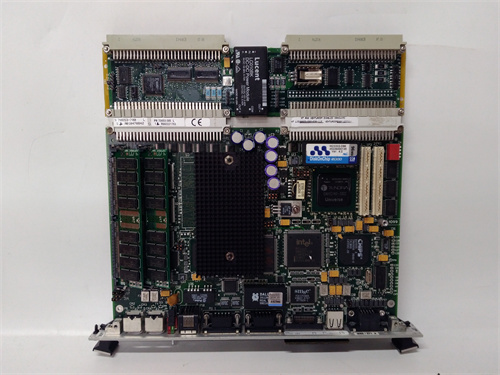
Description
Product Description
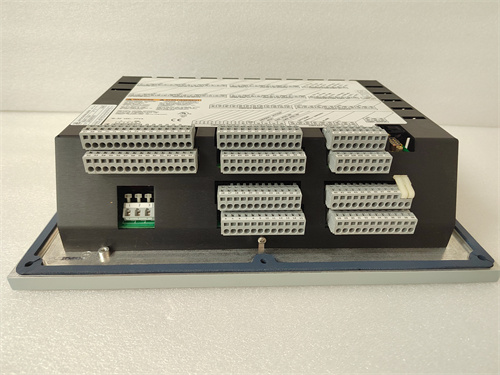
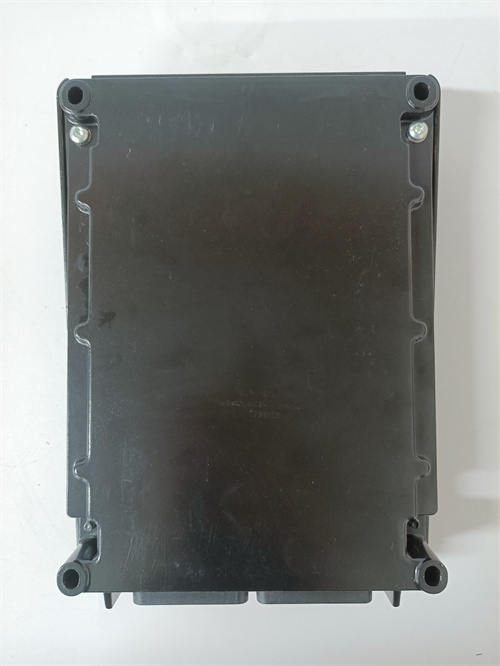
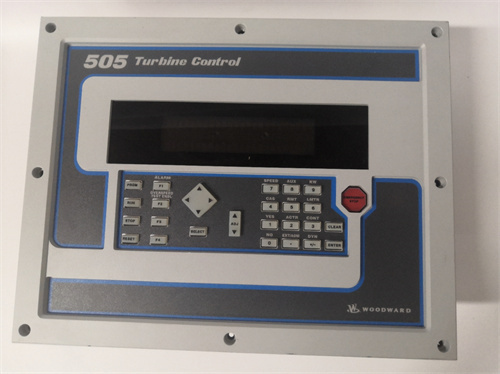
The WOODWARD 5448-898 MFR-13 is a specialized electronic control board designed for use within Woodward’s line of Prime, EasyGen, or legacy analog governor and control systems for engines and turbines. This assembly, the WOODWARD 5448-898 MFR-13, functions as a critical interface or processing module, often responsible for managing key functions such as fuel metering, actuator control, speed sensing, or synchronization logic. It serves as the intelligent intermediary between a turbine/engine’s sensors and its final control elements, executing precise control algorithms to regulate speed, load, and process variables. The integration of a genuine WOODWARD 5448-898 MFR-13 module is essential for maintaining the manufacturer-specified performance, stability, and safety of the prime mover control system.
Product Parameters and Specifications
-
Equipment Family: Replacement assembly for Woodward engine/turbine control systems, such as those in the EasyGen or Prime product lines, or for legacy analog governors.
-
Function: Typically acts as a Main Fuel Regulator (MFR) board, Actuator Driver Module, or a dedicated Speed/Process controller. Its exact function is defined by its position within the specific control system model.
-
Inputs: Interfaces with magnetic pickups (MPUs) for speed sensing, 4-20mA process signals (e.g., for pressure, temperature), potentiometer settings, and digital status inputs.
-
Outputs: Provides precisely modulated output signals to control devices such as proportional solenoids, servo valves, or actuators that directly manage fuel racks or valves.
-
Control Algorithms: Executes proprietary Woodward control algorithms for isochronous speed control, droop control, load sharing (via iso-droop or kW load share), and potentially process control (e.g., pressure, temperature).
-
Construction: A ruggedized printed circuit board (PCB) assembly designed to withstand the vibration, temperature, and EMI environment of an engine or turbine control cabinet.
-
Communications: May include legacy serial communication ports (RS-232/485) for configuration and monitoring via Woodward’s ToolKit software.
Advantages and Key Features
-
Optimized for Prime Mover Control: The core advantage of the WOODWARD 5448-898 MFR-13 is its specialized design for the dynamic and demanding control of engines and turbines, offering performance that generic PLCs cannot match.
-
Proprietary Control Algorithms: It runs Woodward’s proven, field-tested control algorithms for precise speed governing, stable load acceptance/rejection, and seamless generator synchronization to the grid.
-
Robust and Reliable Design: Built to endure harsh operating conditions adjacent to prime movers, featuring conformal-coated PCBs, high-grade components, and designs resistant to vibration and electrical noise.
-
Seamless System Integration: As an original Woodward component, the WOODWARD 5448-898 MFR-13 guarantees perfect electrical and functional compatibility with the rest of the control system, preserving all safety and performance interlocks.
-
Simplified Troubleshooting and Support: Use of the genuine part ensures predictable behavior and access to Woodward’s extensive technical documentation, application notes, and global service network for support.
Application Cases in Various Industries
-
Power Generation (Standby & Prime Power): Controls diesel or gas reciprocating engines in generator sets for data centers, hospitals, and industrial facilities, ensuring stable frequency and voltage during load changes.
-
Oil & Gas: Manages compressor drivers (gas turbines or engines) in pipeline stations and upstream production facilities, regulating speed to maintain precise discharge pressure or flow.
-
Marine Propulsion: Used in control systems for main propulsion engines and ship service generators, providing precise control for maneuvering and electrical load management.
-
Industrial Co-Generation: Controls gas turbines or engines in combined heat and power (CHP) plants, optimizing efficiency by matching electrical output to process steam demand.
Comparison with Competing Products
Compared to attempting to replace this function with a universal PLC or a generic I/O card from manufacturers like Siemens or Rockwell, the WOODWARD 5448-898 MFR-13 provides critical, domain-specific advantages:
-
Application-Specific Expertise: It is a purpose-built solution with decades of embedded knowledge in governing dynamics. A generic PLC would require extensive, risky custom programming to approximate its performance.
-
Certified Safety and Response Time: Woodward controls are engineered and tested for the specific failure modes and response times required for prime mover safety. A retrofit with a general-purpose PLC may not achieve the same level of certified safety and dynamic response.
-
Ecosystem Compatibility: It is part of a holistic control system (including actuators, sensors, and software) designed to work together. Mixing brands often leads to integration challenges, finger-pointing, and degraded performance.
-
Long-Term Product Support: Woodward maintains long support lifecycles for its control components, which is critical for engine and turbine assets that operate for 30+ years.
Selection Suggestions and Precautions
-
Precise Cross-Reference is Critical: This part number is highly specific. You must verify it is the exact replacement for the failed board in your specific Woodward control model (e.g., EasyGen 3200, ProAct I/II/III) by checking the original unit’s nameplate, schematic, or a direct cross-reference from Woodward.
-
Identify the Root Cause: Failure of a board like the WOODWARD 5448-898 MFR-13 is often symptomatic of an external problem (e.g., a faulty actuator shorting the output, poor power supply, damaged speed sensor). Diagnose and rectify the root cause before installing the new board to prevent immediate re-failure.
-
Handle as ESD-Sensitive: Treat this electronic assembly with proper electrostatic discharge (ESD) precautions during handling and installation.
-
Software Configuration May Be Required: The new module may need to be configured with specific application parameters (gain settings, speed ranges, etc.) using Woodward’s proprietary ToolKit software. This requires trained personnel.
-
Calibration and Testing Post-Installation: After installation, a full calibration and functional test sequence should be performed. This includes verifying speed setpoints, actuator stroke, and control response to ensure the system operates as intended.
-
Source from Authorized Channels: Always purchase from authorized Woodward distributors or directly from Woodward. The market for counterfeit turbine control parts is significant, and fake boards can lead to catastrophic engine damage or failure to control.
-
Consult System Documentation: Before replacement, review the control system’s installation and service manual. Understanding the role and test points of the WOODWARD 5448-898 MFR-13 in your specific system is crucial for a successful repair.
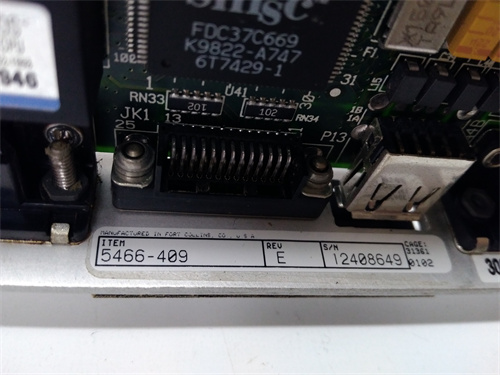
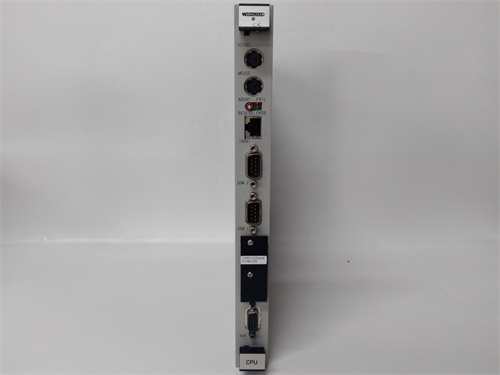
ABB NLIS01 PLC
NCIS02 PLC
ABB 57120001-HP PLC
NIMF02 ABB DCS


Reviews
There are no reviews yet.