
Description
1. Product Overview
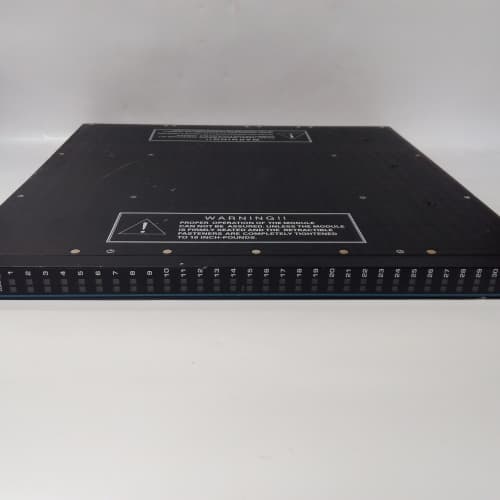
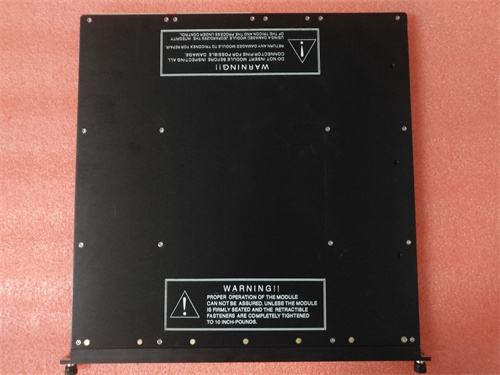
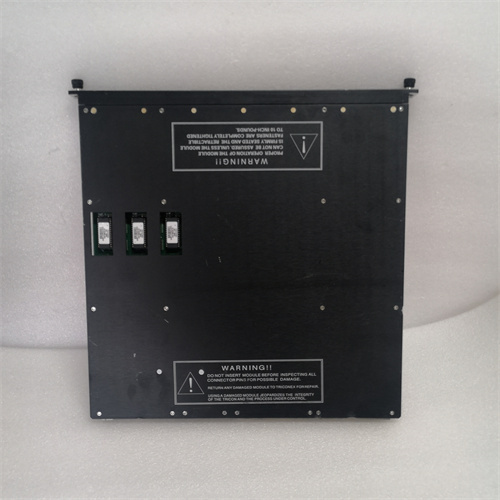
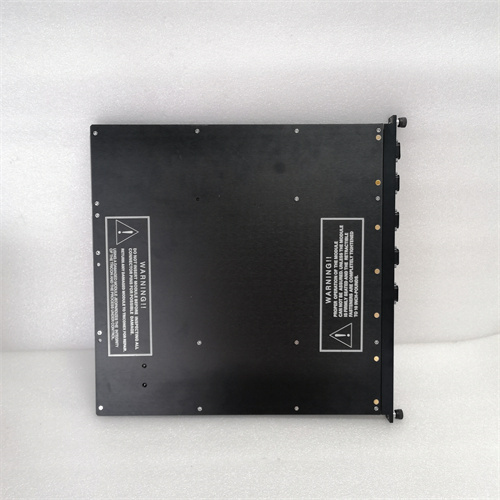
TRICONEX 3625 is a critical digital input module (DI) within the TRICONEX Tricon triple-modular redundant (TMR) safety instrumented system (SIS), engineered for high-reliability detection of discrete signals in SIL 3-certified applications. Designed to interface with sensors, switches, and contact inputs, TRICONEX 3625 provides 32 channels of isolated digital input, making it indispensable for oil & gas, petrochemical, power generation, and chemical industries where accurate fault detection is mission-critical. In refinery emergency shutdown (ESD) systems, TRICONEX 3625 monitors pressure switches, level sensors, and emergency stop buttons; in LNG plant fire/gas detection systems, TRICONEX 3625 processes signals from flame detectors and gas sensors; in nuclear power plant safety loops, TRICONEX 3625 ensures compliance with strict regulatory standards for signal integrity. Additionally, TRICONEX 3625 supports hot-swapping and advanced diagnostics, enabling seamless maintenance without disrupting critical processes.
2. Product Parameters
2.1 Core Input Specifications
- Input Channels: 32 isolated digital input channels (8 channels per group, galvanic isolation between groups)
- Input Type: Dry contact (NO/NC), wet contact (24V DC), TTL-compatible signals
- Input Voltage Range: 18-30V DC (wet contact), 0-5V DC (TTL)
- Response Time: ≤2ms (signal detection to backplane transmission)
- Isolation Rating: 2500V AC between channels (group-to-group), 3000V AC between module and backplane
2.2 Electrical & Communication Parameters
- Power Supply: 24V DC (redundant input, supplied by Tricon chassis), power consumption ≤12W
- Backplane Interface: TRICONEX Tricon proprietary TMR bus (10Mbps, redundant)
- Diagnostic Features: Open-circuit detection, short-circuit detection, channel fault status feedback, module self-test (BIT)
- LED Indicators: Per-channel input status (ON/OFF), module power, fault, and TMR synchronization
- Input Logic: Configurable (normally open/normally closed, positive/negative logic)
2.3 Environmental & Mechanical Parameters
- Operating Temperature: -40°C to +70°C (industrial-grade wide temperature range)
- Storage Temperature: -55°C to +85°C
- Relative Humidity: 5% to 95% (non-condensing, IP20 protection)
- Vibration Resistance: 5-2000Hz, 5g (IEC 60068-2-6, X/Y/Z axes)
- Shock Resistance: 30g (11ms half-sine wave, IEC 60068-2-27)
- Mounting: TRICONEX Tricon 3000/4000/5000 chassis dedicated slot, hot-swappable (TMR-compatible)
2.4 Certifications & Compatibility
- Safety Certifications: SIL 3 (IEC 61508/61511), TÜV Rheinland, ATEX Zone 2 (Ex ib IIC T4)
- Industry Certifications: CE, UL/cUL Class 1 Div 2, FCC Class A, RoHS
- Compatibility: TRICONEX Tricon controllers (MP3008, MP2101), TriStation 1131 engineering software, all TRICONEX I/O modules (including T4351B, MA2211 series)
- MTBF: ≥1,200,000 hours (per Telcordia SR-332 standards)
3. Advantages & Features
- High-Density Isolation: TRICONEX 3625 offers 32 isolated channels in a single module, with group-based galvanic isolation to prevent cross-channel interference. This design reduces chassis space requirements and wiring complexity while ensuring reliable signal detection in noisy industrial environments.
- Fast Response Time: With a ≤2ms response time, TRICONEX 3625 quickly detects critical discrete signals (e.g., emergency stop activation, pressure switch trips) and transmits data to the Tricon controller, enabling immediate safety actions to mitigate hazards.
- Comprehensive Diagnostics: TRICONEX 3625 includes open/short-circuit detection and real-time fault feedback, allowing operators to identify failed sensors or wiring issues before they compromise system safety. The module’s self-test function ensures continuous reliability and compliance with SIL 3 requirements.
- Hot-Swappable & TMR-Compatible: TRICONEX 3625 is hot-swappable in Tricon chassis, meaning modules can be replaced without shutting down the SIS. Its compatibility with TMR architecture eliminates single points of failure, ensuring uninterrupted operation for safety-critical applications.
- Flexible Input Configuration: Support for dry/wet contacts and configurable logic (NO/NC, positive/negative) makes TRICONEX 3625 compatible with a wide range of field devices, from mechanical switches to electronic sensors, reducing the need for additional interface modules.
4. Application Fields & Cases
4.1 Application Fields
- Oil & Gas: ESD system sensor input (pressure/level switches), pipeline leak detection, offshore platform emergency stop monitoring
- Petrochemical: Refinery fire/gas detection systems, burner management system (BMS) input, reactor safety interlock monitoring
- Power Generation: Nuclear power plant safety switch input, fossil fuel power plant boiler interlocks, wind turbine emergency stop detection
- Chemical: Hazardous material processing safety interlocks, batch reactor limit switch monitoring, fire suppression system trigger detection
4.2 Typical Cases
- Refinery ESD System: A major Middle Eastern refinery deployed TRICONEX 3625 modules in its TMR ESD system to monitor 128 safety switches (pressure, level, emergency stop) across 4 process units. The modules’ fast response time (≤2ms) ensured immediate detection of a pressure switch trip in a hydrocracking unit, triggering an emergency shutdown and preventing a catastrophic release of hydrocarbons.
- LNG Plant Fire/Gas Detection: An Australian LNG plant integrated TRICONEX 3625 into its fire/gas detection system to process signals from 64 flame and gas sensors. The modules’ isolation and diagnostic features identified a faulty gas sensor wiring short, allowing maintenance crews to repair the issue before it caused a false alarm or missed detection. Over 2 years of operation, the system achieved 100% reliability in hazard detection.
- Nuclear Power Plant Safety Loops: A European nuclear power plant used TRICONEX 3625 to monitor safety interlocks in auxiliary cooling systems. The modules’ SIL 3 certification, wide temperature tolerance (-40°C to +70°C), and TMR compatibility met strict regulatory requirements, ensuring reliable operation in the plant’s harsh environment.
5. Competitive Comparison
| Parameter | TRICONEX 3625 | Competitor A (SIL 2 DI Module) | Competitor B (Non-Redundant DI Module) |
|---|---|---|---|
| Safety Certification | SIL 3 (IEC 61508) | SIL 2 | No SIL Certification |
| Input Channels | 32 (isolated) | 16 (non-isolated) | 32 (non-isolated) |
| Response Time | ≤2ms | ≤5ms | ≤10ms |
| Operating Temperature | -40°C to +70°C | -20°C to +60°C | 0°C to +55°C |
| Hot-Swappable | Yes (TMR-compatible) | No | No |
| MTBF | ≥1,200,000 hours | ≥600,000 hours | ≥400,000 hours |
6. Selection Suggestions & Precautions
6.1 Selection Suggestions
- Safety Level & Density: Choose TRICONEX 3625 for SIL 3 applications requiring high-density (32-channel) isolated digital inputs—e.g., refinery ESD, nuclear safety loops. For lower-density or SIL 2 applications, consider TRICONEX 3624 (16-channel) or competitor modules.
- Environmental & Response Needs: Select TRICONEX 3625 for extreme temperature environments or applications requiring fast response times (≤2ms); standard modules suffice for controlled indoor settings with non-critical response requirements.
- Redundancy Requirements: Opt for TRICONEX 3625 if TMR fault tolerance and hot-swapping are critical for 24/7 operations (e.g., LNG plants, nuclear facilities); non-redundant modules may be used for non-safety-critical monitoring.
6.2 Precautions
- Installation Guidelines:
- Install TRICONEX 3625 in a TRICONEX Tricon chassis only; ensure proper grounding (≤4Ω) to minimize electromagnetic interference (EMI).
- Use shielded twisted-pair cables for wet contact inputs, with shielding grounded at the sensor end to reduce noise.
- Configuration Notes:
- Configure input logic (NO/NC, positive/negative) via TriStation 1131 software to match field device specifications (e.g., NC for emergency stop buttons).
- Enable diagnostic features (open/short-circuit detection) during setup to ensure early fault identification.
- Troubleshooting:
- For missing inputs: Check sensor wiring, input voltage, and module LED status; use TriStation to verify TMR bus communication.
- For false inputs: Inspect for EMI (reposition cables away from power lines) or faulty sensors; replace degraded components.
- Hot-swapping: Follow TRICONEX procedures (mark module as “offline” in TriStation) to avoid disrupting redundant systems.
- Maintenance:
- Inspect connector pins and backplane contacts annually for corrosion or wear; clean with approved contact cleaner if needed.
- Test input channels with a calibrated signal generator every 2 years to verify response time and accuracy.
- Stock spare TRICONEX 3625 modules for critical applications to minimize downtime in case of failure.
IS200VSVOH1B GE PLC
IS200TBAIH1C PLC
IS215VCMIH2B PLC
IS200EACFG2A GE I/O
IS200DSPXH1D PLC
IS200ESELH1A GE PLC
IS200VCRCH1B PLC
IS200EMIOH1A GE PLC
IS200EMIOH1A PLC


Reviews
There are no reviews yet.