
Description
Product Description
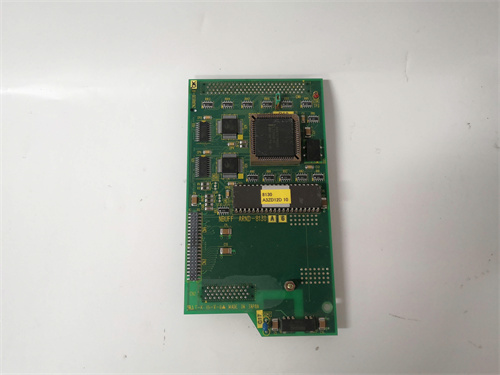
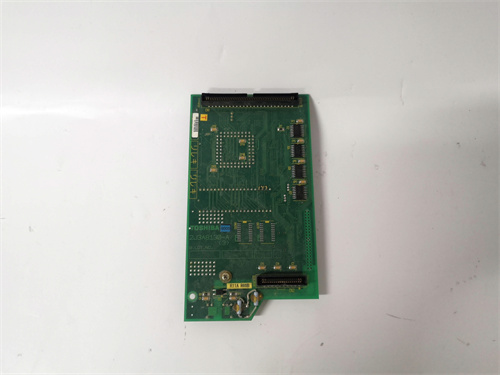
The TOSHIBA MIF WO1G021 is a dedicated Interface Module or Memory/Function card for Toshiba’s legacy programmable logic controller (PLC) systems, such as the Toshiba EX Series or T Series. This specific module, the TOSHIBA MIF WO1G021, acts as a crucial bridge or expansion unit, enhancing the capabilities of the base CPU by providing additional communication ports, specialized I/O handling, or extended memory for complex program and data storage. It is designed to fit into a designated slot on the PLC rack, enabling a more flexible and powerful system architecture tailored to specific application needs. The role of the TOSHIBA MIF WO1G021 is to extend the PLC’s functionality, ensuring reliable data exchange and control logic execution in industrial automation environments.
Product Parameters
The technical specifications for the TOSHIBA MIF WO1G021 are typical of PLC expansion modules from its era:
-
Module Type: Multi-Interface or Memory/Function Module.
-
Primary Function: Likely provides one or more of the following: additional serial communication ports (RS-232C/RS-422/RS-485), a programming port, or expanded user memory capacity.
-
Compatibility: Designed for specific Toshiba PLC racks and CPUs (e.g., EX40/EX250/EX450 CPUs or T1/T2/T3 series). It requires a compatible base unit.
-
Power Consumption: Draws a defined amount of current (e.g., 5V DC) from the PLC backplane; specifications must be checked against the CPU’s power supply capacity.
-
Communication Protocols: May support dedicated Toshiba protocols (e.g., T-Link, TS-Link) or standard protocols for connecting to programming tools, HMIs, or other devices.
-
Memory Capacity (if applicable): If a memory card, it would have a specified capacity (e.g., in kilobytes or megabytes) for storing user programs and data.
-
Indicators: Features status LEDs (PWR, RUN, ERR, COM) for visual diagnostics of power, operation, errors, and communication activity.
Advantages and Features
The TOSHIBA MIF WO1G021 module offers distinct benefits for systems requiring expansion:
-
System Expansion Without Upgrading CPU: The TOSHIBA MIF WO1G021 allows users to add critical functionality like extra communication channels to an existing PLC system, maximizing the investment in the base hardware.
-
Reliable Legacy System Support: As a genuine Toshiba component, it ensures full compatibility and reliable operation within its designated PLC family, which is crucial for maintaining older, mission-critical automation lines.
-
Simplified Connectivity: By providing standardized serial ports, it facilitates easier connection to a wide range of peripheral devices such as bar code readers, weighing scales, printers, or older HMIs.
-
Consolidated Design: Integrates specific functions into a single, factory-tested module, reducing wiring complexity and potential points of failure compared to external adapter solutions.
-
Guaranteed Performance: Engineered to work seamlessly with Toshiba’s system software and firmware, ensuring stable data transfer rates and communication integrity.
Application Cases in Industry
This interface module was commonly deployed in various industrial sectors:
-
Automotive Manufacturing: Used in older transfer line and welding station PLCs to communicate with robot controllers, data loggers, or centralized monitoring systems via serial links.
-
Packaging Machinery: Enabled PLCs on form-fill-seal machines to interface with servo drive indexers or legacy weigh-fillers that used serial communication protocols.
-
Building Automation: Integrated into environmental control systems for HVAC management, allowing the PLC to communicate with multiple fan coil unit controllers or central monitoring stations.
-
Material Handling: Facilitated communication between the main conveyor control PLC and sortation controllers, RFID scanners, or warehouse management systems in legacy distribution centers.
-
Water Treatment Plants: Provided additional ports for connecting remote I/O panels or for serial communication with flow meters and pump variable frequency drives in decentralized treatment systems.
Comparisons with Competing Products
When compared to universal serial converters or third-party expansion cards, the TOSHIBA MIF WO1G021 offers specific advantages:
-
Native Hardware & Software Integration: Unlike a generic USB-to-serial converter, the TOSHIBA MIF WO1G021 is recognized directly by the Toshiba CPU and configured within the native Toshiba programming software (e.g., T-Engineer), ensuring reliable, driver-free operation.
-
Rack-Mounted Reliability: As an internally mounted module, it is protected within the PLC enclosure, offering superior resistance to environmental factors (dust, moisture, vibration) compared to external adapter boxes with separate power supplies.
-
Unified Diagnostics: Any faults or communication errors on the MIF WO1G021 are typically reported through the PLC’s own diagnostic system, providing a centralized point for troubleshooting.
-
Long-Term Solution for Legacy Systems: For maintaining existing Toshiba PLC installations, sourcing the genuine TOSHIBA MIF WO1G021 is often more reliable and cost-effective than attempting to engineer a workaround with modern but incompatible hardware.
Selection Suggestions and Precautions
Proper selection and handling are vital for successful integration:
-
Verify Exact Compatibility: This is the most critical step. Confirm that the TOSHIBA MIF WO1G021 is listed as a compatible option for your specific Toshiba PLC model and CPU version. Consult the original hardware manual or configuration guide.
-
Confirm Module Function: Ascertain the exact function of this specific “MIF” module (e.g., is it for RS-232C, RS-422, or memory expansion?). Using a module with the wrong interface type will not meet application needs.
-
Check Power Budget: Verify that the PLC’s power supply unit has sufficient capacity to handle the additional current draw of the MIF WO1G021 module, especially in a fully loaded rack.
-
Source from Reputable Suppliers: Given its status as a legacy part, procure from specialized industrial automation suppliers with a proven track record to avoid counterfeit or non-functional units.
-
Software Configuration Required: After physical installation, the module must be correctly recognized and its parameters (e.g., baud rate, data format) configured within the Toshiba PLC programming software before it can be used.
GJR5253300R3161
GJR5251400R0101
GJR5251300R2171
GJR5251300R0171
GJR5251300R0161
GJR5251300R0101
.jpg)
-1.jpg)
.jpg)


Reviews
There are no reviews yet.