
Description
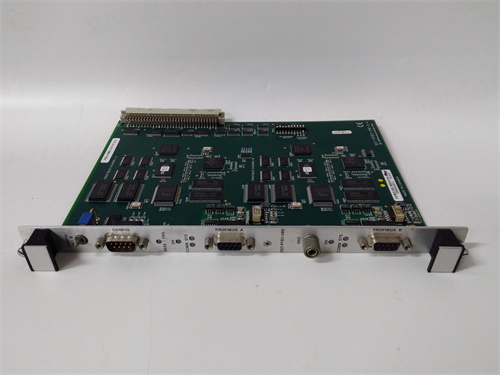
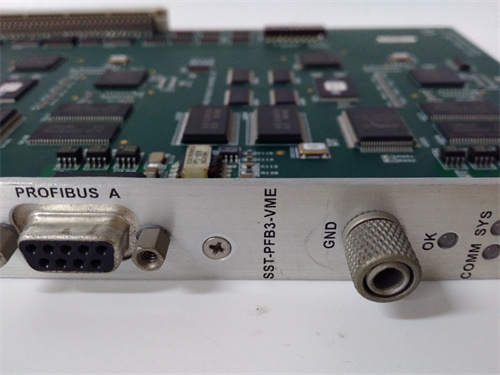
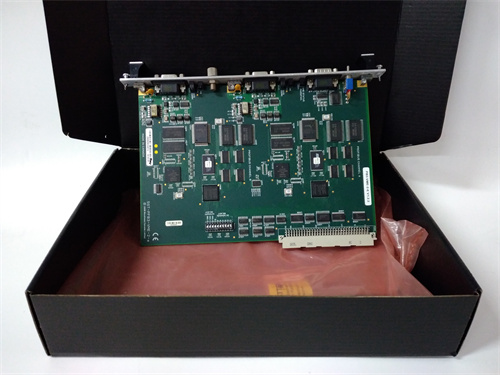
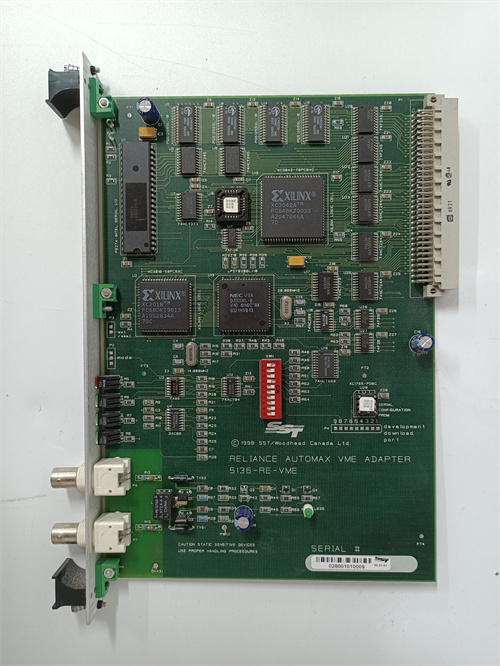
SST SST-PFB3-VME-2 – PROFIBUS Master Communication Card for VMEbus
Product Description
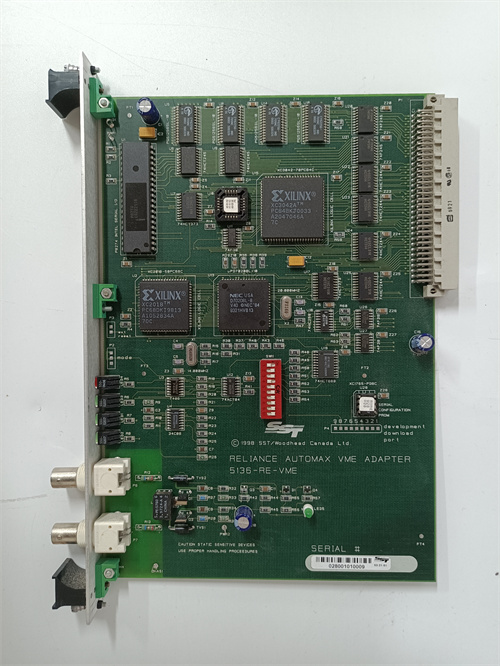
The SST SST-PFB3-VME-2 is a specialized industrial communication interface card designed by SST (Steeplechase Software Technology, later part of Woodhead/Omron) for the VMEbus system architecture. This module is not a PLC CPU or I/O card, but a high-performance network controller that enables a VMEbus-based industrial computer or controller to act as a PROFIBUS DP Master (Class 1). The SST SST-PFB3-VME-2 card installs into a VMEbus backplane and provides a dedicated PROFIBUS network interface, allowing the host VME system to communicate with, configure, and manage a network of distributed PROFIBUS DP slaves such as remote I/O blocks, drives, motor starters, and valve terminals. It is a key component for integrating VME computing platforms into factory automation networks dominated by the PROFIBUS standard.
Product Parameters
-
Type: PROFIBUS DP Master Communication Interface Card.
-
Host Bus: VMEbus (6U form factor, likely supports VME64).
-
Network Protocol: PROFIBUS DP-V0/V1, fulfilling the role of a Master (Class 1).
-
PROFIBUS Interface: One 9-pin D-Sub connector (RS-485) for the PROFIBUS network.
-
Data Transfer Rate: Configurable from 9.6 kbit/s up to 12 Mbit/s (automatic or manual baud rate detection).
-
Maximum Number of Slaves: Supports configuration of a large number of slaves (typically up to 125, limited by network cycle time).
-
Configuration: Requires a GSD (General Station Description) file for each slave device and is configured using SST’s proprietary software tools or, in some cases, a configuration file loaded by the host VME CPU.
-
Memory: Onboard dual-port RAM for high-speed data exchange between the PROFIBUS network and the VME host CPU.
-
Driver Support: Typically supplied with device drivers for various real-time operating systems (RTOS) like VxWorks, QNX, and sometimes Linux.
Advantages and Features
-
High-Performance VME Integration: The SST SST-PFB3-VME-2 is optimized for the deterministic, high-bandwidth VMEbus, making it suitable for demanding real-time control applications where a standard PC-based PROFIBUS card might not suffice.
-
Deterministic Network Control: As a dedicated master card, it provides precise control over the PROFIBUS DP network cycle, ensuring predictable and timely data exchange with all connected slaves, which is critical for motion control and fast process loops.
-
Offloads Host CPU: The card handles all low-level PROFIBUS protocol processing, significantly reducing the communication overhead on the main VME CPU.
-
Access to Vast PROFIBUS Ecosystem: Enables a powerful VME-based controller to leverage the extensive range of available PROFIBUS DP field devices, bridging the gap between high-level computing and the field network.
-
Robust Industrial Design: Built to withstand the vibration, temperature, and electrical noise typical of industrial environments where VME systems are deployed.
Application Cases in Various Fields
-
Complex Machine Control: Used as the network master in VME-based controllers for semiconductor manufacturing equipment, printing presses, and automated assembly lines requiring high-speed coordination of many distributed I/O points and drives.
-
Test & Measurement Systems: Integrating large, distributed sensor arrays and actuator banks into a central VME-based data acquisition and control system.
-
Military & Aerospace Test Stands: Controlling and monitoring ground support equipment and test rigs where VME computers are common.
-
Industrial Automation with Legacy VME Systems: Upgrading or maintaining existing VME control systems by adding modern fieldbus connectivity to manage new or existing PROFIBUS device networks.
Comparisons with Competing Products
-
Other VME PROFIBUS Cards (Softing, Hilscher): Companies like Softing offer similar VME communication cards. The SST SST-PFB3-VME-2 was notable for its strong integration with specific real-time operating systems and its origin from a PLC software company (Steeplechase).
-
PROFIBUS Cards for PCI/PCIe: For standard industrial PCs, PCI-based PROFIBUS master cards are more common. The PFB3-VME-2 is specifically for the legacy, high-reliability VME platform.
-
Integrated PLC CPUs with PROFIBUS: Modern PLCs (e.g., Siemens S7-1500) have PROFIBUS master functionality built into the CPU or via plug-in modules. The SST-PFB3-VME-2 is for custom, computer-based control systems, not standardized PLCs.
Selection Suggestions and Precautions
-
Confirm Host System Compatibility: This card requires a VMEbus system with a compatible backplane, an available slot, and a host CPU running a supported real-time operating system (RTOS). Verify driver availability for your specific OS version.
-
Requires Specialized Configuration Tools: Configuration of the SST SST-PFB3-VME-2 and its connected PROFIBUS slaves typically requires SST’s configuration software (e.g., SST ProfiGate or similar), which may be obsolete. Secure the software and license before purchase.
-
Network Planning is Essential: As the master, you must design the PROFIBUS network: calculate the cycle time, assign slave addresses correctly, and ensure proper network termination. Poor planning leads to communication faults.
-
GSD File Management: You must have the correct GSD file for every slave device on the network to properly configure the master’s database. Collect these files beforehand.
-
Legacy Component Status: The SST-PFB3-VME-2 and its support ecosystem are legacy products. Consider this for long-term support. For new projects, a modern platform like PCI Express or a managed switch to PROFINET might be preferable.
-
Expertise in VME & RTOS Required: Integrating this card successfully demands knowledge of VME system architecture, interrupt handling, memory mapping, and real-time programming—skills distinct from standard PLC programming.
IC647MPP001 GE PLC
GE IS2020RKTSG3A PLC
IC697CPM790 PLC
IC693CPU374 GE PLC
Reviews
There are no reviews yet.