
Description
Product Description
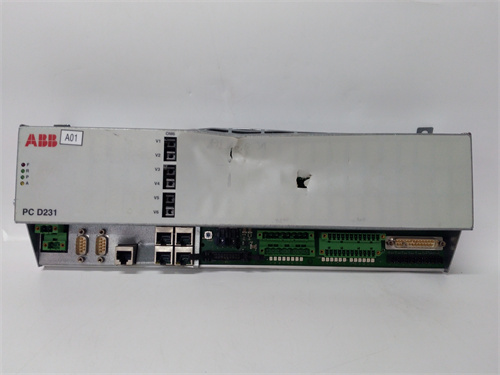
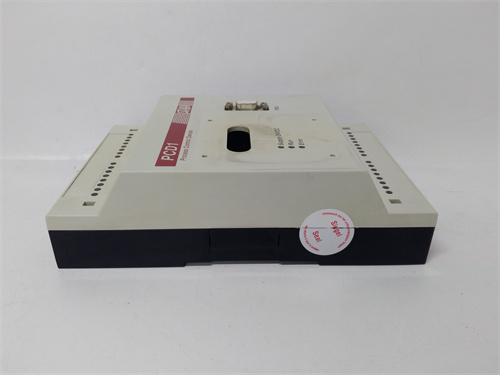
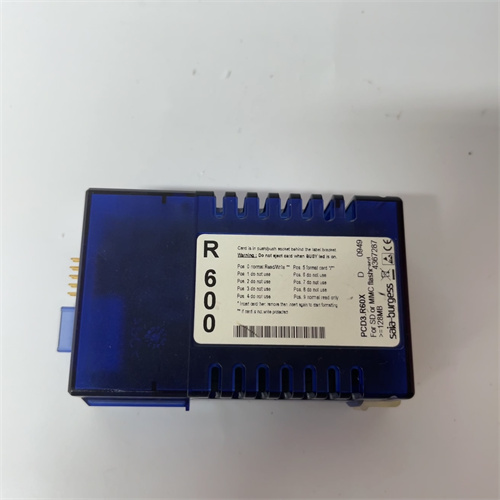
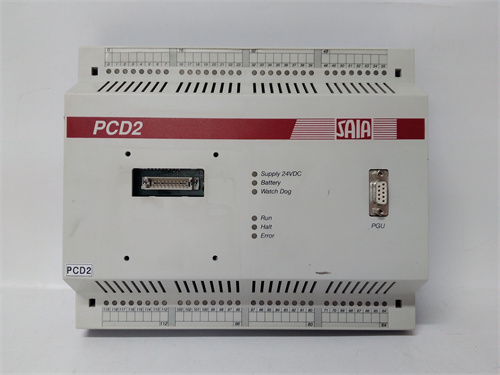
The SAIA PCD2.W610 is a sophisticated and compact 10-Channel Digital Output Module designed for the Saia PCD series of programmable logic controllers. This module, the SAIA PCD2.W610, serves as a critical interface for controlling actuators in the field, such as solenoid valves, contactor coils, indicator lamps, and small relays. Its primary function is to convert the low-voltage logic-level commands from the PCD CPU into robust switching signals capable of driving inductive and resistive loads. The design of the SAIA PCD2.W610 emphasizes reliability, ease of installation, and diagnostic clarity for a wide range of automation applications.
Product Parameters
The technical specifications for the SAIA PCD2.W610 digital output module are as follows:
-
Module Type: Digital Output Module for Saia PCD2/PCD3 Controllers.
-
Output Channels: 10 independent output channels.
-
Output Type: Solid-state relay (SSR) outputs, providing electrical isolation and typically rated for DC switching.
-
Output Rating: Common rating: 24 V DC, 0.5 A per channel. The module will have a maximum total current rating for all channels combined (e.g., 4 A).
-
Switching Element: Transistor-based, suitable for high-speed switching and long life compared to mechanical relays.
-
Isolation: Optical isolation between the controller logic and the field side to protect the PLC from voltage spikes and transients.
-
Protection: Integrated free-wheeling diode for inductive load suppression (for DC outputs) to protect the output transistor from voltage spikes when de-energizing coils.
-
Indicators: LED status indicator for each channel (shows output state) and a module status/power LED.
-
Connection: Screw terminal block for field wiring.
-
Mounting: Plugs directly into the PCD2/PCD3 controller rack or an expansion rack.
Advantages and Features
The SAIA PCD2.W610 digital output module offers several key benefits:
-
High Reliability and Long Life: The solid-state design of the SAIA PCD2.W610 offers a significantly longer operational life with a higher cycle count than mechanical relay outputs, as there are no moving parts to wear out.
-
Fast Switching Speed: Transistor outputs can switch on and off much faster than mechanical relays, making the PCD2.W610 suitable for applications requiring rapid pulsing or high-frequency control.
-
Low Noise Operation: Silent operation compared to the audible click of electromechanical relays, which is beneficial in noise-sensitive environments.
-
Clear Visual Diagnostics: Per-channel LEDs provide instant visual confirmation of the output status, greatly simplifying troubleshooting and commissioning.
-
Compact and Integrated Design: The module is designed for seamless integration into the Saia PCD system, ensuring reliable communication and power from the rack.
Application Cases in Industry
This output module is commonly used in various building automation, infrastructure, and industrial control applications:
-
Building Management Systems (BMS): Controls HVAC components such as damper actuators, fan coil unit valves, and ventilation fans in commercial buildings.
-
Water and Wastewater Treatment: Operates solenoid valves for chemical dosing, controls pump start/stop signals via contactors, and manages indicator lights for alarm panels.
-
Lighting Control: Used for scheduled or sensor-based control of lighting circuits in large facilities, switching low-voltage control inputs to lighting contactors.
-
Material Handling: Controls diverters, conveyor brakes, and package present indicators in sorting and distribution systems.
-
Industrial Machine Control: Manages pneumatic cylinder solenoids, coolant pumps, and tool changer mechanisms on automated machinery.
Comparisons with Competing Products
When compared to mechanical relay output modules or other solid-state outputs, the SAIA PCD2.W610 presents a balanced, application-specific solution:
-
Solid-State vs. Mechanical Relay (MR) Modules: The SAIA PCD2.W610 offers faster switching, longer lifespan, and silent operation, making it ideal for frequent switching and quiet environments. MR modules are better for switching AC loads or loads with very high inrush currents that exceed SSR ratings.
-
System Integration vs. Discrete Relays: Using the integrated PCD2.W610 module saves panel space, reduces external wiring, and provides built-in diagnostics compared to wiring ten individual external relays. It also simplifies the bill of materials and spare parts strategy.
-
Optimized for Saia PCD Environment: It is guaranteed to be electrically and mechanically compatible with the PCD rack, with correct voltage thresholds and backplane communication. Third-party modules or discrete relays require additional engineering for interface and protection.
-
Cost of Ownership: While the initial cost may be higher than a basic relay module, the maintenance-free longevity and diagnostic features of the W610 can lead to a lower total cost of ownership over the system’s life.
Selection Suggestions and Precautions
Correct application is essential to ensure reliability and prevent damage:
-
Verify Load Compatibility: Ensure your load (e.g., solenoid valve coil) is compatible with a DC solid-state output. Check that the load’s inrush and steady-state current are within the SAIA PCD2.W610‘s per-point and total module current ratings. Do not exceed the maximum voltage rating (24V DC).
-
Protect for Inductive Loads: Although the module includes suppression diodes, for highly inductive loads, consider adding an external metal-oxide varistor (MOV) or RC snubber across the load for additional protection against voltage transients.
-
Observe Total Current and Heat Dissipation: Do not simultaneously activate all 10 channels at their maximum current if it exceeds the module’s total current rating. Consider the ambient temperature, as derating may be required. Ensure adequate ventilation in the cabinet.
-
Check the Field Power Supply: Provide a clean, regulated 24V DC power source for the output circuits. The power supply must be sized to handle the sum of all simultaneously active loads.
-
Use Correct Fusing: Install an appropriately rated fuse on the common 24V DC supply line to the module to protect against wiring short circuits.
2711P-B10C4A8 PLC
2098-DSD-HV030 DCS
DA3284-C PLC/PC
CP6500-V PLC
Q8344A PLC
Reviews
There are no reviews yet.