
Description
Product Description
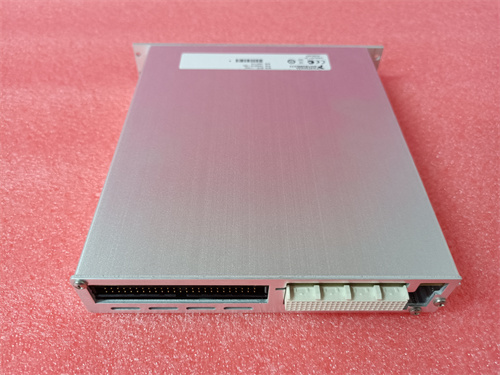
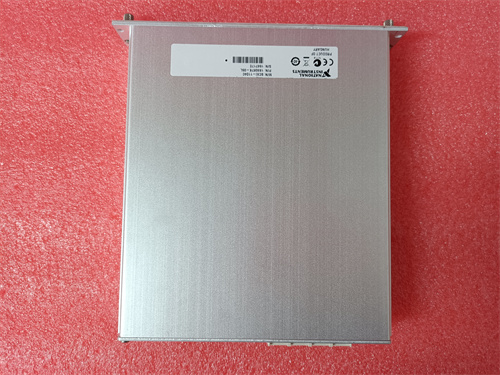
The NI SCXI-1104C is a high-performance signal conditioning module from National Instruments’ (NI) SCXI (Signal Conditioning eXtensions for Instrumentation) platform. While not a traditional PLC (Programmable Logic Controller) part, it serves a critical role in industrial automation and data acquisition (DAQ) systems by acting as a sophisticated front-end for connecting sensitive sensors directly to measurement hardware, such as an NI DAQ card or a PXI system. The primary function of the NI SCXI-1104C is to provide universal, multiplexed signal conditioning for a wide variety of analog voltage and temperature sensors. It amplifies, filters, and isolates low-level signals from thermocouples, RTDs, and voltage sources, ensuring accurate and noise-resistant measurements before the data is digitized. By serving as a robust and configurable interface between the harsh industrial environment and sensitive data acquisition electronics, the SCXI-1104C enables reliable monitoring and control in test, measurement, and automated production systems.
Technical Parameters and Characteristics
-
Manufacturer and Series: National Instruments, SCXI Series.
-
Device Type: Universal Signal Conditioning Module with Multiplexing.
-
Key Function: Multiplexed conditioning for analog voltage and temperature sensors.
-
Channel Configuration:
-
32 single-ended or 16 differential analog input channels.
-
Channels are multiplexed (scanned) and share a single high-precision analog-to-digital converter (ADC) path, typically via an external DAQ device.
-
-
Supported Sensor Types and Signal Conditioning:
-
Thermocouples (TC): Supports types J, K, T, E, R, S, B, N. Provides built-in cold-junction compensation (CJC).
-
RTDs (Resistance Temperature Detectors): Supports 2-, 3-, and 4-wire configurations (e.g., Pt100, Pt1000). Provides excitation current.
-
Voltage Inputs: Accepts analog voltage inputs with programmable gain (e.g., ±5 V, ±1 V, ±500 mV, ±100 mV, ±50 mV, ±10 mV ranges).
-
-
Input Protection: Features built-in protection against overvoltage (up to a specified limit like ±42 V) to safeguard the module and downstream equipment.
-
Filtering: Includes configurable low-pass filters for noise rejection on each channel.
-
Accuracy: High-accuracy specifications for temperature measurement, dependent on the sensor type and configuration.
-
Connection: Screw-terminal or spring-terminal connector block (e.g., NI SCXI-1303 or similar) is required for field wiring.
-
System Integration: Installs into an NI SCXI-1000 or SCXI-1001 chassis, which provides power, cooling, and the data bus to a controlling DAQ device (e.g., a PCI DAQ card via NI SCXI-1600 controller, or a PXI system).
Advantages and Key Features
-
Extreme Versatility: The NI SCXI-1104C is a true universal module, eliminating the need for separate conditioning hardware for different sensor types. It can be reconfigured via software for thermocouples, RTDs, or voltage measurements.
-
High-Density and Cost-Effective: By multiplexing 32 channels through a single high-quality signal path, it provides a very high channel density and a lower cost per channel compared to dedicated per-channel conditioners.
-
High Accuracy and Noise Immunity: The integrated amplification, filtering, and cold-junction compensation are designed for laboratory-grade measurement accuracy in industrial environments. The chassis provides excellent shielding.
-
Scalable and Modular Architecture: Multiple SCXI-1104C modules (and other SCXI modules) can be installed in a single chassis, allowing systems to scale from tens to hundreds of channels with a consistent architecture.
-
Seamless Software Integration: Fully programmable and configurable within the NI ecosystem using software such as LabVIEW, LabWindows/CVI, or Measurement & Automation Explorer (MAX), enabling easy setup, calibration, and data streaming.
Application Cases in Various Fields
-
Industrial Process Monitoring: Continuously monitoring temperatures from dozens of thermocouples and RTDs on reactors, ovens, and heat exchangers in chemical or pharmaceutical plants.
-
Environmental Test Chambers: Acquiring multi-zone temperature data from climatic and vibration test chambers in automotive or aerospace component testing.
-
Power Electronics Test: Measuring voltage and temperature at multiple points on inverters, converters, and motor drives during performance and reliability testing.
-
Machine Condition Monitoring: Integrating temperature and vibration (via IEPE sensors conditioned by voltage inputs) data acquisition for predictive maintenance on turbines, compressors, and large pumps.
-
Research & Development: Serving as a flexible, high-channel-count front-end for custom test stands and prototype validation systems across multiple engineering disciplines.
Comparisons with Competing Products (e.g., Yokogawa DAQ modules, Keysrix/Agilent DAQ, PLC-based Analog Input Cards)
-
In favor of the NI SCXI-1104C: Its core strength is its universal nature and deep integration within the powerful, software-centric NI platform (especially LabVIEW). It excels in flexible, high-accuracy measurement applications requiring mixed sensor types. The SCXI chassis provides excellent noise isolation.
-
Points to consider: Dedicated PLC analog input cards (from Siemens, Rockwell) are better for direct, real-time integration into a control logic program but offer less measurement versatility and lower density. Other DAQ vendors offer similar multiplexed conditioning modules, but the SCXI-1104C is often favored for its software ecosystem and widespread use in engineering applications.
Selection Suggestions and Precautions
-
Complete the System Architecture: Remember that the NI SCXI-1104C is not a standalone device. You must also select and budget for a compatible SCXI chassis, a controller module (e.g., SCXI-1600), and appropriate terminal blocks.
-
Understand Multiplexing Trade-offs: Since channels are multiplexed, they are not sampled simultaneously. The effective aggregate sampling rate is divided by the number of scanned channels. This module is ideal for monitoring relatively slow-changing signals like temperature, not for high-speed, simultaneous capture.
-
Proper Sensor Wiring and Configuration: For optimal accuracy, especially with RTDs, use the correct wiring configuration (3-wire or 4-wire) as specified in the manual. In software, correctly configure the channel for the exact sensor type and desired range.
-
Implement Adequate Fusing and Protection: While the module has some protection, for critical systems, consider adding external fuses or protection devices on field wiring lines, especially in high-voltage environments.
-
Calibration and Maintenance: For critical measurements, factor in periodic calibration of the SCXI-1104C module and its associated CJC sensor to maintain specified accuracy over time.
-
Procurement and Software: Purchase from authorized National Instruments distributors or directly from NI. Ensure you have access to the necessary driver software (NI-DAQmx) and a compatible development environment like LabVIEW for configuration and programming.
IC693CPU363 GE PLC
GE IC697MDL240 PLC
IC697CP1781D
IC697MDL250 PLC


Reviews
There are no reviews yet.