
Description
MOTOROLA MVME5101-0131 Product Analysis
Product Description
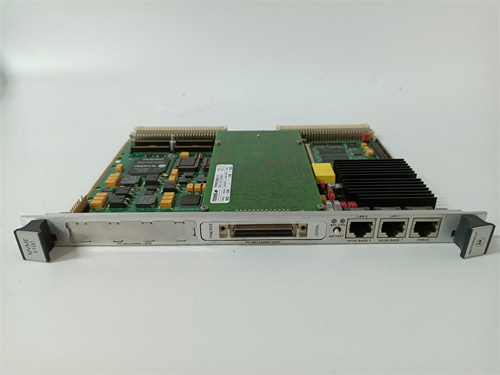
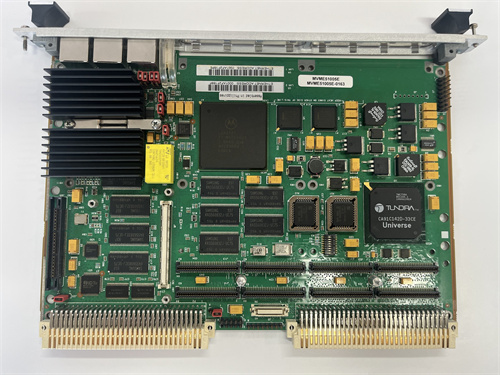
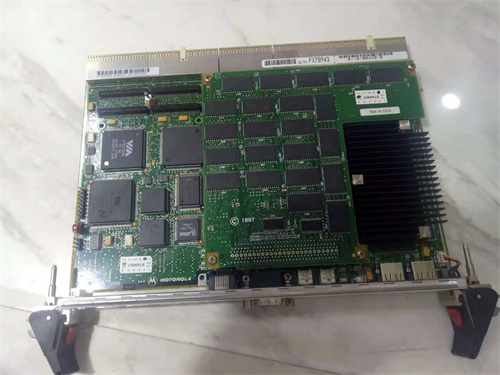
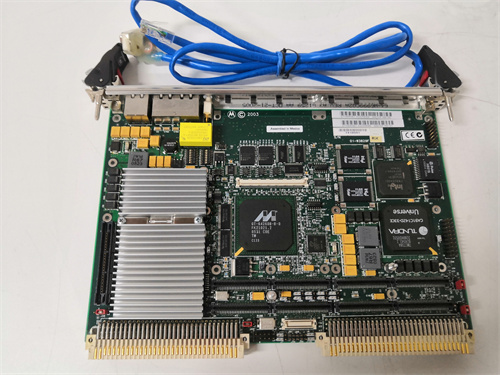
The MOTOROLA MVME5101-0131 is a high-performance VMEbus single-board computer (SBC) originally designed and manufactured by Motorola (later part of Emerson Network Power). This powerful computing module is built around the PowerPC microprocessor architecture and is engineered for demanding embedded computing applications in industrial control, defense, and telecommunications environments. The MOTOROLA MVME5101-0131 serves as the central processing unit within VMEbus systems, providing robust computational capabilities, extensive memory resources, and versatile I/O interfaces. As a member of the MVME5100 series, the MOTOROLA MVME5101-0131 is recognized for its reliability, longevity, and performance in mission-critical applications where continuous operation over many years is essential. This module continues to be a sought-after component in legacy system maintenance and upgrades across various industries.
Parameters and Specifications
The following are the typical parameters and specifications for the MOTOROLA MVME5101-0131 single-board computer. Specific configurations may have variations, and consulting the official Motorola/Emerson documentation is always recommended.
-
Processor: Powered by a PowerPC 750 or 7400 series microprocessor, typically running at speeds ranging from 400 MHz to 500 MHz, delivering high-performance computing for real-time applications.
-
Memory Configuration:
-
RAM: Equipped with onboard SDRAM, typically configured with 256 MB or 512 MB, using ECC (Error-Correcting Code) memory for enhanced reliability in critical applications.
-
Flash Memory: Includes onboard flash memory (typically 32 MB or 64 MB) for firmware storage, boot code, and application program storage.
-
NVRAM: Features non-volatile RAM for storing configuration parameters and critical data that must be retained through power cycles.
-
-
VMEbus Interface: Fully compliant with the VMEbus specification (IEEE 1014-1987 and VME64), supporting both master and slave operation modes with A32/A24/A16 addressing and D64/D32/D16/D8 data transfer capabilities.
-
Onboard Peripherals and I/O:
-
Ethernet: Integrated 10/100BaseTX Ethernet controller with front-panel RJ45 connectivity for network communication.
-
Serial Ports: Dual asynchronous serial interfaces (EIA-232) for console connection and general-purpose communications.
-
Parallel Port: Single bidirectional parallel port for printer or other parallel device connectivity.
-
SCSI Interface: Ultra2 SCSI (LVD) controller for high-speed connection to storage devices.
-
USB: Early implementations may include USB 1.1 ports for peripheral connectivity.
-
-
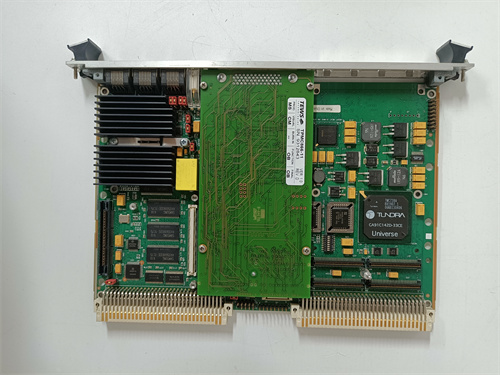
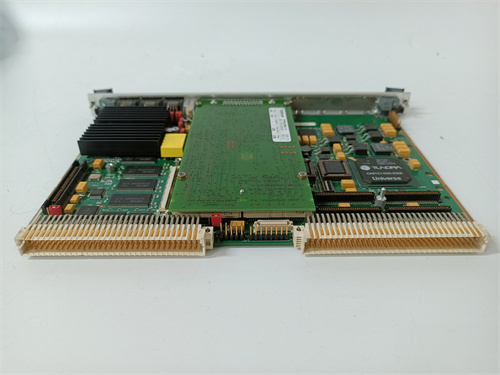
PCI Interface: Provides PMC (PCI Mezzanine Card) expansion sites (typically one or two sites) allowing for additional I/O or functionality customization through industry-standard mezzanine cards.
-
Form Factor: Standard 6U VMEbus form factor (233mm x 160mm) with front panel providing access to key I/O connectors and status indicators.
-
Environmental Specifications: Designed for extended temperature operation (typically 0°C to 55°C) and compliant with industrial shock and vibration standards.
Advantages and Features
The MOTOROLA MVME5101-0131 offers numerous advantages and features that have made it a preferred choice for embedded computing applications.
-
Proven PowerPC Performance: The PowerPC architecture provides an excellent balance of high computational performance and power efficiency, making the MOTOROLA MVME5101-0131 ideal for compute-intensive real-time applications. The processor’s robust instruction set and floating-point capabilities excel in data acquisition, signal processing, and control applications.
-
VMEbus Industry Standard: By adhering to the open VMEbus standard, the MOTOROLA MVME5101-0131 ensures compatibility with thousands of existing I/O modules and chassis from numerous manufacturers. This standardization provides system integrators with tremendous flexibility and protects their investment in VMEbus infrastructure.
-
Comprehensive Memory Subsystem: The combination of ECC-protected SDRAM, flash memory, and NVRAM provides a complete and reliable memory hierarchy. ECC memory is particularly valuable in applications where data integrity is critical, such as in nuclear power plant monitoring or flight simulation systems where a single-bit error could have serious consequences.
-
Extensive I/O Capabilities: The onboard Ethernet, serial, parallel, and SCSI interfaces eliminate the need for additional I/O modules in many applications, reducing system cost and complexity. The PMC expansion sites offer a standardized pathway for adding application-specific functionality such as additional communications ports, graphics capabilities, or specialized data acquisition interfaces.
-
Long-Term Reliability: Motorola’s reputation for quality manufacturing means that the MOTOROLA MVME5101-0131 is built to withstand years of continuous operation in demanding environments. The industrial-grade components and rigorous testing procedures ensure high mean time between failures (MTBF), which is essential for applications where downtime is not an option.
-
Software Support: Broad support for real-time operating systems (RTOS) including VxWorks, LynxOS, and various Linux distributions, as well as support for standalone applications, provides developers with flexibility in choosing their development environment.
Application Cases
The versatility and robust design of the MOTOROLA MVME5101-0131 have led to its adoption across a diverse range of industries and applications.
-
Defense and Aerospace: Used extensively in radar signal processing systems, sonar applications, command and control systems, and flight simulators. The MOTOROLA MVME5101-0131 provides the computational horsepower needed for real-time sensor data processing while meeting the rigorous reliability requirements of military applications. Many defense contractors have standardized on this module for their embedded computing needs.
-
Industrial Automation: Deployed in high-end industrial control systems, particularly in continuous process industries such as steel production, paper manufacturing, and petrochemical processing. The MOTOROLA MVME5101-0131 serves as the central controller in distributed control systems (DCS) where it coordinates multiple I/O racks and executes complex control algorithms.
-
Telecommunications Infrastructure: Utilized in network management systems, base station controllers, and signaling platforms where reliable 24/7 operation is essential. The processing power of the MOTOROLA MVME5101-0131 enables it to handle high-bandwidth communication protocols and manage network traffic efficiently.
-
Medical Imaging: Applied in CT scanners, MRI systems, and nuclear medicine cameras where real-time image acquisition and processing demand significant computational resources. The MOTOROLA MVME5101-0131 handles the data streams from sophisticated sensors and performs the initial image reconstruction before passing data to higher-level processing systems.
-
Transportation Systems: Used in railway signaling and control systems, traffic management centers, and tunnel monitoring applications where fail-safe operation and deterministic response times are mandatory. The rugged construction of the MOTOROLA MVME5101-0131 ensures reliable operation in the challenging environmental conditions often found in transportation infrastructure.
-
Research and Scientific Facilities: Deployed in particle accelerators, telescope control systems, and large-scale data acquisition systems where custom instrumentation interfaces through VMEbus and the MOTOROLA MVME5101-0131 provides the necessary data processing and system coordination.
Comparison with Competing Products
When compared to similar VMEbus single-board computers from competitors like Curtiss-Wright (formerly Dy4) or Kontron, the MOTOROLA MVME5101-0131 presents distinct characteristics.
-
Market Leadership and Ecosystem: Motorola (and later Emerson) historically held a dominant position in the VMEbus SBC market. This market leadership translated into the broadest ecosystem of compatible software, development tools, and technical documentation. Engineers familiar with the MOTOROLA MVME5101-0131 are readily available, and legacy code bases often include support for Motorola’s board support packages, reducing development risk compared to switching to a less common vendor.
-
Performance Balance: While some competing products may offer higher clock speeds or more exotic processor architectures, the MOTOROLA MVME5101-0131 strikes an excellent balance of performance, power consumption, and thermal characteristics. This balanced design makes it suitable for a wider range of enclosure environments without requiring special cooling provisions.
-
PMC Expansion Flexibility: The implementation of PMC expansion sites on the MOTOROLA MVME5101-0131 follows industry standards closely, ensuring broad compatibility with third-party mezzanine cards. Some competitors implemented proprietary expansion interfaces, limiting users to a single vendor’s ecosystem for expanded functionality.
-
Longevity Commitment: Motorola’s commitment to long product lifecycles was a significant differentiator. The MOTOROLA MVME5101-0131 remained in production and supported for many years, giving system designers confidence that their products would not face obsolescence issues shortly after deployment. This longevity commitment was particularly valued in defense and industrial sectors where equipment may remain in service for decades.
-
Migration Path: While newer architectures like CompactPCI and AdvancedTCA have emerged, the MOTOROLA MVME5101-0131 provided a clear upgrade path from older 68K-based Motorola SBCs, allowing customers to reuse much of their existing software investment while gaining significant performance improvements.
Selection Suggestions and Precautions
Selecting the right MOTOROLA MVME5101-0131 module and ensuring its proper operation requires careful consideration of several factors.
-
Sizing and Selection:
-
Processor Speed Requirements: Evaluate the computational demands of your application, including worst-case processing loads, to select an appropriate processor speed variant of the MOTOROLA MVME5101-0131. Consider both average and peak processing requirements, and include a safety margin for future application enhancements.
-
Memory Configuration: Determine the memory requirements for your operating system, application code, and data buffers. The MOTOROLA MVME5101-0131 offers various memory configurations; selecting one with insufficient memory may limit application capabilities, while overspecifying adds unnecessary cost.
-
PMC Expansion Needs: Assess whether your application requires additional I/O capabilities beyond what is provided onboard. If so, verify that the required PMC cards are compatible with the MOTOROLA MVME5101-0131 and that sufficient power and cooling are available for the populated mezzanine cards.
-
-
Installation Precautions:
-
Chassis Compatibility: Verify that your VMEbus chassis backplane supports the signaling levels and power requirements of the MOTOROLA MVME5101-0131. Ensure adequate power supply capacity for the module and any populated PMC cards.
-
Cooling Considerations: Ensure proper airflow through the chassis and around the MOTOROLA MVME5101-0131. Pay particular attention to clearance around the processor and any PMC cards, as these components generate the most heat. Monitor operating temperatures during initial operation to verify adequate cooling.
-
ESD Precautions: Follow strict electrostatic discharge (ESD) precautions when handling the MOTOROLA MVME5101-0131. Use grounded wrist straps and ESD-safe work surfaces to prevent damage to sensitive components.
-
Proper Seating: Ensure the module is firmly and evenly seated in the backplane connector. The injector/ejector handles should lock into place without excessive force. Improper seating can cause intermittent connection issues that are difficult to diagnose.
-
-
Configuration and Commissioning:
-
Firmware Configuration: Access the board’s firmware (often called PPCBug or similar) to configure basic parameters such as boot device, Ethernet settings, and memory test options. Save the configuration to non-volatile memory after making changes.
-
Operating System Installation: Follow the board support package documentation for your chosen operating system carefully. The MOTOROLA MVME5101-0131 may require specific BSP versions for optimal performance and hardware support.
-
Thermal Monitoring: Implement temperature monitoring in your application software to detect potential cooling issues before they cause system failures. The MOTOROLA MVME5101-0131 may include onboard temperature sensors that can be read through software.
-
Spare Parts Strategy: Given that the MOTOROLA MVME5101-0131 is now a legacy product, consider maintaining spare modules for critical applications. Verify that any spare units are configured identically to production units to simplify replacement.
-
-
Long-Term Considerations:
-
Obsolescence Management: Develop an obsolescence management plan for systems using the MOTOROLA MVME5101-0131. Monitor manufacturer announcements regarding end-of-life notifications and plan for technology refreshes well in advance of any discontinuation dates.
-
Software Maintenance: Consider the long-term availability of development tools and operating system support for the PowerPC architecture used in the MOTOROLA MVME5101-0131. Some modern tools may not support legacy processors, potentially complicating future software updates.
-
Documentation Preservation: Maintain comprehensive documentation including hardware manuals, schematics (where available), and software configuration guides for the MOTOROLA MVME5101-0131. This documentation becomes increasingly valuable as original technical support resources become less accessible over time.
-
UR8FV PLC
TP025-MF1-10-051-000 DCS
CSD-20-160-2A-GR-SP PLC
DSBB175 PLC
AO810V2 PLC DCS
HIEE300698R0001 PLC
T9402 ICS PLC DCS


.jpg)
Reviews
There are no reviews yet.