
Description
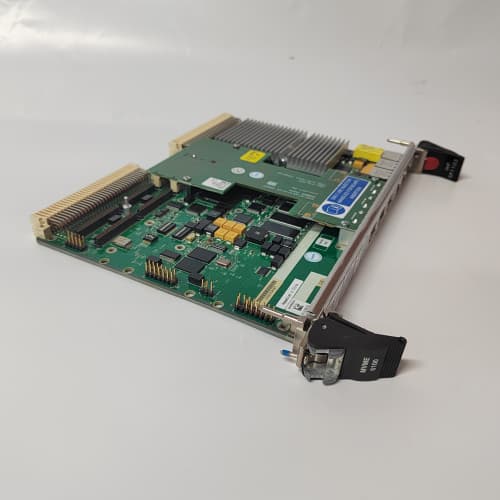
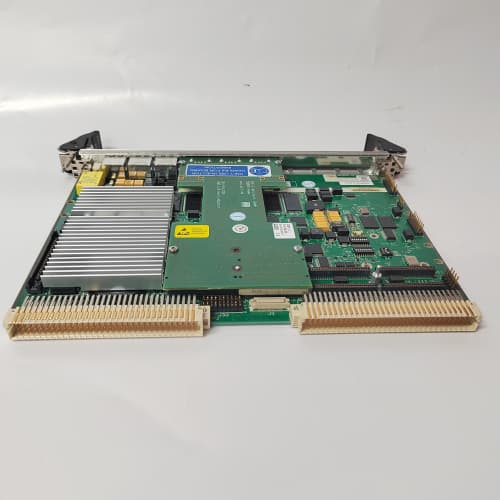
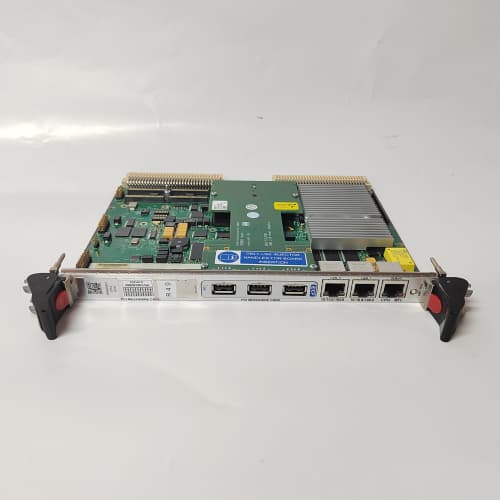
MOTOROLA MVME3100 Product Description
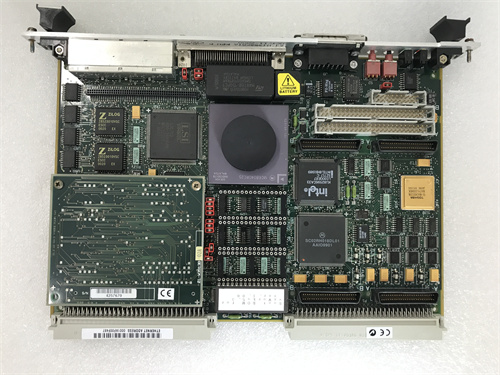
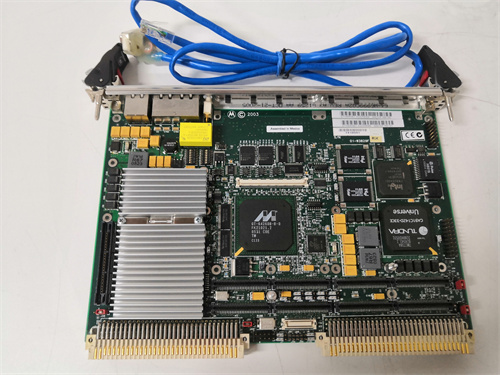
The MOTOROLA MVME3100 is a highly integrated, single-board computer (SBC) designed for the VMEbus architecture, representing a modern evolution in the legacy of Motorola’s renowned MVME product line. Originally developed by Motorola and later supported by Emerson Network Power (now part of Artesyn Embedded Technologies), the MOTOROLA MVME3100 is built around the powerful MPC8540 PowerQUICC III integrated processor from Freescale (now NXP). This SBC combines a PowerPC core with a rich set of communications peripherals, making it exceptionally well-suited for control plane and data plane applications in networking, industrial control, and defense systems. The MOTOROLA MVME3100 features an advanced system controller with DDR memory support, dual Gigabit Ethernet interfaces, and multiple serial ports, all packaged in a single VMEbus slot. By offering a migration path from older CISC-based architectures to high-performance PowerPC processing, the MOTOROLA MVME3100 enables system designers to significantly enhance performance while preserving their existing VMEbus infrastructure investments.
Product Parameters
The MOTOROLA MVME3100 is engineered for high-performance embedded computing with a focus on communication capabilities.
-
Processor: Powered by the Freescale MPC8540 PowerQUICC III integrated processor, featuring a PowerPC e500 core running at speeds up to 1.0 GHz.
-
Memory Architecture:
-
Main Memory: Supports up to 512 MB of DDR SDRAM with ECC (Error Checking and Correcting) for high reliability in mission-critical applications.
-
Flash Memory: Provides up to 128 MB of on-board Flash for firmware storage and user applications.
-
Boot Flash: Includes 8 MB of boot Flash for system initialization.
-
-
VMEbus Interface: Fully compliant with VME64 and VME64x standards, supporting 2eSST (two-edge source synchronous transfer) protocol for high-speed data transfers.
-
Networking: Features dual 10/100/1000Base-TX Gigabit Ethernet ports with front panel RJ-45 connectivity, enabling high-speed network communication.
-
I/O Capabilities:
-
Four asynchronous serial ports (RS-232) for console and device connectivity
-
Two USB 2.0 ports for peripheral expansion
-
PMC (PCI Mezzanine Card) expansion site supporting both single-width and double-width modules
-
IPMC (Intelligent Platform Management Controller) for system management functions
-
-
Operating Systems: Supports a comprehensive range of real-time operating systems including VxWorks, Linux (various distributions), and Integrity.
Advantages and Features
The MOTOROLA MVME3100 brings significant advancements to VMEbus-based embedded systems.
-
High-Performance Processing: The PowerPC e500 core in the MOTOROLA MVME3100 delivers exceptional integer and floating-point performance, enabling complex control algorithms and data processing at the edge of the network.
-
Advanced Communications Integration: With the PowerQUICC III architecture, the MOTOROLA MVME3100 integrates multiple communication controllers directly on-chip, reducing latency and improving throughput for networking applications.
-
Legacy System Modernization: The MOTOROLA MVME3100 provides an ideal upgrade path for older VMEbus systems, allowing users to replace legacy 68K or x86-based SBCs with modern PowerPC performance while maintaining compatibility with existing I/O modules and chassis.
-
Rugged Reliability: Designed for demanding environments, the MOTOROLA MVME3100 features industrial-grade components and is available with extended temperature options and conformal coating for deployment in harsh conditions.
-
Comprehensive Software Support: The MOTOROLA MVME3100 benefits from extensive board support packages (BSPs) for major operating systems, reducing development time and accelerating time-to-market for embedded applications.
-
PMC Expandability: The inclusion of a PMC site on the MOTOROLA MVME3100 allows for customization with specialized I/O modules such as MIL-STD-1553, ARINC 429, FPGA co-processors, or additional networking interfaces.
Application Cases in Application Fields
The MOTOROLA MVME3100 is extensively deployed in applications requiring robust performance and communication capabilities in challenging environments.
-
Defense and Aerospace: Used in radar and sonar signal processing systems where the MOTOROLA MVME3100 handles real-time data acquisition and target tracking algorithms. Its rugged construction ensures reliable operation in airborne, naval, and ground-based military platforms subject to extreme conditions.
-
Telecommunications Infrastructure: Deployed in network control centers, base station controllers, and softswitches where the MOTOROLA MVME3100 manages signaling, call processing, and network routing functions with high reliability and low latency.
-
Industrial Automation: Applied in high-end machine control systems and SCADA (Supervisory Control and Data Acquisition) front-end processors where the MOTOROLA MVME3100 provides the computational horsepower for complex control algorithms and communication with multiple field networks.
-
Test and Measurement: Integrated into automated test equipment (ATE) for aerospace and defense applications, where the MOTOROLA MVME3100 controls instrumentation, processes measurement data, and provides network connectivity for remote operation.
-
Transportation Systems: Utilized in railway signaling and control systems where the MOTOROLA MVME3100 processes track status information and manages interlocking logic with deterministic performance.
Comparisons with Competitor Products
When comparing the MOTOROLA MVME3100 to similar VMEbus SBCs, its balance of performance, features, and ecosystem support becomes evident.
-
vs. Curtiss-Wright SVME/DMV-184: Curtiss-Wright offers PowerPC-based SBCs with similar processing capabilities. However, the MOTOROLA MVME3100 benefits from the extensive MVME software ecosystem and the long-term reliability reputation associated with the Motorola/Emerson brand. The MOTOROLA MVME3100 typically offers more extensive operating system support and comprehensive documentation.
-
vs. GE Fanuc VME172: The older GE Fanuc VME172 series offers more limited processing performance and lacks the integrated Gigabit Ethernet and USB capabilities of the MOTOROLA MVME3100. The MOTOROLA MVME3100 represents a significant performance upgrade while maintaining VMEbus compatibility.
-
vs. Abaco Systems F110: Abaco’s F110 is another PowerQUICC-based VME SBC. While both offer similar core capabilities, the MOTOROLA MVME3100 often provides more flexible I/O options and has a broader installed base, making it a preferred choice for legacy system upgrades.
-
vs. Aitech S956: Aitech’s S956 is designed for extreme rugged environments with enhanced conduction-cooling options. While it offers superior environmental specifications for the harshest conditions, the MOTOROLA MVME3100 provides a more cost-effective solution for standard industrial and defense applications with adequate environmental controls.
Selection Suggestions and Precautions
When selecting a MOTOROLA MVME3100 for your application, careful consideration of several factors will ensure optimal performance and compatibility.
-
Processor Speed Selection: The MOTOROLA MVME3100 is available with various processor speed grades. Select the speed that meets your application requirements while considering thermal management capabilities within your VMEbus chassis. Higher speeds may require additional airflow or cooling.
-
Memory Configuration: Determine the required amount of DDR SDRAM and Flash memory for your application. The MOTOROLA MVME3100 supports up to 512 MB of ECC-protected main memory, which is essential for applications requiring high reliability.
-
Environmental Specifications: Verify that the specific MOTOROLA MVME3100 variant meets your environmental requirements. Options include standard commercial temperature ranges (0°C to +70°C) and extended temperature ranges (-40°C to +85°C) with conformal coating for harsh environments.
-
PMC Module Compatibility: If utilizing the PMC expansion site on the MOTOROLA MVME3100, verify that your chosen PMC module is mechanically and electrically compatible, and that driver support is available for your target operating system.
-
Firmware and Bootloader: Ensure that the firmware version on your MOTOROLA MVME3100 supports your boot requirements. The board supports booting from Flash, Ethernet (network boot), and PMC modules, providing flexibility for various application scenarios.
-
Operating System BSP Availability: Confirm that a board support package (BSP) is available for your chosen operating system. The MOTOROLA MVME3100 has mature BSP support for VxWorks, Linux, and other RTOS options, but verifying version compatibility is essential.
-
Power Supply Considerations: The MOTOROLA MVME3100 has specific power requirements from the VMEbus backplane. Calculate your total system power budget, ensuring that your power supply can handle the current draw of the fully configured board, especially when populated with power-intensive PMC modules.
NI PXI-5124 DCS
NI PXI-5142 PLC
NI PXI-5152 PLC
NI PXI-5154 PLC
NI PXI-5411 PLC
NI PXI-5421 PLC
NI PXI-5441 PLC


Reviews
There are no reviews yet.