
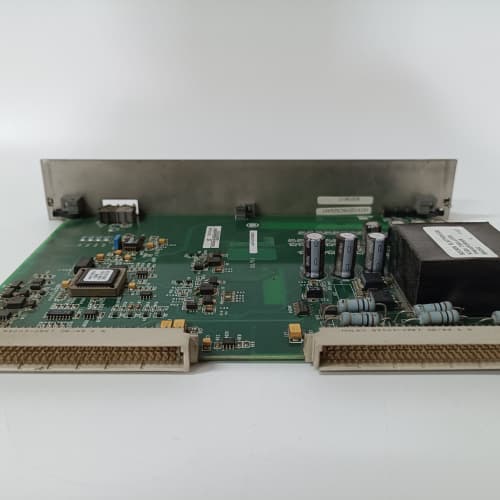
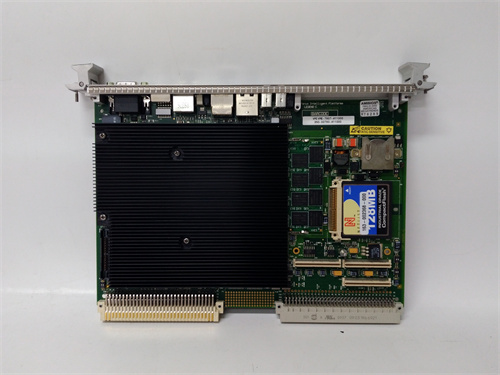
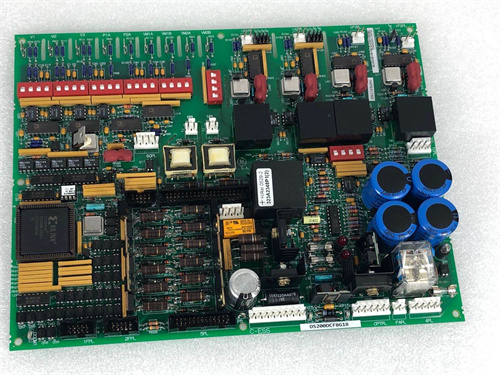
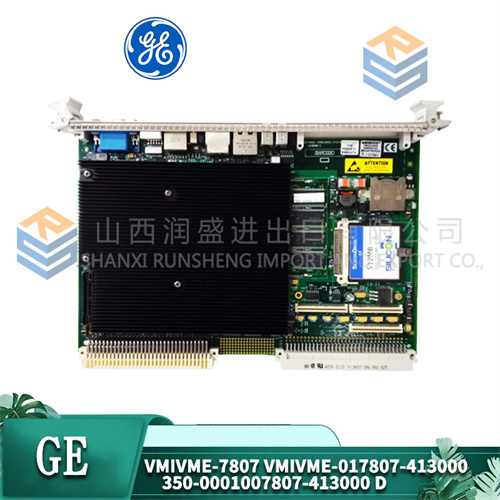
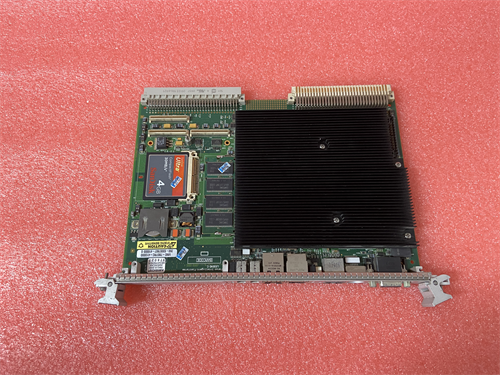
Description
Product Parameters
| Parameter | Specification |
|---|---|
| Model | IS215VCMIH2CB |
| Manufacturer | GE Energy / Baker Hughes |
| Bus Interface | VMEbus (VME64x compliant) |
| Processor | Motorola 68060 @ 50 MHz (screened for extended temperature) |
| Memory | 32 MB DRAM, 8 MB Flash (user-programmable) |
| Communication Ports | 2x Serial (RS-232/RS-422/RS-485), 2x Ethernet (10Base-T/100Base-TX) |
| Protocol Support | Modbus RTU, Modbus TCP, GE HPC (High Performance Communication), DNP 3.0, IEC 60870-5-104 |
| Operating Temperature | -40°C to +85°C (extended range) |
| Storage Temperature | -55°C to +100°C |
| Humidity | 0% to 100% (condensing and non-condensing, with coating) |
| Protection Rating | IP20 (coated board with enhanced chemical resistance) |
| Coating Type | Acrylic conformal coating (double-layer, UL 94 V-0 rated, MIL-I-46058C compliant) |
| Coating Thickness | 75–100 microns (double-layer application) |
| Vibration Resistance | 5 g peak, 10–500 Hz (per IEC 60068-2-6) |
| Shock Resistance | 30 g peak, 11 ms half-sine (per IEC 60068-2-27) |
| Thermal Cycling | 500 cycles from -40°C to +85°C (per MIL-STD-810G) |
| Power Consumption | +5 VDC @ 3.1 A, +12 VDC @ 0.6 A |
| LED Indicators | Status (RUN/FAIL/INIT), Link/Activity (Ethernet x2), TX/RX (Serial x2), Redundancy Status, Coating Integrity LED |
| Firmware Upgrade | Field-upgradable via Ethernet (TFTP) or serial (XMODEM) |
| Dimensions | 6U VME form factor (233 mm x 160 mm) |
| Weight | Approx. 0.90 kg |
| MTBF | > 250,000 hours (per MIL-HDBK-217F, ground fixed environment) |
Advantages and Key Features
-
Double-Layer Conformal Coating – The IS215VCMIH2CB features a unique double-layer acrylic conformal coating system, providing twice the thickness (75–100 microns) of standard coated modules. This offers exceptional protection against chemical attack from acidic gases (H₂SO₄, HCl), alkaline vapors (NH₃), and aggressive solvents commonly found in refineries, chemical plants, and battery rooms. The coating also includes a UV tracer for easy inspection and quality verification.
-
Screened Components for Extended Temperature – Unlike standard modules, the IS215VCMIH2CB uses components that have undergone individual screening and burn-in at -40°C and +85°C. This ensures reliable operation over the extended -40°C to +85°C range, making the IS215VCMIH2CB suitable for unheated outdoor installations in extreme climates, including arctic permafrost regions and desert solar plants.
-
Enhanced Vibration and Shock Tolerance – The IS215VCMIH2CB is designed to withstand 5 g vibration and 30 g shock, making it ideal for mobile installations (e.g., shipboard turbine control, offshore floating platforms, and railway power generation). All connectors are secured with retaining clips, and the PCB uses thicker copper traces (2 oz. versus standard 1 oz.) to prevent trace cracking under mechanical stress.
-
Coating Integrity LED – A unique feature of the IS215VCMIH2CB is the “Coat OK” LED, which performs a continuous impedance measurement across test points on the board. If the conformal coating is breached (e.g., by physical damage or chemical degradation), the LED changes from green to amber to red, providing an early warning of potential corrosion risk before module failure occurs. This feature enables predictive maintenance and proactive replacement.
-
Dual Ethernet Redundancy – Like other VCMI modules, the IS215VCMIH2CB features two independent 10/100 Ethernet ports with automatic failover and load-balancing. The failover time is specified at < 50 ms, ensuring seamless communication during network disruptions. This is critical for turbine control systems where loss of communication for more than 100 ms can trigger a protective trip.
-
Expanded Memory and Processing Power – Powered by a screened 50 MHz 68060 processor with 32 MB ECC-protected DRAM, the IS215VCMIH2CB offers error-correcting memory that detects and corrects single-bit errors, enhancing data integrity in high-radiation environments. The 8 MB flash memory includes a redundant firmware bank, allowing automatic rollback to a known-good version if a firmware update fails.
-
Comprehensive Diagnostic Suite – The IS215VCMIH2CB includes advanced on-board diagnostics that monitor bus voltage levels, clock stability, temperature, and communication statistics. All diagnostic data is accessible via the Mark VI Toolbox and can be exported to external asset management systems. The module also performs a complete memory test (March C algorithm) at startup, ensuring data integrity before the system goes online.
-
Advanced Cybersecurity Suite – The IS215VCMIH2CB includes role-based access control (RBAC), audit trail logging, RADIUS authentication, TLS 1.2 encryption, and supports SNMPv3 for secure network monitoring. Additionally, the module includes a hardware random number generator for cryptographic functions, providing enhanced security for critical infrastructure applications.
-
Hot-Swap Capability – Fully compliant with VME64x hot-swap specifications, the IS215VCMIH2CB can be replaced in a running system without powering down the chassis. The module supports both standard and long-insertion connectors for backward compatibility with older VME chassis.
-
Extended Lifecycle Support – GE has committed to supporting the IS215VCMIH2CB through 2035, with guaranteed availability of spare parts and firmware updates. This makes the IS215VCMIH2CB the preferred choice for long-life projects such as nuclear power plants (40+ year design life) and military installations.
Application Fields and Use Cases
1. Nuclear Power Generation
In pressurized water reactor (PWR) and boiling water reactor (BWR) plants, the IS215VCMIH2CB is deployed in turbine control systems located in containment-adjacent areas where radiation, temperature extremes, and chemical vapors (from coolant additives) are present. The module’s ECC memory and radiation-hardened design ensure reliable operation despite background radiation levels that would cause data corruption in standard electronics. The IS215VCMIH2CB interfaces with the plant’s safety-related DCS, transmitting turbine speed and load data while receiving reactor power setpoints.
2. Shipboard and Naval Propulsion Systems
In naval gas turbine and steam turbine propulsion systems, the IS215VCMIH2CB is specified for its vibration tolerance (5 g) and shock resistance (30 g). The module is installed in engine control rooms of destroyers, frigates, and aircraft carriers, where it communicates with the ship’s integrated platform management system (IPMS). Its dual Ethernet ports allow redundant connections to both port and starboard network switches, ensuring control continuity during battle damage scenarios.
3. Arctic Pipeline Compressor Stations
In natural gas pipeline compressor stations located in permafrost regions (e.g., Siberia, Alaska, Northern Canada), the IS215VCMIH2CB operates reliably at -40°C ambient temperatures. The double-layer conformal coating prevents condensation damage during startup from cold-soaked conditions, while the screened components ensure oscillator stability at low temperatures. The module connects turbine speed governors to the pipeline SCADA system, transmitting compressor surge data via IEC 60870-5-104 protocol.
4. Offshore Floating Production Storage and Offloading (FPSO) Vessels
FPSO vessels experience constant motion, vibration, and corrosive salt-spray environments. The IS215VCMIH2CB is installed in the topside turbine control panels, providing robust communication between the main power generation turbines and the vessel’s distributed control system. Its enhanced shock tolerance ensures reliable operation during severe sea states, while the coating integrity LED allows visual confirmation of protective barrier status without removing the module from the chassis.
5. Concentrated Solar Power (CSP) Plants
In desert CSP plants, ambient temperatures exceed 50°C, with solar radiation heating control cabinets to over 70°C. The IS215VCMIH2CB operates at the upper end of its temperature range, maintaining communication between the power block turbines and the solar field control system. The module’s extended temperature screening ensures accurate clock synchronization for time-tagged data, essential for correlating turbine output with solar thermal input.
6. Military Forward Operating Bases (FOBs)
In mobile gas turbine generator sets deployed at remote military installations, the IS215VCMIH2CB provides reliable communication in dusty, high-temperature, and rapidly changing environmental conditions. The module’s ruggedized construction and secure firmware update mechanism ensure operational readiness in contested environments, while the SNMPv3 support enables integration with military logistics monitoring systems.
Comparison with Competing Products
| Feature | IS215VCMIH2CB (GE) | ABB PP846A (AC 800M) | Siemens 6ES7 443-1EX20-0XE0 (S7-400) | Emerson VE4006 (DeltaV) | Rockwell 1756-EN2TR (ControlLogix) |
|---|---|---|---|---|---|
| Bus Type | VMEbus (VME64x) | Proprietary (S100) | VMEbus-compatible | Proprietary (I/O bus) | ControlLogix backplane |
| Processor | 68060 @ 50 MHz (screened) | MPC860 @ 50 MHz | 486 @ 66 MHz | ARM9 @ 150 MHz | 750 MHz (ARM Cortex) |
| Ethernet Ports | 2x (10/100) | 2x (10/100/1000) | 2x (10/100) | 2x (10/100/1000) | 2x (10/100/1000) |
| Conformal Coating | Yes (double-layer, MIL spec) | Optional | No | No | No |
| Operating Temp | -40°C to +85°C | -25°C to +60°C | 0°C to +60°C | -20°C to +65°C | 0°C to +60°C |
| Vibration Tolerance | 5 g | 2 g | 1 g | 2 g | 2 g |
| Shock Tolerance | 30 g | 10 g | 5 g | 10 g | 10 g |
| Humidity Tolerance | 100% (coated) | 95% (uncoated) | 95% (uncoated) | 95% (uncoated) | 95% (uncoated) |
| Cybersecurity | RBAC, TLS 1.2, RADIUS, SNMPv3 | Firewall, SSL | Basic password | Firewall, LDAP | CIP Security, SSL |
| Hot-Swap Support | Yes (VME64x) | No | Yes | No | Yes |
| ECC Memory | Yes | No | No | No | No |
| Coating Integrity LED | Yes | No | No | No | No |
| GE HPC Protocol | Yes | No | No | No | No |
| MTBF | > 250,000 hours | 100,000 hours | 80,000 hours | 120,000 hours | 150,000 hours |
| Typical Price | High | Higher | Lower | Higher | Medium |
Key Differentiators: The IS215VCMIH2CB stands alone in its class with double-layer conformal coating, extended -40°C to +85°C temperature range, 5 g vibration tolerance, ECC memory, and the unique coating integrity LED. No competing product offers the same level of environmental ruggedization or the GE HPC protocol support. For ABB and Emerson users, the optional conformal coating does not match the MIL-spec double-layer standard of the IS215VCMIH2CB. The Rockwell unit provides higher Ethernet speed but lacks the industrial temperature range and vibration tolerance required for shipboard or arctic applications. For critical infrastructure projects with extreme environmental demands, the IS215VCMIH2CB is the only commercially available communications module that meets all applicable military and industrial ruggedization standards simultaneously.
Selection Suggestions and Precautions
Selection Criteria
-
Environmental Severity Assessment – The IS215VCMIH2CB is designed for the harshest environments: chemical plants with aggressive vapors, arctic/extreme cold, desert/extreme heat, shipboard/mobile, and nuclear/radiation areas. If your installation is in a clean, climate-controlled control room, consider the standard IS215VCMIH2C or IS215VCMIH2CA for cost optimization. Conduct a detailed environmental hazard analysis (including vibration, shock, temperature cycling, and chemical exposure) before selecting the IS215VCMIH2CB.
-
Backplane and Chassis Compatibility – The IS215VCMIH2CB requires a VME64x backplane with full P0, P1, and P2 connectors. Verify that your Mark VI chassis supports VME64x hot-swap (J1/J2 5-row connectors). If upgrading from a pre-Mark VI system, you may need a complete chassis replacement. The IS215VCMIH2CB is not compatible with VME32 (3-row connector) backplanes under any circumstances.
-
System Firmware Version – The IS215VCMIH2CB requires Mark VI Toolbox software version v7.10 or higher. Earlier versions lack support for ECC memory, the coating integrity LED, and some cybersecurity features. Plan for a software upgrade if your system is older than 2020. Contact GE support for a compatibility matrix.
-
Network Topology and Redundancy – With dual Ethernet ports, the IS215VCMIH2CB supports active-standby, active-active, or network-segmented configurations. For NERC CIP compliance, GE recommends active-standby with manual switchover and network segmentation (DCS network separated from plant management network). Document your network architecture and failover testing procedures before commissioning.
-
Spare Strategy – Given the extended lifecycle commitment (through 2035), the IS215VCMIH2CB is suitable for long-term installations. However, GE recommends maintaining a hot spare in the chassis (if backplane slots permit) or at least two cold spares per site, as lead times for the IS215VCMIH2CB can extend to 20 weeks due to the rigorous screening and coating processes.
Critical Precautions
-
Coating Integrity Verification – Upon receiving a new IS215VCMIH2CB, perform a thorough UV inspection (365 nm) to verify complete double-layer coverage. The UV tracer in the first layer (blue-green fluorescence) and second layer (yellow fluorescence) allows visualization of both layers. If any area lacks the characteristic dual fluorescence, return the module to GE. The coating integrity LED should show green at first power-up; if amber or red, the module has a coating defect and should be replaced immediately.
-
Handling and Storage – The IS215VCMIH2CB is sensitive to physical damage from dropped or bent modules. Handle with ESD-safe gloves and store in the original anti-static bag, ideally in a temperature-controlled environment (15°C to 35°C). The conformal coating is mechanically tough but can be scratched by sharp edges; avoid placing the module on rough surfaces. Do not stack modules without protective separators.
-
Connector Preservation – The VME connectors, serial ports, and Ethernet jacks are not coated. Apply a thin layer of dielectric contact lubricant (e.g., De-OxIT D-Series) to the connector pins before insertion to prevent oxidation in aggressive environments. This is particularly important for offshore and chemical plant installations.
-
Power Supply Load Calculation – The IS215VCMIH2CB consumes 3.1 A on the +5 V rail. Measure the total +5 V load of your VME chassis before installation. If total load exceeds 85% of the power supply rating, consider upgrading to a higher-capacity power supply or removing non-essential modules. A power supply operating near its limit may cause voltage droop, leading to module resets.
-
Grounding and Bonding – The IS215VCMIH2CB has enhanced sensitivity to ground potential differences due to its ECC memory and high-speed clock. Ensure the VME chassis ground is connected to the facility’s star-ground point. Measure the resistance between chassis ground and module ground (pin P1-1) to confirm < 0.1 ohm. Floating grounds have been known to cause intermittent memory errors on the IS215VCMIH2CB.
-
Firmware Upgrade Best Practices – Use the following procedures:
-
Perform upgrades over the dedicated management Ethernet port, not the production network.
-
Use TFTP with a checksum file to verify transfer integrity.
-
Never interrupt power during a firmware upgrade; write time is 5–8 minutes.
-
The IS215VCMIH2CB has dual-bank flash; if Bank A corrupts, it automatically boots from Bank B. Do not disable this feature.
-
After upgrade, verify the checksum via the Mark VI Toolbox “Show Firmware” command.
-
-
Cybersecurity Hardening – Follow this checklist after installation:
-
Change default password (“password123”) immediately. Use a 16-character password with complexity.
-
Configure RADIUS authentication for all network access.
-
Enable TLS 1.2 for all Ethernet communication.
-
Disable Telnet and enable SSH only.
-
Set SNMP to version 3 with authentication and encryption.
-
Restrict IP addresses to only authorized devices (DCS servers, engineering workstations).
-
Enable audit logging and forward logs to a SIEM system.
-
-
Thermal Management – Despite the extended temperature range, the IS215VCMIH2CB must have adequate airflow (minimum 40 CFM) across the heat sink. In cabinets with multiple VME modules, ensure that the inlet air temperature does not exceed 75°C. Install temperature sensors near the module and alarm at 70°C to prevent thermal degradation of the conformal coating. Do not block any ventilation holes on the module front panel.
-
Condensation Protection – Although the IS215VCMIH2CB is coated, prolonged condensation can still affect connectors and coating edges. In environments with cyclic temperature changes, install chassis heaters to keep internal temperature above the dew point. The module itself does not include a heater; condensation on the coating surface is acceptable, but condensation pooling in connectors must be prevented.
-
Obsolescence and Future-Proofing – The IS215VCMIH2CB is in active production with support through 2035. However, GE’s Mark VIe platform introduces new communication modules (e.g., IS220P series) that offer gigabit Ethernet and improved diagnostics. For greenfield projects with a design life beyond 2035, evaluate Mark VIe options. For brownfield projects, the IS215VCMIH2CB remains the recommended upgrade path for extreme environments. GE recommends purchasing all spares for a given project at the initial order to avoid lead-time delays and price increases. Consider a lifetime buy if your project requires 10+ modules and has a 20-year operational horizon.
-
Certification and Compliance – The IS215VCMIH2CB carries the following certifications: UL 508A (Industrial Control Equipment), CSA C22.2 No. 142, IEC 61000-6-2 (Immunity), and IEC 61000-6-4 (Emissions). For nuclear applications, the module is qualified under IEEE 323 (Environmental Qualification) and IEEE 344 (Seismic Qualification) with applicable project-specific documentation. Confirm that your project’s regulatory body accepts these certifications before specifying the IS215VCMIH2CB. For military applications, the module is compliant with MIL-STD-810G (Environmental) and MIL-STD-461F (EMC) but requires project-specific testing for each installation.
-
ESD Handling Protocol – Despite the conformal coating, the IS215VCMIH2CB remains sensitive to electrostatic discharge, particularly on connector pins. Follow ESD Class 2 handling procedures:
-
Use grounded workstations and wrist straps.
-
Maintain relative humidity between 40% and 60% during handling.
-
Transport in conductive bags only.
-
Never touch the backplane-side connectors.
-
If a discharge is suspected, perform a functional test using the Mark VI Toolbox before placing the module in service.
-
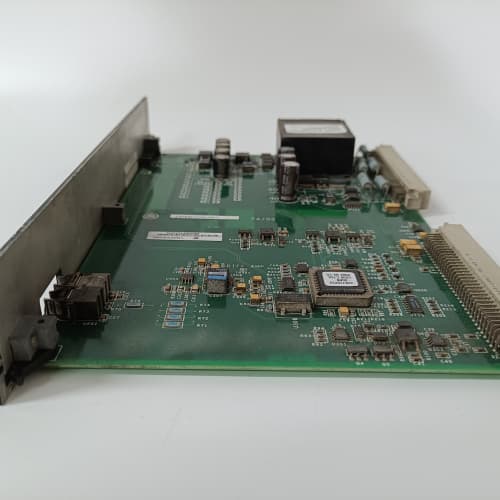
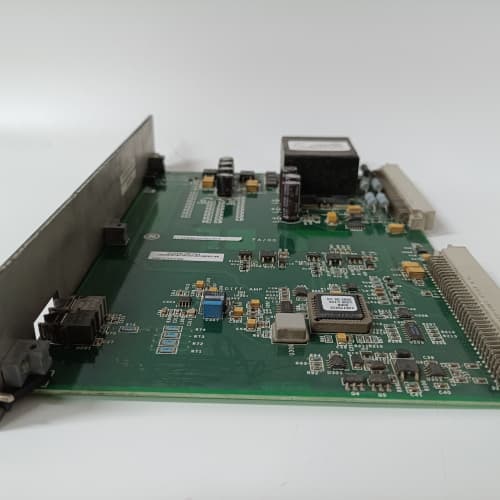
SCHNEIDER TSX073L2028
A-B 1756-OA16I
A-B 1756-OF8

Reviews
There are no reviews yet.