
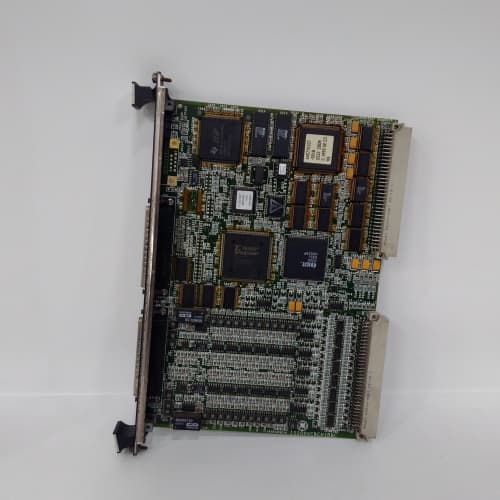
Description
Key Specifications
| Parameter | Specification |
|---|---|
| Fiber Optic Ports | 2 independent transceivers (TX/RX) |
| Data Rate | 10/100 Mbps |
| Fiber Type | Multimode (62.5/125 µm or 50/125 µm) or Single-mode (configurable) |
| Connector Type | ST or SC (variant dependent) |
| Transmission Distance | Up to 2 km (MM) or 15 km (SM) |
| Protocol Support | I/O Net, Modbus TCP, EtherNet/IP, DNP3 (new) |
| Isolation | Complete galvanic isolation (optical) |
| Diagnostics | 1000-event fault log with optical link quality monitoring and waveform snapshots (expanded) |
| Operating Temp | –30 °C to +75 °C (extended over H1AB) |
| Humidity | 5–100% condensing (silicone coating standard) |
| Coating | Silicone conformal coating + enhanced edge encapsulation (UV-traceable) |
| Manufacturing | 120-hour burn-in, 100% X-Ray/AOI, military-grade components |
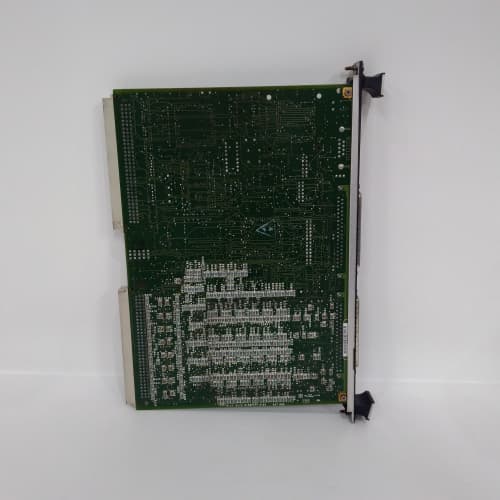
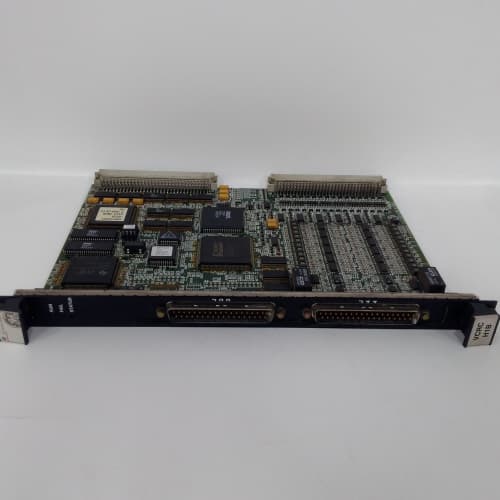
| Form Factor | 6U VME64x (160 × 233 mm), single-slot width |
| Power | 8 W (+5 V / +3.3 VDC) |
| Connectors | Front-panel ST/SC fiber optic ports with gold-plated contacts |
Advantages & Distinctive Features
-
Complete Electrical Isolation: Optical transmission provides immunity to EMI/RFI and eliminates ground loops.
-
Long-Distance Communication: Up to 2 km (MM) or 15 km (SM)—ideal for remote I/O and field devices.
-
Noise Immunity: Ideal for environments near VFDs, high-voltage equipment, and welding gear.
-
High-Speed Data Exchange: 10/100 Mbps supports real-time turbine control data.
-
Dual Redundant Ports: Two independent transceivers for redundancy.
-
Optical Link Quality Monitoring: Monitors signal strength for predictive maintenance.
-
DNP3 Support: For utility and SCADA integration.
-
Silicone Conformal Coating + Edge Encapsulation: Superior protection against humidity, salt spray, chemicals, and condensing environments.
-
Extended Temperature Range: –30 °C to +75 °C.
-
Condensing Humidity Rating: 5–100% condensing.
-
Expanded Diagnostic Log: 1000-event fault log with waveform snapshots.
-
Military-Grade Manufacturing: 120-hour burn-in, military-grade components.
-
Gold-Plated Connectors: Corrosion-resistant connections.
-
Hot-Swappable: No rack power-down for replacement.
-
Direct Retrofit: Replaces older GFOI series boards.
Application Fields
-
Remote I/O Racks: Communication between main control and remote cabinets
-
Field Device Communication: Connecting devices in electrically noisy environments
-
Inter-Rack Communication: Data exchange between multiple Mark VIe racks
-
Offshore platforms: Salt-spray and condensing environments
-
Compressor Stations: Communication near VFDs and high-power equipment
-
Arctic/Desert Installations: Extreme temperature environments
-
Utility Substations: DNP3 integration
-
Nuclear Power Plants: Safety-critical communication
Comparison with GFOIH1AB and Competitors
| Feature | GE IS215GFOIH1ABA | GE IS215GFOIH1AB | Competitor A | Competitor B |
|---|---|---|---|---|
| Fiber Ports | 2 | 2 | 1 | 2 |
| Data Rate | 10/100 Mbps | 10/100 Mbps | 10 Mbps | 100 Mbps |
| Transmission Distance | 2 km (MM) / 15 km (SM) | 2 km / 15 km | 2 km | 2 km |
| Protocol Support | I/O Net, Modbus, EtherNet/IP, DNP3 | I/O Net, Modbus, EtherNet/IP | Profinet | EtherNet/IP |
| Link Quality Monitoring | Yes | Yes | No | No |
| Coating Type | Silicone + edge encaps. | Acrylic | Optional | Optional |
| Temp Range | –30 to +75 °C | –25 to +70 °C | 0 to +55 °C | –10 to +55 °C |
| Humidity | 5–100% condensing | 5–95% non-condensing | 5–90% | 5–95% |
| Fault Logging | 1000 events + waveforms | 750 events | No | No |
| Hot-Swappable | Yes | Yes | No | Yes |
Selection Guidelines
-
When to choose:
-
Critical long-distance fiber optic communication requiring absolute reliability
-
Extreme environments (–30 to +75 °C, condensing, salt spray, chemical exposure)
-
Utility applications needing DNP3 support
-
Maximum reliability (nuclear, critical infrastructure)
-
-
When to choose “H1AB” instead: For less extreme environments (non-condensing, –25 to +70 °C) where acrylic coating suffices.
-
Fiber Type: Multimode for distances up to 2 km; single-mode for up to 15 km.
-
Connector Type: Verify ST or SC connectors match field cabling.
-
Distance Verification: Ensure cable length does not exceed optical budget.
-
Coating Verification: Inspect under UV (365 nm)—silicone shows distinct fluorescence; verify edge encapsulation bead is continuous.
-
Compatibility: Fits all Mark VIe VME64x racks. Requires ControlST v6.5 or higher.
Operational Precautions
-
Fiber Handling: Avoid bending cables beyond minimum bend radius.
-
Connector Cleaning: Clean connectors with approved tools before each connection.
-
Optical Power Measurement: Verify power levels during commissioning.
-
Link Quality Monitoring: Review signal trends in Toolbox ST.
-
DNP3 Configuration: Configure protocol settings for utility integration.
-
LED Diagnostics: Green = link/active; Amber = marginal signal; Red = link fault.
-
Fault Log: Access 1000-event log via Toolbox ST—review waveform snapshots.
-
Coating Care: Use GE-approved silicone-safe cleaner; inspect annually under UV—rework voids with approved silicone coating per GE FSB-MKVIe-112.
-
Hot-Swap: Remove/insert slowly under power.
-
Spare Stock: Maintain 1 spare per 3–4 racks; “H1ABA” backward-compatible with all GFOI sockets.
-
Firmware Updates: Ensure the GE IS215GFOIH1ABA is in “standby” mode during updates.
-
ESD: Handle by edges with grounded wrist strap—coating does not protect connectors.
-
Storage: Anti-static bag with desiccant at –40 to +85 °C; rotate every 3 years for coating inspection.
A-B 1786-RPA
A-B 1756-ENBT
SCHNEIDER 467NHP81100
GE IC200ALG240

Reviews
There are no reviews yet.