
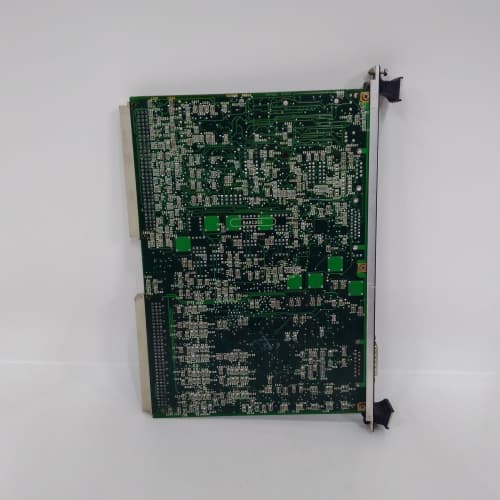
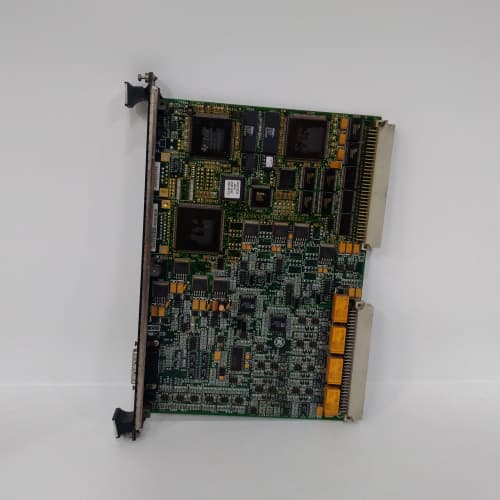
Description
Detailed Technical Specifications
-
Input Channels: 8 differential analog input channels for vibration sensors
-
Sensor Types Supported:
-
Eddy current proximity probes (e.g., Bently Nevada 3300/7200 series)
-
Accelerometers (IEPE/charge type)
-
Velocity sensors (electrodynamic)
-
-
Input Signal Range: –24 V to +24 V DC (proximity probes); ±10 V AC (accelerometers/velocity)
-
Measurement Parameters:
-
Shaft Relative Vibration (displacement, µm or mils)
-
Absolute Bearing Vibration (velocity, mm/s or in/s; acceleration, g)
-
Shaft Position (thrust position, µm or mils)
-
Shaft Eccentricity (µm or mils)
-
Case Expansion (optional, with LVDT inputs)
-
-
Frequency Response: DC to 10 kHz (programmable filters)
-
Resolution: 16-bit ADC per channel
-
Accuracy: ±1% of full scale (typical)
-
Sample Rate: Up to 20 kHz per channel (simultaneous sampling)
-
Protection Functions:
-
Overspeed detection (optional, with separate speed input)
-
Over-vibration trip (programmable alarm and trip levels)
-
Shaft position deviation (thrust bearing wear monitoring)
-
Rate-of-change detection (sudden vibration spikes)
-
-
Input Protection: Overvoltage protection (±40 VDC continuous), ESD protection (IEC 61000-4-2 Level 4)
-
Isolation: 1500 VDC (channel-to-backplane)
-
Communication: I/O Net (dual Ethernet ports for redundancy)
-
Form Factor: 6U VME64x (160 × 233 mm), single-slot width
-
Indicators: LED array for each channel (green = normal, amber = alert, red = danger/trip), module health, and communication status
-
Operating Temp: 0 °C to +60 °C (derated above 50 °C)
-
Power Draw: 12 W typical from +5 VDC and +3.3 VDC backplane rails
-
Connectors: Front-panel 32-pin terminal block (screw-type) for sensor wiring, with corrosion-resistant gold plating
-
Diagnostic Memory: Non-volatile fault logging — stores last 500 events with timestamps and waveform snapshots
-
Signal Conditioning: Programmable gain, offset, and filtering per channel
-
Built-in Self-Test: Automatic sensor bias voltage monitoring and open/short circuit detection
Advantages & Distinctive Features
-
Comprehensive Vibration Monitoring: Supports all major sensor types (proximity probes, accelerometers, velocity sensors)—eliminates the need for separate dedicated vibration monitors.
-
High-Speed Simultaneous Sampling: Up to 20 kHz per channel ensures accurate capture of high-frequency vibration components—critical for early fault detection (bearing wear, gear mesh, blade pass frequencies).
-
Integrated Protection Logic: On-board alarm and trip level processing reduces processor board workload and ensures deterministic trip response (<5 ms) for overspeed and over-vibration events.
-
Programmable Signal Conditioning: Per-channel gain, offset, and filtering allow optimization for different sensor types and installation conditions.
-
Non-Volatile Fault Logging: 500 events with waveform snapshots enable post-event analysis and predictive maintenance trend analysis.
-
Built-in Self-Test: Continuous sensor health monitoring (bias voltage, open/short detection) prevents false trips and identifies sensor degradation.
-
Shaft Position Monitoring: Thrust bearing wear detection and axial position monitoring for critical turbines.
-
Overspeed Protection: Optional dedicated speed input for overspeed detection—redundant to VPRO processor overspeed logic.
-
I/O Net Integration: Seamless communication with processor boards via redundant Ethernet links.
-
Hot-Swappable: Supports removal and replacement without powering down the rack.
-
Retrofit Compatibility: Direct replacement for VSCAH1 series boards.
Application Fields
-
Gas Turbines: Bearing vibration, shaft displacement, and overspeed protection for heavy-duty and aero-derivative turbines.
-
Steam Turbines: Bearing and casing vibration monitoring for HP/IP/LP sections, thrust position monitoring.
-
Compressors: Centrifugal and axial compressor vibration monitoring for surge protection and performance optimization.
-
Generators: Stator end-winding vibration and bearing vibration monitoring.
-
Pumps: Critical feedwater and boiler circulation pump vibration monitoring.
-
Fans and Blowers: ID/FD fan bearing vibration monitoring.
-
Wind Turbines: Main bearing and gearbox vibration monitoring for predictive maintenance.
-
Hydro Turbines: Bearing vibration and shaft position monitoring.
Comparison with Competing Products
| Feature | GE IS200VSCAH2A | Competitor A (Bently Nevada 3500) | Competitor B (Rockwell XM-120) |
|---|---|---|---|
| Channels | 8 | 4 | 4 |
| Sensor Support | Prox/Accel/Velocity | Prox/Accel/Velocity | Accel only |
| Sample Rate | 20 kHz | 10 kHz | 5 kHz |
| Frequency Response | DC to 10 kHz | DC to 5 kHz | DC to 2 kHz |
| Integrated Protection | Yes (on-board) | Yes (rack-based) | No (needs PLC) |
| Fault Logging | 500 events + waveforms | 100 events | No |
| Overspeed Input | Yes (optional) | No | No |
| Hot-Swappable | Yes | No | Yes |
| Communication | I/O Net (redundant) | Proprietary | EtherNet/IP |
The GE IS200VSCAH2A offers superior channel density, sensor compatibility, sample rate, and integrated protection compared to competitors—making it the ideal solution for comprehensive machinery protection in a single VME slot.
Selection Guidelines
-
When to choose: Any Mark VIe application requiring vibration monitoring and protection—gas turbines, steam turbines, compressors, generators, or critical pumps.
-
Sensor Selection: Verify field sensors are compatible (proximity probes require ±24 VDC power supply, accelerometers may need IEPE excitation). The GE IS200VSCAH2A provides programmable excitation for IEPE sensors (2–10 mA).
-
Filtering Configuration: Program low-pass filters per channel to reject high-frequency noise (e.g., electrical interference) while preserving relevant vibration frequencies (typically 1–5 kHz for bearing monitoring, up to 10 kHz for gear mesh).
-
Alarm/Trip Level Setting: Configure alert and danger levels per API 670 guidelines. Start with 50% of sensor range for alert, 80% for danger, and adjust based on historical data.
-
Overspeed Input: If using the optional speed input, ensure the speed sensor is compatible (magnetic pickup or proximity probe) and connected to the dedicated speed channel.
-
Compatibility: Fits all Mark VIe VME64x racks. Requires processor board (VPRO series) with I/O Net connectivity and ControlST v6.5 or higher.
-
Cooling: Passive convection—ensure adequate cabinet ventilation.
Operational Precautions
-
Wiring: Follow GE wiring diagrams (GEH-6805)—correct polarity and shield grounding essential. Use shielded twisted-pair cables for sensor wiring; ground the shield at the terminal board only.
-
Sensor Bias Voltage Check: For proximity probes, verify the bias voltage is within the sensor’s specified range (−24 V to −4 V typically) using Toolbox ST. Out-of-range bias indicates sensor or cable fault.
-
Calibration: Factory calibrated—but verify vibration amplitude against a known reference (e.g., handheld vibration meter) during commissioning for critical protection channels.
-
Alarm/Trip Testing: Perform simulated vibration tests (e.g., using a function generator or manual barring) to verify alarm and trip logic during commissioning.
-
Overspeed Testing: If overspeed protection is used, verify speed reading against a known speed reference and test overspeed trip setpoint.
-
Diagnostic Interpretation: Channel LED codes: Green = normal, Amber = alert, Red = danger/trip. Review fault logs in Toolbox ST for detailed event analysis.
-
Hot-Swap Procedure: When replacing a GE IS200VSCAH2A under power, remove and insert slowly to avoid inrush spikes. The processor board automatically recognizes the new module.
-
Spare Stock: Maintain at least one spare GE IS200VSCAH2A per 3–4 active racks. The board is critical for machinery protection—a failure can lead to turbine downtime or damage.
-
Annual Verification: Perform channel-by-channel verification against a known vibration reference during scheduled outages. Compare baseline data to detect sensor or board degradation.
-
Filter Setting Review: Review filter settings annually—if new vibration frequencies appear (e.g., due to machinery changes), adjust filters to capture relevant signals while rejecting noise.
-
Firmware Updates: Ensure the GE IS200VSCAH2A is in “standby” mode during updates. Use ControlST v6.5 or higher for full feature support.
-
ESD Handling: Handle by edges only using grounded wrist straps and ESD-safe workstations.
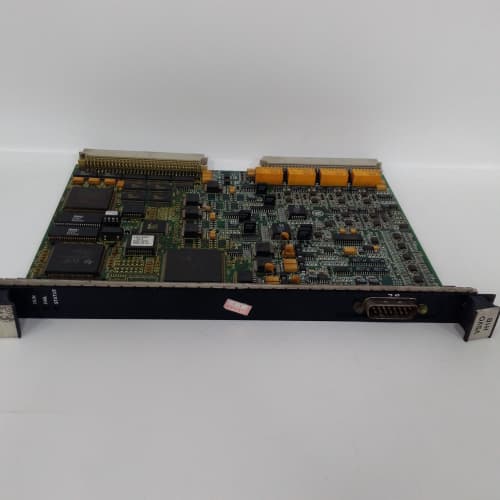
SIEMENS C98043-A7002-L1-13
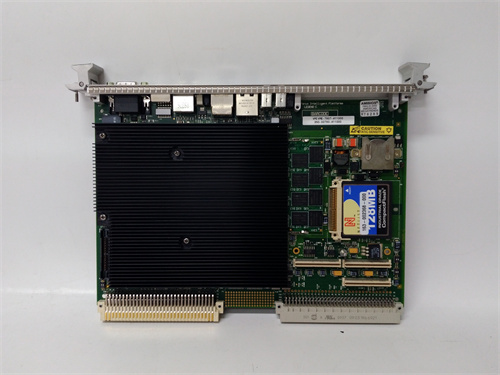
A-B 1756-OF6CI
SCHNEIDER 170BDI35600


Reviews
There are no reviews yet.