
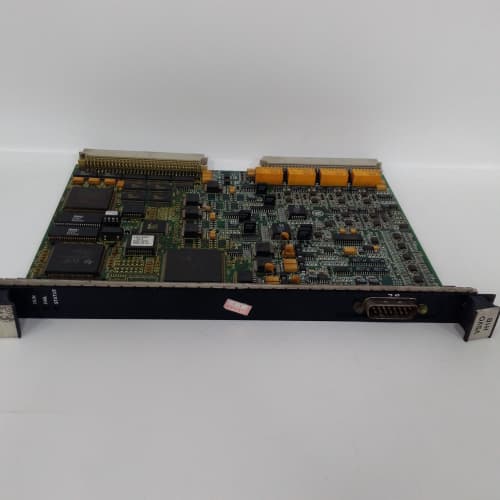
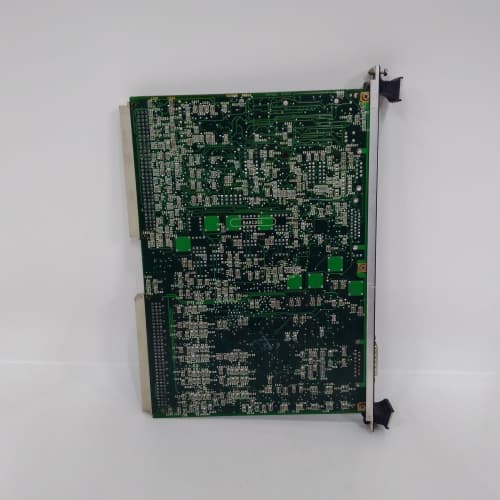
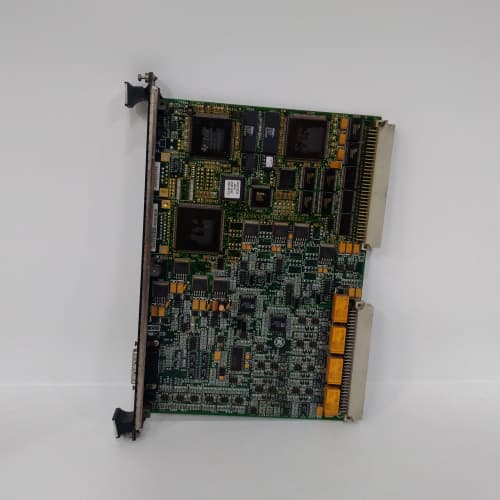
Description
Product Parameters
| Parameter | Specification |
|---|---|
| Brand / Series | GE Mark VIe Speedtronic |
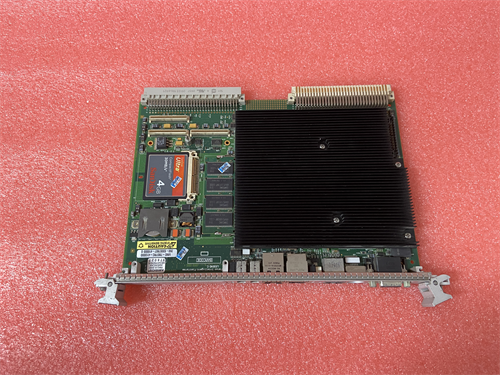
| Model | IS200TPROH1BCB |
| Speed Inputs | Up to 4 independent channels (configurable) |
| Input Signal Types | Magnetic pickups, proximity probes (passive/active), TTL, 5–24 VDC logic |
| Frequency Range | 0.5 Hz – 30 kHz |
| Input Voltage Range | ±30 VDC maximum |
| Input Impedance | > 10 kΩ |
| Trigger Level | Programmable per channel (0.5–24 VDC, hysteresis configurable) |
| Scaling | Programmable (RPM, Hz, etc.) via GE ToolboxST |
| Accuracy | ±0.005% of reading |
| Isolation | 2000 VAC (field-to-system) |
| Diagnostics | Open-circuit detection, signal loss detection, frequency out-of-range monitoring, signal integrity monitoring (amplitude/quality), reference validation, calibration status tracking, sensor drift detection |
| Status Indication | 4 green LEDs (channel active), 4 red LEDs (channel fault), 2 red summary fault LEDs, 1 yellow LED (reference/calibration status) |
| Calibration Features | Onboard calibration memory with traceable records, software-triggered self-calibration |
| Operating Temperature | –40°C to +70°C |
| Storage Temperature | –55°C to +85°C |
| Mounting | VME rack-mount terminal board with front-panel I/O connectors |
| Backplane Interface | VME64x (A24/A32, D16/D32/D64) |
| EMC Compliance | IEC 61000-4 Level 4 |
Advantages & Key Features
-
High-Density Speed Monitoring: Up to 4 independent speed inputs in a single VME slot.
-
Highest Accuracy: ±0.005% reading accuracy provides the highest precision for speed measurements.
-
Extended Frequency Range: 0.5 Hz to 30 kHz covers the widest range from startup to overspeed conditions.
-
Extended Temperature Range: –40°C to +70°C operation makes IS200TPROH1BCB suitable for extreme environments.
-
Enhanced Isolation: 2000 VAC isolation provides superior protection for the Mark VIe backplane.
-
Signal Integrity Monitoring: Per-channel amplitude/quality monitoring detects weak or degraded sensor signals.
-
Sensor Drift Detection: Tracks sensor performance over time to predict failures before they occur.
-
Versatile Signal Compatibility: Supports magnetic pickups, proximity probes, TTL, and logic-level signals.
-
Programmable Trigger Levels: Per-channel programmable trigger voltage and hysteresis ensure reliable detection.
-
Advanced Calibration: Onboard calibration memory with traceable records and software-triggered self-calibration.
-
Comprehensive Diagnostics: Open-circuit, signal loss, frequency out-of-range, signal integrity, reference validation, and sensor drift detection.
-
ToolboxST Integration: Full configuration, monitoring, diagnostics, and calibration management via GE ToolboxST.
-
Drop-In Replacement: Direct replacement for IS200TPROH1BBB, IS200TPROH1BAA, IS200TPROH1B, IS200TPROH1A, and earlier speed probe terminal boards.
Application Fields
-
Gas & Steam Turbines (GE Frame 6B/7EA/9E/HA): Shaft speed monitoring, overspeed detection, speed control.
-
Aeroderivative Turbines: Speed monitoring and overspeed protection.
-
Compressor Stations: Compressor speed monitoring.
-
Generator Speed Monitoring: Turbine-generator speed measurement.
-
Multi-Shaft Applications: Speed monitoring of multiple turbine sections.
-
Arctic & Desert Installations: Extreme-environment turbine speed monitoring.
-
Nuclear Power Plants: Applications requiring maximum precision and documented calibration.
Comparison with Competing Products
| Feature | GE IS200TPROH1BCB | GE IS200TPROH1BBB | GE IS200TPROH1BAA | Competitor A (Speed Probe) | Competitor B (Speed Monitor) |
|---|---|---|---|---|---|
| Speed Inputs | Up to 4 | Up to 4 | Up to 4 | 2 | 1 |
| Frequency Range | 0.5 Hz – 30 kHz | 0.5 Hz – 30 kHz | 0.5 Hz – 25 kHz | 1 Hz – 10 kHz | 1 Hz – 15 kHz |
| Accuracy | ±0.005% | ±0.005% | ±0.005% | ±0.1% | ±0.05% |
| Signal Integrity Monitoring | Yes | Yes | Yes | No | No |
| Sensor Drift Detection | Yes | Yes | No | No | No |
| Reference Validation | Yes | Yes | Yes | No | No |
| Calibration Records | Yes (traceable) | Yes (traceable) | Yes (traceable) | No | No |
| Self-Calibration | Yes | Yes | Yes | No | No |
| Isolation | 2000 VAC | 2000 VAC | 2000 VAC | 1000 VAC | 500 VDC |
| Operating Temp | –40°C to +70°C | –40°C to +70°C | –40°C to +70°C | 0°C to 50°C | 0°C to 60°C |
Key Advantage: IS200TPROH1BCB delivers up to 4 independent speed inputs with the widest frequency range (30 kHz), highest accuracy (±0.005%), signal integrity monitoring, sensor drift detection, 2000 VAC isolation, extended –40°C to +70°C temperature range, and comprehensive calibration management—making it the ultimate solution for critical turbine speed monitoring applications requiring maximum precision, reliability, and regulatory compliance.
Selection Guidelines & Recommendations
-
Input Count: Determine the number of speed inputs required (up to 4 per board).
-
Sensor Type: Verify speed sensor type and configure trigger levels in GE ToolboxST.
-
Signal Integrity Monitoring: Enable for critical speed sensors to receive early warnings of signal degradation.
-
Sensor Drift Detection: Enable to predict sensor failures and schedule preventive maintenance.
-
Calibration Management: Use GE ToolboxST to perform software-triggered self-calibration during scheduled maintenance.
-
Controller Firmware: Requires Mark VIe processor firmware v9.5 or later for full sensor drift detection and calibration record support.
-
Wiring Guidelines: Use shielded twisted-pair cables. Maintain shield grounding only at the Mark VIe cabinet end.
-
Spare Strategy: Keep one spare per turbine; lead times 8–14 weeks.
-
Retrofit: Direct replacement for IS200TPROH1BBB, IS200TPROH1BAA, IS200TPROH1B, and IS200TPROH1A—regenerate configuration in GE ToolboxST to access enhanced features.
Important Cautions
-
No Hot-Swap: De-energize rack before insertion/removal.
-
Signal Polarity: For magnetic pickups, observe correct polarity for reliable zero-crossing detection.
-
Trigger Level: Incorrect trigger level can cause missed pulses or false triggering—verify with sensor specifications.
-
Cable Length: For magnetic pickups, use low-capacitance cables for runs exceeding 50 meters.
-
Grounding: Connect AGND to Mark VIe system ground at single star point.
-
Shield Termination: Ground speed probe cable shields only at cabinet end.
-
ESD Handling: Use grounded wrist straps; field repair not possible.
-
Temperature Rating: Verify cabinet ambient does not exceed +70°C or fall below –40°C.
-
Reference Validation: Yellow LED indicates reference drift—schedule factory recalibration or perform software self-calibration if illuminated.
-
Self-Calibration: Perform only when board is de-energized and free from field wiring faults.
-
Calibration Records: Do not modify calibration memory via external tools—use only GE ToolboxST.
-
Signal Integrity Alerts: Investigate weak signal alerts promptly to prevent sensor failure.
-
Sensor Drift Alerts: Investigate drift alerts to replace aging sensors before failure.
-
Frequency Out-of-Range: Monitor diagnostic alerts—investigate sensor or wiring faults.
-
Channel Mapping: With up to 4 channels, verify field wiring maps to correct ToolboxST channel numbers.
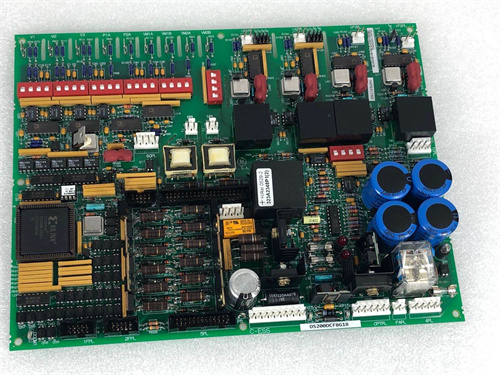
A-B 1756-OF4
BENTLY NEVADA 330180-51-00
GE IC693PWR331
AB 1785-KE/C


Reviews
There are no reviews yet.