
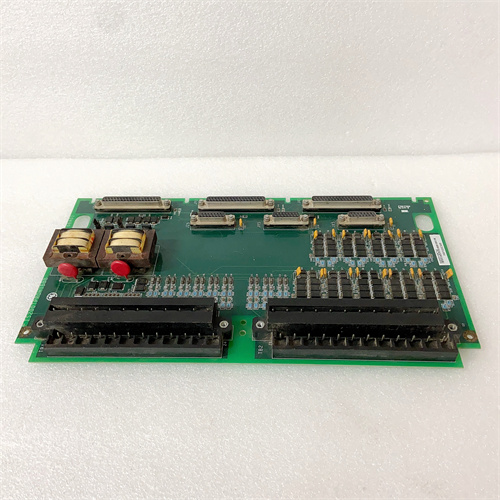
Description
Product Parameters
| Parameter | Specification |
|---|---|
| Brand / Series | GE Mark VIe Speedtronic |
| Model | IS200SCTTG1A |
| Input Channels | 24 thermocouple OR 12 RTD (selectable via software configuration) |
| Thermocouple Types | J, K, T, E, R, S, B (software-selectable per channel) |
| RTD Types | Pt100 (3-wire or 4-wire), Ni120 |
| Input Range | Thermocouple: ±100 mV; RTD: 0–400 Ω |
| Cold-Junction Compensation | Built-in CJC sensor on terminal block (accuracy ±0.5°C) |
| ADC Resolution | 24-bit delta-sigma, with programmable sampling rate (4–200 SPS) |
| Accuracy | ±0.1% of reading + ±1°C (thermocouple) / ±0.5°C (RTD) |
| Isolation | 1500 VAC (field-to-system) |
| Common Mode Rejection | >100 dB @ 50/60 Hz |
| Operating Temperature | –30°C to +65°C |
| Mounting Type | VME rack-mount terminal board with 68-pin front I/O connector |
| Built-in Diagnostics | Open-circuit detection, short-circuit detection, CJC fault alarm, per-channel status LEDs |
Advantages & Key Features
-
Multi-Sensor Flexibility: IS200SCTTG1A eliminates the need for separate thermocouple and RTD termination boards. Each channel can be independently configured via the GE ToolboxST software for thermocouple type, RTD wiring mode, or even as a millivolt input for high-level transmitters, greatly reducing spare parts inventory.
-
High-Precision Cold-Junction Compensation: The board incorporates dual CJC sensors near the terminal block, with automatic compensation correction algorithms. This ensures that IS200SCTTG1A maintains measurement accuracy even during cabinet temperature fluctuations—a critical advantage over generic PLC analog modules.
-
Advanced Noise Rejection: With 24-bit delta-sigma conversion and >100 dB CMRR, IS200SCTTG1A delivers stable readings in high-electromagnetic-interference environments typical of turbine generator halls. The programmable sampling rate allows operators to trade speed for resolution based on application needs.
-
Comprehensive Diagnostics: Real-time open-circuit and short-circuit detection per channel, combined with CJC health monitoring, enables predictive maintenance. The Mark VIe system can generate alarms before a failed sensor causes a turbine trip, a feature not available on older GE terminal boards like the IS200STTCH series.
-
Direct Replacement Compatibility: IS200SCTTG1A is a drop-in upgrade for legacy GE Speedtronic thermocouple boards (e.g., IS200STTCH1A) while offering enhanced accuracy, digital filtering, and software configurability without requiring chassis or cable changes.
Application Fields & Use Cases
-
Power Generation (Gas & Steam Turbines): IS200SCTTG1A is deployed in GE Frame 6B, 7EA, 9E, and HA-class turbines for monitoring critical temperature points, including:
-
Exhaust gas temperature (EGT) thermocouple arrays
-
Bearing metal temperature (RTD)
-
Inlet guide vane (IGV) cooling air temperature
-
Turbine casing and flange temperature differentials
-
Generator stator winding temperature (RTD)
-
-
Combined Cycle Plants: Used in heat recovery steam generators (HRSG) for superheater and reheater outlet temperature monitoring, interfacing directly with the Mark VIe combustion turbine control.
-
Compressor Stations: Monitoring discharge gas temperature and intercooler performance in natural gas pipeline centrifugal compressors.
-
Aeroderivative Turbines: Deployed in LM-series turbines for oil temperature, fuel gas preheat, and exhaust monitoring due to the board’s compact design and high vibration tolerance.
Comparison with Competing Products
| Feature | GE IS200SCTTG1A (Mark VIe) | Competitor A (Emerson 8CH TC Module) | Competitor B (Siemens 8CH RTD Module) |
|---|---|---|---|
| Maximum Channels | 24 TC or 12 RTD per board | 8 TC (fixed) | 8 RTD (fixed) |
| Sensor Mixing | Any mix per channel (software) | Fixed per module | Fixed per module |
| ADC Resolution | 24-bit delta-sigma | 16-bit SAR | 16-bit sigma-delta |
| Cold-Junction Accuracy | ±0.5°C (dual sensors) | ±1.2°C (single) | Not applicable (RTD only) |
| Open/Short Detection | Per-channel, hardware-triggered | Software-polled | Software-polled |
| Isolation | 1500 VAC optical | 1000 VAC | 500 VDC |
| Cable Compatibility | Direct fit with existing GE cabling | Requires new termination | Requires new terminal blocks |
Key Advantage: IS200SCTTG1A offers significantly higher channel density and flexibility than Siemens or Emerson alternatives. Its ability to mix thermocouple types and RTDs on the same board reduces rack space usage by up to 60% compared to competitive solutions, while maintaining superior accuracy and diagnostic capabilities.
Selection Guidelines & Recommendations
-
Confirm Sensor Type: Verify whether your application requires thermocouple or RTD inputs. IS200SCTTG1A supports both, but wiring differs—thermocouples require extension-grade leads with proper polarity, while RTDs require 3-wire or 4-wire connections to compensate for lead resistance. The board must be configured in GE ToolboxST before commissioning.
-
Check Controller Firmware: Ensure your Mark VIe main processor (e.g., IS420UCSBH1A or IS420UCSCH1A) is running firmware v7.0 or later. Earlier versions do not recognize the enhanced linearization tables for Type R/S thermocouples used in high-temperature turbine exhaust applications.
-
Cold-Junction Sensor Placement: The CJC sensors are located on the terminal block of IS200SCTTG1A. Maintain adequate airflow around the terminal area—do not cover it with heat-shrink tubing or heavy cable bundles, as this will degrade CJC accuracy.
-
Cable Selection: Use GE-supplied shielded twisted-pair cables (e.g., IS200CABLE series) between IS200SCTTG1A and the field sensors. Shield grounding should be performed only at the Mark VIe cabinet end to avoid ground loops.
-
Spare Parts Strategy: Given that IS200SCTTG1A is a high-precision analog board, keep at least one spare unit per turbine for critical plants. Lead times can extend to 8–12 weeks as GE produces these in limited batch runs.
-
Upgrade Consideration: If you are retrofitting from the older IS200STTCH1A, note that IS200SCTTG1A requires the same mounting holes and cable connectors, making it a simple swap. However, the configuration file must be re-generated in ToolboxST due to the different channel mapping.
Important Cautions
-
No Hot-Swap: IS200SCTTG1A is not hot-swappable. Always de-energize the Mark VIe rack before insertion or removal to prevent backplane damage and ESD events on the sensitive 24-bit ADC.
-
Thermocouple Polarity: Reverse connection of thermocouple leads will produce negative temperature readings but will not damage the board. However, this may trigger an open-circuit alarm if the input falls outside the valid range. Always verify polarity against the terminal block labeling on IS200SCTTG1A.
-
RTD Wiring Configuration: For 3-wire RTDs, ensure the two current-carrying wires are of identical gauge and length to maintain the lead-wire compensation accuracy. IS200SCTTG1A expects the sense wire to be connected to the designated terminal—incorrect wiring will introduce offset errors.
-
CJC Calibration: The cold-junction compensation sensors are factory-calibrated. Do not apply conformal coating or silicone sealant to the terminal block area of IS200SCTTG1A, as this insulates the CJC sensors and invalidates temperature compensation.
-
Grounding: The board’s analog ground (AGND) must be connected to the Mark VIe system ground at a single star point. Multiple grounding paths will introduce 50/60 Hz noise and degrade the >100 dB CMRR specification.
-
Firmware Lock: After configuring IS200SCTTG1A via GE ToolboxST, do not attempt to modify the onboard EEPROM or update firmware independently. The board is factory-programmed with specific calibration coefficients; unauthorized changes will require return to GE service for recalibration.
This completes the technical analysis for IS200SCTTG1A. If you have further questions about installation, configuration, or fault diagnostics on this board, feel free to ask.
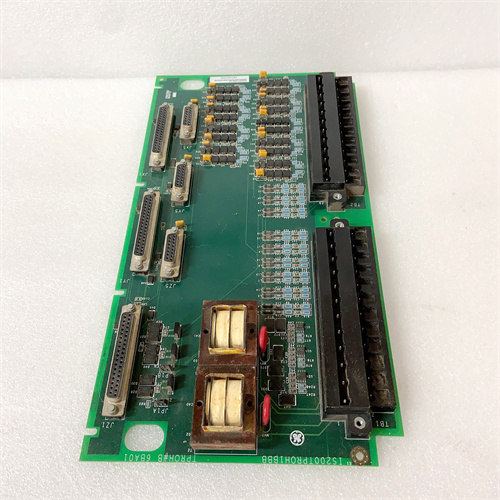
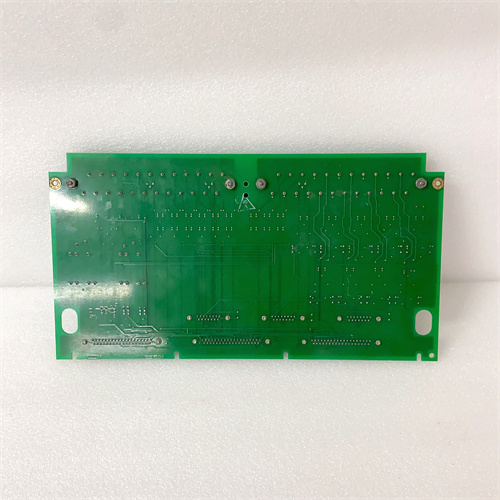
SCHNEIDER 97-5750-000
Nor-Cal ESVP-1502-NWB-5
Siemens FSP400-60PFI
Honewell CC-TAIX11


Reviews
There are no reviews yet.