
.jpg "IS200WETBH1ABA(3)")
Description
Technical Specifications
| Parameter Category | Specific Specification |
|---|---|
| Manufacturer | General Electric (GE) |
| Product Model | IS200DSPXH2BEB |
| Series | Mark VI / Speedtronic™ |
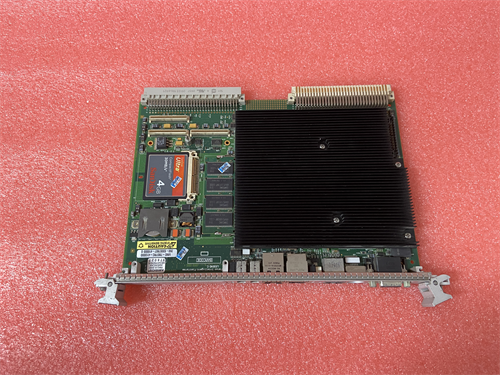
| Processor Core | Texas Instruments (TI) TMS320C3x series floating-point DSP, clock speed 40–60 MHz |
| Onboard Memory | 512 KB SRAM (program storage) + 512 KB Flash (firmware permanent storage) |
| Communication Interfaces | 2× serial RS-485 ports, 1× Ethernet 10Base-T (RJ45), 1× VME backplane bus interface (P1/P2 connectors) |
| I/O Expansion Capability | Supports up to 64 analog/digital channel expansion via backplane bus |
| Power Requirements | +5 V DC / 3.5 A (typical), +12 V DC / 0.5 A (auxiliary) |
| Operating Temperature Range | -30°C to +65°C (industrial wide-temperature version) |
| Storage Temperature | -40°C to +85°C |
| Relative Humidity | 5% to 95% (non-condensing) |
| Vibration/Shock Resistance | Complies with IEC 60068-2-6 (5g peak, 10–500 Hz) |
| Dimensions (H × W × D) | 6U VME form factor (233 mm × 160 mm × 20 mm) |
| Firmware Upgrade Method | Online programming via Ethernet or serial port (supports remote updates) |
| Redundancy Support | Dual-redundant DSP configuration (requires hot-standby mode with paired IS200DSPXH2BEB boards) |
Advantages and Key Features
Ultra-High Real-Time Performance: Built upon the TI TMS320C3x floating-point DSP architecture, the IS200DSPXH2BEB executes PID regulation, fuel valve characteristic curve compensation, and flame detection algorithms at microsecond-level cycle times, meeting the stringent timing requirements of gas turbines from startup to full-load step response.
Robust Redundancy Design: Supports “active-standby” or “active-active” redundant operating modes. When the primary IS200DSPXH2BEB experiences a fault, the backup board can assume control authority within 50 ms with seamless transfer, dramatically improving unit availability (>99.99%).
Comprehensive Environmental Hardening: Featuring conformal coating (moisture-proof, salt-fog-proof, and fungus-proof) and reinforced PCB substrate materials, the IS200DSPXH2BEB maintains stable long-term operation in high-vibration, high-temperature, and high-EMI environments typical of turbine generator halls.
Flexible Communication Ecosystem: With dual RS-485 ports and an Ethernet interface, the IS200DSPXH2BEB can simultaneously communicate with the human-machine interface (HMI), distributed control system (DCS), and intelligent field devices via Modbus RTU/TCP protocols, simplifying system integration.
Diagnostic and Self-Monitoring Capabilities: Onboard voltage/temperature monitoring circuits and a built-in watchdog timer enable the IS200DSPXH2BEB to perform continuous health checks and automatically generate alarm logs upon anomaly detection, significantly reducing mean time to repair (MTTR).
Application Fields and Case Studies
Primary Application Fields: Power generation (heavy-duty gas turbine control for GE Frame 6B/7E/9E series, steam turbine speed and extraction control, combined-cycle plant coordination); Oil & gas (compressor surge protection, pipeline pumping station automation, LNG liquefaction process control); Marine and propulsion (shipboard gas turbine propulsion control systems); Industrial cogeneration (waste heat recovery boiler drum level control and fuel-air ratio management).
Typical Application Case: In a 300 MW combined-cycle power plant, a pair of IS200DSPXH2BEB boards were configured in active-standby redundancy to govern a GE Frame 9E gas turbine. The primary IS200DSPXH2BEB executed the fuel scheduling algorithm at a 10 ms control cycle while simultaneously communicating with the excitation system and the DCS via Modbus TCP. During a simulated grid frequency disturbance (50 Hz → 47 Hz), the IS200DSPXH2BEB responded within 80 ms, adjusting the fuel stroke reference to restore turbine speed to setpoint, well within the grid code requirement of 150 ms. The standby board performed continuous background self-tests and took over seamlessly during a scheduled firmware upgrade without any load interruption.
Comparison with Competing Products
| Comparison Dimension | IS200DSPXH2BEB (GE Mark VI) | Competitor A (Siemens T403 Series) | Competitor B (Woodward 505 Series) |
|---|---|---|---|
| Processor Architecture | TI TMS320C3x Floating-Point DSP | Infineon TriCore Fixed-Point | Motorola 68K Series |
| Maximum Control Cycle | 5 ms (typical) | 20 ms | 50 ms |
| Redundancy Switching Time | < 50 ms | < 200 ms | < 500 ms |
| Operating Temperature | -30°C to +65°C | -25°C to +55°C | -20°C to +60°C |
| Communication Protocols | Modbus RTU/TCP, proprietary GE HMI | PROFIBUS, PROFINET | Modbus RTU only |
| Firmware Upgrade | Online, hot-swappable supported | Offline required | Offline required |
| Mean Time Between Failures (MTBF) | > 150,000 hours | ~100,000 hours | ~80,000 hours |
| Typical Market Price Range | Premium tier | Mid-tier | Economy tier |
The IS200DSPXH2BEB clearly outperforms competitors in real-time responsiveness, redundancy speed, and environmental ruggedness, making it the preferred choice for critical turbine control applications despite its higher cost. While Competitor A offers better integration with Siemens ecosystems and Competitor B provides a lower initial investment, neither matches the IS200DSPXH2BEB in terms of deterministic performance and field-proven reliability across decades of deployment.
Selection Recommendations
For new turbine control system projects, prioritize the IS200DSPXH2BEB if your application involves single-shaft or multi-shaft heavy-duty gas turbines with rapid load change requirements (e.g., grid frequency regulation or black-start capability). For steam turbine retrofits where speed control accuracy is paramount, the IS200DSPXH2BEB provides superior governor response compared to legacy analog controllers. When upgrading from older Mark V or Mark IV systems, the IS200DSPXH2BEB offers a direct migration path with backward compatibility for existing I/O terminations. For combined-cycle plants requiring coordinated control between gas and steam turbines, a dual-redundant configuration of IS200DSPXH2BEB boards is strongly recommended to ensure system availability. Additionally, always verify your existing Mark VI rack firmware revision and backplane compatibility before purchasing, as early revision racks may require a passive adapter for the IS200DSPXH2BEB.
Precautions and Important Notes
First, ensure proper electrostatic discharge (ESD) protection during handling and installation of the IS200DSPXH2BEB, as the onboard CMOS components are sensitive to static damage. Always use a grounded wrist strap and anti-static work surface. Second, confirm that the system power supply meets the +5 V DC / 3.5 A and +12 V DC / 0.5 A requirements with less than 5% ripple; inadequate or noisy power can cause erratic DSP behavior or permanent board damage. Third, when performing firmware upgrades on the IS200DSPXH2BEB, never interrupt the power cycle during the flashing process; a corrupted bootloader will require factory repair. Fourth, operate the IS200DSPXH2BEB strictly within its rated temperature range (-30°C to +65°C); prolonged exposure beyond limits will degrade electrolytic capacitors and reduce MTBF significantly. Fifth, always maintain at least one spare IS200DSPXH2BEB in inventory for critical installations, as lead times for GE legacy parts can extend beyond 12 weeks. Sixth, before integrating the IS200DSPXH2BEB into an existing Mark VI system, verify that all connected I/O termination boards (e.g., IS200TRLYH1B, IS200TBAS series) are compatible with the DSP firmware version to avoid communication handshake failures. Finally, document all configuration parameters (PID gains, fuel curve breakpoints, network IP settings) prior to board replacement to expedite re-commissioning and minimize downtime.
.jpg)
.jpg)
SCHNEIDER 140ARI03010
A-B 1747-ASB
A-B 1756-IF16/A
A-B 1746-P4


Reviews
There are no reviews yet.