
Description
Product Description
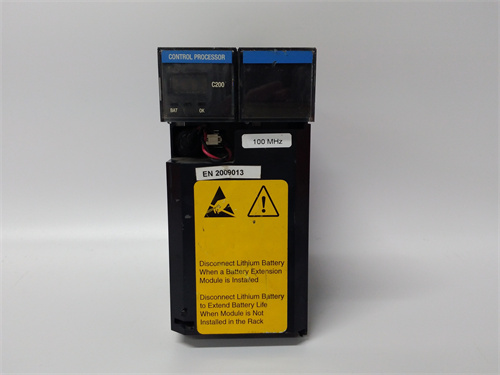
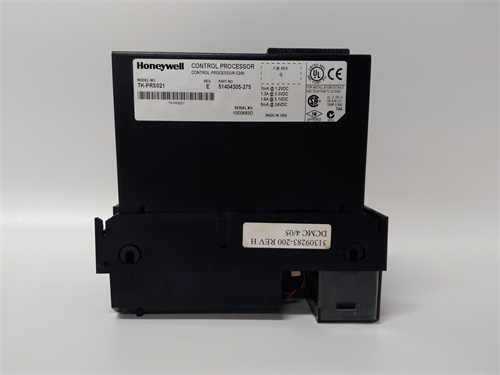
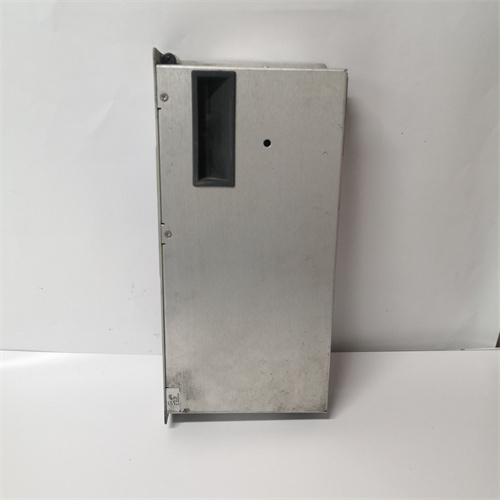
The HONEYWELL TK-PRS021 is a specialized Pressure Transmitter designed for integration into Honeywell’s building automation and control systems, such as those based on the Niagara Framework. This device, the HONEYWELL TK-PRS021, is a critical sensing component used to measure air or gas pressure in HVAC (Heating, Ventilation, and Air Conditioning) applications. It converts a physical pressure reading into a standardized analog electrical signal, typically 0-10 VDC or 4-20 mA, which is then read by a controller (like a Honeywell Spyder or WEBs-AX controller) to monitor and control building systems. The primary function of the HONEYWELL TK-PRS021 is to provide accurate and reliable pressure data for maintaining proper airflow, filter monitoring, and building pressurization. Its compact and robust design makes it suitable for direct installation in ducts, plenums, or across filters.
Product Parameters
The technical specifications for the HONEYWELL TK-PRS021 pressure transmitter are tailored for building automation:
-
Sensor Type: Piezoresistive or capacitive sensing element.
-
Measurement Type: Gage pressure (pressure relative to atmospheric pressure).
-
Pressure Range: Available in specific ranges suitable for HVAC, such as 0-1″ w.c. (0-250 Pa), 0-2″ w.c., or 0-5″ w.c. for low-pressure airflow applications.
-
Output Signal: Standard analog output, typically 0-10 VDC or 4-20 mA, 2-wire.
-
Power Supply: Required supply voltage for the transmitter, typically 15-35 VDC for voltage output models or 12-35 VDC for 2-wire 4-20 mA loop-powered models.
-
Accuracy: High accuracy, often ±1% of full scale or better, including the effects of non-linearity, hysteresis, and repeatability.
-
Operating Temperature: Designed for standard HVAC environments, typically -40°F to 140°F (-40°C to 60°C).
-
Media Compatibility: Compatible with air and non-corrosive gases.
-
Electrical Connection: Typically uses a removable terminal block for easy wiring.
-
Mounting: Features integrated mounting tabs or a built-in bracket for easy installation in a duct or on a wall.
Advantages and Features
The HONEYWELL TK-PRS021 offers several key benefits for building management:
-
High Accuracy and Stability: Engineered to provide precise and stable pressure readings over time, which is essential for maintaining optimal HVAC system performance and energy efficiency.
-
Easy Installation and Configuration: The HONEYWELL TK-PRS021 features a compact design, clear terminal designations, and often a zero/span adjustment potentiometer, simplifying setup and calibration in the field.
-
Robust Industrial Design: Built to withstand the vibration, temperature variations, and occasional moisture found in mechanical rooms and air handling units.
-
Seamless System Integration: As a Honeywell product, it is designed to work flawlessly with Honeywell controllers and software, ensuring reliable communication and straightforward configuration within the Niagara or WEBs-AX engineering environment.
-
Versatile Application: Suitable for a wide range of HVAC pressure measurement tasks, from simple filter monitoring to complex variable air volume (VAV) control sequences.
Application Cases in Industry
This pressure transmitter is widely used in commercial and institutional building systems:
-
Variable Air Volume (VAV) System Control: Measures duct static pressure to control the speed of a supply fan via a variable frequency drive (VFD), maintaining a constant pressure in the duct system as VAV boxes open and close.
-
Filter Monitoring: Installed across air filters (differential pressure) to signal when filters are dirty and need replacement, preventing excessive energy use and maintaining air quality.
-
Building Pressurization Control: Used to measure differential pressure between a building interior and exterior or between different zones (e.g., hospital isolation rooms) to control airflows and maintain proper pressurization.
-
Airflow Measurement and Balancing: Employed with an airflow station (pilot tube array) to measure total airflow in a duct for commissioning and ongoing monitoring.
-
Fume Hood and Laboratory Control: Critical for measuring face velocity or room pressure in laboratories to ensure safety containment.
Comparisons with Competing Products
When compared to generic pressure transducers or transmitters from other HVAC brands, the HONEYWELL TK-PRS021 offers specific advantages:
-
Optimized for Building Automation Protocols: While a generic 4-20 mA transmitter will work, the HONEYWELL TK-PRS021 is part of a complete ecosystem. Its specifications (range, output) are ideally matched to common HVAC controller inputs, and its form factor is designed for standard HVAC installation practices.
-
Superior Long-Term Stability and Quality: Honeywell’s manufacturing and calibration processes often result in better long-term drift performance and overall reliability compared to lower-cost, generic alternatives, reducing maintenance and recalibration needs.
-
Integrated Support and Documentation: Provides access to Honeywell’s comprehensive application guides, wiring diagrams, and technical support specific to building automation, which is not available for a generic industrial sensor.
-
Simplified Procurement and Specification: For consultants and engineers specifying Honeywell systems, using the TK-PRS021 ensures a single-vendor responsibility for the sensor-controller loop, simplifying design and procurement.
Selection Suggestions and Precautions
Proper selection and installation are key to accurate measurement:
-
Select the Correct Pressure Range: Choose the HONEYWELL TK-PRS021 variant with a range that is 1.5 to 2 times your normal operating pressure. This ensures good resolution at the operating point and protects the sensor from overpressure damage during system surges.
-
Match Output Signal to Controller: Verify your controller’s input card accepts either a 0-10V or 4-20 mA signal, and select the corresponding TK-PRS021 model. The 4-20 mA model is generally preferred for longer wire runs due to its noise immunity.
-
Ensure Proper Mounting: Mount the transmitter in a location representative of the pressure you need to measure. For duct static pressure, mount on a straight section of duct, away from elbows, dampers, or fans. Use the static pressure tap correctly.
-
Calibrate and Zero: Before placing into service, perform a zero calibration (especially for differential pressure applications). Adjust the zero potentiometer (if available) with the system off or at a known neutral pressure state.
-
Protect from Condensation and Particulates: In dirty or humid environments, use tubing and a condensation trap or a siphon to protect the sensor’s diaphragm from water droplets and debris.
MVI56-MNETR PLC
10A6131NB1B PLC
CP451-50 PLC
VI702DCS3000 PLC
F650BFBF1G0HICE
MVI69-AFC
YT204001-JF-YXU167G PLC
YPQ201A-YT204001-KA PLC
Reviews
There are no reviews yet.