
Description
Product Overview and Description
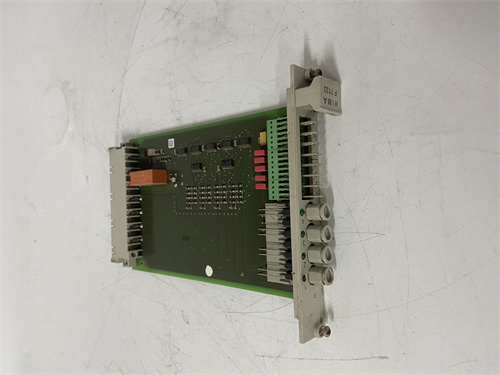
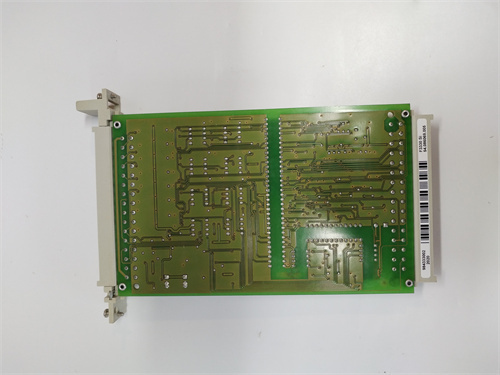
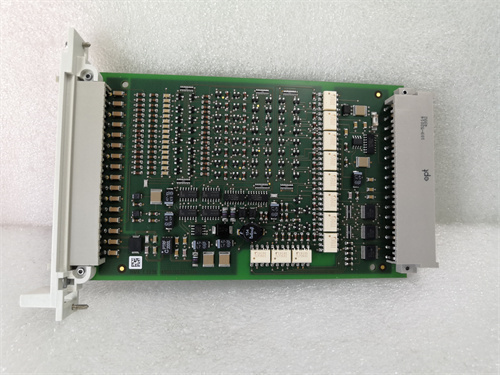
The HIMA F7133 is a critical I/O module from HIMA, a world-leading specialist in safety-critical automation systems. Specifically, it is a digital input module belonging to the highly respected HIMax safety system platform. Unlike standard PLC modules, the HIMA F7133 is engineered and certified for use in Safety Instrumented Systems (SIS) and Emergency Shutdown (ESD) systems, where its primary function is to reliably and securely read the status of field devices like emergency stop buttons, pressure switches, flame detectors, or valve position limit switches. The module’s design follows rigorous safety standards (e.g., IEC 61508, IEC 61511) to achieve a high Safety Integrity Level (SIL 3 or SIL 4), ensuring it can detect internal faults and drive the system to a safe state. Implementing a HIMA F7133 module is a fundamental step in building a fault-tolerant safety loop, providing the essential link between hazardous area sensors and the logic solver. The reliability and diagnostic capabilities of the HIMA F7133 make it a cornerstone component in industries where failure is not an option.
Product Parameters and Specifications
-
Product Type: Safety Digital Input Module
-
Manufacturer Part Number (MPN): F7133
-
Brand: HIMA
-
System Compatibility: HIMax Safety System
-
Safety Certification: Typically certified for SIL 3 according to IEC 61508 / IEC 61511.
-
Number of Channels: Commonly 8 or 16 channels per module (exact channel count depends on the specific F7133 variant).
-
Input Type: Dry contact (NAMUR) or voltage-sourcing inputs (e.g., 24V DC). Designed for connection to intrinsically safe (IS) barriers when used in hazardous areas.
-
Function: Monitors the open/closed state of field contacts. Includes advanced diagnostics for channel failures, wire breaks, short circuits, and cross-circuit faults.
-
Response Time: Very fast and predictable, suitable for critical shutdown applications.
-
Power Supply: Powered via the HIMax system backplane.
-
Communication: Interfaces with the central processing modules via the internal safety-oriented bus system.
-
Status Indicators: Per-channel LEDs and module status LEDs for power, communication, and fault indication.
Key Advantages and Features
The HIMA F7133 module’s paramount advantage is its built-in high safety integrity and comprehensive diagnostics. It employs redundant internal circuits and continuous self-testing to detect potentially dangerous hidden failures, a process central to maintaining a high Safe Failure Fraction (SFF). Its galvanic isolation between channels and from the system bus prevents fault propagation. The module is designed for high noise immunity in electrically harsh industrial environments. A key feature is its support for forced status functionality for offline testing and simulation during system maintenance without affecting the live process. The HIMA F7133 offers flexible configuration for different sensor types (e.g., NAMUR, 2-wire transmitters) and de-bounce times. Its robust construction and proven design ensure long-term availability and reliability, which are non-negotiable in safety systems.
Application Scenarios and Use Cases
The HIMA F7133 is deployed exclusively in safety-critical shutdown and protection systems across high-hazard industries. In Oil & Gas, it is used on offshore platforms and onshore refineries to monitor Emergency Shutdown (ESD) pushbuttons, gas detection sensors, and fire & gas system initiators. In Chemical and Petrochemical plants, it reads inputs from high-pressure/high-temperature switches and safety interlock switches on reactor systems. In Power Generation, particularly in turbine protection, the HIMA F7133 monitors overspeed detectors, lube oil pressure switches, and vibration switches. It also finds application in burner management systems (BMS) for boilers and furnaces, where it reads flame scanner and purge status signals. Any application requiring a SIL 2, SIL 3, or SIL 4 certified input for a Safety Instrumented Function (SIF) is a primary use case for this module.
Comparison with Competing Products
Compared to standard digital input modules from mainstream PLC manufacturers (e.g., Siemens ET200, Rockwell Point I/O), the HIMA F7133 is in a different class, as it is a safety-certified module for dedicated SIS. Competing products are safety modules from other SIS specialists like Rockwell (GuardLogix), Siemens (S7-400F/FH, ET200proF), or ABB (Symphony Plus S+). The HIMA F7133 differentiates itself through HIMA’s singular focus on independent safety systems, often offering higher possible SIL levels and more extensive inherent diagnostics than safety modules from general automation vendors. Its architecture is based on a dedicated safety controller (HIMax), whereas some competitors offer integrated safety within a standard PLC platform. The choice often revolves around a corporate standard for independent versus integrated safety controllers.
Selection Guidelines and Important Notes
Selection Advice:
-
Determine Safety Requirements: The HIMA F7133 must be selected based on a Safety Requirement Specification (SRS) that defines the needed Safety Integrity Level (SIL) for each loop.
-
Verify Exact Variant: Confirm the specific HIMA F7133 variant (e.g., channel count, input type: NAMUR or voltage). Using the wrong input type for your field device can be unsafe.
-
Check System Compatibility: Ensure the module is compatible with the existing HIMax CPU and baseplate/rack model in your system.
-
Plan for Certification: The entire safety loop, including sensors, the HIMA F7133, logic solver, and final elements, must be validated. Keep the module’s safety manual and certification documents for audit purposes.
Important Precautions:
-
Safety System Regulations: Installation, configuration, and modification of a HIMA F7133 module must only be performed by trained and authorized safety system engineers.
-
Follow Safety Manual: The official HIMA safety manual for the F7133 is the governing document. It contains critical information about safe installation, operation, and maintenance.
-
Testing Procedures: Regular proof testing of the entire safety loop, as per the SRS, is legally and operationally mandatory. The module’s diagnostics support but do not replace functional testing.
-
Bypasses and Forces: The use of software forces or hardware bypasses must be strictly controlled under a formal permit-to-work procedure.
-
Wiring Integrity: Use correct, approved cabling and ensure proper separation from non-safety signals to maintain the loop’s integrity.
-
Never Substitute: A standard input module must never be used to replace a safety-rated HIMA F7133 module.
GJR5252300R0101
GJR5252200R0101
GJR5252100R3261
GJR5252100R0261
GJR5252100R0161
GJR5252100R0101
GJR5251600R0202

Reviews
There are no reviews yet.