
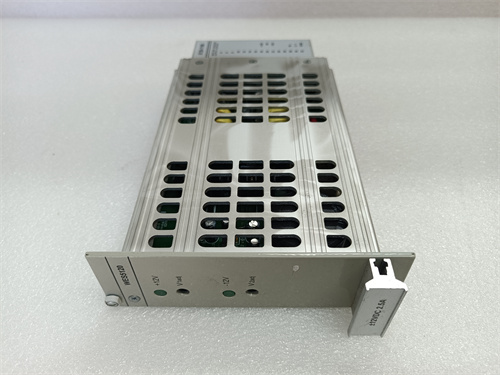
Description
GE WES5120 2340-21005 Product Analysis
Product Description
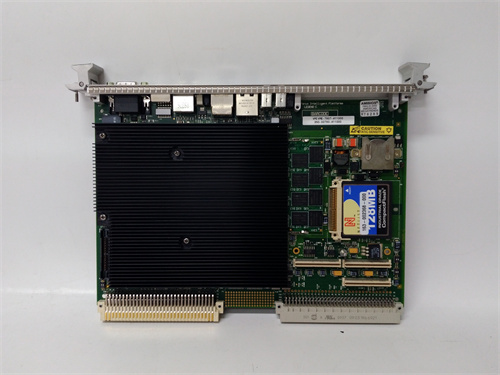
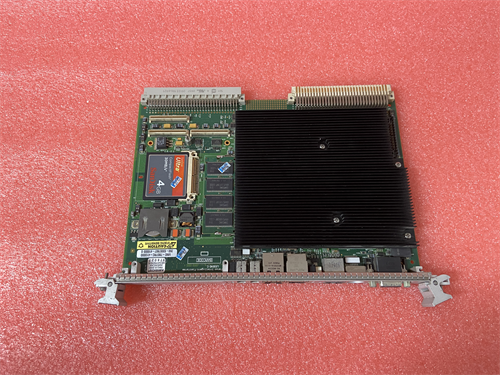
The GE WES5120 2340-21005 is a specialized communication processor module designed for use within GE’s WESeries product line, which encompasses critical infrastructure protection and control systems. This specific model, identified by the part number 2340-21005, represents a variant of the WES5120 family engineered for demanding applications in electric power substations, industrial facilities, and infrastructure automation. The GE WES5120 2340-21005 serves as a high-performance communication interface, enabling seamless data exchange between protection relays, metering devices, PLCs, and higher-level control systems such as SCADA (Supervisory Control and Distribution Automation) platforms. As a component of GE’s comprehensive automation portfolio, the GE WES5120 2340-21005 is built to meet the rigorous requirements of modern power system automation, including support for multiple communication protocols, robust cybersecurity features, and exceptional reliability in harsh environmental conditions. This module is essential for applications requiring reliable, high-speed data communication in mission-critical infrastructure.
Parameters and Specifications
The following are the typical parameters and specifications for the GE WES5120 2340-21005 communication processor module. Specific configurations may have variations, and consulting the official GE documentation is always recommended for precise technical data.
-
Product Type: Communication processor / gateway module for power system automation and industrial control applications.
-
Processor Core: High-performance embedded processor optimized for communication protocol conversion and data handling, typically featuring a PowerPC or similar architecture with ample processing capacity for multiple simultaneous communication tasks.
-
Communication Ports: The GE WES5120 2340-21005 typically includes a comprehensive set of physical interfaces:
-
Ethernet Ports: Multiple 10/100BaseTX Ethernet ports with RJ45 connectors for LAN connectivity, often including support for redundant network topologies.
-
Serial Ports: Multiple RS-232 and RS-485 serial ports for connecting to legacy devices, protection relays, and metering equipment.
-
Fiber Optic Ports: ST or SC-type fiber optic connectors for noise-immune, long-distance communication in substation environments.
-
USB Ports: For local configuration, firmware updates, and data retrieval.
-
-
Supported Protocols: The GE WES5120 2340-21005 supports a wide range of industrial and utility communication protocols:
-
IEC 61850: The international standard for substation automation, including MMS (Manufacturing Message Specification) and GOOSE (Generic Object-Oriented Substation Event) messaging.
-
DNP3: Distributed Network Protocol, widely used in North American utilities for SCADA communications, both serial and LAN/WAN variants.
-
Modbus: RTU, ASCII, and TCP/IP versions for industrial device connectivity.
-
IEC 60870-5-101/103/104: International standards for telecontrol equipment and systems.
-
Proprietary GE Protocols: For seamless integration with GE protection relays and control devices.
-
-
Protocol Conversion Capability: The primary function of the GE WES5120 2340-21005 is to translate between different protocols, enabling devices that speak different languages to communicate effectively. For example, it can convert Modbus from legacy devices to IEC 61850 for modern SCADA systems.
-
Data Handling Capacity: Designed to handle thousands of data points (analog inputs, status points, control outputs) with efficient data mapping and processing capabilities.
-
Cybersecurity Features: Built with security in mind, including:
-
Role-based access control
-
Authentication and encryption support
-
Audit logging
-
Integration with cybersecurity monitoring systems
-
-
Time Synchronization: Supports precision time protocols including SNTP (Simple Network Time Protocol) and IRIG-B for accurate time-stamping of events across the automation system.
-
Environmental Ratings:
-
Operating temperature: -40°C to +70°C (-40°F to +158°F) for substation-hardened applications
-
Storage temperature: -40°C to +85°C (-40°F to +185°F)
-
Humidity: 5% to 95% relative humidity, non-condensing
-
Vibration and shock resistance per IEC 60255 and IEEE 1613 standards for substation equipment
-
-
Mounting: Typically designed for DIN-rail mounting or panel mounting within control cabinets or substation racks.
-
Power Supply: Wide-range DC input, typically 24-125 VDC or 110-240 VAC/VDC, with redundant power input options for high-availability applications.
-
Certifications: Compliant with relevant industry standards including IEEE 1613 (environmental and testing requirements for substation communication devices), IEC 61850-3, and appropriate safety and EMC standards.
Advantages and Features
The GE WES5120 2340-21005 offers numerous advantages and features that make it an essential component in modern power system and industrial automation architectures.
-
Multi-Protocol Gateway Functionality: The standout feature of the GE WES5120 2340-21005 is its ability to bridge the gap between different communication protocols. In a typical substation, there may be protection relays using IEC 61850, older relays using Modbus, meters using DNP3, and a SCADA system requiring yet another protocol. The GE WES5120 2340-21005 consolidates all these disparate devices into a unified communication architecture, translating between protocols in real-time and presenting a consistent interface to the control center.
-
Substation-Hardened Design: Unlike commercial-grade networking equipment, the GE WES5120 2340-21005 is engineered to survive and operate reliably in the harsh environment of electrical substations. It withstands extreme temperatures, electromagnetic interference from high-voltage switching, vibration, and other challenges that would quickly destroy standard IT equipment. This ruggedization ensures that critical communication links remain operational when they are needed most.
-
IEC 61850 Excellence: As power utilities worldwide transition to IEC 61850 as the standard for substation automation, the GE WES5120 2340-21005 provides comprehensive support for this complex standard. It handles the high-speed peer-to-peer communication required for GOOSE messaging, which is essential for protection schemes that require sub-3-millisecond communication between relays. The module’s efficient implementation of the IEC 61850 stack ensures that protection and control applications meet their stringent timing requirements.
-
Future-Proofing Infrastructure: By deploying the GE WES5120 2340-21005, utilities can modernize their communication infrastructure while preserving investment in legacy equipment. Older relays with serial Modbus or DNP3 interfaces can continue to operate and provide valuable data to modern SCADA systems through the protocol conversion capabilities of the GE WES5120 2340-21005. This bridging capability enables phased migrations to new technologies without the need for costly “rip and replace” projects.
-
Comprehensive Diagnostics and Troubleshooting: The GE WES5120 2340-21005 includes extensive diagnostic capabilities that simplify network troubleshooting. Built-in protocol analyzers, traffic monitoring, and event logging allow engineers to quickly identify communication problems, whether they originate in the field devices, the network infrastructure, or the master station.
-
Cybersecurity for Critical Infrastructure: With increasing threats to critical infrastructure, the cybersecurity features of the GE WES5120 2340-21005 are essential. The module implements defense-in-depth strategies including device hardening, secure communications, and integration with security monitoring systems. These features help utilities comply with NERC CIP (North American Electric Reliability Corporation Critical Infrastructure Protection) requirements and other regulatory mandates.
-
Redundancy and High Availability: The GE WES5120 2340-21005 supports redundant network topologies and can be configured in hot-standby pairs for applications where communication cannot be interrupted. With redundant power supplies and support for Rapid Spanning Tree Protocol (RSTP) or other redundancy protocols, the module ensures that critical data continues to flow even in the event of network failures or component faults.
Application Cases
The capabilities of the GE WES5120 2340-21005 make it suitable for a wide range of applications in power system automation and industrial infrastructure.
-
Substation Integration and Automation: In electrical transmission and distribution substations, the GE WES5120 2340-21005 serves as the central communication hub, connecting protection relays, bay controllers, transformers, and switchgear to the substation HMI and the utility’s SCADA system. It aggregates thousands of data points from intelligent electronic devices (IEDs), performs protocol conversion as needed, and presents a unified view of substation status to operators. The GE WES5120 2340-21005 handles both the real-time control communications and the non-real-time reporting and configuration traffic.
-
Renewable Energy Integration: Wind farms and solar power plants present unique communication challenges, with numerous distributed generation units spread over large areas. The GE WES5120 2340-21005 collects data from inverters, meteorological stations, and grid interconnection equipment, converting between proprietary inverter protocols and utility-standard protocols like DNP3 or IEC 60870-5-104. This integration enables grid operators to monitor and control renewable generation assets effectively, supporting grid stability and maximizing energy production.
-
Hydroelectric and Thermal Power Plants: Within power generation facilities, the GE WES5120 2340-21005 integrates balance-of-plant systems with turbine controls, generator protection, and plant DCS (Distributed Control Systems). It collects data from vibration monitors, temperature sensors, and auxiliary systems, making this information available to operators and predictive maintenance systems. The module’s rugged design is particularly valuable in the challenging environments found in power plants.
-
Industrial Facility Power Management: Large industrial facilities with on-site power generation, cogeneration plants, or complex electrical distribution systems use the GE WES5120 2340-21005 to implement comprehensive power management systems. The module collects data from protective relays, power meters, and switchgear, feeding this information to energy management software that optimizes power usage, monitors power quality, and ensures reliable operation of critical processes.
-
Railway Electrification Systems: Railway traction power substations require robust communication systems to coordinate power delivery to trains. The GE WES5120 2340-21005 integrates protection relays, circuit breaker controllers, and SCADA systems along the railway line, ensuring that power is available when and where it is needed. The module’s ability to operate over long-distance fiber optic links and its immunity to traction power interference are particularly valuable in this application.
-
Oil and Gas Pipeline SCADA: Along oil and gas pipelines, communication equipment must operate reliably in remote locations with extreme temperatures and limited access. The GE WES5120 2340-21005 serves as the communication gateway at pipeline pumping stations and compressor stations, collecting data from pressure transmitters, flow meters, and valve controllers, and reporting to central SCADA systems via satellite, cellular, or microwave links.
Comparison with Competing Products
When compared to similar communication processors and gateway devices from competitors like Siemens (e.g., SICAM A8000 series), Schweitzer Engineering Laboratories (e.g., SEL-3355 or SEL-3620), ABB (e.g., COM600 series), and NovaTech (e.g., Orion series), the GE WES5120 2340-21005 presents distinct characteristics.
-
GE Ecosystem Integration: A primary advantage of the GE WES5120 2340-21005 is its seamless integration with GE’s extensive portfolio of protection relays, controllers, and software. The module includes native support for GE’s proprietary protocols and data models, simplifying configuration and ensuring optimal performance when used with GE field devices. For utilities with significant installed bases of GE equipment, this integration provides substantial benefits in engineering efficiency and system reliability compared to generic gateway products.
-
Protocol Support Breadth: While all major communication processors support common protocols, the GE WES5120 2340-21005 offers particularly comprehensive support for the full range of utility protocols, including deep implementation of IEC 61850 features. Its handling of GOOSE messaging for protection applications, including support for Goose Publisher/Subscriber configurations and Goose dataset management, is especially robust. This depth of protocol implementation distinguishes the GE WES5120 2340-21005 from general-purpose industrial gateways that may only implement basic IEC 61850 functionality.
-
Substation Hardening Level: The GE WES5120 2340-21005 meets or exceeds the stringent requirements of IEEE 1613 and IEC 61850-3 for substation communication equipment. While many competing products claim industrial-grade construction, the GE WES5120 2340-21005 is specifically tested and certified for the extreme conditions found in electric utility substations, including high electromagnetic interference, wide temperature swings, and power quality variations. This certification provides utilities with confidence in long-term reliability.
-
Configuration and Engineering Tools: GE’s engineering software for the GE WES5120 2340-21005 provides a comprehensive environment for system configuration, data mapping, and diagnostics. The software’s intuitive interface for defining protocol conversions, setting up data point mappings, and visualizing communication flows reduces engineering time and minimizes configuration errors. While competing products offer similar tools, the integration with GE’s broader engineering ecosystem provides additional value for GE-centric users.
-
Long-Term Support and Lifecycle Management: GE’s commitment to the utility market includes extended product lifecycles and long-term support for products like the GE WES5120 2340-21005. This commitment is particularly important for infrastructure projects that may have design, construction, and operational phases spanning decades. Utilities can standardize on the GE WES5120 2340-21005 with confidence that it will be available and supported for the life of their projects.
-
Cybersecurity Certification: With increasing regulatory focus on cybersecurity in critical infrastructure, the GE WES5120 2340-21005 includes features and certifications that address these requirements. Its security architecture aligns with NERC CIP standards and incorporates best practices from IEC 62351 (cybersecurity for power system communications). For utilities subject to regulatory oversight, these capabilities simplify compliance efforts compared to products designed primarily for non-regulated industrial applications.
Selection Suggestions and Precautions
Selecting the right GE WES5120 2340-21005 configuration and ensuring its proper operation requires careful consideration of several factors.
-
Sizing and Selection:
-
Communication Requirements Analysis: Begin with a thorough inventory of all devices that will communicate through the GE WES5120 2340-21005. Document their physical interfaces (Ethernet, serial, fiber), communication protocols, data point counts, and update rates. This analysis will determine the required number and type of ports on the GE WES5120 2340-21005 and its data handling capacity.
-
Protocol Conversion Needs: Identify all protocol conversions required in your application. The GE WES5120 2340-21005 supports many protocols, but verify that all required source-to-destination protocol pairs are supported. Pay particular attention to any proprietary protocols from non-GE devices that may require special consideration.
-
Performance Requirements: Consider the performance requirements of your application, especially for time-critical functions like protection schemes using GOOSE messaging. The GE WES5120 2340-21005 must process and forward messages within the timing constraints of your application. For protection applications, ensure that the module’s latency and throughput meet the requirements of the overall scheme.
-
Scalability and Future Expansion: Select a GE WES5120 2340-21005 configuration that provides capacity for future expansion. Communication requirements often grow over time as new devices are added and monitoring becomes more sophisticated. Choosing a model with spare port capacity and processing headroom avoids the need for premature replacement.
-
Redundancy Requirements: Determine whether your application requires redundant communication paths. If so, select a GE WES5120 2340-21005 configuration that supports the appropriate redundancy mechanisms, such as dual power supplies, support for RSTP or PRP (Parallel Redundancy Protocol), and the ability to operate in hot-standby pairs.
-
-
Installation Precautions:
-
Environmental Assessment: Verify that the installation location for the GE WES5120 2340-21005 meets the module’s environmental specifications for temperature, humidity, and other factors. In substation applications, pay particular attention to temperature extremes and ensure adequate ventilation or heating as needed.
-
Power Supply Verification: Ensure that the power supply feeding the GE WES5120 2340-21005 meets the module’s voltage and current requirements and provides clean, stable power. Consider using uninterruptible power supplies (UPS) or station battery systems for critical applications where communication must be maintained during AC power interruptions.
-
Grounding and Bonding: Proper grounding is essential for the reliable operation of the GE WES5120 2340-21005, particularly in high-EMI environments like substations. Follow GE’s recommendations for grounding the module, and ensure that all connected devices share a common reference ground to avoid ground loops and communication errors.
-
Cable Routing and Segregation: Route communication cables connected to the GE WES5120 2340-21005 with care, maintaining separation from power cables and other sources of electrical noise. For serial and Ethernet cables, follow recommended practices for cable type, shielding, and termination. For fiber optic cables, observe minimum bend radii and avoid stress on connectors.
-
Physical Security: Install the GE WES5120 2340-21005 in a location with appropriate physical security, such as locked cabinets or equipment rooms. Given its role in critical infrastructure communication, unauthorized physical access could compromise both security and reliability.
-
-
Configuration and Commissioning:
-
Network Design: Develop a comprehensive network design before configuring the GE WES5120 2340-21005. Plan IP addressing, subnet structures, routing (if applicable), and any network redundancy mechanisms. Document this design for future reference and troubleshooting.
-
Security Configuration: Implement appropriate security measures on the GE WES5120 2340-21005 before connecting it to operational networks. Change default passwords, disable unused services, configure access control lists, and enable audit logging. Follow GE’s security recommendations and any applicable utility or regulatory requirements.
-
Data Point Mapping: Carefully plan and document the mapping of data points from field devices through the GE WES5120 2340-21005 to the SCADA or control system. Consistent, well-documented naming conventions simplify ongoing maintenance and troubleshooting.
-
Testing and Validation: Thoroughly test all communication paths through the GE WES5120 2340-21005 before placing the system in service. Verify that all data points are being read correctly, that control commands execute as expected, and that timing requirements are met. Test failure scenarios, including device failures and network interruptions, to verify that the system responds appropriately.
-
Documentation: Maintain comprehensive documentation of the GE WES5120 2340-21005 configuration, including network settings, data point mappings, protocol configurations, and security settings. This documentation is essential for troubleshooting, maintenance, and future modifications.
-
-
Long-Term Considerations:
-
Spare Parts Strategy: For critical infrastructure applications, maintain an appropriate inventory of spare GE WES5120 2340-21005 modules. Consider the criticality of the application, the installed base of modules, and the manufacturer’s product lifecycle status when determining spare parts quantities.
-
Firmware Management: Establish a process for managing firmware updates on the GE WES5120 2340-21005. Monitor GE’s firmware release announcements, evaluate the impact of updates on your application, and plan for regular updates to address security vulnerabilities and improve functionality.
-
Obsolescence Planning: Monitor GE’s product lifecycle communications regarding the GE WES5120 2340-21005 and develop long-term obsolescence management plans. For systems expected to operate for many years, plan for technology refreshes that migrate to newer platforms while preserving investment in field devices and infrastructure.
-
Training and Competency: Ensure that personnel responsible for maintaining systems using the GE WES5120 2340-21005 have appropriate training in both the module itself and the broader communication protocols and networks it supports. Communication technology evolves rapidly, and ongoing training is essential for effective system support.
-
Periodic Review and Testing: Conduct periodic reviews of the GE WES5120 2340-21005 configuration and performance. Verify that security settings remain appropriate, that data point mappings are still correct, and that the module’s performance meets application requirements. Test backup and recovery procedures to ensure they work when needed.
-


PU0DO15RMH1S00 PLC DCS
QS1L01AA03301P0B
BP100RX PLC
68BA050VXT03B PLC
QS1L015Z178 PLC DCS
P50B05005DXX4ZE PLC DCS
FS1W075P00 PLC DCS


Reviews
There are no reviews yet.