
.jpg "RS-FS-9001(2)")
Description
Product Overview: The GE RS-FS-9001 Flow Sensor
The GE RS-FS-9001 is a flow sensor module from General Electric’s industrial sensing and control portfolio. This device is designed to detect and monitor the flow of liquids or gases within a pipe or conduit, providing a critical digital or analog signal to a PLC, controller, or monitoring system. The primary function of the GE RS-FS-9001 is to act as a sentinel for process integrity, triggering alarms, enabling safety interlocks, or providing feedback for control loops based on the presence, absence, or rate of fluid flow. Proper integration of the GE RS-FS-9001 into an automation system requires careful review of its specifications, available at the official GE RS-FS-9001 product information page.
Product Parameters and Technical Specifications
-
Sensing Principle: Typically utilizes a paddlewheel, turbine, or other mechanical flow-activated mechanism to generate a signal. Some variants may use thermal dispersion or other non-intrusive principles.
-
Output Signal: Commonly provides a discrete (on/off) switch signal or a pulsed frequency output proportional to flow rate. Specific models may offer analog current (4-20mA) or voltage (0-10V) outputs.
-
Flow Range: Defined by minimum and maximum detectable flow rates (e.g., 1 to 100 L/min), specific to the fluid type.
-
Process Connection: Features standard pipe thread connections (e.g., NPT, G-thread) for inline installation, with sizes such as 1/2″, 3/4″, or 1″.
-
Electrical Connection: Typically includes a conduit entry with flying leads or a quick-disconnect connector for power and signal wiring.
-
Material Compatibility: Wetted parts (body, sensor) are constructed from materials like brass, stainless steel, or engineered plastics compatible with specific fluids (water, oils, mild chemicals, air).
-
Power Supply: Operates on standard DC (e.g., 10-30V DC) or AC voltage, depending on the output type and internal electronics.
Advantages and Key Features
-
Reliable Flow Verification: Provides a direct, hardware-based confirmation of flow, which is essential for pump protection, cooling system monitoring, and process safety.
-
Simple Integration: The straightforward switch or pulse output of the GE RS-FS-9001 interfaces easily with the digital or high-speed counter inputs of virtually any PLC.
-
Robust Industrial Design: Built to withstand the vibration, pressure, and fluid compatibility challenges of industrial environments.
-
Low Maintenance: Models with mechanical sensing often feature a simple, field-serviceable design with few moving parts.
-
Cost-Effective Monitoring: Offers an economical solution for point-of-need flow detection compared to more complex totalizing flow meters.
Application Cases in Industry
-
Cooling System Monitoring: Detecting coolant flow failure to motors, transformers, pumps, or machining centers to trigger an alarm and prevent overheating.
-
Pump Protection and Control: Providing a “flow proven” signal to a PLC to confirm a pump has successfully started before allowing a downstream process to begin, or to detect dry-running conditions.
-
Lubrication Systems: Ensuring proper oil flow to bearings, gears, or compressors as part of a preventative maintenance or safety interlock circuit.
-
Chemical Dosing/Skid Control: Verifying that a diaphragm or dosing pump is operational and fluid is being delivered in batching or continuous processes.
-
HVAC and Building Management: Monitoring flow in chilled water or condenser lines to optimize chiller operation and detect blockages or pump failures.
Comparison with Competing Products
The GE RS-FS-9001 competes with similar flow switches from manufacturers like IFM (SM series), Gems Sensors (3100/3200 series), and Dwyer Instruments. Compared to some competitors, the GE RS-FS-9001 benefits from the GE brand’s broad industrial recognition and distribution network. Key differentiators often lie in specific construction materials, adjustable setpoint mechanisms (fixed vs. field-adjustable), the inclusion of a visual flow indicator, and the type of electrical connection offered. Against a full-featured flow transmitter, the RS-FS-9001 is a simpler, more cost-effective choice when only a switch point or basic rate indication is needed, rather than precise analog measurement or totalization.
Selection Suggestions and Precautions
-
Selection Advice: Select the GE RS-FS-9001 for applications requiring reliable on/off flow detection or basic rate monitoring for interlock and alarm purposes. Key selection criteria are: fluid type (for material compatibility), required flow setpoint, pipe size, process pressure/temperature, and the desired output signal (discrete vs. pulse).
-
Precautions:
-
Material Compatibility: Verify that all wetted materials of the sensor are chemically compatible with the process fluid to avoid corrosion or degradation.
-
Flow Orientation and Piping: Install the sensor according to manufacturer directives (e.g., horizontal vs. vertical orientation, required upstream/downstream straight pipe runs) to ensure accurate and reliable operation.
-
Setpoint Adjustment: If adjustable, set the flow trip point under actual operating conditions, considering factors like fluid viscosity and temperature which can affect the calibration.
-
Electrical Ratings: Ensure the switch output’s voltage and current ratings (for dry contact or solid-state models) are compatible with the connected PLC input module to avoid damage.
-
Reference Official Data: Always confirm the exact specifications, installation instructions, and wiring diagram from the official GE RS-FS-9001 documentation before procurement and installation.
-
.jpg)
.jpg)
BENTLY NEVADA 350092
BENTLY NEVADA 3500 60
BENTLY NEVADA 3500 42M
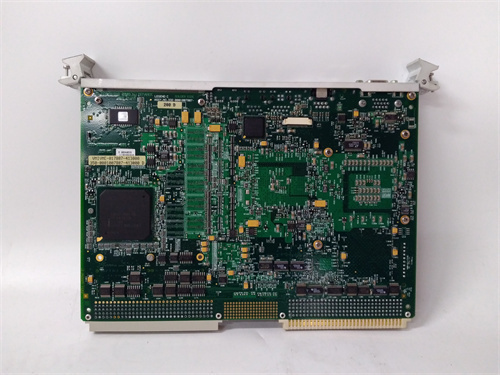
VMIVME-7807 VMIVME-017807-413000

.jpg)

Reviews
There are no reviews yet.