
Description
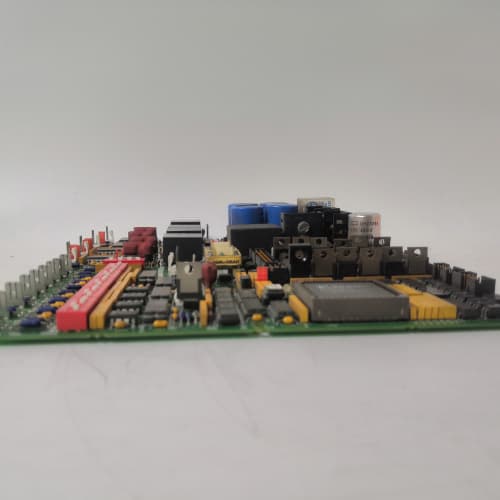
Product Parameters
Manufacturer & Series: General Electric (GE), Speedtronic Mark VIe series. Part Number: GE Mark VIe DS200ADGIG1AAA (the “AAA” suffix denotes base configuration with standard features). Power Supply: +5 VDC (logic) and ±15 VDC (analog circuitry) drawn from the Mark VIe VME64x backplane. Channel Configuration: 16 single-ended or 8 differential analog input channels, software-configurable via ToolboxST. Input Range: Software-selectable: ±10 V, ±5 V, 0-10 V, 0-5 V, or ±20 mA (with external shunt resistor). Resolution: 16-bit SAR ADC (effective resolution: up to 14.5 bits at maximum sampling rate). Sampling Rate: Up to 500 kHz aggregate (16 channels at 31.25 kHz each, or 8 channels at 62.5 kHz each). Input Impedance: >1 MΩ (voltage mode); 250 Ω (current mode with external shunt). Differential Input Specifications: Common-mode rejection ratio (CMRR): 85 dB typical; common-mode voltage range: ±12 V. Accuracy: ±0.05% of full scale (at 25°C); ±0.15% across full temperature range (-30°C to +65°C). Signal-to-Noise Ratio (SNR): 80 dB typical at 1 kHz input. Total Harmonic Distortion (THD): -75 dB typical. FIFO Buffer: 2 KB onboard FIFO for high-speed data buffering. Isolation: 2500 Vrms per-channel galvanic isolation between analog inputs and backplane logic (significantly higher than the standard 1500 Vrms of ADCIF series). Input Protection: Overvoltage protection up to ±60 VDC continuous (enhanced for high-isolation variants) and ESD protection up to 8 kV (contact discharge). Diagnostics: Over-range/under-range detection, missing channel detection, internal reference monitoring, ADC temperature monitoring, and isolation integrity monitoring (unique to ADGI series). Operating Temperature: -30°C to +65°C (standard range). Mounting & Connectivity: Direct VME backplane insertion; front panel features a 68-pin high-density SCSI-style connector.
Advantages & Features
Superior Per-Channel Galvanic Isolation: The GE Mark VIe DS200ADGIG1AAA provides 2500 Vrms per-channel isolation—significantly higher than the standard 1500 Vrms of the ADCIF series. This makes it ideal for applications in high-voltage environments, medical-grade monitoring, safety-critical systems, and installations where ground-loop prevention and patient/operator safety are paramount. The isolation integrity monitoring continuously verifies isolation health, providing early warning of insulation degradation. High-Speed Data Acquisition with Isolation: Despite the enhanced isolation, the GE Mark VIe DS200ADGIG1AAA maintains aggregate sampling rates up to 500 kHz (16 channels at 31.25 kHz each, or 8 channels at 62.5 kHz each), making it one of the fastest isolated analog input boards in the Mark VIe portfolio. Enhanced Input Protection: With ±60 VDC overvoltage protection (enhanced vs. standard ±40 VDC on ADCIF series), the GE Mark VIe DS200ADGIG1AAA provides exceptional resilience against wiring errors, lightning-induced transients, and high-voltage faults—reducing field failure rates in high-risk environments. Flexible Configuration: The board supports both single-ended (16 channels) and differential (8 channels) modes, providing flexibility for different field sensor types. Differential mode offers superior noise rejection, while single-ended mode maximizes channel density. Onboard FIFO Buffering: The 2 KB FIFO buffer ensures continuous data acquisition even during bus contention, preventing data loss during high-speed burst acquisitions. 16-Bit SAR ADC with Good Dynamic Performance: The SAR architecture provides good dynamic performance (80 dB SNR, -75 dB THD), making the GE Mark VIe DS200ADGIG1AAA suitable for high-frequency AC signals such as vibration and speed sensor outputs. Isolation Integrity Monitoring: A unique feature of the ADGI series, this diagnostic continuously monitors the integrity of the per-channel galvanic isolation, detecting early signs of insulation degradation, moisture ingress, or high-voltage stress before isolation failure occurs—critical for safety-related applications. Seamless VME Integration: The board connects directly to the VME backplane, providing deterministic, zero-latency data transfer—essential for real-time control loops requiring fast analog feedback. Backward Compatibility: The board is pin-compatible with older Mark V isolated analog boards, allowing easy field upgrades without modifying termination panels.
Application Cases
Gas Turbine – High-Voltage Generator Excitation Monitoring: A large gas turbine combined-cycle plant used the GE Mark VIe DS200ADGIG1AAA to monitor generator excitation system parameters (field voltage, field current, and exciter output) which operate at 600 VDC. The 2500 Vrms per-channel isolation protected the Mark VIe control system from potential high-voltage faults, ensuring operator and equipment safety. The isolation integrity monitoring detected a gradual decrease in isolation resistance on one channel, traced to condensation in a junction box—corrected before isolation failure occurred. The 500 kHz sampling captured transient events during excitation system switching. Steam Turbine – Safety-Critical Overspeed and Vibration Monitoring: A nuclear power plant implemented the GE Mark VIe DS200ADGIG1AAA for safety-critical overspeed protection (3 differential speed probes) and bearing vibration monitoring (5 differential accelerometers). The 2500 Vrms isolation ensured that a ground fault in the turbine’s high-voltage electro-hydraulic system (2.3 kV) would not propagate to the control system, preventing false trips or control system damage. The isolation integrity monitoring provided continuous verification of isolation health, satisfying NRC requirements for safety-related instrumentation. LNG Compressor – High-Voltage Motor Monitoring: An LNG facility installed the GE Mark VIe DS200ADGIG1AAA on a large centrifugal compressor driven by a 13.8 kV motor. The board monitored motor winding temperature (RTDs with isolated transmitters) and bearing vibration (accelerometers). The 2500 Vrms isolation protected the control system from potential motor winding faults, while the enhanced ±60 VDC input protection ensured survival during voltage transients from motor switching. Medical-Grade Turbine Application: A specialized medical facility using turbine-driven backup generators for critical care applications used the GE Mark VIe DS200ADGIG1AAA to monitor all analog signals from the turbine and generator. The 2500 Vrms per-channel isolation provided the required patient isolation (IEC 60601-1 compliance), ensuring that no hazardous currents could reach patient-connected equipment in the event of a fault. The isolation integrity monitoring provided documentation for regulatory compliance.
Comparison with Competitors
vs. Siemens Simatic ET 200SP HA Isolated High-Speed Analog Module: Siemens offers isolated high-speed modules but typically with 1500 Vrms isolation (vs. 2500 Vrms) and lower channel density (8-12 channels vs. 16 channels). The GE Mark VIe DS200ADGIG1AAA provides superior isolation voltage (2500 Vrms), higher channel density (16 channels), and isolation integrity monitoring—a feature unavailable from Siemens. vs. ABB S800 Isolated High-Speed Analog Input Module (AI845-ISO): ABB offers isolated modules with 2000 Vrms isolation and up to 12 channels. The GE Mark VIe DS200ADGIG1AAA provides higher isolation (2500 Vrms), more channels (16 channels), higher aggregate sampling (500 kHz vs. typically 200 kHz), and isolation integrity monitoring. vs. Phoenix Contact MACX MCR Isolated Analog Modules: Phoenix offers excellent isolated signal conditioning but for test and measurement, not integrated turbine control. The GE Mark VIe DS200ADGIG1AAA integrates directly with the Mark VIe real-time control environment with zero-latency VME access, whereas Phoenix modules require external communication. vs. GE Mark V Equivalent (DS200ADGIG1A – older generation): The GE Mark VIe DS200ADGIG1AAA offers substantial improvements: 500 kHz aggregate vs. 250 kHz, 16-bit SAR vs. 14-bit, 2500 Vrms isolation vs. 2000 Vrms, ±60 VDC input protection vs. ±40 VDC, onboard FIFO (2 KB) vs. none, and isolation integrity monitoring vs. none.
Selection Suggestions
Evaluate Isolation Requirements: If your application involves high-voltage environments (>1000 V), patient-connected equipment (medical applications), safety-critical systems, or installations where ground-loop prevention is paramount, the GE Mark VIe DS200ADGIG1AAA with 2500 Vrms per-channel isolation is the optimal choice. For standard turbine applications with 1500 Vrms isolation sufficient, the ADCIF series may be more cost-effective. Assess Channel Density vs. Sampling Rate: If you require maximum isolation and moderate channel density (16 channels) with sampling rates up to 31.25 kHz per channel (single-ended), the GE Mark VIe DS200ADGIG1AAA is ideal. For applications requiring higher channel density (64 channels), consider the ADCIH1 series (without per-channel isolation). Consider Signal Types: The GE Mark VIe DS200ADGIG1AAA is optimized for voltage and current inputs. For thermocouple or RTD inputs, consider using the ACNAG series. Evaluate Environmental Conditions: For installations in high-EMI environments or with long cable runs, configure the GE Mark VIe DS200ADGIG1AAA in differential mode (8 channels) to leverage the 85 dB CMRR. Check System Compatibility: The GE Mark VIe DS200ADGIG1AAA requires ToolboxST software v5.0 or later. The board is physically compatible with all Mark VIe racks. Spare Parts Strategy: The GE Mark VIe DS200ADGIG1AAA is a specialized isolated board with typical lead times of 6-10 weeks. For critical safety-related applications, maintain at least one spare board per system.
Precautions
ESD Protection: The GE Mark VIe DS200ADGIG1AAA contains sensitive 16-bit SAR ADC and precision analog components. Always use ESD precautions during handling. No Hot-Swapping: This board is strictly non-hot-swappable. Always de-energize the entire Mark VIe rack before insertion or removal. Isolation Voltage Limits: Although the GE Mark VIe DS200ADGIG1AAA provides 2500 Vrms per-channel isolation, this is the continuous rating. Do not exceed this voltage—higher voltage faults can cause isolation breakdown. The isolation integrity monitoring will indicate degradation before catastrophic failure. Wiring Practices for High-Voltage Applications: When using the GE Mark VIe DS200ADGIG1AAA in high-voltage environments, ensure field wiring is properly rated for the expected voltages (minimum 2500 V insulation rating). Maintain adequate creepage and clearance distances on termination panels to prevent arcing. Input Range Selection: Ensure the input range matches the field sensor output to prevent ADC saturation. The ±10 V range is recommended for unknown signals initially. Signal Cable Shielding: Use properly shielded twisted-pair cables with shields grounded at the sensor end only (single-point grounding) to maintain isolation integrity. Grounding the shield at both ends can create ground loops that stress the isolation barrier. Loop Power Supply: The GE Mark VIe DS200ADGIG1AAA does not provide loop power for 4-20 mA transmitters. Use an isolated 24 VDC power supply with appropriate shunt resistors to maintain isolation integrity. FIFO Overflow Prevention: Although the board features a 2 KB FIFO, ensure the main processor polls the board frequently enough to prevent overflow. For continuous 500 kHz acquisition, the control program must handle the data rate appropriately. Configuration Backup: Before replacing a faulty unit, export configuration via ToolboxST. New boards ship with factory-default settings. Storage Conditions: Store uninstalled boards in original anti-static bags within 10°C to 35°C and humidity below 50%. Firmware Compatibility: Verify firmware revision matches the main processor. Coordinate with GE field service for alignment. Calibration Cycle: GE recommends external calibration every 24 months. For critical safety applications, consider annual calibration using a traceable signal source. Isolation Integrity Monitoring: Periodically review the isolation integrity diagnostic reports. A gradual increase in leakage current or decrease in insulation resistance indicates isolation degradation—replace the board immediately if values approach warning thresholds. Temperature Cycling: Although rated for -30°C to +65°C, avoid rapid temperature changes (>5°C per minute) that can cause condensation and thermal stress, potentially affecting isolation integrity. Regulatory Compliance: For medical applications (IEC 60601-1) or nuclear safety-related applications, maintain documentation of the GE Mark VIe DS200ADGIG1AAA isolation ratings and isolation integrity monitoring records as part of regulatory compliance files.
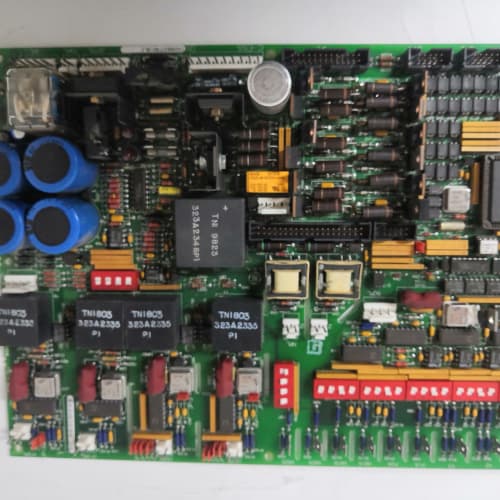
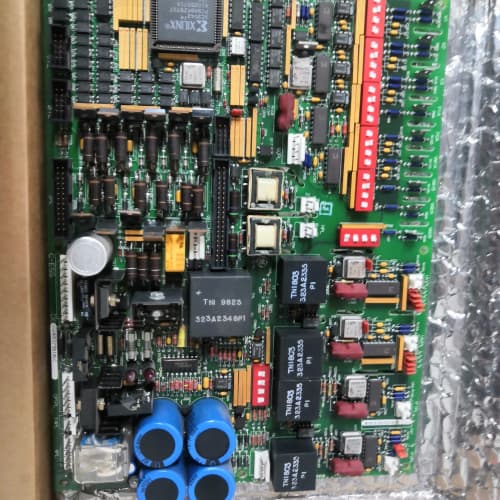 .
.
A-B MVI69-MCM
Parker DLD13004R
ABB DSQC604 3HAC12928-1

Reviews
There are no reviews yet.