
Description
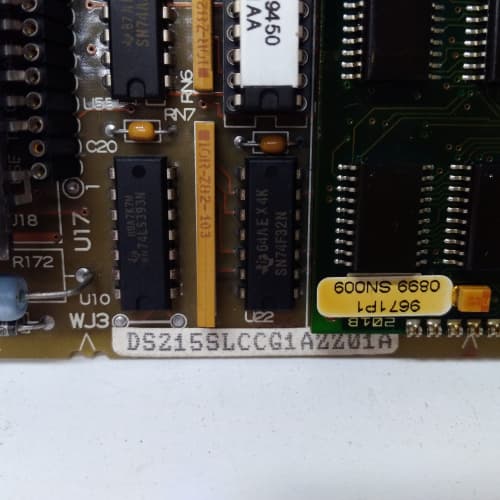
Product Parameters
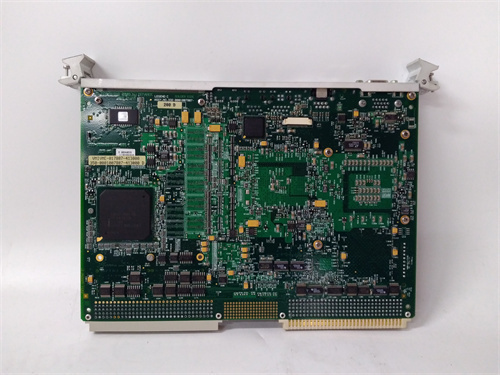
Manufacturer & Series: General Electric (GE), Speedtronic Mark VIe series. Part Number: GE Mark VIe DS200ADCIH1A (the “A” suffix denotes enhanced EMC filtering, improved differential performance, and extended diagnostics). Power Supply: +5 VDC (logic) and ±15 VDC (analog circuitry) drawn from the Mark VIe VME64x backplane. Channel Configuration: 64 single-ended or 32 differential analog input channels, software-configurable via ToolboxST. Input Range: Software-selectable: ±10 V, ±5 V, 0-10 V, 0-5 V, or ±20 mA (with external shunt resistor). Resolution: 16-bit SAR ADC (effective resolution: up to 14 bits at maximum sampling rate). Sampling Rate: Up to 500 kHz aggregate (64 channels at 7.8125 kHz each, or 32 channels at 15.625 kHz each). Input Impedance: >1 MΩ (voltage mode); 250 Ω (current mode with external shunt). Differential Input Specifications: Common-mode rejection ratio (CMRR): 90 dB typical (improved from 85 dB); common-mode voltage range: ±12 V. Accuracy: ±0.06% of full scale (at 25°C); ±0.15% across full temperature range (-40°C to +70°C—extended vs. standard). Signal-to-Noise Ratio (SNR): 82 dB typical at 1 kHz input (improved from 80 dB). Total Harmonic Distortion (THD): -78 dB typical (improved from -75 dB). FIFO Buffer: 2 KB onboard FIFO for high-speed data buffering. Isolation: 1500 Vrms galvanic isolation between analog inputs and backplane logic. Input Protection: Overvoltage protection up to ±40 VDC continuous (improved from ±30 VDC) and ESD protection up to 8 kV (contact discharge). Diagnostics: Enhanced diagnostics including over-range/under-range detection, missing channel detection, internal reference monitoring, ADC temperature monitoring, and channel-to-channel leakage monitoring (new in “A” revision). Operating Temperature: -40°C to +70°C (extended vs. standard -30°C to +65°C). Mounting & Connectivity: Direct VME backplane insertion; front panel features a 68-pin high-density SCSI-style connector with enhanced grounding for EMI shielding.
Advantages & Features
Unmatched Channel Density with Enhanced Performance: The GE Mark VIe DS200ADCIH1A offers 64 single-ended or 32 differential channels in a single VME slot—double the density of the ADCIG1 series (32/16 channels). The “A” revision adds improved CMRR (90 dB), better SNR (82 dB), and extended temperature range, making it suitable for demanding applications where both density and signal quality are critical. Enhanced EMC Filtering: The “A” revision features improved EMI filtering on both power supply and analog input lines, providing superior rejection of high-frequency noise from VFDs, ignition systems, and radio transmitters—particularly beneficial in combined-cycle plants and industrial environments with heavy electrical interference. Extended Temperature Range: Rated for -40°C to +70°C, the GE Mark VIe DS200ADCIH1A is suitable for extreme environments including arctic installations, desert solar-thermal plants, and outdoor turbine cabinets where standard boards may derate or fail. Improved Input Protection: The ±40 VDC overvoltage protection (from ±30 VDC) and 8 kV ESD rating provide greater resilience against wiring errors, lightning-induced transients, and electrostatic discharge during maintenance—significantly reducing field failure rates. Enhanced Channel-to-Channel Leakage Monitoring: A new diagnostic feature in the “A” revision continuously monitors leakage currents between adjacent channels, detecting early degradation of isolation due to humidity or contamination. This enables predictive maintenance before leakage causes measurement errors or cross-channel interference. Flexible Configuration: The GE Mark VIe DS200ADCIH1A supports both single-ended (64 channels) and differential (32 channels) modes, providing flexibility for different field sensor types. Differential mode offers superior noise rejection for long cable runs, while single-ended mode maximizes channel density. Onboard FIFO Buffering: The 2 KB FIFO buffer ensures continuous data acquisition even during bus contention, preventing data loss during moderate-speed burst acquisitions. 16-Bit SAR ADC with Improved Dynamic Performance: The SAR architecture provides good dynamic performance (82 dB SNR, -78 dB THD), making the GE Mark VIe DS200ADCIH1A suitable for high-frequency AC signals such as vibration and speed sensor outputs. Seamless VME Integration: The board connects directly to the VME backplane, providing deterministic, zero-latency data transfer—essential for real-time control loops. Backward Compatibility: The board is pin-compatible with older Mark V high-density analog boards and the base H1 variant, allowing easy field upgrades without modifying termination panels.
Application Cases
Gas Turbine – Comprehensive Monitoring in Harsh Environment: A 9HA gas turbine combined-cycle plant in a desert environment used the GE Mark VIe DS200ADCIH1A to monitor 128 analog signals (64 EGT thermocouples with external transmitters, 32 bearing RTDs, 16 pressure transmitters, and 16 flow transmitters). The -40°C to +70°C rating proved essential when cabinet temperatures reached 68°C during summer peak loads. The enhanced EMC filtering eliminated noise from nearby VFDs, providing stable readings. The high channel density allowed all monitoring to fit within available VME slots. Steam Turbine – Critical Performance Monitoring in Arctic Installation: An arctic combined-cycle plant used the GE Mark VIe DS200ADCIH1A for comprehensive steam turbine monitoring with 48 thermocouple inputs, 32 RTD inputs, and 48 4-20 mA inputs. The -40°C rating enabled reliable cold startup during winter conditions. The enhanced CMRR (90 dB) eliminated ground-loop interference from the turbine’s electro-hydraulic system, and the channel-to-channel leakage monitoring detected early moisture ingress in a termination panel, preventing measurement errors. LNG Compressor Station – Distributed Monitoring with Long Cables: An LNG facility used the GE Mark VIe DS200ADCIH1A for distributed monitoring of compressor auxiliary systems. The board monitored 32 differential channels (pressure transducers, vibration probes, temperature transmitters) with the differential mode providing 90 dB CMRR for 200-meter cable runs. The enhanced input protection (±40 VDC) protected the board when a wiring error connected a 48 VDC supply to an input channel—the board survived with no damage. Hydroelectric Plant – High-Density Generator Monitoring: A large hydroelectric facility used the GE Mark VIe DS200ADCIH1A to monitor generator winding temperatures (RTDs), cooling water temperatures (4-20 mA), bearing temperatures (thermocouples), and guide vane positions (0-10 V) across multiple generator units. The 64-channel capacity allowed a single board per unit, simplifying the I/O architecture. The enhanced EMC filtering ensured accurate readings despite the high magnetic fields and harmonics in the generator hall.
Comparison with Competitors
vs. Siemens Simatic ET 200SP HA High-Density Analog Module: Siemens offers high-density modules with up to 32 channels (single-ended) but with limited temperature range (-25°C to +60°C) and lower CMRR (80 dB typical). The GE Mark VIe DS200ADCIH1A provides double the density (64/32 channels), extended temperature range (-40°C to +70°C), and higher CMRR (90 dB)—superior for harsh environments and challenging EMI conditions. vs. ABB S800 High-Density Analog Input Module (AI845-HD): ABB offers high-density modules with up to 32 channels but with slower sampling rates (typically 100 Hz per channel) and limited temperature range (-25°C to +60°C). The GE Mark VIe DS200ADCIH1A provides 64 channels with 7.8 kHz per channel (single-ended mode) and extended temperature range—a significant advantage for moderate-speed dynamic monitoring in extreme environments. vs. Rockwell Automation ControlLogix 1756-IF32 (32-channel Analog Input): Rockwell offers 32-channel analog input modules but with per-channel sampling rates typically below 1 kHz, limited temperature range, and lower CMRR. The GE Mark VIe DS200ADCIH1A provides double the density (64 channels), much higher per-channel sampling (7.8 kHz), extended temperature range, and superior CMRR—a dramatic improvement. Additionally, Rockwell requires an EtherNet/IP adapter, introducing latency unsuitable for turbine control. vs. GE Mark V Equivalent (DS200ADCIH1A – older generation): The GE Mark VIe DS200ADCIH1A offers substantial improvements over the Mark V version: 64 channels vs. 48, 500 kHz aggregate vs. 250 kHz, 16-bit SAR vs. 14-bit, 90 dB CMRR vs. 80 dB, -40°C to +70°C vs. 0°C to +55°C, onboard FIFO (2 KB) vs. none, enhanced diagnostics including leakage monitoring, and improved input protection (±40 VDC vs. ±30 VDC).
Selection Suggestions
Evaluate Channel Density Requirements: If your application requires monitoring a large number of analog signals (>32 channels per turbine) and the per-channel sampling rate of 7.8 kHz (single-ended) or 15.6 kHz (differential) is sufficient, the GE Mark VIe DS200ADCIH1A is the optimal choice. For applications requiring higher sampling rates (>15.6 kHz per channel), consider the ADCIG1 series (1 MHz aggregate) at the cost of lower channel density. Assess Environmental Conditions: For installations in extreme temperatures (below -30°C or above 65°C), high-EMI environments (near VFDs, radar, or radio transmitters), or corrosive atmospheres, the GE Mark VIe DS200ADCIH1A with extended temperature range, enhanced EMC filtering, and improved CMRR is strongly recommended. For climate-controlled indoor environments, the base H1 variant may suffice. Consider Differential vs. Single-Ended Needs: If your application involves long cable runs (>50 meters) or high-EMI environments, configure the GE Mark VIe DS200ADCIH1A in differential mode (32 channels) to leverage the enhanced 90 dB CMRR. If maximum density is the priority and cable runs are short, use single-ended mode (64 channels). Evaluate Signal Types: The GE Mark VIe DS200ADCIH1A is optimized for voltage and current inputs. For thermocouple or RTD inputs, consider using the ACNAG series which includes onboard CJC and excitation. Alternatively, use external transmitters (4-20 mA) with the ADCIH1A. Check System Compatibility: The GE Mark VIe DS200ADCIH1A requires ToolboxST software v5.5 or later to access its full feature set (leakage monitoring, enhanced diagnostics). The board is physically compatible with all Mark VIe racks. Spare Parts Strategy: The GE Mark VIe DS200ADCIH1A is a specialized high-density board with typical lead times of 6-10 weeks. For facilities with large monitoring requirements in harsh environments, maintain at least one spare board per two installed to ensure redundancy.
Precautions
ESD Protection: The GE Mark VIe DS200ADCIH1A contains sensitive 16-bit SAR ADC and precision analog components. Always use ESD precautions during handling. No Hot-Swapping: This board is strictly non-hot-swappable. Always de-energize the entire Mark VIe rack before insertion or removal. Wiring Complexity: With 64 channels per board, the GE Mark VIe DS200ADCIH1A requires careful wiring planning. Use properly labeled, shielded twisted-pair cables and ensure termination panels are clearly marked to avoid channel misconnections. Differential Wiring Integrity: For differential mode, use twisted-pair cables with a dedicated pair for each signal. Maintain consistent wire gauge and length for both legs to ensure the 90 dB CMRR specification. Mismatched wire lengths can degrade CMRR significantly. Input Range Selection: Ensure the input range matches the field sensor output to prevent ADC saturation. The ±10 V range is recommended for unknown signals initially. Signal Cable Shielding: Use properly shielded twisted-pair cables with shields grounded at the sensor end only (single-point grounding). For differential mode, the shield should not carry signal current—it is for EMI protection only. Loop Power Supply: The GE Mark VIe DS200ADCIH1A does not provide loop power for 4-20 mA transmitters. Use an isolated 24 VDC power supply with appropriate shunt resistors. FIFO Overflow Prevention: Although the board features a 2 KB FIFO, ensure the main processor polls the board frequently enough to prevent overflow. For continuous 500 kHz acquisition, the control program must handle the data rate appropriately. Configuration Backup: Before replacing a faulty unit, export configuration via ToolboxST. New boards ship with factory-default settings. Storage Conditions: Store uninstalled boards in original anti-static bags within 10°C to 35°C and humidity below 50%. Firmware Compatibility: Verify firmware revision matches the main processor. The “A” variant requires specific firmware (typically v5.5 or later) to support new features. Coordinate with GE field service for alignment. Calibration Cycle: GE recommends external calibration every 24 months. For critical applications (vibration monitoring, overspeed detection), consider annual calibration using a traceable signal source. Channel-to-Channel Leakage Monitoring: Periodically review the leakage monitoring diagnostic reports. A gradual increase in leakage between adjacent channels may indicate moisture ingress, connector contamination, or insulation degradation—take corrective action before errors occur. Data Bus Bandwidth: The data rate of 500 kHz aggregate (approximately 1 MB/s for 64 channels at 16 bits) places demands on the VME bus. Ensure adequate bus bandwidth and main processor capacity before deploying multiple GE Mark VIe DS200ADCIH1A boards in a single rack to avoid data bottlenecks. Temperature Cycling: Although rated for -40°C to +70°C, avoid rapid temperature changes (>5°C per minute) that can cause condensation and thermal stress, potentially affecting measurement accuracy.
Honeywell TK-FTEB01
HONEYWELL FC-SDO-0824 V1.3
A-B 1756-EN2T
A-B 2711C-T10C


Reviews
There are no reviews yet.