
Description
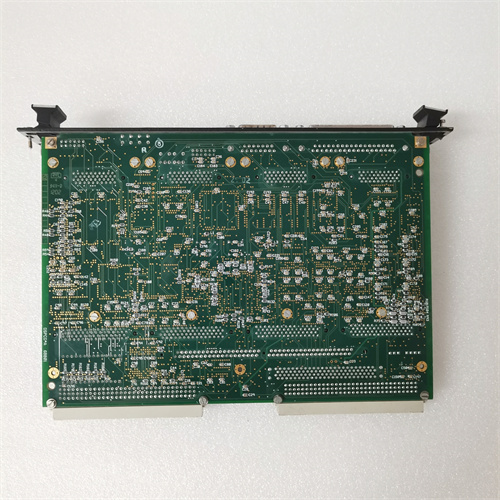
Product Parameters
-
Manufacturer & Series: General Electric (GE), Speedtronic Mark VIe series.
-
Part Number: GE Mark VIe DS200ACNAG1A (the “A” suffix denotes improved EMC filtering, enhanced CJC accuracy, and expanded diagnostics).
-
Power Supply: +5 VDC (logic) and +24 VDC (field loop power/excitation) drawn from the Mark VIe VME64x backplane.
-
Channel Configuration: 24 channels total, each independently software-configurable via ToolboxST as:
-
4-20 mA or 0-20 mA (with internal 250 Ω precision shunt resistor, ±0.005% tolerance—improved from G1).
-
0-10 VDC or ±10 VDC (high-impedance input >100 MΩ).
-
Thermocouple: Types J, K, T, E, R, S, B, N with enhanced CJC accuracy of ±0.3°C (improved from ±0.5°C on G1).
-
RTD: Pt100 or Pt1000 (3-wire or 4-wire) with programmable excitation current (100 µA to 1 mA).
-
-
Resolution: 24-bit delta-sigma ADC per channel (effective resolution: up to 21.5 bits, improved from 21 bits).
-
Input Impedance: >100 MΩ (voltage mode); 250 Ω ±0.005% (current mode).
-
Accuracy: ±0.04% of full scale (at 25°C); ±0.08% across full temperature range (-30°C to +65°C)—20% improvement over G1.
-
Temperature Drift: ±12 ppm/°C (gain) and ±1.5 µV/°C (offset).
-
Sampling Rate: Software-selectable from 0.5 Hz to 120 Hz per channel (expanded range vs. G1’s 1-100 Hz).
-
Noise Rejection: 110 dB at 50/60 Hz (normal mode); 130 dB common-mode rejection (CMRR)—improved filtering.
-
Isolation: 1500 Vrms galvanic isolation between field inputs and backplane logic; channel-to-channel isolation at 300 Vrms continuous (improved from 250 Vrms), 2.5 kV surge withstand.
-
Diagnostics: Enhanced diagnostics including over-range/under-range detection, open-loop detection (threshold configurable from 1.0 to 3.0 mA), RTD wire-break detection, thermocouple burnout detection (upscale/downscale), internal reference monitoring, periodic self-calibration, and channel-to-channel leakage monitoring (new in “A” revision).
-
Input Protection: Overvoltage protection up to ±40 VDC continuous (improved from ±30 VDC) and ESD protection up to 8 kV (contact discharge).
-
Operating Temperature: -30°C to +70°C (extended range vs. G1’s -30°C to +65°C).
-
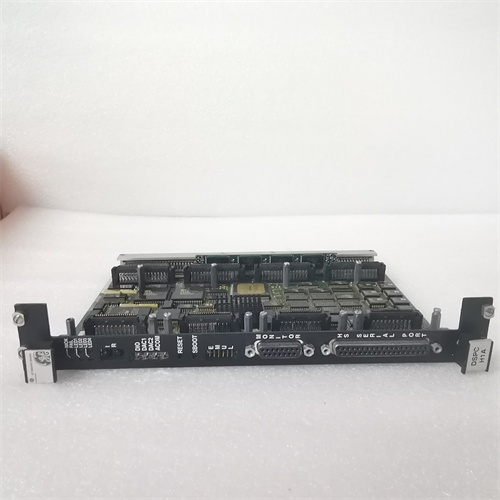
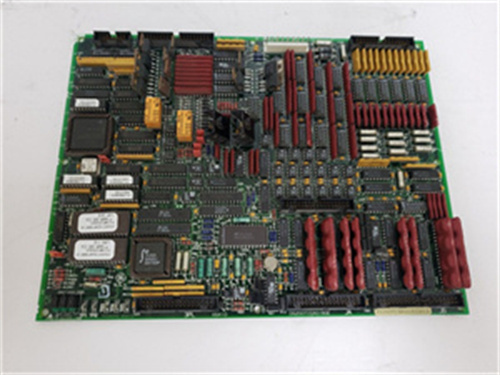
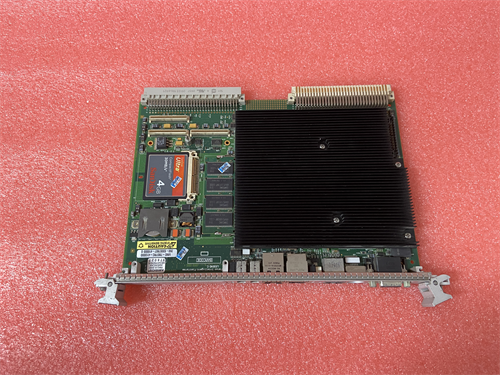
Mounting & Connectivity: Direct VME backplane insertion; front panel features two 68-pin high-density SCSI-style connectors (Channels 1-12 and 13-24) with improved grounding for EMI shielding.
Advantages & Features
-
Enhanced Accuracy and Stability: The GE Mark VIe DS200ACNAG1A offers ±0.04% accuracy and ±12 ppm/°C drift—a 20% improvement over the G1 variant. This is achieved through upgraded precision reference voltage sources and chopper-stabilized amplifiers, ensuring stable measurements for critical control loops such as EGT monitoring and steam temperature control.
-
Superior Cold-Junction Compensation: With enhanced CJC accuracy of ±0.3°C, the GE Mark VIe DS200ACNAG1A provides 40% better thermocouple measurement accuracy than the G1 variant. This is particularly valuable for high-temperature exhaust monitoring, where every degree of measurement error impacts combustion efficiency and NOx emissions calculations.
-
Extended Temperature Range: Rated for operation up to 70°C (vs. 65°C on G1), the GE Mark VIe DS200ACNAG1A is better suited for outdoor turbine cabinets in extreme climates (desert, tropical, or poorly ventilated generator compartments) where ambient temperatures frequently exceed 60°C.
-
Improved Input Protection: The “A” revision features enhanced overvoltage protection up to ±40 VDC (from ±30 VDC) and 8 kV ESD protection, providing greater resilience against wiring errors, lightning-induced transients, and electrostatic discharge during maintenance—significantly reducing field failure rates.
-
Enhanced Noise Rejection: With 110 dB normal-mode rejection (improved from 100 dB) and 130 dB CMRR, the GE Mark VIe DS200ACNAG1A delivers superior signal integrity in environments with high EMI from VFDs, ignition systems, and high-voltage generators. The expanded digital filter options include configurable notch frequencies with deeper attenuation.
-
Expanded Sampling Rate Range: The ability to sample from 0.5 Hz (for ultra-stable, high-resolution measurements) up to 120 Hz (for fast transient capture) provides greater flexibility than the G1’s 1-100 Hz range, accommodating both precision monitoring and dynamic response applications.
-
Channel-to-Channel Leakage Monitoring: A new diagnostic feature in the “A” revision continuously monitors leakage currents between adjacent channels, detecting early degradation of isolation due to humidity or contamination. This enables predictive maintenance before leakage causes measurement errors or cross-channel interference.
-
Configurable Open-Loop Threshold: Unlike the fixed 1.5 mA threshold on the G1, the GE Mark VIe DS200ACNAG1A allows users to set the open-loop detection threshold from 1.0 to 3.0 mA via software, accommodating different transmitter types and application requirements.
-
Backward Compatibility: The GE Mark VIe DS200ACNAG1A remains pin-compatible with the G1 variant and older Mark V analog input boards, allowing easy field upgrades without modifying termination panels.
Application Cases
-
Gas Turbine – High-Precision EGT Monitoring: A 7FA gas turbine installed the GE Mark VIe DS200ACNAG1A for 24-channel EGT monitoring using Type K thermocouples. The enhanced CJC accuracy (±0.3°C) and ±0.04% overall accuracy reduced EGT measurement uncertainty to ±1.0°C (from ±1.8°C with the previous G1 board). This improved combustion control, reducing NOx emissions by 6% and extending hot-section inspection intervals by 2,000 operating hours. The extended 70°C temperature rating proved essential, as the turbine cabinet routinely reached 68°C during summer peak loads.
-
Steam Turbine – Critical Bearing and Thrust Monitoring: A nuclear power plant used multiple GE Mark VIe DS200ACNAG1A boards to monitor 96 bearing temperatures (Pt100 RTDs) and 24 thrust position signals (4-20 mA transmitters). The board’s channel-to-channel leakage monitoring detected early moisture ingress in a termination panel during a steam leak, allowing maintenance to dry the panel before leakage caused measurement errors. The extended 70°C rating enabled operation during a cooling system failure when cabinet temperatures reached 66°C for 6 hours, avoiding a turbine trip.
-
LNG Compressor – Surge and Performance Monitoring: An LNG facility retrofitted the GE Mark VIe DS200ACNAG1A on a large centrifugal compressor with 12 channels for 4-20 mA inputs (suction/discharge pressure, DP flow, temperature), 6 channels for thermocouples (bearing and gas temperatures), and 6 channels for 0-10 V inputs. The configurable open-loop threshold (set to 2.5 mA) prevented nuisance alarms from a marginally low transmitter that was still functional, avoiding unnecessary maintenance calls. The enhanced noise rejection eliminated intermittent reading fluctuations previously caused by a nearby 6.6 kV VFD.
-
Hydroelectric – Generator Winding and Cooling Water: A large hydro plant used the GE Mark VIe DS200ACNAG1A to monitor generator stator winding temperatures (Pt100 RTDs) and cooling water temperatures (4-20 mA). The board’s self-calibration maintained accuracy over the 8-month operating season, eliminating the need for mid-season recalibration. The improved input protection (±40 VDC) protected the board when a wiring error connected a 48 VDC power supply to a voltage input channel during maintenance—the board survived with no damage, a failure that would have destroyed the G1 variant.
Comparison with Competitors
-
vs. Siemens Simatic ET 200SP HA High-Density Analog Module: Siemens offers up to 16 channels without channel-to-channel isolation, requiring external isolators for multi-sourced loops. The GE Mark VIe DS200ACNAG1A provides 24 channels with 300 Vrms per-channel isolation, reducing cabinet space and eliminating isolator panels. Siemens modules also require separate RTD/thermocouple modules, whereas the GE board accepts all input types universally.
-
vs. ABB S800 AI845 (16-channel Analog Input): ABB’s AI845 offers per-channel isolation but supports only 4-20 mA and 0-10 V inputs—thermocouples and RTDs require separate modules. The GE Mark VIe DS200ACNAG1A accepts thermocouples and RTDs directly with enhanced CJC and excitation, reducing module types to stock and simplifying spare parts management.
-
vs. Rockwell Automation ControlLogix 1756-IF16: Rockwell offers good resolution but lacks per-channel isolation and requires an EtherNet/IP adapter, introducing 5-20 ms latency unsuitable for 1 ms turbine control cycles. The GE Mark VIe DS200ACNAG1A connects directly to the VME backplane with zero-latency, deterministic data transfer.
-
vs. GE Mark V Equivalent (DS200ACNAG1A – older generation): Comparing within the GE lineage, the GE Mark VIe DS200ACNAG1A offers substantial improvements over the Mark V version: 24-bit ADC vs. 16-bit, ±0.04% accuracy vs. ±0.10%, CJC ±0.3°C vs. ±1.0°C, per-channel isolation 300 Vrms vs. 200 Vrms, extended 70°C operation vs. 60°C, enhanced EMC filtering, automatic self-calibration vs. manual, and additional diagnostics (leakage monitoring, configurable thresholds).
Selection Suggestions
-
Evaluate Precision Requirements: If your application demands the highest accuracy for critical control loops (e.g., EGT monitoring, steam temperature, flow for billing), the GE Mark VIe DS200ACNAG1A with ±0.04% accuracy and ±0.3°C CJC is strongly recommended. For less critical monitoring, the G1 variant may be cost-effective.
-
Assess Environmental Conditions: If your turbine cabinet routinely exceeds 65°C (outdoor desert installations, poorly ventilated enclosures), the GE Mark VIe DS200ACNAG1A with 70°C rating is essential. For climate-controlled indoor turbine halls, the G1’s 65°C rating suffices.
-
Consider EMI Environment: In facilities with high VFD density, large ignition systems, or RF transmitters, the GE Mark VIe DS200ACNAG1A with 110 dB noise rejection provides superior signal integrity compared to the G1’s 100 dB.
-
Evaluate Thermocouple and RTD Usage: If your application involves extensive thermocouple or RTD inputs, prioritize the GE Mark VIe DS200ACNAG1A due to its enhanced CJC accuracy, expanded thermocouple types (including B and N), and improved RTD excitation options.
-
Check System Compatibility: The GE Mark VIe DS200ACNAG1A requires ToolboxST software v5.5 or later to access its full feature set (configurable open-loop threshold, leakage monitoring, expanded sampling range). Consult GE for compatibility with older firmware versions.
-
Spare Parts Strategy: The GE Mark VIe DS200ACNAG1A remains in active production with typical lead times of 6-10 weeks. Given the “A” revision is the current preferred variant, prioritize stocking “A” boards over older G1 for future replacement applications.
Precautions
-
ESD Protection: The GE Mark VIe DS200ACNAG1A contains highly sensitive 24-bit ADC and precision components. Always wear a grounded ESD wrist strap and work on a static-dissipative mat. Avoid touching gold-plated edge connectors and exposed component pins.
-
No Hot-Swapping: This board is strictly non-hot-swappable. Always de-energize the entire Mark VIe rack before inserting or removing the GE Mark VIe DS200ACNAG1A to prevent backplane voltage spikes.
-
Wiring Polarity and Shielding: Pay careful attention to polarity for current inputs, thermocouples, and RTDs. Reverse polarity can damage precision shunt resistors and cause erroneous readings. Use shielded twisted-pair cables with shields grounded at the sensor end only (single-point grounding). The improved ±40 V input protection reduces damage risk but does not eliminate it.
-
Loop Power Supply Isolation: The GE Mark VIe DS200ACNAG1A does not provide loop power for 4-20 mA transmitters. Use an isolated 24 VDC power supply rated at 1500 Vrms to maintain the board’s isolation integrity. Non-isolated supplies can defeat channel-to-channel isolation and create hazardous ground loops.
-
Thermocouple Extension Wire: Always use thermocouple-grade extension wire matching the thermocouple type. Standard copper wire introduces additional thermoelectric junctions causing measurement errors. Ensure the enhanced CJC sensor is at thermal equilibrium with the terminal block.
-
RTD Lead Wire Compensation: For 3-wire RTD configurations, ensure all three wires have identical resistance and gauge. The GE Mark VIe DS200ACNAG1A compensates for lead resistance, but mismatched lead wires can introduce errors beyond the ±0.04% specification.
-
Configuration Backup: Before replacing a faulty unit with a new GE Mark VIe DS200ACNAG1A, export the full channel configuration via ToolboxST. New boards ship with factory-default settings. After installation, restore the configuration and perform a validation test with a calibrated signal source.
-
Grounding Practices: Follow GE’s recommended grounding practices. Ensure the control cabinet has a low-impedance earth connection (<1 Ω) and that all cable shields terminate at a common ground bus bar. Avoid “daisy-chaining” grounds to prevent ground potential differences.
-
Storage Conditions: Store uninstalled boards in original anti-static bags within 10°C to 35°C and humidity below 50%. Prolonged exposure to high humidity, corrosive gases (H₂S, chlorine), or UV light can degrade conformal coating.
-
Firmware Compatibility: When procuring a new GE Mark VIe DS200ACNAG1A, verify its firmware revision matches the main processor’s software version. The “A” variant requires specific firmware (typically v5.5 or later) to support new features. Coordinate with GE field service for alignment.
-
Calibration Cycle: Although the GE Mark VIe DS200ACNAG1A features periodic self-calibration, GE recommends an external calibration check every 24 months for full rated accuracy. For critical safety applications, consider annual calibration using a traceable source.
-
Channel-to-Channel Leakage Monitoring: Periodically review the leakage monitoring diagnostic reports. A gradual increase in leakage between adjacent channels may indicate moisture ingress, connector contamination, or insulation degradation—take corrective action before errors occur.
A-B 2711P-RDT10C
EMG LS43.01/24
ABB CI810B 3BSE020520R1
A-B 2711-T10C20



Reviews
There are no reviews yet.