
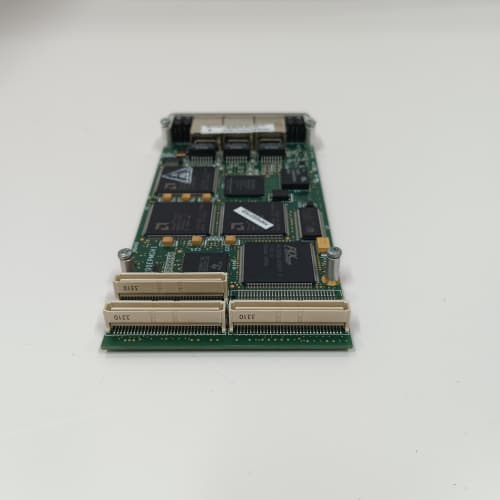
Description
Product Parameters
| Parameter | Specification |
|---|---|
| Model | IS230TRTDH1D |
| Manufacturer | GE Energy / Baker Hughes |
| Platform | Mark VIe |
| Type | RTD input termination board |
| Compatible Modules | IS220PRTDH1A |
| Input Channels | Up to 16 RTD inputs (depending on module) |
| RTD Types | PT100 (α=0.00385 & 0.00392), PT500, PT1000, Ni120, Cu10 |
| RTD Wiring | 2‑wire, 3‑wire, 4‑wire (jumper selectable per channel) |
| Excitation Current | 0.5 mA or 1 mA (selectable via module) |
| Terminal Type | Screw‑clamp (pluggable, 2‑piece) |
| Number of Positions | 32 positions (field wiring side) |
| Wire Gauge | 0.2–2.5 mm² (AWG 24–14) |
| Signal Conditioning | Configurable termination resistors, RC filters, ESD protection (Level 3) |
| Isolation | 1500 V (field‑to‑backplane via module) |
| LED Indicators | None (status via I/O module) |
| Operating Temperature | -40°C to +85°C |
| Storage Temperature | -40°C to +100°C |
| Humidity | 5% to 100% (non‑condensing) |
| Dimensions | Standard Mark VIe terminal board form factor |
| Weight | Approx. 0.45 kg |
| MTBF | > 200,000 hours |
Advantages and Key Features
-
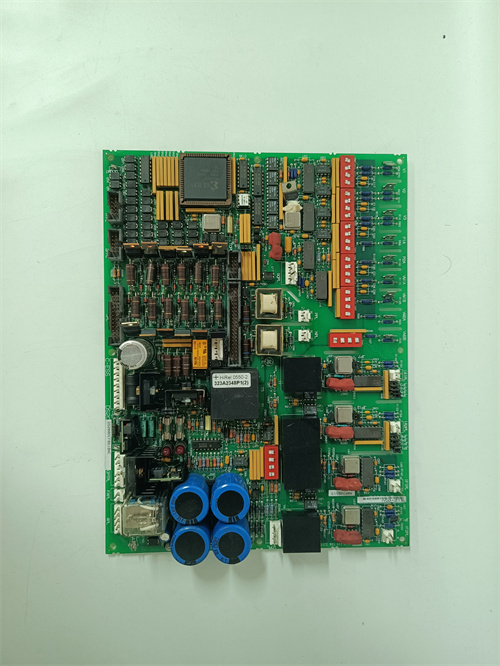
Dedicated RTD Termination – The IS230TRTDH1D is specifically optimized for RTD temperature sensors, providing reliable termination and signal conditioning for the IS220PRTDH1A module.
-
Flexible RTD Wiring – Supports 2‑wire, 3‑wire, and 4‑wire RTD configurations via simple jumper selection, allowing compensation for lead wire resistance in 3‑wire and 4‑wire configurations.
-
Extended Sensor Support – Supports PT100 (both DIN and American standards), PT500, PT1000, Ni120, and Cu10 RTD types, providing compatibility with all common RTD sensors in GE turbine applications.
-
High Accuracy – The IS230TRTDH1D is designed to preserve the ±0.1% accuracy of the IS220PRTDH1A module through high-quality termination resistors and low‑thermal‑EMF connections.
-
Integrated Signal Conditioning – Provides mounting locations for termination resistors and RC filters to match sensor characteristics and reject noise, reducing external components.
-
Pluggable Terminal Design – 2‑piece pluggable terminal block design simplifies maintenance and module replacement without rewiring.
-
Wide Temperature Range – Rated for -40°C to +85°C, suitable for extreme environments including arctic and desert installations.
-
Gold‑Plated Contacts – The IS230TRTDH1D features gold‑plated screw‑clamp terminals, providing superior corrosion resistance and low‑resistance connections for low‑level RTD signals.
Application Fields and Use Cases
1. Turbine Bearing Temperature Monitoring
The IS230TRTDH1D connects PT100 RTD sensors on turbine bearings, providing critical temperature data for bearing health monitoring and lubrication system control.
2. Generator Stator and Rotor Temperature
Provides PT100 connections for generator winding temperature monitoring, preventing thermal overload and extending equipment life.
3. Coolant and Lubricant Temperature
Measures cooling water, lube oil, and hydraulic fluid temperatures for auxiliary system control and thermal management.
4. Ambient Temperature Compensation
Provides ambient temperature data for combustion control algorithms requiring temperature compensation.
5. Motor Winding Temperature
Connects PT100 RTDs in motor windings for thermal protection of pumps, fans, and compressors.
6. Retrofit Projects
The IS230TRTDH1D is the recommended upgrade from the IS230TRTDH1C for Mark VIe upgrades, offering enhanced sensor support and improved signal conditioning.
Comparison with Competing Products
| Feature | IS230TRTDH1D (GE) | IS230TRTDH1C (GE) | IS230TBTCH1B (GE) | ABB TU830 + TB845 | Siemens 6ES7 392-1AJ00 |
|---|---|---|---|---|---|
| Platform | Mark VIe | Mark VIe | Mark VIe | AC 800M | S7-400 |
| Type | RTD termination | RTD termination | Universal | Terminal + RTD | Terminal block |
| Channels | 16 | 16 | Up to 32 | 8–16 | 8 |
| RTD Support | PT100 (both), PT500, PT1000, Ni120, Cu10 | PT100, PT500, PT1000, Ni120 | Via module | PT100, Ni100 | PT100, Ni100 |
| Wiring | 2/3/4‑wire | 2/3‑wire | 2/3/4‑wire | 2/3/4‑wire | 2/3‑wire |
| Contact Material | Gold‑plated | Tin‑plated | Tin‑plated | Tin‑plated | Tin‑plated |
| Temp Range | -40°C to +85°C | -30°C to +70°C | -40°C to +85°C | -25°C to +60°C | 0°C to +60°C |
| Pluggable | Yes | Yes | Yes | Yes | No |
| MTBF | > 200,000 hrs | > 180,000 hrs | > 200,000 hrs | > 120,000 hrs | > 80,000 hrs |
Key Differentiators: The IS230TRTDH1D is the most advanced RTD termination board in the GE Mark VIe lineup, offering gold‑plated contacts, support for both PT100 standards (α=0.00385 and α=0.00392), extended RTD types (PT500, PT1000, Ni120, Cu10), and full 2/3/4‑wire support. It provides superior corrosion resistance for low‑level RTD signals. Compared to the IS230TRTDH1C, it offers enhanced sensor support and improved contact material. Compared to universal terminal boards, it is specifically optimized for RTD applications.
Selection Suggestions and Precautions
Selection Criteria
-
Choose the IS230TRTDH1D for RTD temperature monitoring applications requiring the highest accuracy and reliability with the IS220PRTDH1A module.
-
For standard RTD applications, the IS230TRTDH1C may be a cost‑effective alternative.
-
Verify the RTD type (PT100, PT500, PT1000, Ni120, Cu10) is supported by the IS230TRTDH1D.
-
Ensure proper wiring configuration (2‑wire, 3‑wire, 4‑wire) is selected via jumpers.
Critical Precautions
-
Wiring Configuration – Configure each channel on the IS230TRTDH1D for the correct wiring type (2‑wire, 3‑wire, 4‑wire) using jumpers. 3‑wire and 4‑wire configurations provide lead resistance compensation for longer cable runs.
-
Lead Resistance – For 2‑wire RTD connections, lead resistance adds directly to the RTD resistance and can cause significant measurement errors. Use 3‑wire or 4‑wire configuration for long cable runs (> 50 meters).
-
Sensor Matching – Ensure RTD sensors are matched to the IS230TRTDH1D configuration (PT100 with α=0.00385 or α=0.00392). Incorrect configuration will produce erroneous temperature readings.
-
Shielding – Use shielded twisted‑pair cables for RTD connections to the IS230TRTDH1D. Terminate shields at the field device end, not at the board, to prevent ground loops.
-
Cable Quality – Use high‑quality copper cables with consistent resistance for all three (3‑wire) or four (4‑wire) leads to maintain lead compensation accuracy.
-
Terminal Connections – Use recommended torque: 0.5–0.6 N·m. Gold‑plated terminals are softer than tin‑plated; avoid over‑tightening to prevent thread damage.
-
Grounding – Ensure proper grounding of the IS230TRTDH1D and field devices. Ground loops can introduce noise into low‑level RTD signals.
-
ESD Handling – Use grounded wrist straps when handling the IS230TRTDH1D to prevent static damage.
-
Obsolescence – The IS230TRTDH1D is in active production with long‑term support. It is the recommended choice for new Mark VIe RTD installations. Keep spare boards for critical RTD applications.
A-B 1756-IF8
NI SCXI-1349
SGMPH-01AAE4SD
ABB 802R-HF
Reviews
There are no reviews yet.